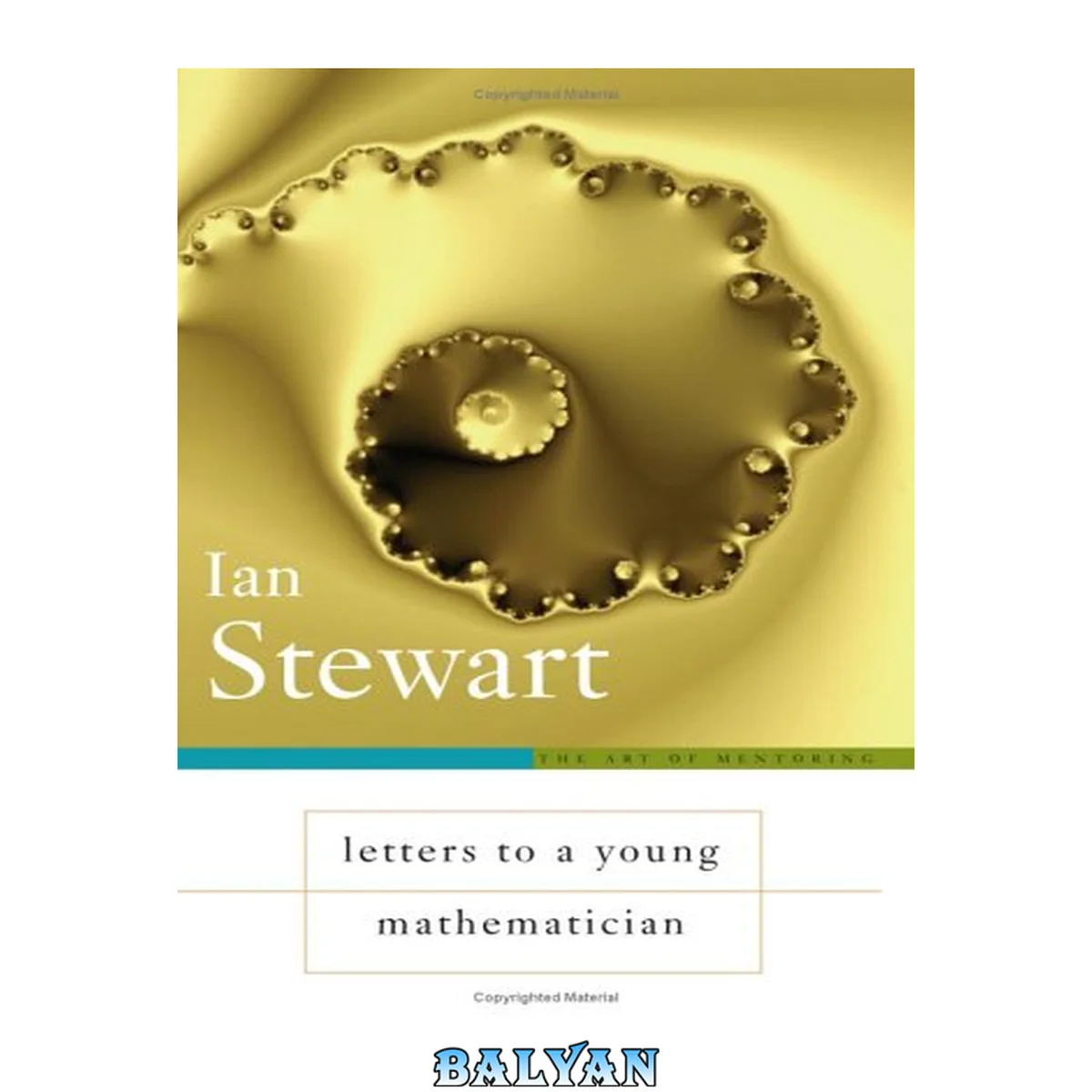
Letters to a Young Mathematician (Art of Mentoring)
معرفی کتاب «Letters to a Young Mathematician (Art of Mentoring)» نوشتهٔ Bryan Peterson، Bryan F. Peterson و Ian Stewart، منتشرشده توسط نشر Basic Books در سال 2006. این کتاب در 200 صفحه، فرمت pdf، زبان انگلیسی ارائه شده است.
در میان انبوه کتابهایی که به شرح و بسط ریاضیات میپردازند، «نامههایی به یک ریاضیدان جوان» (Letters to a Young Mathematician) اثر ایان استوارت، جایگاهی منحصربهفرد دارد. این کتاب که در سال ۲۰۰۶ منتشر شده، با زبانی شیوا و لحنی صمیمی، پلی است بین دنیای انتزاعی ریاضیات و تجربهی زیستهی یک انسان در مسیر حرفهای شدن.
دربارهی کتاب Letters to a Young Mathematician
کتاب «نامههایی به یک ریاضیدان جوان» با الهام از سنت نامهنگاری و در ادامهی مجموعهی «هنر راهنمایی» (Art of Mentoring) از نشر بیسیک بوکس (Basic Books) منتشر شده است. ایان استوارت در مقدمهی کتاب، آن را بهروزرسانی و پاسخی به رسالهی کلاسیک «عذرآوری یک ریاضیدان» (A Mathematician's Apology) از جی. اچ. هاردی میداند. ساختار کتاب به صورت مجموعهای از نامهها به یک شخصیت خیالی به نام «مگ» (Meg) است که از سالهای دبیرستان تا اخذ کرسی استادی در یک دانشگاه آمریکایی را دنبال میکند. این نامهها، که تعدادشان به بیست و یک میرسد، به پرسشهای بنیادینی پاسخ میدهند که در نقاط عطف مختلف یک مسیر علمی به وجود میآیند. استوارت از رابطهی منطق و برهان و نقش زیبایی در تفکر ریاضی میگوید و به پرسشهای عملیتری چون نحوهی یادگیری ریاضیات، مقابله با مشکلات حل مسئله، و چگونگی تعامل با جامعهی ریاضیات میپردازد. فضا و لحن کتاب، ترکیبی از طنزی لطیف و نگاهی عمیق و روشنگر به ماهیت ریاضیات است و سعی دارد این حوزه را برای همگان، فارغ از پیشزمینهی تخصصی، قابلدرک و جذاب سازد.
دربارهی نویسنده
ایان استوارت (Ian Stewart) استاد بازنشستهی ریاضیات در دانشگاه وارویک (University of Warwick) انگلستان و یکی از پرکارترین نویسندگان و مروجان علم در جهان معاصر است. او علاوه بر انتشار بیش از ۱۴۰ مقالهی علمی پژوهشی در حوزههایی همچون نظریهی انشعاب، دینامیک و ریاضیات زیستی، با نوشتن ستون «تفریحات ریاضی» در مجلهی ساینتیفیک آمریکن (Scientific American) برای سالها، نقشی کلیدی در عمومیسازی ریاضیات ایفا کرده است. استوارت به دلیل تلاشهایش در ترویج علم، جوایز متعددی از جمله مدال مایکل فارادی از انجمن سلطنتی (Royal Society) در سال ۱۹۹۵ و مدال کریستوفر زیمن از انجمن ریاضی لندن را دریافت کرده و در سال ۲۰۰۱ به عنوان عضو انجمن سلطنتی (FRS) برگزیده شده است. او همچنین همکاری موفقی با تری پرچت و جک کوهن در نگارش مجموعه کتابهای علمی-تخیلی «علوم دیسکورلد» داشته است.
چرا باید این کتاب را بخوانید؟
مطالعهی این کتاب برای هر کسی که با ریاضیات سروکار دارد یا به آن علاقهمند است، مزایای متعددی به همراه دارد که از جملهی آنها میتوان به موارد زیر اشاره کرد:
درک ماهیت و زیبایی ریاضیات: استوارت با زبانی شیوا نشان میدهد که ریاضیات فقط مجموعهای از فرمولها و معادلات نیست، بلکه دنیایی از زیبایی، الگو و اندیشه است که در تمام جنبههای زندگی جریان دارد.
دریافت راهنماییهای عملی و ارزشمند: کتاب از تجربیات نویسنده به عنوان دانشجو و استاد سرشار است و توصیههای مفیدی برای غلبه بر چالشهای یادگیری، نوشتن برهان، تدریس و ادامهی مسیر حرفهای ارائه میدهد.
دسترسی به دنیای درون جامعهی ریاضی: این کتاب نگاهی اجمالی و صادقانه به فرهنگ، آداب و رسوم، و چالشهای جامعهی ریاضیدانان دارد، از نحوهی همکاری تا آیندهی این رشته.
روشن شدن جنبههای کمتر دیده شده: مباحثی چون نقش زیبایی در ریاضیات، تفاوت ریاضیات محض و کاربردی، و حتی پرسشهای فلسفی مانند «آیا خدا ریاضیدان است؟» در این کتاب به شیوهای جذاب و قابلفهم بررسی شدهاند.
سبکی دلنشین و صمیمی: نویسنده با نثری ساده، طنزی لطیف و لحنی دوستانه، مفاهیم عمیق را به شیوهای بیان میکند که برای هر خوانندهای لذتبخش است.
این کتاب برای چه کسانی مناسب است؟
این کتاب برای طیف وسیعی از مخاطبان جذاب و مفید خواهد بود. دانشآموزان و دانشجویانی که به دنبال درکی عمیقتر از ریاضیات و مسیرهای پیشروی خود هستند، یکی از اصلیترین گروههای هدف آن را تشکیل میدهند. معلمان و اساتید ریاضیات نیز میتوانند از توصیههای ارزشمند آن، به ویژه دربارهی نحوهی تدریس، بهرهمند شوند. با این حال، جذابیت کتاب صرفاً به جامعهی ریاضیات محدود نمیشود و برای هر خوانندهی کنجکاوی که میخواهد بداند ریاضیات چیست و چرا برخی از باهوشترین افراد جهان خود را وقف آن میکنند، منبعی الهامبخش و روشنگر محسوب میشود.
سوالات متداول
آیا برای درک این کتاب به دانش پیشنیاز ریاضی نیاز است؟
خیر، این کتاب برای مخاطب عام نوشته شده است. ظاهر شدن معادلات در آن بسیار نادر است و از هرگونه اصطلاحات تخصصی غیرضروری پرهیز شده است. هر کسی با کنجکاوی در مورد ریاضیات میتواند از آن لذت ببرد.
تفاوت این کتاب با «عذرآوری یک ریاضیدان» هاردی در چیست؟
هاردی در کتاب کلاسیک خود از دیدگاهی نخبهگرایانه و تا حدی بدبینانه به ریاضیات مینگرد. در مقابل، استوارت در این کتاب، با رویکردی مدرنتر و واقعبینانهتر، هم به جنبههای زیباییشناختی و هم به کاربردهای گستردهی ریاضیات در دنیای امروز میپردازد و نگاه خوشبینانهتری را ارائه میدهد.
آیا این کتاب صرفاً برای کسانی که قصد دارند ریاضیدان شوند مفید است؟
اگرچه عنوان کتاب به جوانان و ریاضیدانان اشاره دارد، اما محتوای آن برای هر کسی که به دنبال درک ماهیت تفکر ریاضی و نقش آن در جهان است، سودمند و الهامبخش است و بسیاری از منتقدان آن را برای مخاطبانی خارج از این حوزه نیز جذاب دانستهاند.
As the title suggests, this book is written in the form of letters to a "young mathematician", offering advice and generally discussing what mathematics is and what it means to be a mathematician. The back cover promises that it "tells readers what world renowned mathematician Ian Stewart wishes he had known when he was a student", and I was intrigued because I had a mixed experience with mathematics in university and always wondered what I could have done differently. I have to say, my experience with this book was also mixed. First of all, lest the title mislead, I think it's actually more suited for a general non-mathematical audience than for someone who's actually in the process of becoming a mathematician--which wasn't a problem for me, since I read it for general interest and not as an aspiring mathematician. Stewart raises a lot of interesting points here, but he often doesn't discuss them in as much detail as I would have liked. I think this is part of a series, and it was probably a requirement that the book be barely 200 pages long, but there are times when a bit more depth would have been nice. It was good in a way that the book left me wanting more, and it did include references to other interesting reading throughout, but it wasn't quite satisfying enough in itself. Many people will probably appreciate the brevity, though. A more serious concern for me was the fact that I just didn't agree with some of his more important points. I know, he's the mathematician and I'm not, but still. The book got off to a bad start, in my mind, with the initial chapter entitled "Why Do Math?". Stewart's reason, briefly, is that math is everywhere. There's a bit too much focus on the utility and not enough on the beauty of it. The same is true even in his chapter on proofs: "it would be silly to suggest that this agreement [with experiment to an accuracy of nine decimal places] is an accident, and that no physical principle is involved.... [but] it is equally silly not to try to find out the deep logic that justifies the calculation. Such understanding... will surely advance mathematics." So even proofs are presented not as necessary, but merely as useful (a view that he steps back from slightly in the following chapter, but to my mind, the damage was done). Another point that left me wondering is his claim that not everyone can be a mathematician, because "originality is one of those things that you either have or you don't." I really appreciate the fact that he expressly disagrees with the politically-correct view that everyone can be good at everything, but I think he simplifies the issue a bit too much. In particular, I'm just not convinced that originality is the key. He compares it to the attempt of a tone-deaf person to become a great musician, but there's nothing in there to make me think that creativity is the problem rather than some more basic musical/mathematical aptitude. His explanations about how he excelled at math without effort from the time he was 10 didn't convince me either; the mathematics that one does at age 10 is so different from "real" mathematics that it can barely be called the same subject. Creativity certainly isn't the main factor there. I wonder whether Stewart's various unconvincing arguments are a direct result of the book's extreme brevity; maybe I would have been more convinced if he had elaborated his position further. On the other hand, I think the fact that I have so much to say about this book speaks in its favour. Regardless of whether I agree with everything Stewart says, he makes plenty of interesting and provocative points in a short space. And there's a fair bit of humour, too, including a whole chapter on what not to do as a tenure-track professor that consists mainly of humorous anecdotes about various mishaps ("I was once abandoned inside a Dutch mathematics building when my hosts went off to the parking garage to go to a restaurant. I had to make my escape through a window, setting off a burglar alarm.") I still found myself thinking about this book months after finishing it. So in the end, I would cautiously recommend this book, as long as you don't take Stewart's views as the be-all-and-end-all when it comes to what mathematics is. Letters To A Young Mathematician Tells Readers What Ian Stewart Wishes He Had Known When He Was A Student. He Takes Up Subjects From The Philosophical To The Practical - What Mathematics Is And Why It's Worth Doing, The Relationship Between Logic And Proof, The Role Of Beauty In Mathematical Thinking, The Future Of Mathematics, How To Deal With The Peculiarities Of The Mathematical Community, And Many Others - In A Style That Combines Subtle, Easygoing Humor With A Talent For Cutting To The Heart Of The Matter--jacket. Why Do Math? -- How I Almost Became A Lawyer -- The Breadth Of Mathematics -- Hasn't It All Been Done? -- Surrounded By Math -- How Mathematicians Think -- How To Learn Math -- Fear Of Proofs -- Can't Computers Solve Everything? -- Mathematical Storytelling -- Going For The Jugular -- Blockbusters -- Impossible Problems -- The Career Ladder -- Pure Or Applied? -- Where Do You Get Those Crazy Ideas? -- How To Teach Math -- The Mathematical Community -- Pigs And Pick-up Trucks -- Pleasures And Perils Of Collaboration -- Is God A Mathematician? Ian Stewart. Includes Bibliographical References. cover......Page 1 Letters to a young mathematician......Page 2 Contents......Page 6 Preface......Page 8 1 Why Do Math?......Page 12 2 How I Almost Became a Lawyer......Page 22 3 The Breadth of Mathematics......Page 29 4 Hasn't It All Been Done?......Page 44 5 Surrounded by Math......Page 56 6 How Mathematicians Think......Page 64 7 How to Learn Math......Page 73 8 Fear of Proofs......Page 82 9 Can't Computers Solve Everything?......Page 93 10 Mathematical Storytelling......Page 98 11 Going for the Jugular......Page 106 12 Blockbusters......Page 114 13 Impossible Problems......Page 121 14 The Career Ladder......Page 133 15 Pure or Applied?......Page 142 16 Where Do You Get Those Crazy Ideas?......Page 158 17 How to Teach Math......Page 168 18 The Mathematical Community......Page 179 19 Pigs and Pickup Trucks......Page 189 20 Pleasures and Perils of Collaboration......Page 199 21 Is God a Mathematician?......Page 207 Notes and References......Page 216 The first scientific entry in the acclaimed Art of Mentoring series from Basic Books, Letters to a Young Mathematician tells readers what Ian Stewart wishes he had known when he was a student and young faculty member. Subjects ranging from the philosophical to the practical -- what mathematics is and why it's worth doing, the relationship between logic and proof, the role of beauty in mathematical thinking, the future of mathematics, how to deal with the peculiarities of the mathematical community, and many others -- are dealt with in Stewart's much-admired style, which combines subtle, easygoing humor with a talent for cutting to the heart of the matter. In the tradition of G.H. Hardy's classic A Mathematician's Apology, this book is sure to be a perennial favorite with students at all levels, as well as with other readers who are curious about the frequently incomprehensible world of mathematics. Explores what it's really like to do mathematics. Part of the "Art of Mentoring" series, this work tells readers what the author wishes he'd known when he was a student. It deals with the subjects ranging from the philosophical to the practical such as what mathematics is and why it's worth doing, and the relationship between logic and proof Shares what the author wishes he had known when he was a student, such as the relationship between logic and proof, the function of beauty in mathematical thinking, and how to handle the peculiarities of the mathematical community.