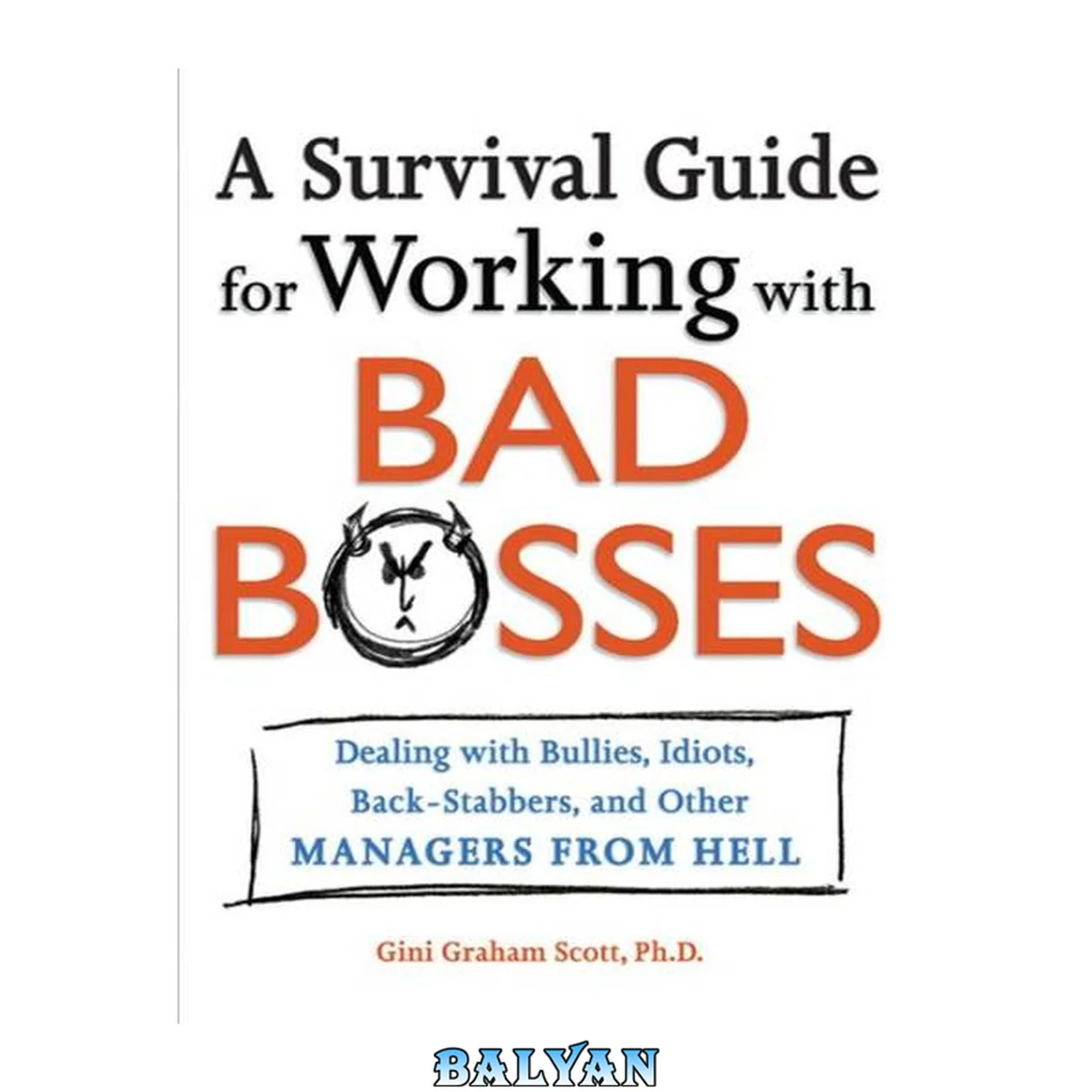
راهنمای بقا برای کار با رؤسای بد: مقابله با زورگویان، احمقها، خنجرزنها و سایر مدیران جهنمی
A Survival Guide for Working with Bad Bosses : Dealing with Bullies, Idiots, Back-stabbers, and Other Managers From Hell
معرفی کتاب «راهنمای بقا برای کار با رؤسای بد: مقابله با زورگویان، احمقها، خنجرزنها و سایر مدیران جهنمی» (با عنوان لاتین A Survival Guide for Working with Bad Bosses : Dealing with Bullies, Idiots, Back-stabbers, and Other Managers From Hell) نوشتهٔ Gini Graham Scott Ph.D.، منتشرشده توسط نشر AMACOM/American Management Association در سال 2005. این کتاب در فرمت pdf، زبان انگلیسی ارائه شده است.
آیا تا به حال برای رئیسی کار کردهاید که روزهای کاری شما را به کابوسی بیپایان تبدیل کند؟ کتاب «راهنمای بقا برای کار با رؤسای بد: مقابله با زورگویان، احمقها، خنجرزنها و سایر مدیران جهنمی» نوشتهٔ جینی گراهام اسکات، راهنمایی است که برای چنین شرایطی طراحی شده و به شما ابزارهای عملی برای نه تنها زنده ماندن، بلکه پیشرفت در چنین محیطهایی را ارائه میدهد.
دربارهٔ کتاب راهنمای بقا برای کار با رؤسای بد: مقابله با زورگویان، احمقها، خنجرزنها و سایر مدیران جهنمی
این کتاب که توسط انتشارات معتبر AMACOM به چاپ رسیده است، یک منبع کاربردی و هوشمندانه برای مقابله با مدیرانی است که میتوانند محیط کار را به جهنم تبدیل کنند. جینی گراهام اسکات با تکیه بر سالها تجربه و تحقیق، طیف وسیعی از انواع «رؤسای بد» را دستهبندی کرده و برای هر کدام راهکارهایی عملی ارائه میدهد. موضوع اصلی کتاب فراتر از شکایت صرف از یک مدیر است و بر ارائهٔ استراتژیهای قدرتمند برای مدیریت روابط با رؤسایی متمرکز است که ممکن است نالایق، خائن، زورگو یا بیکفایت باشند. سبک نگارش کتاب ساده، روان و قابلدسترس است و با ارائهٔ مثالهای واقعی و داستانهای عینی، مفاهیم را برای خواننده ملموس میکند. اسکات با تقسیمبندی کتاب به شش بخش اصلی، هر کدام را به گونهای از مدیران مشکلساز اختصاص داده و در بخش پایانی، یک آزمون خودسنجی برای شناسایی نوع رئیس بد و جمعبندی نهایی قرار داده است. این رویکرد ساختاریافته به خواننده اجازه میدهد تا بدون نیاز به مطالعهٔ کل کتاب، مستقیماً به بخش مرتبط با مشکل خود مراجعه کند.
دربارهٔ نویسنده
جینی گراهام اسکات، دکترای جامعهشناسی خود را از دانشگاه کالیفرنیا در برکلی دریافت کرده و همچنین مدرک حقوقی (J.D.) از دانشکده حقوق دانشگاه سانفرانسیسکو دارد. او بنیانگذار و مدیر شرکتهای Changemakers و Creative Communications & Research است و بیش از ۴۰ کتاب در موضوعات مختلف از جمله روابط کاری، حل تعارض و مسائل اجتماعی تألیف کرده است. اسکات علاوه بر نویسندگی، بهعنوان مشاور در زمینهٔ روابط کسبوکار و حل تعارض فعالیت دارد و ستون هفتگی «درست کار کنید!» را برای روزنامهٔ اوکلند تریبیون و سایر نشریات نوشته است. او همچنین به خاطر آثارش در رسانههای ملی مانند برنامههای «اپرا» و «سیانان» حضور داشته است.
چرا باید راهنمای بقا برای کار با رؤسای بد: مقابله با زورگویان، احمقها، خنجرزنها و سایر مدیران جهنمی را بخوانید؟
شناسایی دقیق انواع رؤسای بد: این کتاب با ارائهٔ یک دستهبندی جامع، از «رئیس کلاهبردار بزرگ» و «رئیس هیچدان» گرفته تا «رئیس کنترلگر» و «مخرب اخلاقی»، به شما کمک میکند تا دقیقاً نوع مدیری که با آن روبرو هستید را تشخیص دهید.
ارائهٔ راهکارهای عملی و گامبهگام: اسکات برای هر نوع مدیر بد، یک سری راهکارهای مشخص و عملی ارائه میدهد. این راهکارها از روشهای مقابله مستقیم تا تاکتیکهای هوشمندانه برای مدیریت موقعیت را شامل میشود.
استفاده از داستانهای واقعی و مثالهای عینی: کتاب با بهرهگیری از روایتهای واقعی کارمندانی که با رؤسای دشوار مواجه بودهاند، درک مفاهیم را برای خواننده آسانتر کرده و او را با موقعیتهای مشابه آشنا میسازد.
ارائهٔ استراتژیهایی فراتر از تحمل صرف: هدف این کتاب تنها آموزش روشهای تحمل یک رئیس بد نیست، بلکه به شما نشان میدهد که چگونه میتوانید در چنین شرایطی نه فقط دوام بیاورید، بلکه به موفقیت شغلی نیز دست پیدا کنید.
منبعی جامع و کاربردی برای تمام سطوح سازمانی: این کتاب برای هر کسی که در یک محیط سازمانی کار میکند - از کارمندان تازهکار تا مدیران میانی - مفید است و بینشهای ارزشمندی دربارهٔ پویاییهای قدرت و روابط انسانی در محل کار ارائه میدهد.
این کتاب برای چه کسانی مناسب است؟
این کتاب بهویژه برای افرادی طراحی شده است که در محیطهای کاری با مدیرانی دشوار، زورگو، بیکفایت یا غیراخلاقی دستوپنجه نرم میکنند و به دنبال راهحلهای عملی برای بهبود شرایط خود هستند. همچنین برای کسانی که تازه وارد بازار کار شدهاند و ممکن است با الگوهای رفتاری جدید و گاه چالشبرانگیز مواجه شوند، منبعی بسیار ارزشمند به شمار میرود. از سوی دیگر، مدیرانی که میخواهند دیدگاه کارمندان خود را نسبت به سبک مدیریتی خود درک کنند و از اشتباهات رایج رؤسای بد دوری نمایند، نیز میتوانند از مطالعهٔ این کتاب بهرهمند شوند. به عبارت دیگر، هر کسی که به دنبال درک بهتر روابط انسانی در محیط کار و ارتقای کیفیت زندگی شغلی خود است، مخاطب اصلی این راهنما خواهد بود.
سوالات متداول
آیا کتاب صرفاً به بیان مشکلات میپردازد یا راهحل ارائه میدهد؟
کتاب «راهنمای بقا برای کار با رؤسای بد» کاملاً بر ارائهٔ راهحلهای عملی و گامبهگام متمرکز است. نویسنده برای هر نوع رئیس بد، سناریوهایی تعریف کرده و پس از تحلیل وضعیت، گزینههای مختلفی را برای مقابله با آن موقعیت پیشنهاد میدهد و در نهایت بهترین رویکرد را توصیه میکند. این کتاب یک راهنمای عملی برای اقدام است، نه صرفاً یک تحلیل از مشکلات.
رویکرد کتاب چگونه به من کمک میکند تا با رئیسم کنار بیایم؟
نویسنده با استفاده از مثالهای عینی و داستانهای واقعی، به شما نشان میدهد که چگونه میتوانید رفتارهای خاص یک رئیس را مدیریت کنید. کتاب تأکید دارد که قبل از هر اقدامی، سناریوهای مختلف را بررسی کنید و رویکردی متعادل و سنجیده در پیش بگیرید. نکتهٔ کلیدی این است که کتاب به شما کمک میکند تا از یک موقعیت انفعالی خارج شده و با درک بهتر از پویاییهای قدرت، راهکارهای مؤثری برای بهبود رابطهٔ کاری خود پیدا کنید.
آیا مطالب کتاب برای کار در سازمانهای بزرگ و پیچیده نیز کاربردی است؟
بله، کتاب به طور خاص به چالشهای کار در سازمانهای بزرگ و بروکراتیک نیز پرداخته است. فصلهایی مانند «رئیس بد در دیوانسالاری بزرگ» و «شکستن دیوار دیوانسالاری» راهکارهایی را برای مدیریت موقعیتهایی ارائه میدهند که در آنها ساختار سازمانی پیچیده، خود به عاملی برای بدتر شدن وضعیت تبدیل میشود. این نشان میدهد که محتوای کتاب برای انواع محیطهای کاری قابل تعمیم است.
I've read many books on management, relationships, and dealing with "challenging people". I certainly respect Gini Scott's approach to this issue. Gini has written a series of fictional accounts involving "stereotypical" bosses. One boss is a pass-the-buck boss. Another boss is scatterbrained. A third boss won't provide backup. For each boss Gini creates an entire story with an employee. The boss is doing X and Y and Z, and what should the employee do? Gini offers a series of responses and suggests the best choice. On one hand this is a great approach for people who like to think very concretely. You hear in great detail about Margie, an employee who had a "psycho hose beast" boss named Veronica. Veronica would call Margie at all hours, even when Margie was sick, even when Margie was on her honeymoon. Margie got tired of this intrusive behavior. Margie considered several options, and then took one. The entire chapter on "intrusive" bosses is focused on this situation between Margie and Veronica. The problem with this approach is that it is FAR too specific. You hear about what Veronica is doing to Margie - but what if your boss isn't that exact same way? You can try to make guesses about how you should react in your situation, but you aren't getting any guidance. You have to extrapolate, on your own, how to make this one-specific-scenario fit your own needs. If you're lucky and your situation does match up, then you're set. If you're less lucky, then you are on your own. There is of course some helpful information in here that you can use when interacting with people of all walks of life, not just bosses. If you have someone who \*should\* have authority but is disinclined to use it (a "no-boss boss") then go ahead and take on the responsibility yourself. Communicate so people know you're there to help, and dive in. If your problem is a scatter-brained boss, work with written lists and send email confirmations. That way you stay clear on what the path is. If your boss isn't providing fair treatment to everyone, document the issues and then ask gently to brainstorm on ways to fix the issue. If your boss nit-picks too much, then develop documented guidelines and agree that things done in this way will be considered acceptable. However, I also find advice in here that I'm less fond of. With clueless bosses, apparently you're supposed to explain to him - when he has a stupid idea - just why it is stupid. I imagine if I went to any boss of mine and told him his idea was stupid (and why) that I would not get a favorable result. In another section a boss is maligned for providing constructive feedback with criticism. Apparently bosses should solely criticize if something is wrong. I feel quite the opposite way. If an employee is heading in the wrong direction, you make sure they realize they're on the wrong path, but you can do it by praising their other talents at the same time. The key is to make it constructive criticism, not a personal attack. In general, I simply find the scenarios far too specific. I enjoy my other books far more, where they talk about types of problem bosses in a more general way, talk about a variety of ways the "bad trait" can happen in a workplace and discuss all of the ways to deal with it. This is a good book to have as part of an overall library on dealing with issues, but I would definitely not start here. I'd read several other books to get a more solid grounding, and then use this as a cute "novelization" style supplement for a few extra tips. Not Fit For Command -- The No-boss Boss -- The Pass-the-buck Boss -- Clueless But Connected -- Scatterboss -- Critically Clueless -- The Dishonest Genius -- That's Unfair! -- On Overload -- Only Good Enough To Train Others -- No Back-up -- No Excuses -- That's Perfect - Not! -- Promises, Promises -- No Trust -- You're Great But -- Power Players -- Just For Sport -- Turning Yeses Into Nos -- The Wolf-in-sheep's-clothing -- Controlling The Control Freak -- Bad Boss In A Big Bureaucracy -- Breaking Through The Bureaucracy -- It Goes With The Territory -- Who's The Boss? -- Out Of Bounds -- Dirty Looks -- A New Boss Is Insulting And Abusive -- Call 911 -- Drunk, Disorderly, And Untouchable -- The Intrusive Boss -- Party Planner -- Cultural Divide -- Ethical Challenges -- Dealing With Danger -- The Cover-up -- It's A Crime! -- Sex And Faxes -- Give In To Collective Denial Or Leave? -- Putting It All Together -- Bad Boss Or Bad Employee? -- How Bad Is Your Boss: A Self-assessment Quiz -- Knowing How To Deal. Gini Graham Scott. Includes Index. This book provides you with savvy, practical advice for coping with managers and supervisors who are mean, incompetent, unethical, and worse. Being saddled with a terrible supervisor can turn even the best job into a nightmare. Unfortunately, not every boss is the great symbol of managerial perfection one would hope for. In fact, more people than not consider themselves stuck with a "bad boss." But short of remaining miserable or quitting a job, what can be done about it? A Survival Guide for Working with Bad Bosses includes powerful strategies for not only working with -- but thriving under -- such bad boss types Whether a boss is high-strung, incompetent, or a power-mad tyrant, A Survival Guide for Working with Bad Bosses has the solution. The sad fact is that the majority of people in the workforce have a less than perfect relationship with their supervisor and many of them consider themselves to be working for "a bad boss". But what can they do about it, short of leaving their job? "A Survival Guide for Working with Bad Bosses" gives readers all the guidance they so desperately need not just to survive, but thrive while reporting to someone incompetent, mean, unethical, or even worse Being saddled with a terrible supervisor can turn even the best job into a nightmare. Unfortunately, not every boss is the great symbol of managerial perfection one would hope for. A Survival Guide for Working with Bad Bosses provides readers with savvy, practical advice for coping with managers and supervisors who are mean, incompetent, unethical, and worse.