زیولیتها و چارچوبهای فلزی-آلی: از آزمایشگاه تا صنعت (پیشرفتهای آتلانتیس در نانوتکنولوژی، علم مواد و فناوریهای انرژی)
Zeolites and Metal-Organic Frameworks: From Lab to Industry (Atlantis Advances in Nanotechnology, Material Science and Energy Technologies)
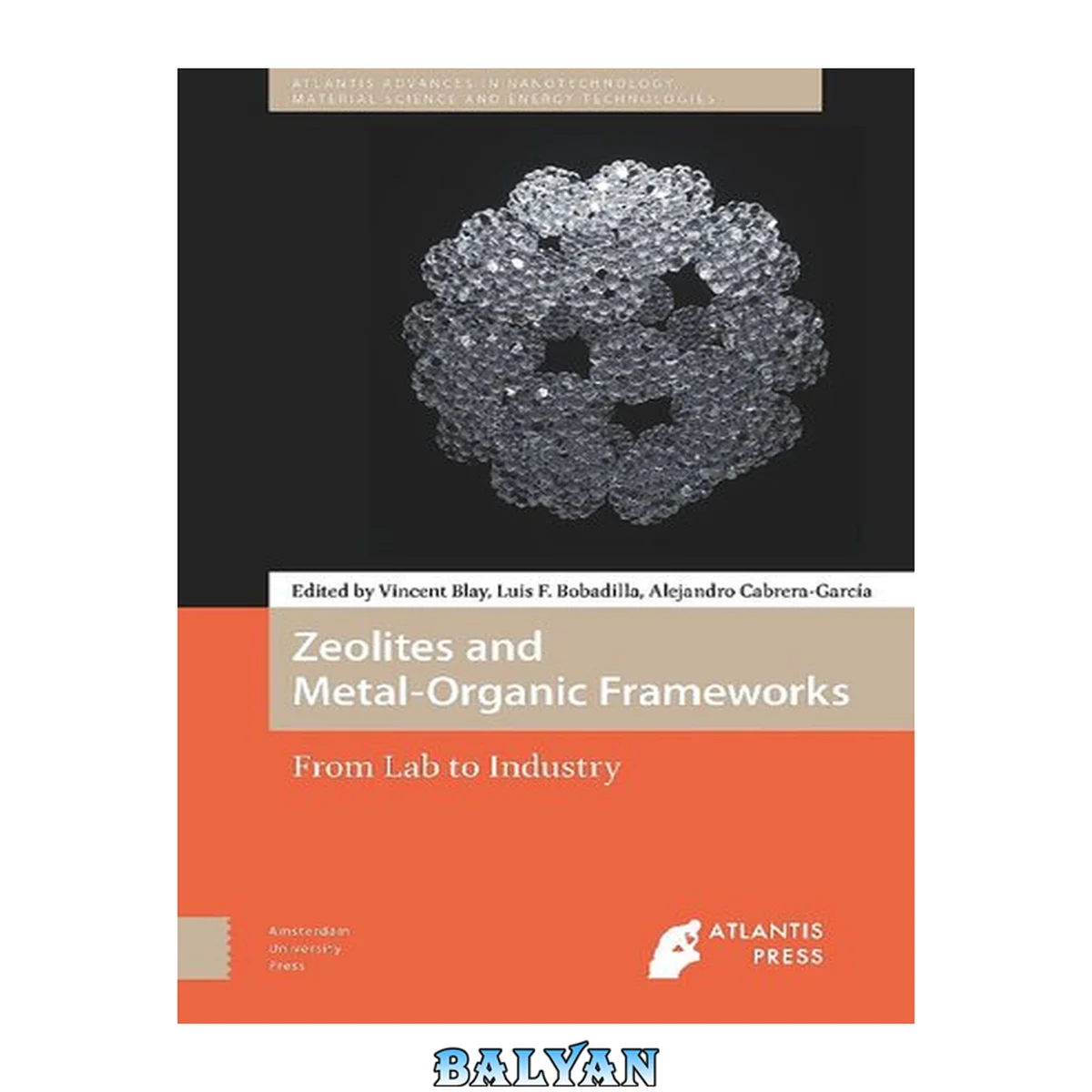
معرفی کتاب «زیولیتها و چارچوبهای فلزی-آلی: از آزمایشگاه تا صنعت (پیشرفتهای آتلانتیس در نانوتکنولوژی، علم مواد و فناوریهای انرژی)» (با عنوان لاتین Zeolites and Metal-Organic Frameworks: From Lab to Industry (Atlantis Advances in Nanotechnology, Material Science and Energy Technologies)) نوشتهٔ Vincent Blay (editor); Luis Francisco Bobadilla (editor); Alejandro Cabrera (editor); Atlantis Press SARL (editor)، منتشرشده توسط نشر Atlantis Press : Amsterdam University Press در سال 2018. این کتاب در فرمت pdf، زبان انگلیسی ارائه شده است.
This book examines Zeolites and Metal-Organic Frameworks. It explains the different synthetic routes available to prepare these materials, and examines how they are used by science and industry. Zeolites are natural or synthetic materials with porous chemical structures that are valuable due to their absorptive and catalytic qualities. Metal-Organic Frameworks (MOFs) are manmade organometallic polymers with similar porous structures. This introductory book, with contributions from top-class researchers from all around the world, examines these materials and explains the different synthetic routes available to prepare zeolites and MOFs. The book also highlights how the substances are similar yet different and how they are used by science and industry in situations ranging from fueling cars to producing drugs. Cover Half Title Atlantis Advances in Nanotechnology, Material Science and Energy Technologies Series Zeolites and Metal-Organic Frameworks: From Lab to Industry Copyright Contents Prologue 1. Zeolites and MOFs? Dare to Know Them! 1. Introduction 2. Zeolites 3. Metal-organic Frameworks 4. Summary and outlook Acknowledgements References 2. Synthesis and Identification Methods for Zeolites and MOFs 1. Introduction 2. Zeolites 2.1. Structure and nomenclature 2.2. Synthesis of zeolites 3. Metal-organic frameworks 3.1. Structure and nomenclature 3.2. Synthesis of MOFs 4. Standard characterization for structure, texture and morphology Powder X-Ray diffraction Adsorption and surface area measurement Electron microscopy 5. Concluding remarks References 3. Spectroscopic Methods of Characterization for Zeolites and MOFs 1. Fundamentals 2. General characterization 2.1. Acidity analysis 2.2. Site accessibility 2.3. Basicity 2.4. Cationic and redox sites 2.5. Quantification of sites: coupling IR spectroscopy with thermogravimetry (TGA) 3. Characterization of zeolites using spectroscopic methods: examples 3.1. Acidity in zeolites 3.2. Basicity in zeolites 3.3. Redox properties: metal cation exchanged zeolites 4. Characterization of MOFs using spectroscopic methods: examples 4.1. Direct IR analysis 4.2. Adsorption of probe molecules 5. Concluding remarks References 4. Oil Refining and Petrochemistry: Use of Zeolites and Opportunities for MOF 1. Introduction 2. Zeolites as adsorbents in the refining and petrochemical industry 2.1. Linear paraffin production 2.2. Xylenes production: m-xylene and p-xylene 2.3. Olefins production 2.4. Liquid and gas purification 3. Zeolites as catalysts in the refining industry 3.1. Fluid catalytic cracking 3.2. Hydrocracking 3.3. Linear paraffin isomerization 3.4. Post-treatment of reformate 3.5. Naphtha post-treatment 3.6. Non-conventional reforming 3.7. Dewaxing and isodewaxing of middle distillates and lubricants 4. Zeolites as catalysts in the petrochemical industry 4.1. Benzene alkylation with light olefins: cumene and ethylbenzene 4.2. Benzene alkylation with heavy olefins: linear alkylbenzene (LAB) 4.3. Xylenes isomerization 4.4. Toluene disproportionation 4.5. Heavy aromatics and toluene transalkylation 5. Zeolites in other processes related to the refining and petrochemical industry 5.1. Conversion of light olefins 5.2. Syngas to fuels through gas to liquids technology (GTL) 5.3. Other processes 6. Perspectives 6.1. The future of the refining and petrochemical industry 6.2. The future of zeolite and MOF materials in refining and petrochemistry References 5. Biomass Transformation into Chemicals Using Zeolites and MOFs 1. Introduction 2. Cellulose transformation into chemicals using zeolites 2.1. Transformation of the primary products of the cellulose fragmentation: sucrose, glucose, fructose, xylose, arabinose, galactose, mannose 2.2. Hydrolytic hydrogenation of glucose to sugar alcohols or hexitols 2.3. Production of HMF, furfural and 2,5-furandicarboxylic acid 2.4. Cellulose to levulinic acid 2.5. Levulinic acid hydrogenation to γ-valerolactone 2.6. Oxidation of glucose to gluconic acid, glucuronic acid, tartaric acid, glycolic acid, and glyceric acid 2.7. Production of lactic acid and methyl lactate 2.8. Aldol condensation of fural aldehydes 3. Lignin valorization 4. Metal-organic frameworks for the upgrading of biomass 4.1. Transformation of cellulose and hemicellulose carbohydrate polymers using MOF catalysts 4.2. Transformation of lignin over MOF catalysts 5. Concluding remarks Acknowledgments References 6. Biocatalysis on Porous Materials 1. Introduction 2. Zeolites versus Ordered Mesoporous Materials 3. Hydrophobic porous supports for lipase immobilization 4. Amino-functionalized porous supports for laccase immobilization 5. MOF as platforms to support enzymes 6. How do regular structures improve catalytic properties? References 7. Adsorption Processes on Zeolites and Metal-Organic Frameworks for Industrial and Environmental Applications 1. Introduction 2. Principles of adsorption processes Isosteric method Chromatographic methods 3. Strategies to enhance adsorption processes Modification of secondary building units (SBUs) Formation of defects Ion exchange 4. Gas adsorption on zeolites and metal-organic frameworks 4.1. Applications in energy 4.2. Environmental remediation 4.3. Other applications for gas adsorption 5. Adsorption of molecules of environmental interest in solution Removal of heavy metals and ionic species Removal of radionuclides and fission products Removal of dyes from the textile industry Removal of pharmaceuticals and personal care products 6. Conclusion References 8. Membrane Technology: how, where, and why 1. Introduction 2. How to prepare zeolite and MOF membranes 2.1. The variety of zeolite and MOF membranes 2.2. Material and shape of membrane supports 2.3. Membrane preparation procedure 2.4. Seeding techniques 2.5. Role of seed crystals in the growth step 2.6. Scale-up of the membrane preparation method 3. Where are membranes used? 3.1. Gas separation 3.2. Dehydration of organic solvents 3.3. Hydrocarbon separation 3.4. Food manufacturing 4. Why do nanoporous crystal membranes separate mixtures? 4.1. Molecular sieving 4.2. Selective permeation because of affinity 4.3. Evaluation method for inter-crystalline pathways in a membrane 4.4. Membrane reactors 5. Summary References 9. Computational Chemistry Experiment Possibilities 1. Introduction 2. Energy calculations Force fields Density Functional Theory ‘Partial’ solutions 3. The Potential Energy Surface (PES) 4. Molecular Dynamics Diffusion of guest molecules IR spectra 5. Monte Carlo methods 6. Models Cluster models Periodic models 7. Electronic structure of porous frameworks 8. Practical investigations of porous frameworks using DFT Example 1: CO2 hydrogenation on Ir4/FAU system Example 2: Electronic structure of breathing MOFs Electronic structure: from spin coupling to splitting orbitals Example 3: Separation of CO2 and CH4 in UIO-66 References Notes 10. Zeolites and Metal-Organic Frameworks as Biomedical Nanodevices 1. From nanotechnology to biomedicine 2. Zeolites and MOFs as drug delivery devices 3. Zeolites and metal-organic frameworks in other biomedical modalities 4. Zeolites and MOFs as multifunctional biomedical devices Combination Therapy Multimodal Diagnostic Imaging Theranostic Nanoplatforms Stimuli-Responsive Systems for Drug Delivery 5. Remarks on the Future Acknowledgments References 11. Zeolites and MOFs as Catalysts in Fine Chemical Reactions 1. Introduction 2. MOFs and zeolites in acid catalysed reactions 3. MOFs and zeolites in base catalyzed reactions 4. MOFs and zeolites in oxidation reactions 5. MOFs and zeolites in reduction reactions 6. Conclusions and outlook References 12. The Future of Zeolite and MOF Materials 1. Introduction 2. Zeolites and zeolite-type materials as adsorbents and ion exchangers 2.1. Traditional use of zeolites as adsorbents and/or ion exchangers 2.2. Novel applications of zeolites as adsorbents and ion exchangers 2.3. The future of zeolites as adsorbents 3. Zeolites as catalysts 3.1. Cracking catalysts 3.2. Hydrocracking/hydroisomerization catalysts 4. Metal-Organic Frameworks 4.1. From modular chemistry to magic number ratios 4.2. Expanding the MOFs Family: MOF composites and MOF derivatives 4.3. MOF devices & applications: the MOF-based technology 5. Zeolites and MOFs: from lab to industry References "Zeolites are natural or synthetic materials with porous chemical structures that are valuable due to their absorptive and catalytic qualities. Metal-Organic Frameworks (MOFs) are manmade organometallic polymers with similar porous structures. This introductory book, with contributions from top-class researchers from all around the world, examines these materials and explains the different synthetic routes available to prepare zeolites and MOFs. The book also highlights how the substances are similar yet different and how they are used by science and industry in situations ranging from fueling cars to producing drugs."--Provided by publisher
دانلود کتاب زیولیتها و چارچوبهای فلزی-آلی: از آزمایشگاه تا صنعت (پیشرفتهای آتلانتیس در نانوتکنولوژی، علم مواد و فناوریهای انرژی)