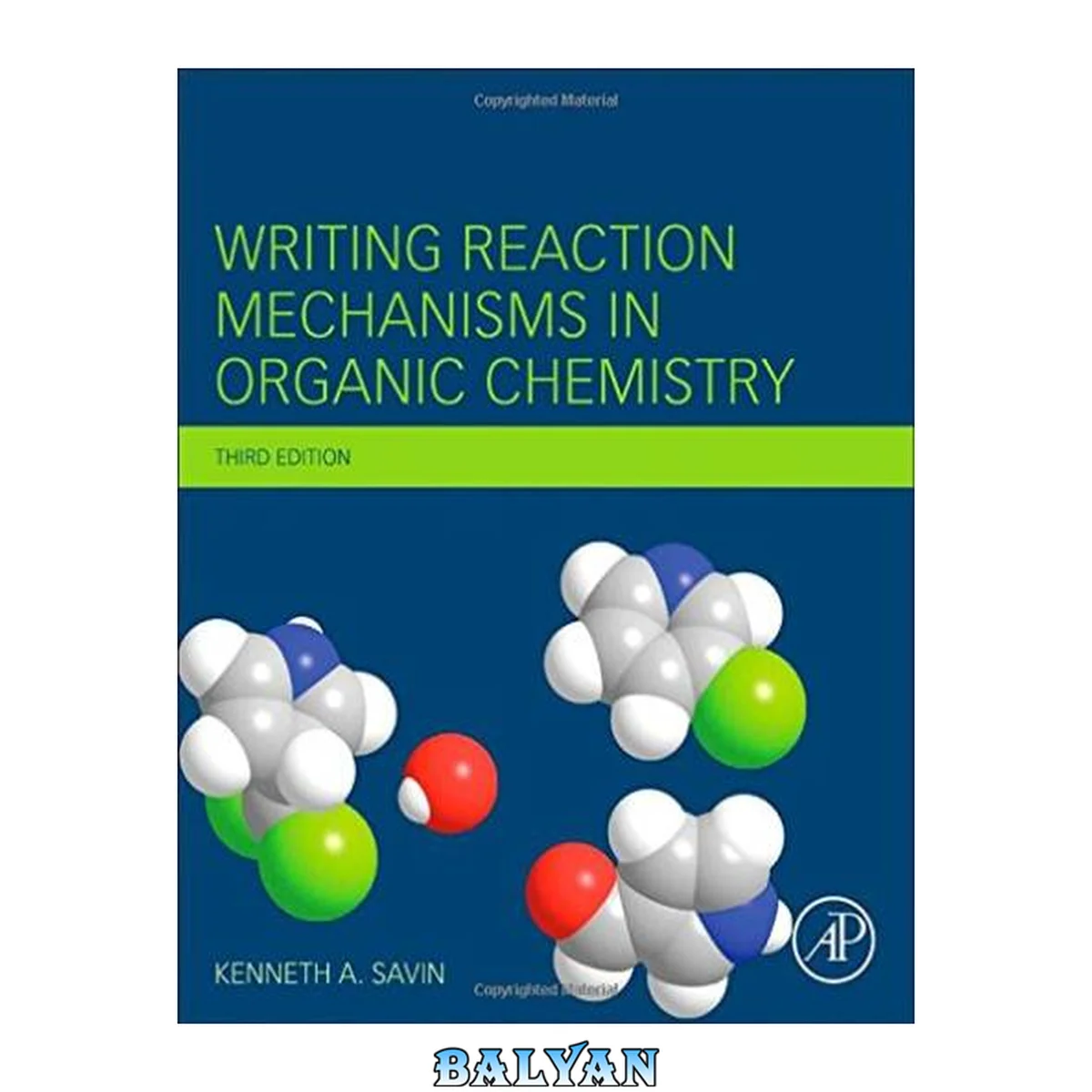
معرفی کتاب «Writing Reaction Mechanisms in Organic Chemistry, Third Edition» نوشتهٔ Greg Attwood، Ian Bettison، Alan Clegg، Gill Dyer، Jane Dyer، Keith Gallick و Kenneth A Savin; Elsevier، منتشرشده توسط نشر Academic Press در سال 2014. این کتاب در فرمت pdf، زبان انگلیسی ارائه شده است.
Writing Reaction Mechanisms in Organic Chemistry, Third Edition is an invaluable guide to understanding the movements of atoms and electrons in the reactions of organic molecules. Expanding on the successful book by Miller and Solomon, this new edition further enhances your understanding of reactions. The whole book has been extensively revised with new material including a completely new chapter. To further aid understanding, all illustrations have been redrawn with the use of color to clearly indicate how each reaction works. This book illustrates that understanding organic reactions is based on applying general principles rather than memorizing unrelated processes. This approach helps you understand that writing mechanisms is a practical method of applying knowledge of previously encountered reactions and reaction conditions to new reactions. After simply explaining basic principles, this book then examines each type of reaction. A clear background and explanation is provided for each reaction, followed by an example of the reaction in use. At the end of each section is a series of problems, with a wider range of challenging questions, to test your understanding of the mechanism, with answers to check that you are right. Students and research chemists alike will find this revised book useful to organize what may seem an overwhelming quantity of information into a set of simple general principles and guidelines for determining and describing organic reaction mechanisms. Extensively rewritten and reorganized with a completely new chapter on oxidation and reduction reactions including stereochemical reactions Essential for those who need to have mechanisms explained in greater detail than most organic chemistry textbooks provide Now illustrated with hundreds of colorful chemical structures to help you understand reaction processes more easily New and extended problem sets and answers to help you understand the general principles and how to apply this to real applications New information boxes throughout the text to provide useful background to reactions and the people behind the discovery of a reaction
Writing Reaction Mechanisms in Organic Chemistry, Third Edition is an invaluable guide to understanding the movements of atoms and electrons in the reactions of organic molecules. Expanding on the successful book by Miller and Solomon, this new edition further enhances your understanding of reactions. The whole book has been extensively revised with new material including a completely new chapter. To further aid understanding, all illustrations have been redrawn with the use of color to clearly indicate how each reaction works. This book illustrates that understanding organic reactions is based on applying general principles rather than memorizing unrelated processes. This approach helps you understand that writing mechanisms is a practical method of applying knowledge of previously encountered reactions and reaction conditions to new reactions. After simply explaining basic principles, this book then examines each type of reaction. A clear background and explanation is provided for each reaction, followed by an example of the reaction in use. At the end of each section is a series of problems, with a wider range of challenging questions, to test your understanding of the mechanism, with answers to check that you are right. Students and research chemists alike will find this revised book useful to organize what may seem an overwhelming quantity of information into a set of simple general principles and guidelines for determining and describing organic reaction mechanisms.
- Extensively rewritten and reorganized with a completely new chapter on oxidation and reduction reactions including stereochemical reactions
- Essential for those who need to have mechanisms explained in greater detail than most organic chemistry textbooks provide
- Now illustrated with hundreds of colorful chemical structures to help you understand reaction processes more easily
- New and extended problem sets and answers to help you understand the general principles and how to apply this to real applications
- New information boxes throughout the text to provide useful background to reactions and the people behind the discovery of a reaction
Writing Reaction Mechanisms in Organic Chemistry, Third Edition, is a guide to understanding the movements of atoms and electrons in the reactions of organic molecules. Expanding on the successful book by Miller and Solomon, this new edition further enhances your understanding of reaction mechanisms in organic chemistry and shows that writing mechanisms is a practical method of applying knowledge of previously encountered reactions and reaction conditions to new reactions. The book has been extensively revised with new material including a completely new chapter on oxidation and reduction reactions including stereochemical reactions. It is also now illustrated with hundreds of colorful chemical structures to help you understand reaction processes more easily. The book also features new and extended problem sets and answers to help you understand the general principles and how to apply these to real applications. In addition, there are new information boxes throughout the text to provide useful background to reactions and the people behind the discovery of a reaction. This new edition will be of interest to students and research chemists who want to learn how to organize what may seem an overwhelming quantity of information into a set of simple general principles and guidelines for determining and describing organic reaction mechanisms. Extensively rewritten and reorganized with a completely new chapter on oxidation and reduction reactions including stereochemical reactions Essential for those who need to have mechanisms explained in greater detail than most organic chemistry textbooks provide Now illustrated with hundreds of colorful chemical structures to help you understand reaction processes more easily New and extended problem sets and answers to help you understand the general principles and how to apply this to real applications New information boxes throughout the text to provide useful background to reactions and the people behind the discovery of a reaction __**Writing Reaction Mechanisms in Organic Chemistry, Third Edition**__is an invaluable guide to understanding the movements of atoms and electrons in the reactions of organic molecules. Expanding on the successful book by Miller and Solomon, this new edition further enhances your understanding of reactions. The whole book has been extensively revised with new material including a completely new chapter. To further aid understanding, all illustrations have been redrawn with the use of color to clearly indicate how each reaction works. This book illustrates that understanding organic reactions is based on applying general principles rather than memorizing unrelated processes. This approach helps you understand that writing mechanisms is a practical method of applying knowledge of previously encountered reactions and reaction conditions to new reactions. After simply explaining basic principles, this book then examines each type of reaction. A clear background and explanation is provided for each reaction, followed by an example of the reaction in use. At the end of each section is a series of problems, with a wider range of challenging questions, to test your understanding of the mechanism, with answers to check that you are right. Students and research chemists alike will find this revised book useful to organize what may seem an overwhelming quantity of information into a set of simple general principles and guidelines for determining and describing organic reaction mechanisms. Content: Front Matter, Page iii Copyright, Page iv Acknowledgments for the Third Edition, Page vii Chapter 1 - Introduction—Molecular Structure and Reactivity, Pages 1-53 Chapter 2 - General Principles for Writing Reaction Mechanisms, Pages 55-92 Chapter 3 - Reactions of Nucleophiles and Bases, Pages 93-159 Chapter 4 - Reactions Involving Acids and Other Electrophiles, Pages 161-235 Chapter 5 - Radicals and Radical Anions, Pages 237-292 Chapter 6 - Pericyclic Reactions, Pages 293-353 Chapter 7 - Oxidations and Reductions, Pages 355-431 Chapter 8 - Additional Problems, Pages 433-480 Appendix A - Lewis Structures of Common Functional Groups, Pages 481-482 Appendix B - Symbols and Abbreviations Used in Chemical Notation, Pages 483-484 Appendix C - Relative Acidities of Common Organic and Inorganic Substancesa, Pages 485-491 Index, Pages 493-502 "This book illustrates that understanding organic reactions is based on applying general principles rather than memorizing unrelated processes. This approach helps you understand that writing mechanisms is a practical method of applying knowledge of previously encountered reactions and reaction conditions to new reactions. After explaining basic principles, this book then examines a series of examples representing a broad series of reaction types. A clear background and explanation is provided for the reactions, as well as an illustration of the reaction use and its mechanism."-- from the publisher