Women in Ancient Egypt : Revisiting Power, Agency, and Autonomy
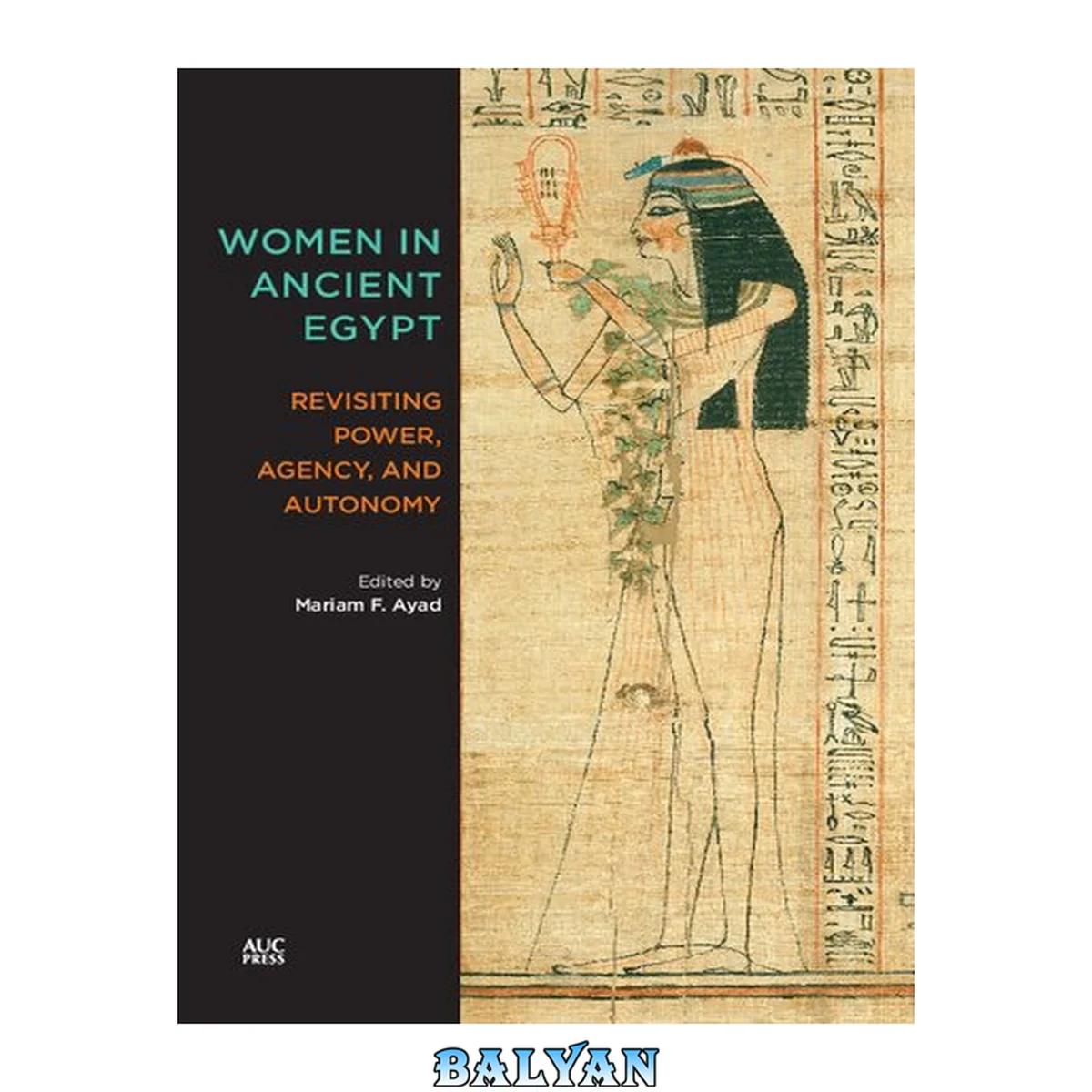
معرفی کتاب «Women in Ancient Egypt : Revisiting Power, Agency, and Autonomy» نوشتهٔ Doe، Anna B و Mariam F. Ayad;، منتشرشده توسط نشر American University in Cairo Press; The American University in Cairo Press در سال 2022. این کتاب در فرمت pdf، زبان انگلیسی ارائه شده است.
Cutting-edge research by twenty-four international scholars on female power, agency, health, and literacy in ancient Egypt There has been considerable scholarship in the last fifty years on the role of ancient Egyptian women in society. With their ability to work outside the home, inherit and dispense of property, initiate divorce, testify in court, and serve in local government, Egyptian women exercised more legal rights and economic independence than their counterparts throughout antiquity. Yet, their agency and autonomy are often downplayed, undermined, or outright ignored. In Women in Ancient Egypt twenty-four international scholars offer a corrective to this view by presenting the latest cutting-edge research on women and gender in ancient Egypt. Covering the entirety of Egyptian history, from earliest times to Late Antiquity, this volume commences with a thorough study of the earliest written evidence of Egyptian women, both royal and non-royal, before moving on to chapters that deal with various aspects of Egyptian queens, followed by studies on the legal status and economic roles of non-royal women and, finally, on women’s health and body adornment. Within this sweeping chronological range, each study is intensely focused on the evidence recovered from a particular site or a specific time-period. Rather than following a strictly chronological arrangement, the thematic organization of chapters enables readers to discern diachronic patterns of continuity and change within each group of women. · Clémentine Audouit , Paul Valery University, Montpellier, France · Anne Austin , University of Missouri, St. Louis, Missouri, USA · Mariam Ayad , The American University in Cairo, Cairo, Egypt · Romane Betbeze , Université de Genève, Switzerland, and Ecole Pratique des Hautes Etudes, PSL, France · Anke Ilona Blöbaum , Saxon Academy of Sciences and Humanities in Leipzig, Leipzig, Germany · Eva-Maria Engel , Humboldt-Universität zu Berlin, Berlin, Germany · Renate Fellinger , University of Cambridge, Cambridge, UK · Kathrin Gabler, University of Basel, Basel, Switzerland · Rahel Glanzmann , independent scholar, Basel, Switzerland. · Izold Guegan, Swansea University, UK, and Sorbonne University, Paris, France · Fayza Haikal , The American University in Cairo, Cairo, Egypt · Janet H. Johnson , Oriental Institute, University of Chicago, Chicago, Il, USA · Katarzyna Kapiec, Institute of the Mediterranean and Oriental Cultures of the Polish Academy of Sciences, Warsaw, Poland · Susan Anne Kelly , Macquarie University Sydney, Sydney, Australia · AnneMarie Luijendijk , Princeton University, Princeton, New Jersey, USA · Suzanne Onstine , University of Memphis, Memphis, Tennessee, USA · José Ramón Pérez-Accino Picatoste, Facultad de Geografía e Historia, Universidad Complutense de Madrid, Madrid, Spain · Tara Sewell-Lasater, University of Houston, Houston, Texas, USA · Yasmin El Shazly , American Research Center in Egypt, Cairo, Egypt · Reinert Skumsnes , Centre for Gender Research, University of Oslo, Oslo, Norway · Isabel Stünkel , The Metropolitan Museum of Art, New York, New York, USA · Inmaculada Vivas Sainz , National Distance Education University), Madrid, Spain · Hana Vymazalová , Czech Institute of Egyptology, Faculty of Arts, Charles University, Prague, Czeck Republic · Jacquelyn Williamson , George Mason University, Fairfax, Viriginia, USA · Annik Wüthrich , Austrian Academy of Sciences, Austrian Archaeological Institute, Vienna, Austria Cutting-edge research by twenty-four international scholars on female power, agency, health, and literacy in ancient Egypt There has been considerable scholarship in the last fifty years on the role of ancient Egyptian women in society. With their ability to work outside the home, inherit and dispense of property, initiate divorce, testify in court, and serve in local government, Egyptian women exercised more legal rights and economic independence than their counterparts throughout antiquity. Yet, their agency and autonomy are often downplayed, undermined, or outright ignored. In Women in Ancient Egypt twenty-four international scholars offer a corrective to this view by presenting the latest cutting-edge research on women and gender in ancient Egypt. Covering the entirety of Egyptian history, from earliest times to Late Antiquity, this volume commences with a thorough study of the earliest written evidence of Egyptian women, both royal and non-royal, before moving on to chapters that deal with various aspects of Egyptian queens, followed by studies on the legal status and economic roles of non-royal women and, finally, on women's health and body adornment. Within this sweeping chronological range, each study is intensely focused on the evidence recovered from a particular site or a specific time-period. Rather than following a strictly chronological arrangement, the thematic organization of chapters enables readers to discern diachronic patterns of continuity and change within each group of women. · Clémentine Audouit , Paul Valery University, Montpellier, France · Anne Austin , University of Missouri, St. Louis, Missouri, USA · Mariam F. Ayad , The American University in Cairo, Cairo, Egypt · Romane Betbeze , Université de Genève, Switzerland, and Ecole Pratique des Hautes Etudes, PSL, France · Anke Ilona Blöbaum , Saxon Academy of Sciences and Humanities in Leipzig, Leipzig, Germany · Eva-Maria Engel , Humboldt-Universität zu Berlin, Berlin, Germany · Renate Fellinger , University of Cambridge, Cambridge, UK · Kathrin Gabler, University of Basel, Basel, Switzerland · Rahel Glanzmann , independent scholar, Basel, Switzerland. · Izold Guegan, Swansea University, UK, and Sorbonne University, Paris, France · Fayza Haikal , The American University in Cairo, Cairo, Egypt · Janet H. Johnson , Oriental Institute, University of Chicago, Chicago, Il, USA · Katarzyna Kapiec, Institute of the Mediterranean and Oriental Cultures of the Polish Academy of Sciences, Warsaw, Poland · Susan Anne Kelly , Macquarie University Sydney, Sydney, Australia · AnneMarie Luijendijk , Princeton University, Princeton, New Jersey, USA · Suzanne Onstine , University of Memphis, Memphis, Tennessee, USA · José Ramón Pérez-Accino Picatoste, Facultad de Geografía e Historia, Universidad Complutense de Madrid, Madrid, Spain · Tara Sewell-Lasater, University of Houston, Houston, Texas, USA · Yasmin El Shazly , American Research Center in Egypt, Cairo, Egypt · Reinert Skumsnes , Centre for Gender Research, University of Oslo, Oslo, Norway · Isabel Stünkel , The Metropolitan Museum of Art, New York, New York, USA · Inmaculada Vivas Sainz , National Distance Education University), Madrid, Spain · Hana Vymazalová , Czech Institute of Egyptology, Faculty of Arts, Charles University, Prague, Czeck Republic · Jacquelyn Williamson , George Mason University, Fairfax, Viriginia, USA · Annik Wüthrich , Austrian Academy of Sciences, Austrian Archaeological Institute,... Cutting-edge research by twenty-four international scholars on female power, agency, health, and literacy in ancient EgyptThere has been considerable scholarship in the last fifty years on the role of ancient Egyptian women in society. With their ability to work outside the home, inherit and dispense of property, initiate divorce, testify in court, and serve in local government, Egyptian women exercised more legal rights and economic independence than their counterparts throughout antiquity. Yet, their agency and autonomy are often downplayed, undermined, or outright ignored. In Women in Ancient Egypt twenty-four international scholars offer a corrective to this view by presenting the latest cutting-edge research on women and gender in ancient Egypt.Covering the entirety of Egyptian history, from earliest times to Late Antiquity, this volume commences with a thorough study of the earliest written evidence of Egyptian women, both royal and non-royal, before moving on to chapters that deal with various aspects of Egyptian queens, followed by studies on the legal status and economic roles of non-royal women and, finally, on women's health and body adornment. Within this sweeping chronological range, each study is intensely focused on the evidence recovered from a particular site or a specific time-period. Rather than following a strictly chronological arrangement, the thematic organization of chapters enables readers to discern diachronic patterns of continuity and change within each group of women.· Clémentine Audouit, Paul Valery University, Montpellier, France· Anne Austin, University of Missouri, St. Louis, Missouri, USA· Mariam F. Ayad, The American University in Cairo, Cairo, Egypt· Romane Betbeze, Université de Genève, Switzerland, and Ecole Pratique des Hautes Etudes, PSL, France· Anke Ilona Blöbaum, Saxon Academy of Sciences and Humanities in Leipzig, Leipzig, Germany· Eva-Maria Engel, Humboldt-Universität zu Berlin, Berlin, Germany· Renate Fellinger, University of Cambridge, Cambridge, UK· Kathrin Gabler, University of Basel, Basel, Switzerland· Rahel Glanzmann, independent scholar, Basel, Switzerland. · Izold Guegan, Swansea University, UK, and Sorbonne University, Paris, France· Fayza Haikal, The American University in Cairo, Cairo, Egypt· Janet H. Johnson, Oriental Institute, University of Chicago, Chicago, Il, USA· Katarzyna Kapiec, Institute of the Mediterranean and Oriental Cultures of the Polish Academy of Sciences, Warsaw, Poland· Susan Anne Kelly, Macquarie University Sydney, Sydney, Australia· AnneMarie Luijendijk, Princeton University, Princeton, New Jersey, USA· Suzanne Onstine, University of Memphis, Memphis, Tennessee, USA· José Ramón Pérez-Accino Picatoste, Facultad de Geografía e Historia, Universidad Complutense de Madrid, Madrid, Spain· Tara Sewell-Lasater, University of Houston, Houston, Texas, USA· Yasmin El Shazly, American Research Center in Egypt, Cairo, Egypt· Reinert Skumsnes, Centre for Gender Research, University of Oslo, Oslo, Norway· Isabel Stünkel, The Metropolitan Museum of Art, New York, New York, USA· Inmaculada Vivas Sainz, National Distance Education University), Madrid, Spain· Hana Vymazalová, Czech Institute of Egyptology, Faculty of Arts, Charles University, Prague, Czeck Republic· Jacquelyn Williamson, George Mason University, Fairfax, Viriginia, USA· Annik Wüthrich, Austrian Academy of Sciences, Austrian Archaeological Institute, Vienna, Austria Cutting-edge research by twenty-four international scholars on female power, agency, health, and literacy in ancient Egypt There has been considerable scholarship in the last fifty years on the role of ancient Egyptian women in society. With their ability to work outside the home, inherit and dispense of property, initiate divorce, testify in court, and serve in local government, Egyptian women exercised more legal rights and economic independence than their counterparts throughout antiquity. Yet, their agency and autonomy are often downplayed, undermined, or outright ignored. In Women in Ancient Egypt twenty-four international scholars offer a corrective to this view by presenting the latest cutting-edge research on women and gender in ancient Egypt. Covering the entirety of Egyptian history, from earliest times to Late Antiquity, this volume commences with a thorough study of the earliest written evidence of Egyptian women, both royal and non-royal, before moving on to chapters that deal with various aspects of Egyptian queens, followed by studies on the legal status and economic roles of non-royal women and, finally, on womens health and body adornment. Within this sweeping chronological range, each study is intensely focused on the evidence recovered from a particular site or a specific time-period. Rather than following a strictly chronological arrangement, the thematic organization of chapters enables readers to discern diachronic patterns of continuity and change within each group of women. Clmentine Audouit, Paul Valery University, Montpellier, France Anne Austin, University of Missouri, St. Louis, Missouri, USA Mariam F. Ayad, The American University in Cairo, Cairo, Egypt Romane Betbeze, Universit de Genve, Switzerland, and Ecole Pratique des Hautes Etudes, PSL, France Anke Ilona Blbaum, Saxon Academy of Sciences and Humanities in Leipzig, Leipzig, Germany Eva-Maria Engel, Humboldt-Universitt zu Berlin, Berlin, Germany Renate Fellinger, University of Cambridge, Cambridge, UK Kathrin Gabler, University of Basel, Basel, Switzerland Rahel Glanzmann, independent scholar, Basel, Switzerland. Izold Guegan, Swansea University, UK, and Sorbonne University, Paris, France Fayza Haikal, The American University in Cairo, Cairo, Egypt Janet H. Johnson, Oriental Institute, University of Chicago, Chicago, Il, USA Katarzyna Kapiec, Institute of the Mediterranean and Oriental Cultures of the Polish Academy of Sciences, Warsaw, Poland Susan Anne Kelly, Macquarie University Sydney, Sydney, Australia AnneMarie Luijendijk, Princeton University, Princeton, New Jersey, USA Suzanne Onstine, University of Memphis, Memphis, Tennessee, USA Jos Ramn Prez-Accino Picatoste, Facultad de Geografa e Historia, Universidad Complutense de Madrid, Madrid, Spain Tara Sewell-Lasater, University of Houston, Houston, Texas, USA Yasmin El Shazly, American Research Center in Egypt, Cairo, Egypt Reinert Skumsnes, Centre for Gender Research, University of Oslo, Oslo, Norway Isabel Stnkel, The Metropolitan Museum of Art, New York, New York, USA Inmaculada Vivas Sainz, National Distance Education University), Madrid, Spain Hana Vymazalov, Czech Institute of Egyptology, Faculty of Arts, Charles University, Prague, Czeck Republic Jacquelyn Williamson, George Mason University, Fairfax, Viriginia, USA Annik Wthrich, Austrian Academy of Sciences, Austrian Archaeological Institute, Vienna, Austria Foreword : women in ancient Egypt : current research & historical trends /Fayza Haikal --Moving beyond gender bias /Miriam F. Ayad --The earliest evidence.Early Dynastic women : the written evidence /Eva-Maria Engel --Royal women : expressions of power & influence.Setibhor : soliving the puzzle of Djedkare's queen / Hana Vymazalová --Elevated or diminished? : questions regarding Middle Kingdom royal women /Isabel Stünkel --Egyptianizing female sphinxes in the Mediterranean during the Middle Bronze Age /Yasmin El-Shazly --An intriguing feminine figure in the Royal Cachette Wadi : new findings from C2 Project /Inmaculada Vivas Sainz and José Ramón Pérez-Accino Picatoste --The role of Amunet during the reign of Hatshepsut /Katarzyna Kapiec --Violence and piety in context : the example of Nefertiti /Jacquelyn Williamson --Arsinoe II and Berenike II : Ptolemaic vanguards of queenly political power /Tara Sewell-Lasater
دانلود کتاب Women in Ancient Egypt : Revisiting Power, Agency, and Autonomy