ویلیام مککینلی، پیامآور حمایتگرایی
William McKinley, Apostle of Protectionism
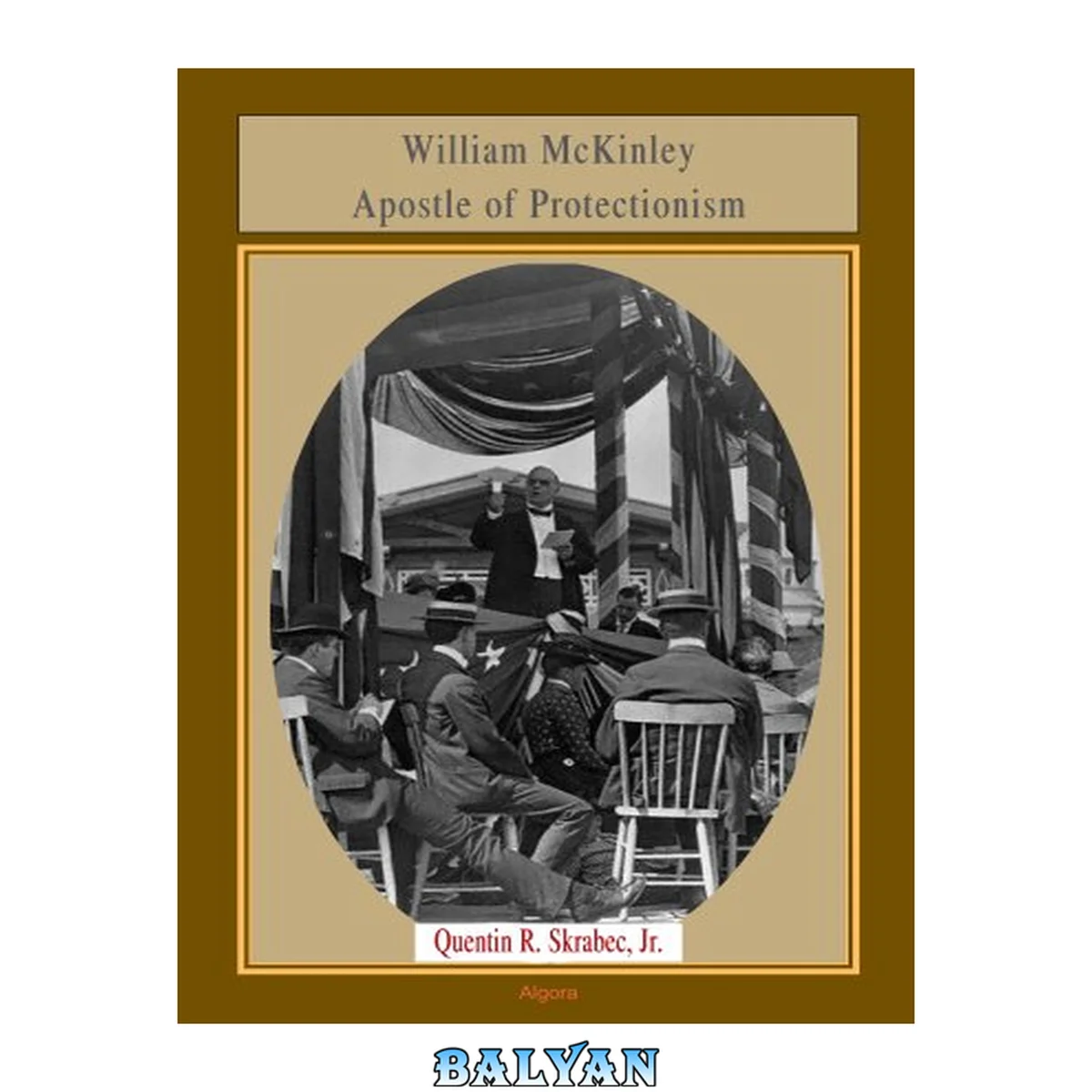
معرفی کتاب «ویلیام مککینلی، پیامآور حمایتگرایی» (با عنوان لاتین William McKinley, Apostle of Protectionism) نوشتهٔ Quentin R. Skrabec, Jr.، منتشرشده توسط نشر Algora Publishing در سال 2007. این کتاب در فرمت pdf، زبان انگلیسی ارائه شده است.
This biography, focused on McKinley's unusual view of protectionism, a labor-business alliance, and American exceptionalism, offers striking parallels to today as the US struggles to define its international role and to determine the best blend of free trade, protectionism, and immigration. William McKinley was the first US president to address globalization; his legacy in protectionism and immigrant labor offer lessons for the current era. He orchestrated an alliance between big business and the American worker that ushered in one of the greatest periods of growth ever known in the US economy. Yet McKinley has been in the shadow of his successor Theodore Roosevelt for over a hundred years. As Chairman of the Ways and Means Committee, McKinley had forged a tariff bill in 1888 that united a nation that was still divided between North and South, East and West. His continued efforts to support free trade, protected by managed markets in the tradition of Henry Clay, and worker benefits like those provide by George Westinghouse, led to a great economic compromise. Further, with revolutionary, visionary rhetoric laden with America's economic manifest destiny he appealed to everyone from the steelworkers of Pittsburgh to the New York bankers. He articulated a uniting Free trade in the United States is founded upon a community of equalities and reciprocities...[F]ree foreign trade admits the foreigner to equal privileges with our citizens. It invites the product of foreign cheap labor to this market in competition with the domestic, representing better paid labor [albeit with tariffs to protect that domestic product]. McKinley's vision built the industrial base of the nation. By the end of his presidency the American steel, glass, rubber, oil, machinery and electrical appliance industries dominated the world. He was one of America's most popular presidents. As his funeral train crossed the nation in 1901, factory workers and captains of industry alike stood along the rails to mourn him. Never since has such a political alliance between labor and management been forged. He was the last president to build a voting alliance between laborers, immigrant workers, and capitalists. That alliance was marred by famous labor strikes and the building of great trusts, yet he still managed to sweep the labor votes in the great industrial centers due to his belief in reciprocity and protectionism. McKinley's role as a dinner pail Republican offers insights into how America can approach today's globalization with the best interests of the home team in mind. William McKinley was the first U.S. president to address globalization; his legacy in protectionism and immigrant labor offer lessons for the current era. He orchestrated an alliance between big business and the American worker that ushered in one of the greatest periods of growth ever known in the U.S. economy. Yet McKinley has been in the shadow of his successor Theodore Roosevelt for over a hundred years. As Chairman of the Ways and Means Committee, McKinley had forged a tariff bill in 1888 that united a nation that was still divided between North and South, East and West. His continued efforts to support free trade, protected by managed markets in the tradition of Henry Clay, and worker benefits like those provide by George Westinghouse, led to a great economic compromise. Further, with revolutionary, visionary rhetoric laden with America's economic manifest destiny he appealed to everyone from the steelworkers of Pittsburgh to the New York bankers. He articulated a uniting philosophy: Free trade in the United States is founded upon a community of equalities and reciprocities. [F]ree foreign trade admits the foreigner to equal privileges with our citizens. It invites the product of foreign cheap labor to this market in competition with the domestic, representing better paid labor [albeit with tariffs to protect that domestic product]. McKinley's vision built the industrial base of the nation. By the end of his presidency the American steel, glass, rubber, oil, machinery and electrical appliance industries dominated the world. He was one of America's most popular presidents. As his funeral train crossed the nation in 1901, factory workers and captains of industry alike stood along the rails to mourn him. Never since has such a political alliance between labor and management been forged. He was the last president to build a voting alliance between laborers, immigrant workers, and capitalists. That alliance was marred by famous labor strikes and the building of great trusts, yet he still managed to sweep the labor votes in the great industrial centers due to his belief in reciprocity and protectionism. McKinley's role as a dinner pail Republican offers insights into how America can approach today's globalization with the best interests of the home team in mind Prologue -- Legacy Of Henry Clay's American System -- The Formative Years In An Industrial Family -- Major Mckinley And War Logistics -- Canton Lawyer -- Congressman Mckinley -- The Napoleon Of Protection-the Mckinley Tariff Bill Of 1890 -- Governor Mckinley -- The World Turned Upside Down-the Cleveland Administration -- Pre-presidential Campaign -- The Campaign Of 1896 -- President Mckinley -- The Last Term And A New Vision -- A Tale Of Two Cities : Socialism And Capitalism -- Dinner-pail Republicanism-mckinley's Industrial Legacy -- Mckinley's Labor Alliance-the People's Legacy -- A New Middle Class And The American System -- Mckinley, Capitalism, And Trusts -- Mckinley's Place In History. Quentin R. Skrabec, Jr. Includes Bibliographical References (p. 261-264) And Index. Preliminaries......Page 2 Table of Contents......Page 10 Introduction......Page 12 Index......Page 0
دانلود کتاب ویلیام مککینلی، پیامآور حمایتگرایی