Uterine Fibroids: The Complete Guide (A Johns Hopkins Press Health Book)
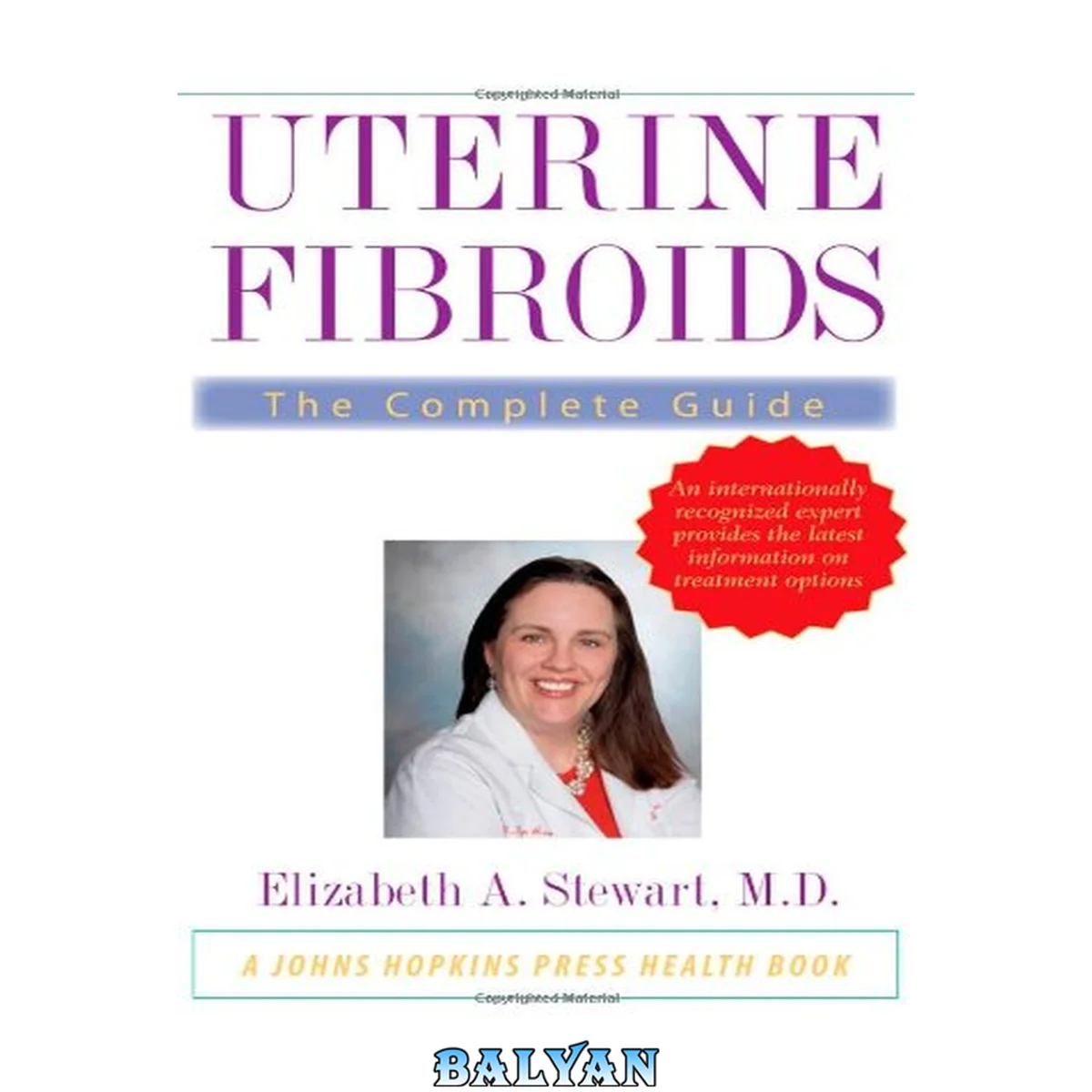
معرفی کتاب «Uterine Fibroids: The Complete Guide (A Johns Hopkins Press Health Book)» نوشتهٔ Elizabeth A. Stewart MD، منتشرشده توسط نشر The Johns Hopkins University Press; Johns Hopkins University Press در سال 2007. این کتاب در فرمت pdf، زبان انگلیسی ارائه شده است.
You've called in sick today. Your back and legs hurt. Your abdomen is bloated and more than a little uncomfortable. You are having your period, and the bleeding is so heavy you can't even think about leaving the house. You have uterine fibroids.
One in every four women see their lives affected by uterine fibroids, which can cause heavy bleeding, abdominal bloating, pain, and infertility. The symptoms can be mildly annoying or life altering in severity. Until recently, hysterectomy was the only way to cure fibroids, and each year more than 200,000 hysterectomies are performed in the United States to treat these noncancerous growths.
But hysterectomy isn't always the best solution. The procedure can be devastating for women who were planning to get pregnant, and it is a significant surgery for anyone. In this comprehensive and compassionate guide, Dr. Elizabeth A. Stewart helps women understand the treatment options now available.
An internationally recognized expert on fibroids, Dr. Stewart describes all the available medical and surgical treatments as well as alternative and complementary therapies. In addition to hysterectomy, she explains uterine artery embolization (UAE), noninvasive focused ultrasound (FUS), and innovative hormone treatments. Simple diagrams and photographs illustrate the condition — and its treatment.
Dr. Stewart encourages women with fibroids to learn as much as they can before choosing a treatment plan. Providing the most reliable and up-to-date information on this very common and difficult disorder, she helps women understand uterine fibroids and make the best possible choices about their care.
Doody Review Services
Reviewer:Jacqueline Ogutha, MD(Washington University School of Medicine)
Description:This is a well written resource on uterine fibroids, full of scientific data, hypotheses about their etiology, and available treatment options. Figures and pictures help readers understand some of the more complicated concepts.
Purpose:According to the author, the purpose is to educate women about fibroids and enable them to become more active participants in the decision-making process regarding treatment options. These objectives are certainly worthy given that upwards of 20 million women have fibroids.
Audience:As the introduction states, this book is written for the woman with uterine fibroids who would like to be better informed about her diagnosis and treatment options. However, the first several chapters read like a gynecology text book. Chapter 4, on the endocrinology of the uterus, contains a fairly detailed discussion of receptors, growth factors, and second messenger systems that may be challenging for readers with no previous exposure to biochemistry. The author has published articles on fibroids and has years of clinical experience.
Features:After an overview of the biology of fibroids and surgical and medical management, the book makes a case for more rigorous scientific inquiry into the genetics of fibroids. The chapters on surgical treatment are especially well written and clearly describe all the available options. The appendix, "Hints for Surgical Recovery," is a thoughtful addition to the book and will be appreciated by any patient contemplating surgery.
Assessment:This book is a comprehensive account of uterine fibroids for the motivated patient. Although the amount of scientific detail may be overwhelming for those without a background in the sciences, it is balanced by illustrations, photographs, and a clear writing style that make the book easy to read overall.
You've called in sick today. Your back and legs hurt. Your abdomen is bloated and more than a little uncomfortable. You are having your period, and the bleeding is so heavy you can't even think about leaving the house. You have uterine fibroids.
One in every four women see their lives affected by uterine fibroids, which can cause heavy bleeding, abdominal bloating, pain, and infertility. The symptoms can be mildly annoying or life altering in severity. Until recently, hysterectomy was the only way to cure fibroids, and each year more than 200,000 hysterectomies are performed in the United States to treat these noncancerous growths.
But hysterectomy isn’t always the best solution. The procedure can be devastating for women who were planning to get pregnant, and it is a significant surgery for anyone. In this comprehensive and compassionate guide, Dr. Elizabeth A. Stewart helps women understand the treatment options now available.
An internationally recognized expert on fibroids, Dr. Stewart describes all the available medical and surgical treatments as well as alternative and complementary therapies. In addition to hysterectomy, she explains uterine artery embolization (UAE), noninvasive focused ultrasound (FUS), and innovative hormone treatments. Simple diagrams and photographs illustrate the condition—and its treatment.
Dr. Stewart encourages women with fibroids to learn as much as they can before choosing a treatment plan. Providing the most reliable and up-to-date information on this very common and difficult disorder, she helps women understand uterine fibroids and make the best possible choices about their care.
In This Reliable Resource, An Internationally Recognized Expert On Fibroids Discusses Their Causes, Their Symptoms, And The Different Methods Used To Diagnose Them. Dr. Elizabeth A. Stewart Explains How To Determine When Fibroids Should Be Treated And How To Get The Best Possible Treatment. She Includes Information On The Latest Surgical And Medical Treatments Available,... -- Back Cover. About Fibroids -- Who Gets Fibroids, And What Are The Symptoms? -- What Are Uterine Fibroids? -- Why We Are So Far Behind In Understanding And Treating Fibroids -- Endocrinology Of The Uterus -- Why Do Fibroids Form? -- Diagnosis: How Do I Know That I Have Fibroids? -- When Fibroids Come Back -- Surgical Treatment -- Surgery Inside The Uterus: Hysteroscopic Myomectomy, Endometrial Ablation, And Vaginal Myomectomy -- Laparoscopic Myomectomy And Myolysis -- Abdominal Myomectomy -- Uterine Artery Embolization -- Focused Ultrasound Surgery And Other Thermoablative Therapies -- Hysterectomy -- Medical Treatment -- Traditional Hormonal Therapies: Birth Control Pills And Progestin -- Gnrh Agonists, Add-back Therapies, And Gnrh Antagonists -- Innovative Medical Strategies For Treating Uterine Fibroids -- Other Factors, Other Conditions -- Genetics Of Fibroids -- Pregnancy, Infertility, And Miscarriage -- Adenomyosis And Endometrial Polyps -- Uterine Cancers -- Fibroid-like Conditions -- Alternative And Complementary Therapies -- What Can We Do About Fibroids? Elizabeth A. Stewart. Includes Bibliographical References (p. 191-214) And Index.