Using UML: Software Engineering with Objects and Components (2nd Edition) (Addison-Wesley Object Technology)
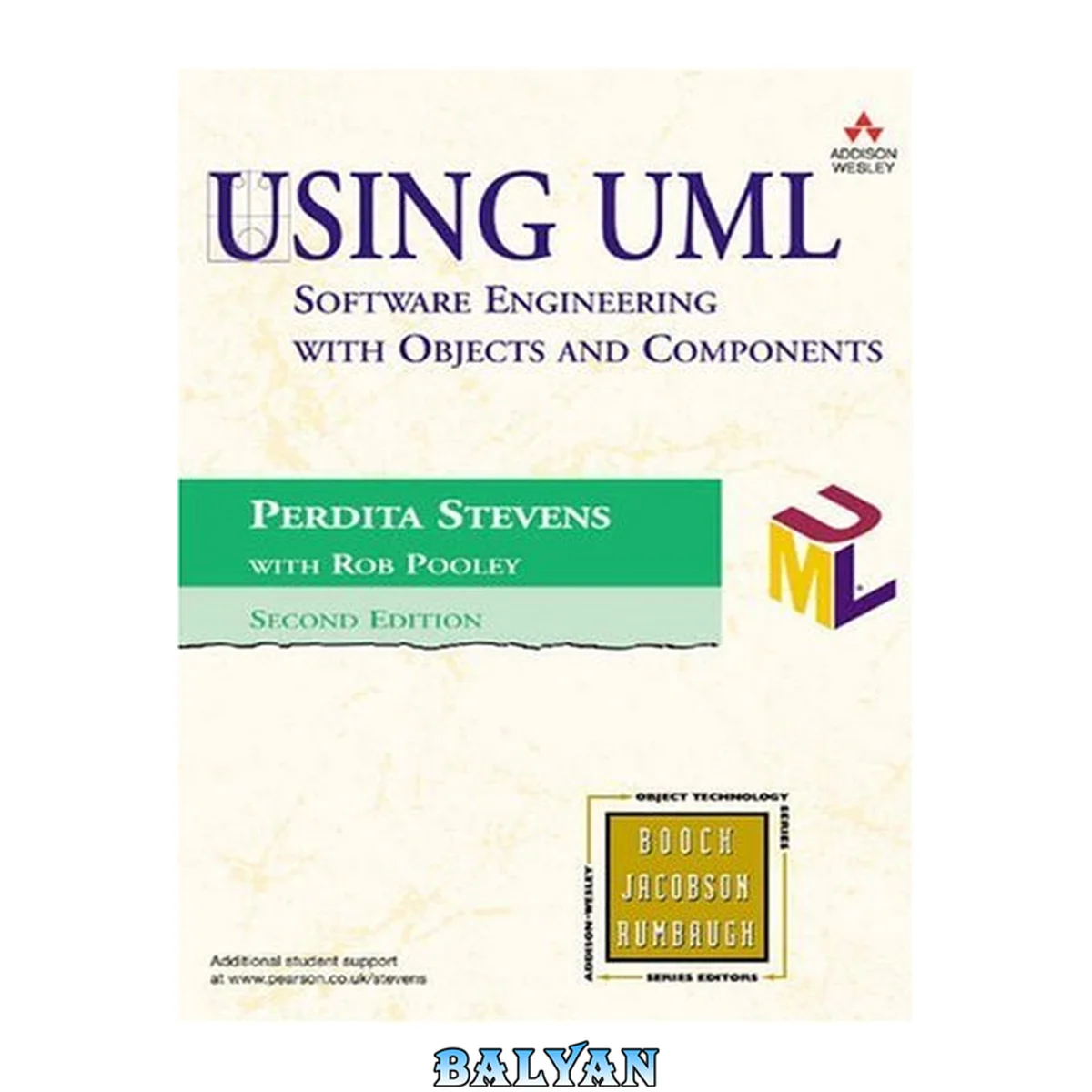
معرفی کتاب «Using UML: Software Engineering with Objects and Components (2nd Edition) (Addison-Wesley Object Technology)» نوشتهٔ Perdita Stevens with Rob Pooley، منتشرشده توسط نشر Addison Wesley در سال 2006. این کتاب در 20 صفحه، فرمت pdf، زبان انگلیسی ارائه شده است.
Using UML
Software Engineering with Objects and Components
Second Edition
Perdita Stevens with Rob Pooley
Completely updated with the new and expanded UML 2.0 standard, this is the ideal introduction to the Unified Modelling Language.
Designed for students and practitioners learning about object- and component-based software design and development, the book encourages a pragmatic and open-minded approach to real-life software engineering. It places UML in the context of the software engineering discipline as a whole, providing readers with a practical understanding of best practice in software design and development.
Features of UML 2.0 discussed in this edition include:
- The ball and socket notation for interfaces.
- New notation for sequence diagrams.
- UML 2’s two different kinds of state machines, and when to use them.
- Revised component structure and deployment diagrams.
Using UML also provides a wealth of learning aids, including:
- Self-test questions to promote understanding.
- Discussion questions to encourage deeper exploration.
- Technical notes on specific UML features.
- Boxed sections covering important issues such as Design by Contract, the Law of Demeter, and persistence.
Perdita Stevens is a Reader in the Schoolof Informatics at the University of Edinburgh. Her teaching and research interests lie mainly in tools and techniques for supporting software design and redesign. Rob Pooley is a Professor in the School of Mathematical and Computer Sciences at Heriot-Watt University in Edinburgh.
The companion website includes:
- Source code for case studies
- Pointers for additional research
- Instructor's resource material