Truth, Justice, and Reparations in Peru, Uruguay, and South Korea : The Clash of Advocacy and Politics
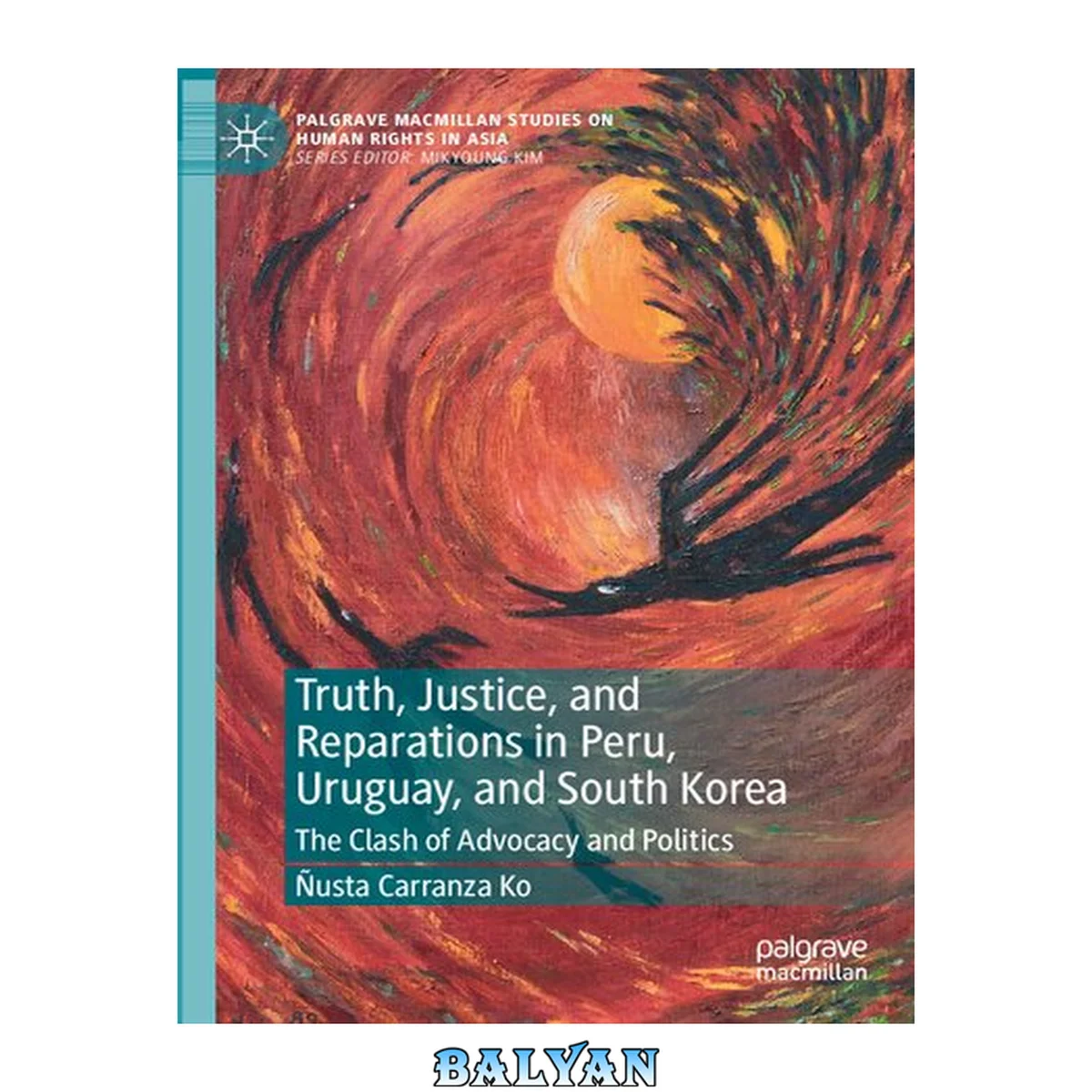
معرفی کتاب «Truth, Justice, and Reparations in Peru, Uruguay, and South Korea : The Clash of Advocacy and Politics» نوشتهٔ Ñusta Carranza Ko (auth.)، منتشرشده توسط نشر Springer Singapore : Imprint: Palgrave Macmillan در سال 2021. این کتاب در فرمت pdf، زبان انگلیسی ارائه شده است.
"Ñusta Carranza Ko's exciting new book deftly challenges the conventional wisdom, showing through detailed case studies of Peru, Uruguay, and South Korea that domestic political factors dominate over international advocacy in explaining long term adherence to--or backsliding from--international human rights and transitional justice norms. Carranza Ko should be commended for an important contribution to international relations and political science." --Clifford Bob, Professor and Chair of Political Science, Duquesne University This book presents the first cross-regional analysis of post-transitional justice periods and the conditions that influence states' behaviors. Specifically, the book examines why states that adopt and ostensibly implement transitional justice norms as policies--criminal prosecutions, reparations policies, and truth commissions--fail to follow through with their recommendations. Applying these perspectives to a comparative study of states from Latin America and East Asia--namely, Peru, Uruguay, and South Korea--which accepted and implemented transitional justice norms but took different trajectories of behavior after the implementation of policies, this book contributes to understanding the relationship of norm influence on states and why states change in compliance after norm adoption. The book explores the conditions that contribute or limit the continued respect for transitional justice norms, emphasizing the political interests and transnational advocacy networks' roles in affecting states' policies of addressing past abuses. Ñusta Carranza Ko is an Assistant Professor in the School of Public and International Affairs at the University of Baltimore. She is the co-author of Theories of International Relations and the Game of Thrones (Lanham: Lexington Books, 2019). Her research focuses on transitional justice in Latin America and Asia, and indigenous peoples' rights in Peru. Acknowledgments Contents List of Figures List of Tables 1 When the Pressure of the World Has Dissipated: Introduction Argument Concepts and Ideas Cases and Methodology Plan of the Book References 2 Converging Human Rights and Transitional Justice Norm Identities and Interests Developments of Transitional Justice Evolution of Norms-Criminal Accountability Truth-Seeking Reparations The Link Theory Building and Challenges Conclusion References 3 Political Dynamics of Human Rights Change in Peru Tracing Human Rights Changes: Peru’s Norm Adoption Processes Early Advocacy Pressures Regime Change and Experimenting with Transitional Justice Truth-Seeking Comisión de la Verdad y Reconciliación and Its Mandates Reparations and Their Outcomes Accountability: Rule of Law and Domestic Prosecutions Accountability: Compliance with the Inter-American Court of Human Rights Barrios Altos v. Peru and Accomarca Massacre Hugo Bustíos-Saavedra and Eduardo Rojas-Arce v. Peru More on Compliance: Divisions in Advocacy More on Compliance: Armed Forces Conclusion References 4 Uruguay’s Path Towards Justice Tracing Human Rights Development: Uruguay’s Repression and Norm Changes Early Activism from Advocacy Networks Ruptured Democratic Change and Questions of Transitional Justice Accountability: Context of Amnesty Law Conditions of Compliance-the State and Advocacy Accountability: Compliance with the Inter-American Commission and Court of Human Rights Gelman v. Uruguay Early Compliance, Politics, and Advocacy Truth-Seeking Comisión para la Paz Compliance with Truth-Seeking: More Truth Commissions and Politics Compliance with Truth-Seeking: Reparations Policies Conditioning the Outcome of Compliance: Role of the Armed Forces Conclusion References 5 The Story of South Korea’s Contending Past Abuses Tracing Human Rights Changes: Korea’s Norm Adoption Processes The Era of the Generals Repression and Advocacy Regime Change and Experimenting with Transitional Justice Starting Juncture of Change Criminal Accountability and the 1996 Trials Conditions of Compliance-Collision of Interests and Advocacy Changing Times for Truth-Seeking Truth-Seeking and Compliance Advocacy Before the Jeju Commission Jeju Commission and Its Mandates Reparations and Conditions of Compliance Accountability and Advocacy in Jeju TRCK Politics and Advocacy Reparations and Conditions of Compliance Accountability and Its Advocates Conclusion References 6 Conclusion: Domestic Politics, International Pressure, and Transitional Justice A Summary of Transitional Justice Policies in Peru, Uruguay, and South Korea Advocacy Networks Domestic Politics and Interests Clash of Logics Transitional Injustice and Zombie Policies Policy Implications References Appendix: Interviewee List Index "Ñusta Carranza Ko's exciting new book deftly challenges the conventional wisdom, showing through detailed case studies of Peru, Uruguay, and South Korea that domestic political factors dominate over international advocacy in explaining long term adherence to--or backsliding from--international human rights and transitional justice norms. Carranza Ko should be commended for an important contribution to international relations and political science." --Clifford Bob, Professor and Chair of Political Science, Duquesne University This book presents the first cross-regional analysis of post-transitional justice periods and the conditions that influence states' behaviors. Specifically, the book examines why states that adopt and ostensibly implement transitional justice norms as policies--criminal prosecutions, reparations policies, and truth commissions--fail to follow through with their recommendations. Applying these perspectives to a comparative study of states from Latin America and East Asia--namely, Peru, Uruguay, and South Korea--which accepted and implemented transitional justice norms but took different trajectories of behavior after the implementation of policies, this book contributes to understanding the relationship of norm influence on states and why states change in compliance after norm adoption. The book explores the conditions that contribute or limit the continued respect for transitional justice norms, emphasizing the political interests and transnational advocacy networks' roles in affecting states' policies of addressing past abuses. Ñusta Carranza Ko is an Assistant Professor in the School of Public and International Affairs at the University of Baltimore. She is the co-author of Theories of International Relations and the Game of Thrones (Lanham: Lexington Books, 2019). Her research focuses on transitional justice in Latin America and Asia, and indigenous peoples' rights in Peru.
دانلود کتاب Truth, Justice, and Reparations in Peru, Uruguay, and South Korea : The Clash of Advocacy and Politics