To Forgive Design : Understanding Failure
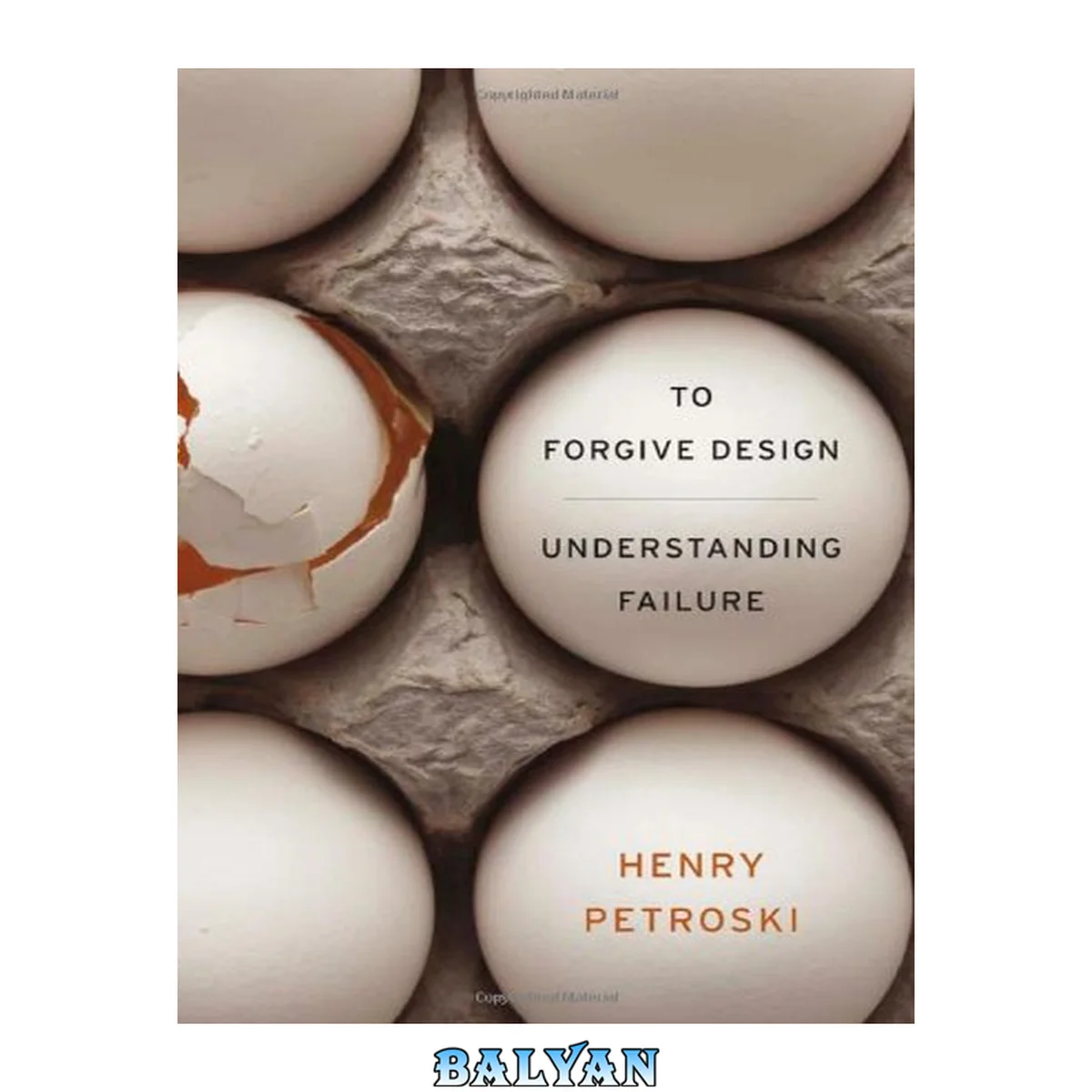
معرفی کتاب «To Forgive Design : Understanding Failure» نوشتهٔ Henry Petroski; A O Sykes، منتشرشده توسط نشر Belknap Press: An Imprint of Harvard University Press در سال 2012. این کتاب در فرمت pdf، زبان انگلیسی ارائه شده است.
When planes crash, bridges collapse, and automobile gas tanks explode, we are quick to blame poor design. But Henry Petroski says we must look beyond design for causes and corrections. Known for his masterly explanations of engineering successes and failures, Petroski here takes his analysis a step further, to consider the larger context in which accidents occur.
In To Forgive Design he surveys some of the most infamous failures of our time, from the 2007 Minneapolis bridge collapse and the toppling of a massive Shanghai apartment building in 2009 to Boston’s prolonged Big Dig and the 2010 Gulf oil spill. These avoidable disasters reveal the interdependency of people and machines within systems whose complex behavior was undreamt of by their designers, until it was too late. Petroski shows that even the simplest technology is embedded in cultural and socioeconomic constraints, complications, and contradictions.
Failure to imagine the possibility of failure is the most profound mistake engineers can make. Software developers realized this early on and looked outside their young field, to structural engineering, as they sought a historical perspective to help them identify their own potential mistakes. By explaining the interconnectedness of technology and culture and the dangers that can emerge from complexity, Petroski demonstrates that we would all do well to follow their lead.
When planes crash, bridges collapse, and automobile gas tanks explode, we are quick to blame poor design. But Henry Petroski says we must look beyond design for causes and corrections. Known for his masterly explanations of engineering successes and failures, Petroski here takes his analysis a step further, to consider the larger context in which accidents occur. In To Forgive Design he surveys some of the most infamous failures of our time, from the 2007 Minneapolis bridge collapse and the toppling of a massive Shanghai apartment building in 2009 to Boston's prolonged Big Dig and the 2010 Gulf oil spill. These avoidable disasters reveal the interdependency of people and machines within systems whose complex behavior was undreamt of by their designers, until it was too late. Petroski shows that even the simplest technology is embedded in cultural and socioeconomic constraints, complications, and contradictions. Failure to imagine the possibility of failure is the most profound mistake engineers can make. Software developers realized this early on and looked outside their young field, to structural engineering, as they sought a historical perspective to help them identify their own potential mistakes. By explaining the interconnectedness of technology and culture and the dangers that can emerge from complexity, Petroski demonstrates that we would all do well to follow their lead. - Publisher. Contents 10 Preface 12 1. By Way of Concrete Examples 18 2. Things Happen 43 3. Designed to Fail 65 4. Mechanics of Failure 98 5. A Repeating Problem 124 6. The Old and the New 145 7. Searching for a Cause 167 8. The Obligation of an Engineer 192 9. Before, during, and after the Fall 216 10. Legal Matters 240 11. Back-Seat Designers 258 12. Houston, You Have a Problem 287 13. Without a Leg to Stand On 319 14. History and Failure 344 Notes 380 Illustrations 412 Index 414 When planes crash, bridges collapse, and automobile gas tanks explode, we are quick to blame poor design. But Petroski, known for his masterly explanations of engineering successes and failures, says we must look beyond design to the interdependency of people and machines within complex socioeconomic systems undreamt of by designers. Argues that failures in structural engineering are not necessarily due to the physical design of the structures, but instead a misunderstanding of how cultural and socioeconomic constraints would affect the structures.