Things That Make Us Smart: Defending Human Attributes In The Age Of The Machine (William Patrick Book)
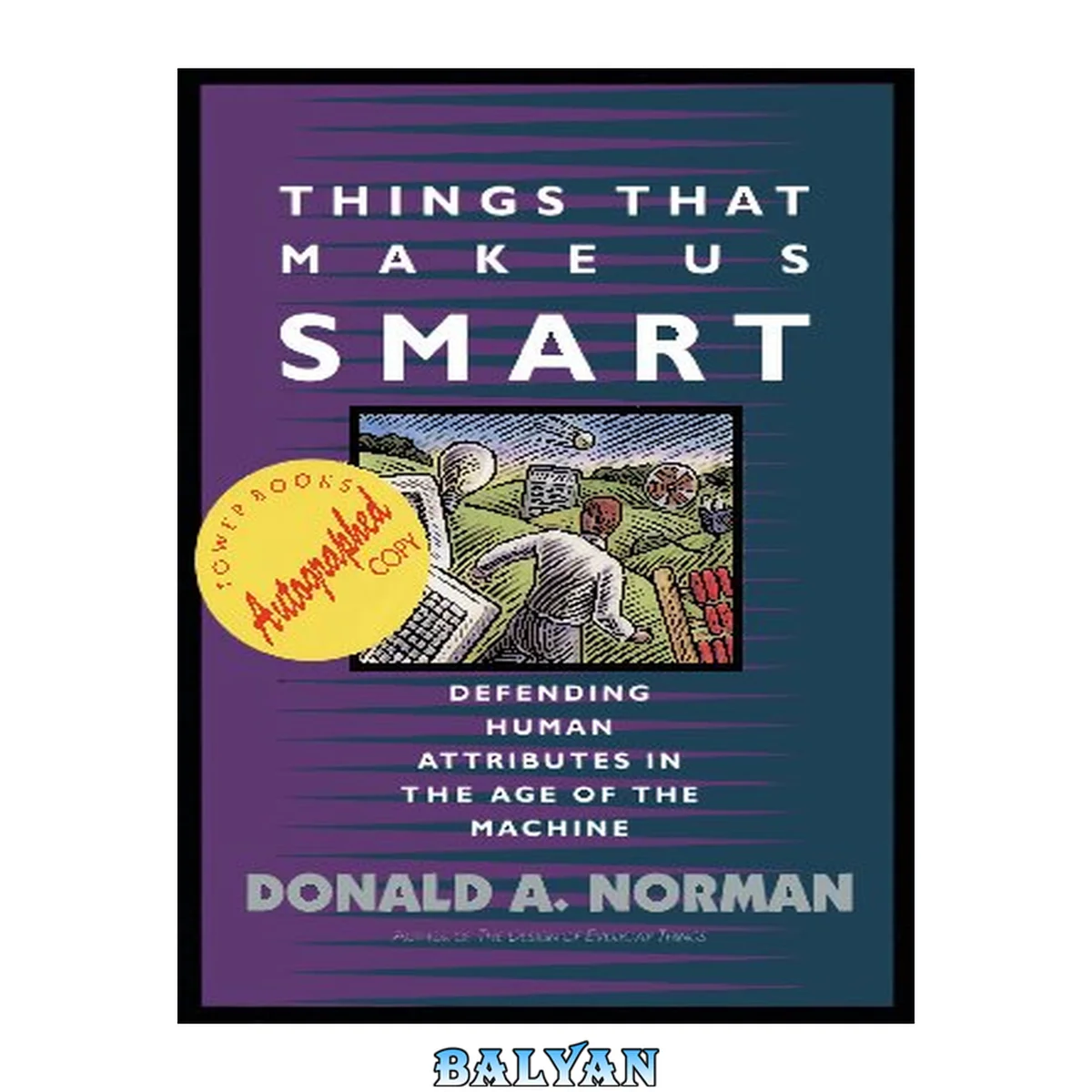
معرفی کتاب «Things That Make Us Smart: Defending Human Attributes In The Age Of The Machine (William Patrick Book)» نوشتهٔ Donald A. Norman; Tamara Dunaeff، منتشرشده توسط نشر Addison Wesley Publishing Company در سال 1994. این کتاب در فرمت pdf، زبان انگلیسی ارائه شده است.
In Things That Make Us Smart, Donald A. Norman explores the complex interaction between human thought and the technology it creates, arguing for the development of machines that fit our minds, rather
Publishers Weekly
Building on the insights of The Design of Everyday Things and Turn Signals Are the Facial Expressions of Automobiles , cognitive scientist Norman continues his lively assault on ``machine-centered'' design, arguing for appropriate technologies scaled to human need and cognitive capacity. A fellow at Apple Computer, Norman considers poorly or well-designed ``cognitive artifacts'' ranging from filing cabinets to medical prescriptions and the information displays used on electronic devices. He ponders the frustrations of using telephone voice-messaging systems, faults today's multimedia classrooms for gimmickry and suggests ``human-centered'' designs for computers, telephones and post-office stamp machines. Readers interested in making the work environment or the task fit the person (instead of the other way around) will find many tips in this thoughtful critique. Illustrated . (May)
Insightful and whimsical, profoundly intelligent and easily accessible, Don Norman has been exploring the design of our world for decades, exploring this complex relationship between humans and machines. In this seminal work, fully revised and updated, Norman gives us the first steps towards demanding a person-centered redesign of the machines we use every day. Humans have always worked with objects to extend our cognitive powers, from counting on our fingers to designing massive supercomputers. But advanced technology does more than merely assist with memory—the machines we create begin to shape how we think and, at times, even what we value. In THINGS THAT MAKE US SMART, Donald Norman explores the complex interaction between human thought and the technology it creates, arguing for the development of machines that fit our minds, rather than minds that must conform to the machine. In Things That Make Us Smart, Donald A. Norman explores the complex interaction between human thought and the technology it creates, arguing for the development of machines that fit our minds, rather than minds that must conform to the machine.Humans have always worked with objects to extend our cognitive powers, from counting on our fingers to designing massive supercomputers. But advanced technology does more than merely assist with thought and memorythe machines we create begin to shape how we think and, at times, even what we value. Norman, in exploring this complex relationship between humans and machines, gives us the first steps towards demanding a person-centered redesign of the machines that surround our lives. In Things That Make Us Smart, Donald A. Norman explores the complex interaction between human thought and the technology it creates, arguing for the development of machines that fit our minds, rather than minds that must conform to the machine. Humans have always worked with objects to extend our cognitive powers, from counting on our fingers to designing massive supercomputers. But advanced technology does more than merely assist with thought and memorythe machines we create begin to shape how we think and, at times, even what we value. Norman, in exploring this complex relationship between humans and machines, gives us the first steps towards demanding a person-centered redesign of the machines that surround our lives Table of Contents Preface Chapter Notes and Book Design 1 A Human-centered Technology 2 Experiencing the World 3 The Power of Representation 4 Fitting the Artifact to the Person 5 The Human Mind 6 Distributed Cognition 7 A Place for Everything, and Everything in Its Place 8 Predicting the Future 9 Soft and Hard Technology 10 Technology is Not Neutral Chapter Notes References Index