The war in the West. Volume One, The Allies strike back, 1941-1943
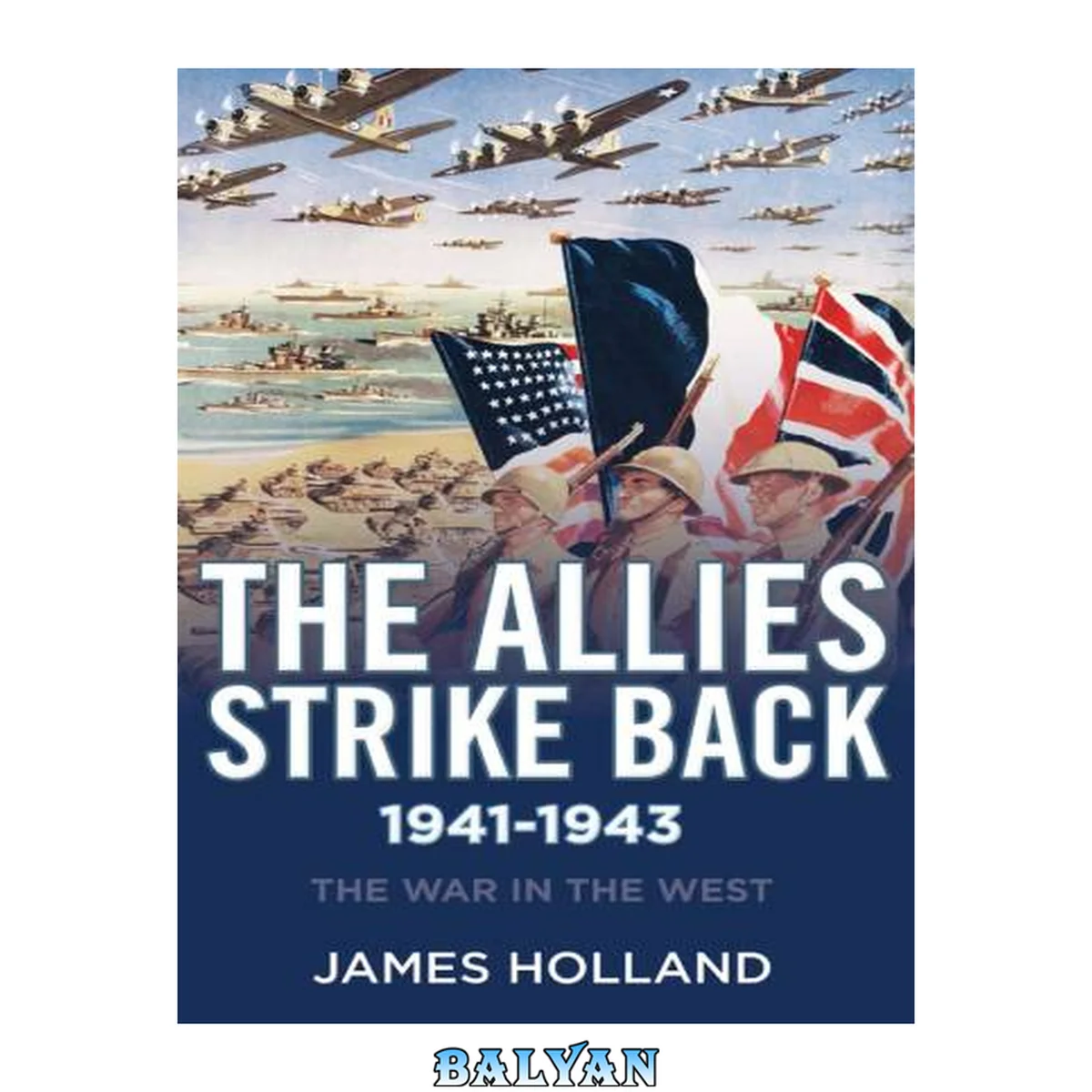
معرفی کتاب «The war in the West. Volume One, The Allies strike back, 1941-1943» نوشتهٔ Holland, James، منتشرشده توسط نشر Atlantic Monthly Press در سال 2017. این کتاب در فرمت epub، زبان انگلیسی ارائه شده است.
Volume two in this "expert, anecdote-filled, thoroughly entertaining" history of WWII follows The Rise of Germany as the Allied forces turn the tides ( Kirkus ). James Holland's The Rise of Germany , the first volume in his War in the West trilogy, was widely praised for his impeccable research and lively narrative. Covering the dawn of World War II, it ended at a point when the Nazi war machine appeared to be unstoppable. Germany had taken Poland and France with shocking speed. London was bombed, and U-boats harried shipping on the Atlantic. But Germany hadn't actually won the Battle of Britain or the Battle of the Atlantic. It was not producing airplanes or submarines fast enough. And what looked like victory in Greece and Crete had expended crucial resources in short supply. The Allies Strike Back continues the narrative as Germany's invasion of Russia unfolds in the east, while in the west, the Americans formally enter the war. In North Africa, following major setbacks at the hands of Rommel, the Allies storm to victory. Meanwhile, the bombing of Germany escalates, aiming to not only destroy the its military, industrial, and economic system, but also relentlessly crush civilian morale. Comprehensive and impeccably researched, "Holland brings a fresh eye to the ebb and flow of the conflict" in this "majestic saga" of 20th century history (Literary Review, UK). James Holland's The Rise of Germany, the first volume in his War in the West trilogy, was widely praised for Holland's impeccable research and narrative skills. With a wealth of characters from across the western theatre of WWII, Holland told a captivating story and used new research to challenge our assumptions and reframe our understanding of this momentous conflict. As The Rise of Germany ended, the Nazi war machine looked to be unstoppable. Germany had taken Poland and France with shocking speed. London was blitzed by the Luftwaffe, and U-boats harried Allied shipping. But Germany hadn't actually won the Battle of Britain or the Battle of the Atlantic, and was not producing airplanes or submarines fast enough. And what looked like victory in Greece and Crete had expended crucial resources in short supply. In The Allies Strike Back, while Germany's invasion of Russia unfolds in the east, in the west, the Americans formally enter the war. In North Africa, after setbacks at the hands of Rommel, the Allies storm to victory. Meanwhile, the bombing of Germany escalates, aiming to destroy Nazi industry and crush civilian morale. The Allies Strike Back is a captivating book by a supremely skilled historian-- Part I. America enters the war -- The largest clash of arms -- Manoeuvring -- Summer '41 -- The US Navy goes to war -- The sinking of the Reuben James -- Crusaders -- Unraveling -- World war -- Part II. Eastern influences -- Battles at sea -- Strategic blunders -- Carnage off America -- Fighters and bombers -- Steel and strategy -- Seeds of resistance -- Heat and dust -- Into the cauldron -- Combined production -- The fall of Tobruk -- Sea and sand -- Thousand bomber raid -- Sea and steppe -- Gathering strength -- Last chance in Africa -- The end of the German dream -- Part III. The Allies strike back -- A brief discourse on tanks and fire-power -- A brief discourse on training and morale -- Return of the hero -- Getting ready -- The vicious circle -- Lighting the torch -- Lightfoot -- Supercharge -- Cutting losses -- Invasion -- Part IV. Crushing the wolfpacks -- The blackest month -- Setbacks -- Year end -- The critical theatre -- Living dangerously -- Frühlingswind -- Heavy water -- Regaining the initiative -- Into the gap -- Closing in -- Victory for the Allies. James Holland. Includes bibliographical references (pages 626-678) and index. "James Holland's The Rise of Germany, the first volume in his War in the West trilogy, was widely praised for Holland's impeccable research and narrative skills. With a wealth of characters from across the western theatre of World War II, Holland told a captivating story while calling on new research to challenge our assumptions and reframe our understanding of this momentous conflict. As The Rise of Germany ended, the Nazi war machine looked to be unstoppable. Germany had taken Poland and France with shocking speed. London was blitzed by the Luftwaffe, and U-boats harried shipping on the Atlantic. But Germany hadn't actually won the Battle of Britain or the Battle of the Atlantic, and was not producing airplanes or submarines fast enough. And what looked like victory in Greece and Crete had expended crucial resources in short supply. In The Allies Strike Back, while Germany's invasion of Russia unfolds in the east, in the west, the Americans formally enter the war. In North Africa, following major setbacks at the hands of Rommel, the Allies storm to victory. Meanwhile, the bombing of Germany escalates, aiming to destroy Nazi industry and crush civilian morale. A captivating book by a supremely skilled historian, The Allies Strike Back is a perfect successor to The Rise of Germany"-- Provided by publisher By June 1941, Germany's war machine looked to be unstoppable. The Nazi blitzkrieg had taken Poland, France, and Holland with shocking speed. The Luftwaffe had bombed London, while German U-boats wrought havoc on Allied shipping on the Atlantic. And yet, as James Holland shows at the start of The Allies Strike Back, 1941-1943 —the second volume in his magisterial narrative of World War II in the West—cracks were already appearing in Germany's apparent invincibility. Shortages of food and materiel were becoming critical. And, having failed to defeat Britain, Adolf Hitler fatefully pivoted east to invade the Soviet Union—territory he felt compelled to conquer for Germany's protection—and on June 22, 1941 precipitated the largest clash of arms the world had ever seen. Built for speed and quick conquest, German forces by that fall were bogged down in a horrible war of attrition that blunted the Nazi momentum. The Allies Strike Back offers... By June 1941, Germany's war machine looked to be unstoppable. The Nazi blitzkrieg had taken Poland, France, and Holland with shocking speed. The Luftwaffe had bombed London, while German U-boats wrought havoc on Allied shipping on the Atlantic. And yet, as James Holland shows at the start of —the second volume in his magisterial narrative of World War II in the West—cracks were already appearing in Germany's apparent invincibility. Shortages of food and materiel were becoming critical. And, having failed to defeat Britain, Adolf Hitler fatefully pivoted east to invade the Soviet Union—territory he felt compelled to conquer for Germany's protection—and on June 22, 1941 precipitated the largest clash of arms the world had ever seen. Built for speed and quick conquest, German forces by that fall were bogged down in a horrible war of attrition that blunted the Nazi momentum.__The Allies Strike Back__
دانلود کتاب The war in the West. Volume One, The Allies strike back, 1941-1943