The vision revolution : how the latest research overturns everything we thought we knew about human vision
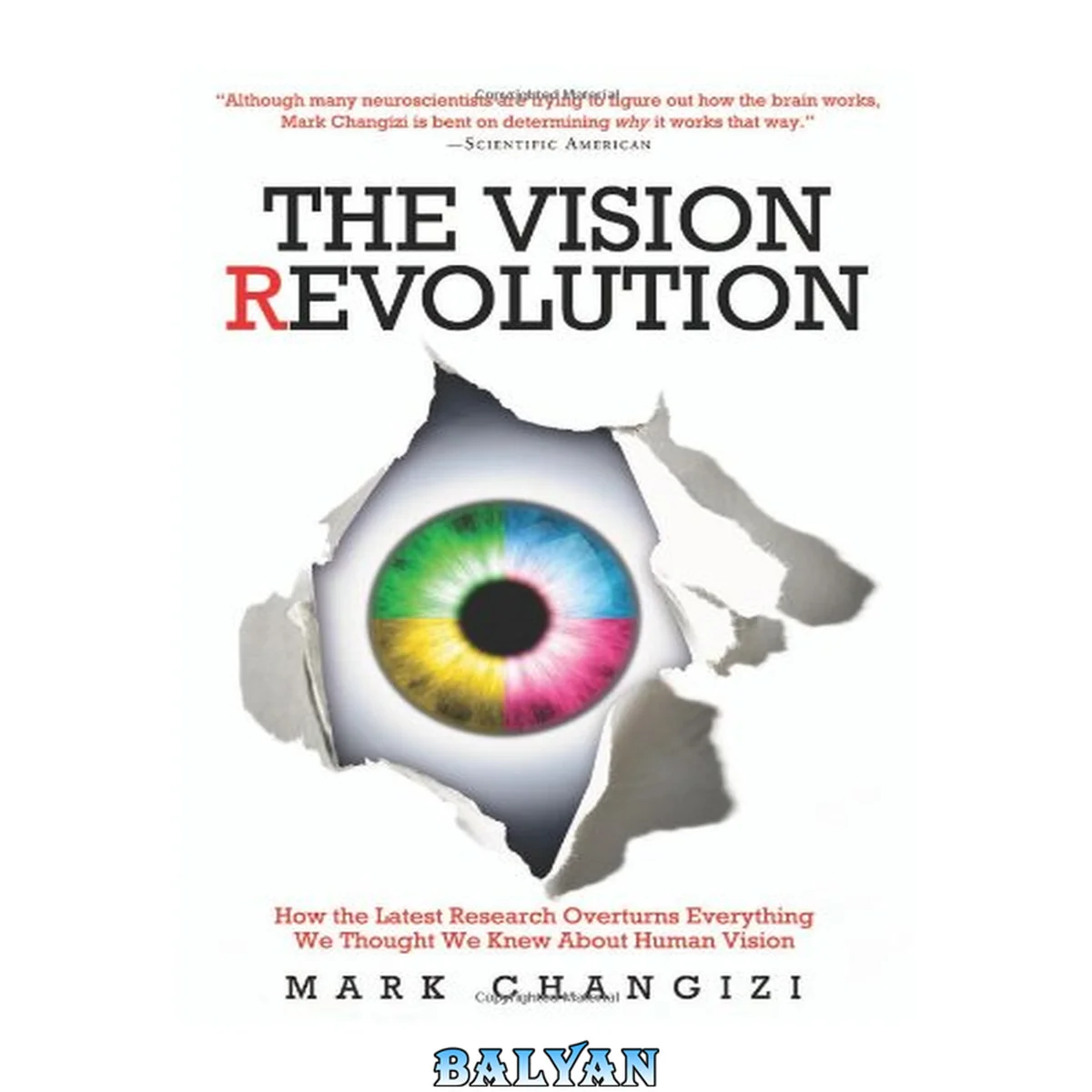
معرفی کتاب «The vision revolution : how the latest research overturns everything we thought we knew about human vision» نوشتهٔ Mark A. Changizi، منتشرشده توسط نشر BenBella Books در سال 2009. این کتاب در فرمت pdf، زبان انگلیسی ارائه شده است.
Primates evolved binocular vision (both eyes facing forward) so that they can see in three dimensions, critical as they jumped from branch to branch. Higher primates developed color vision to better hunt out ripe fruit. Optical illusions succeed because they exploit the limitations of our visual processing. Wrong! All of these beliefs are false, as groundbreaking research by evolutionary scientist and neurobiologist Mark Changizi now reveals. Changizi's research centers on the "why" of human vision. Why do we have binocular vision? Why do we see in color the way we do? Why do optical illusions work? And why are we able to absorb information by reading?a very new invention from an evolutionary perspective?more readily than by hearing, which we've evolved to do over hundreds of thousands of years? The Vision Revolution answers these questions, and proves, with the detailed results of Changizi's fieldwork, that the answers are very different than traditionally believed. A radically new perspective of human vision is now emerging. The Vision Revolution is upon us. In The Vision Revolution , Mark Changizi, prominent neuroscientist and vision expert, addresses four areas of human vision and provides explanations for why we have those particular abilities, complete with a number of full-color illustrations to demonstrate his conclusions and to engage the reader. Written for both the casual reader and the science buff hungry for new information, The Vision Revolution is a resource that dispels commonly believed perceptions about sight and offers answers drawn from the fields most recent research. Changizi focuses on four why questions: 1. Why do we see in color? 2. Why do our eyes face forward? 3. Why do we see illusions? 4. Why does reading come so naturally to us? Why Do We See in Color? It was commonly believed that color vision evolved to help our primitive ancestors identify ripe fruit. Changizi says we should look closer to home: ourselves. Human color vision evolved to give us greater insights into the mental states and health of other people. People who can see color changes in skin have an advantage over their color-blind counterparts; they can see when people are blushing with embarrassment, purple-faced with exertion or the reddening of rashes. Changizis research reveals that the cones in our eyes that allow us to see color are exquisitely designed exactly for seeing color changes in the skin. And its no coincidence that the primates with color vision are the ones with bare spots on their faces and other body parts; Changizi shows that the development of color vision in higher primates closely parallels the loss of facial hair, culminating in the near hairlessness and highly developed color vision of humans. Why Do Our Eyes Face Forward? Forward-facing eyes set us apart from most mammals, and there is much dispute as to why we have them. While some speculate that we evolved this feature to give us depth perception available through stereo vision, this type of vision only allows us to see short distances, and we already have other mechanisms that help us to estimate distance. Changizis research shows that with two forward-facing eyes, primates and humans have an x-ray ability. Specifically, were able to see through the cluttered leaves of the forest environment in which we evolved. This feature helps primates see their targets in a crowded, encroached environment. To see how this works, hold a finger in front of your eyes. Youll find that youre able to look through it, at what is beyond your finger. One of the most amazing feats of two forward-facing eyes? Our views arent blocked by our noses, beaks, etc. Why Do We See Illusions? We evolved to see moving objects, not where they are, but where they are going to be. Without this ability, we couldnt catch a ball because the brains ability to process visual information isnt fast enough to allow us to put our hands in the right place to intersect for a rapidly approaching baseball. If our brains simply created a perception of the way the world was at the time light hit the eye, then by the time that perception was elicitedwhich takes about a tenth of a second for the brain to dotime would have marched on, and the perception would be of the recent past, Changizi explains. Simply put, illusions occur when our brain is tricked into thinking that a stationary two-dimensional picture has an element that is moving. Our brains project the moving element into the future and, as a result, we dont see whats on the page, but what our brain thinks will be the case a fraction of a second into the future. Why Does Reading Come So Naturally to Us? We can read faster than we can hear, which is odd, considering that reading is relatively recent, and weve evolved to process speech for millions of years. Changizis research reveals that language has been carefully designed to tap in to elements of the visual processing center that have evolved for tens of millions of years. Visual signs of all languages are shaped like objects in nature, Changizi says, because we have evolved to see nature easily. People have noticed letters in nature for some time, and there are artists who have a spent a lot of time photographing Latin letters in natural scenes or on butterfly wings, Changizi says. For example, if you look at an upper corner of the room you are in, you will see three contours meeting at a point, making a shape close to that of a Y. The Vision Revolution expands upon how our ancestors found the shapes of Latin letters and delves into how visual signs can have similar shapes even though their inspirations come from very different environments. In addition to these four areas, The Vision Revolution explores other phenomena such as cyclopses, peeking and many more you hadnt even thought to wonder about. Changizi shows how deeply involved these evolutionary aspects of our vision are in why we see the way we doand what the future holds for us. to understand how culture interacts with vision, one must understand not just the eyes design, but the actual mechanisms we have evolved, Changizi says, for culture can tap in to both the designed responses of our brains and the unintended responses. The Vision Revolution is a book that finally gives attention to what before has been largely neglected by other works on human visiona book that looks at the why. Primates evolved binocular vision (both eyes facing forward) so that they can see in three dimensions, critical as they jumped from branch to branch. Higher primates developed color vision to better hunt out ripe fruit. Optical illusions succeed because they exploit the limitations of our visual processing. Wrong! All of these beliefs are false. The author's research centers on the "why" of human vision : why we have binocular vision, why we see in color the way we do, why optical illusions work. He also looks at why are we able to absorb information by readinga very new invention from an evolutionary perspectivemore readily than by hearing, which we've evolved to do over hundreds of thousands of years.
دانلود کتاب The vision revolution : how the latest research overturns everything we thought we knew about human vision