The Sum of the People : How the Census Has Shaped Nations, From the Ancient World to the Modern Age
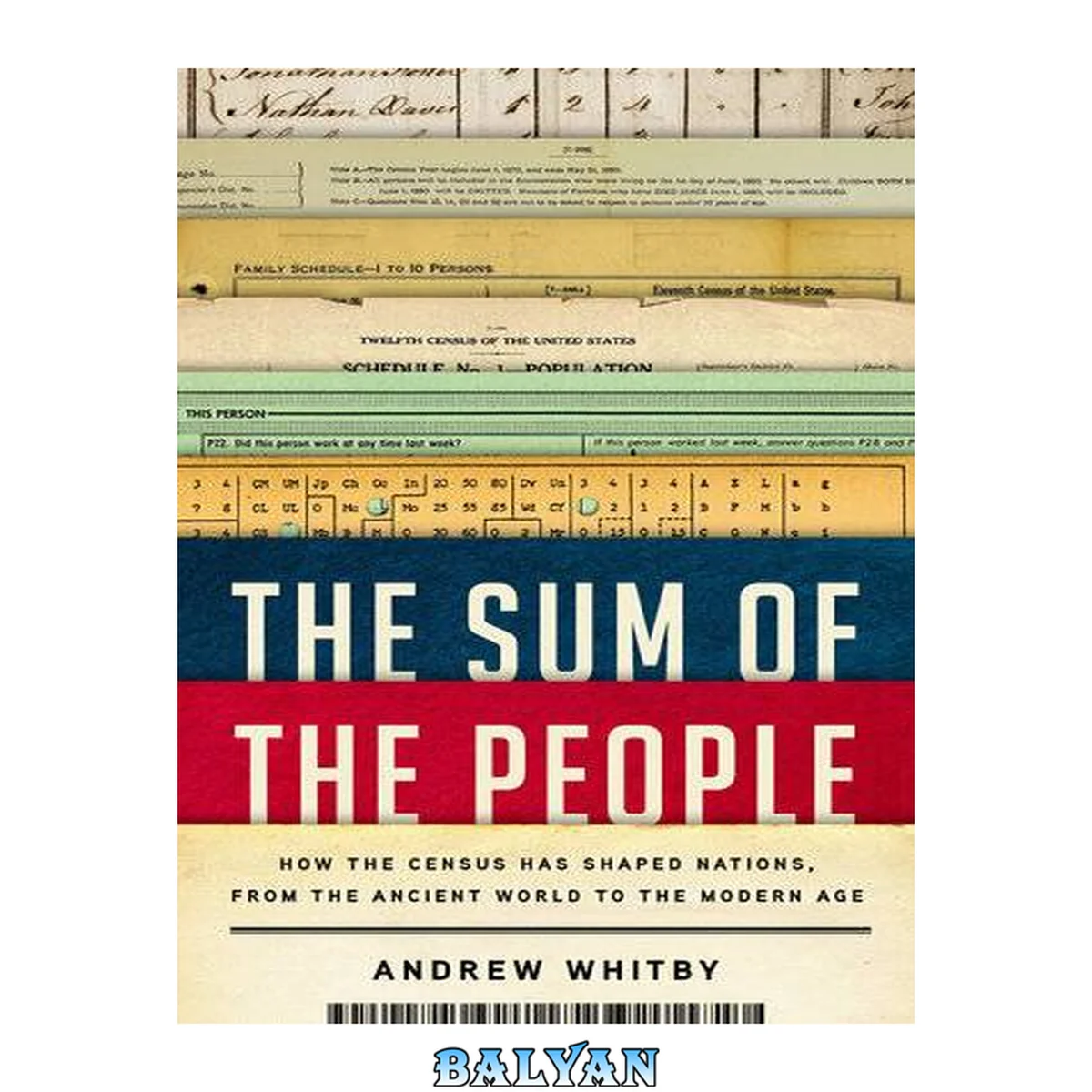
معرفی کتاب «The Sum of the People : How the Census Has Shaped Nations, From the Ancient World to the Modern Age» نوشتهٔ Touko Amekawa و Andrew Whitby، منتشرشده توسط نشر Basic Books در سال 2020. این کتاب در فرمت epub، زبان انگلیسی ارائه شده است.
In April 2020, the United States will embark on what has been called "the largest peacetime mobilization in American history": the decennial population census. It is part of a long, if uneven, tradition of counting people that extends back at least three millennia. Tracing the remarkable history of the census from ancient China, through the Roman Empire, revolutionary America, and Nazi-occupied Europe, right up to today's Supreme Court battles, The Sum of the People shows how the impulse to count ourselves is universal, how the census has evolved with time, and how it has always profoundly shaped the societies we have built. As data scientist Andrew Whitby reveals, the earliest censuses in ancient China and the Fertile Crescent had purely extractive aims: taxation and conscription. Later, as Enlightenment-era governments began to answer to citizens, the census was reinvented to support political representation and to delimit the boundaries of new nation-states. As the role of government grew through the nineteenth and twentieth centuries, censuses became more complex and scientific. Census bureaus spun out dozens of other surveys, which formed the statistical foundation of modern, technocratic, data-driven government. For the first time, counting every person on the planet became a real possibility-and debates about who was counted, who was not, and what questions they were asked became the subject of intense political controversy in places from Australia to South Africa to the United States. The census at its best is a marvel of democracy, but it has at times been an instrument of exclusion, and, as in the case of Nazi Germany, a tool of tyranny and genocide. Today, governments and businesses alike now routinely collect "big data" that would have been unimaginable just a few decades ago, prompting fears similar to those the census once provoked and leading to some to suggest that traditional censuses will soon be obsolete. The Sum of the People closes by making the case that, for all its past faults, the census can be an alternative and an antidote to a future of constant, invasive surveillance. In 2020, the United States will embark again on what has been called "the largest peacetime mobilization in American history": the decennial population census. It is part of a tradition of counting people that goes back more than three millennia and now spans the globe. In The Sum of the People, data scientist Andrew Whitby traces the remarkable history of the census from ancient China and the Roman Empire through revolutionary America, Nazi-occupied Europe, and post-apartheid South Africa all the way to the steps of the Supreme Court. Conceived in antiquity to impose taxation and military conscription, the census was reinvented in the Enlightenment era to support representative government and delimit the boundaries of new nation states. As enumeration became a foundation of modern, technocratic governance in the nineteenth and twentieth centuries, controversy raged about who was counted, who was not, and what questions they were asked. Censuses have been marvels of democracy, instruments of exclusion, and, at worst, tools of tyrrany and genocide. They have profoundly shaped the societies we've built. Today, in a world beset by high-tech surveillance, The Sum of the People shows how the traditional census--direct, transparent and accountable--is something worth celebrating The fascinating three-thousand-year history of the census, revealing why the true boundaries of today's nations aren't lines on a map, but columns in a census tabulation In April 2020, the United States will embark on what has been called "the largest peacetime mobilization in American history": the decennial population census. It is part of a tradition of counting people that goes back at least three millennia and now spans the globe. In The Sum of the People , data scientist Andrew Whitby traces the remarkable history of the census, from ancient China and the Roman Empire, through revolutionary America and Nazi-occupied Europe, to the steps of the Supreme Court. Marvels of democracy, instruments of exclusion, and, at worst, tools of tyranny and genocide, censuses have always profoundly shaped the societies we've built. Today, as we struggle to resist the creep of mass surveillance, the traditional census -- direct and transparent -- may offer the seeds of an alternative. This fascinating three-thousand-year history of the census traces the making of the modern survey and explores its political power in the age of big data and surveillance.In April 2020, the United States will embark on what has been called'the largest peacetime mobilization in American history': the decennial population census. It is part of a tradition of counting people that goes back at least three millennia and now spans the globe.In The Sum of the People, data scientist Andrew Whitby traces the remarkable history of the census, from ancient China and the Roman Empire, through revolutionary America and Nazi-occupied Europe, to the steps of the Supreme Court. Marvels of democracy, instruments of exclusion, and, at worst, tools of tyranny and genocide, censuses have always profoundly shaped the societies we've built. Today, as we struggle to resist the creep of mass surveillance, the traditional census -- direct and transparent -- may offer the seeds of an alternative. Provides a 3,000-year history of the census, chronicling the practices of the ancient world through the Supreme Court rulings of today, examining how censuses have been used as tools of democracy, exclusion and mass surveillance A 3,000-year history of the census chronicles the practices of the ancient world through the Supreme Court rulings of today, examining how censuses have been used as tools of democracy, exclusion and mass surveillance Prologue: Where counting really counts -- The book of numbers -- Political arithmetic -- A punch photograph -- Paper people -- A world census -- The uncounted -- The transparent citizen
دانلود کتاب The Sum of the People : How the Census Has Shaped Nations, From the Ancient World to the Modern Age