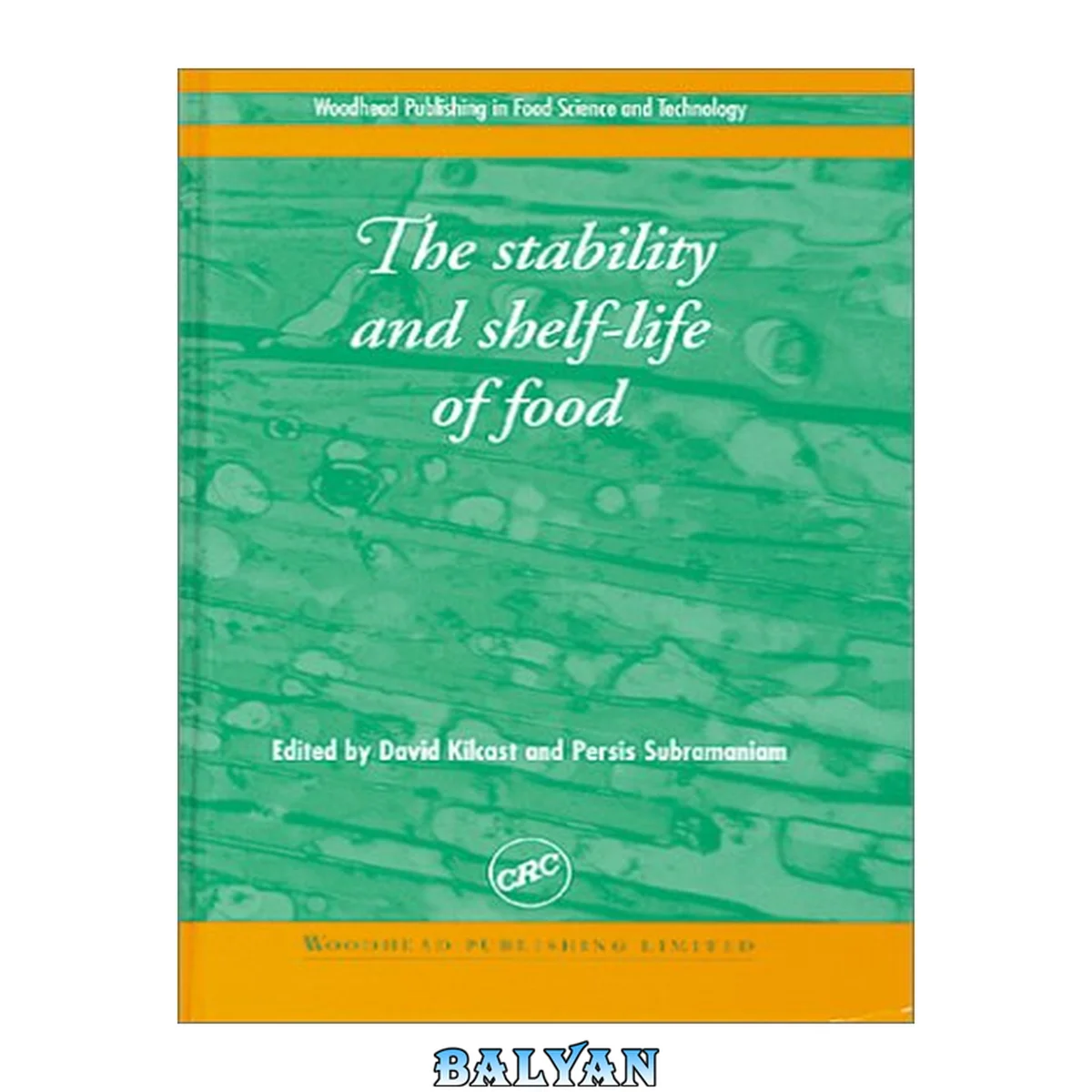
معرفی کتاب «The Stability and Shelf-Life of Food (Woodhead Publishing Series in Food Science, Technology and Nutrition)» نوشتهٔ P. Subramaniam, David Kilcast, Persis Subramaniam، منتشرشده توسط نشر CRC Press ; Woodhead Pub در سال 2000. این کتاب در فرمت pdf، زبان انگلیسی ارائه شده است.
The stability of foods and assessment of the shelf-life of foods are major issues for the entire food and drink industry. Companies are experiencing considerable difficulties in defining and understanding the factors that influence stability over the desired storage period. The Stability and Shelf-Life of Food discusses the tools that can be used to measure shelf-life, what determines shelf-life and the ways it can be extended. It concludes with chapters on the shelf-life of specific foods, including fruits and vegetables, baked foods, dairy products, oils, and fats. Edited by the head of sensory science at an internationally-renowned center for sensory and shelf-life analysis, the collection brings together a range of European and US experts to assess such issues as the use of sensory, instrumental, and accelerated tests to measure shelf-life, the complex range of factors which determine the stability of food, and how these can be used to extend the shelf-life of particular products. WP0857_PDF_TOC......Page 1 The stability and shelf-life of food......Page 3 Contents......Page 5 Preface......Page 9 Contributors......Page 11 1.1 What is shelf-life?......Page 13 Part 2: Case studies......Page 0 1.2 Factors influencing shelf-life......Page 15 1.2.1 Microbiological changes......Page 16 1.2.3 Physical deteriorative changes......Page 17 1.4.1 Sensory panels......Page 18 1.4.2 Instrumental methods......Page 19 1.4.3 Physical measurements......Page 20 1.4.4 Chemical measurements......Page 22 1.5.1 Accelerated shelf-life testing......Page 23 1.5.2 Predictive models......Page 24 1.6 The design of shelf-life experiments......Page 25 1.7 Extending of shelf-life......Page 27 Sous-vide processing......Page 28 1.7.2 Packaging......Page 29 1.8 The structure of this book......Page 30 1.9 References......Page 31 Appendix......Page 32 Part 1: Analysing shelf-life......Page 35 2.1 Introduction......Page 36 2.2.1 Water activity – its uses and limitations......Page 38 2.2.2 Sorption isotherms......Page 39 2.3.1 State diagrams and viscosity......Page 41 2.3.2 Equations used to fit and predict Tg......Page 44 2.3.4 Measuring Tg......Page 46 2.4.1 Microbial growth in the glass transition region......Page 48 2.4.2 Stabilising effects of the glassy state......Page 52 2.4.3 Rates of reactions in relation to the glass transition......Page 54 2.4.4 The glass transition and the stability of frozen foods......Page 56 2.5 Conclusions......Page 57 2.6 Acknowledgements......Page 58 2.7 References......Page 59 3.1 Introduction......Page 66 3.2.2 Experimental design......Page 68 3.2.4 Modelling and mathematical validation......Page 69 3.2.5 Product validation......Page 71 3.3.1 Food MicroModel......Page 73 3.3.2 Pathogen Modeling Program......Page 74 3.3.3 Pseudomonas Predictor......Page 75 3.3.5 Decision Support System......Page 76 3.3.8 ChefCad software......Page 77 3.3.11 MicroFit......Page 78 3.4.2 Meat and meat products......Page 79 3.4.3 Fish......Page 81 3.4.4 Vegetable products......Page 82 3.4.5 Considerations when applying models......Page 83 3.5 Future trends......Page 84 3.6 Sources of further information and advice......Page 85 3.7 References......Page 86 4.1 Introduction......Page 90 4.2.1 The human senses......Page 92 4.2.2 Factors influencing the quality of sensory data......Page 94 4.3.2 Provision of a dedicated sensory testing environment......Page 95 4.3.3 Selection of suitable test procedures......Page 96 Analytical tests......Page 97 4.3.5 Data handling, analysis and presentation......Page 98 4.4.2 Duo–trio test......Page 99 4.4.5 Analysis of discrimination tests......Page 100 4.5 Quantitative descriptive tests......Page 101 4.5.1 Scaling procedures......Page 102 Vocabulary development......Page 103 4.5.4 The Spectrum TM method......Page 104 4.5.6 Time-related methods......Page 105 4.5.8 Multivariate analysis of scaled data......Page 106 4.7.1 Selection of tests for shelf-life assessment......Page 107 4.8 The interpretation of sensory shelf-life data......Page 108 4.9 Instrumental methods in sensory shelf-life testing......Page 110 4.9.1 Appearance......Page 111 4.9.2 Aroma and flavour......Page 112 4.10 Future trends......Page 113 4.11 References......Page 114 5.2 Basic principles......Page 117 5.3 Initial rate approach......Page 118 5.4 Kinetic model approach......Page 120 5.4.1 Single accelerating factor......Page 122 5.4.2 Glass transition models......Page 126 5.4.3 Multiple accelerating factors......Page 127 5.4.4 Accelerated methods for establishing a kinetic model......Page 129 5.4.5 The ‘no model’ approach......Page 130 5.4.6 Combination of approaches......Page 132 5.5.1 Absence of deterioration index......Page 133 5.5.3 Statistical problems......Page 134 5.7 References......Page 135 6.1 Introduction: starch retrogradation......Page 139 6.2.2 Techniques monitoring the impact of reordering on molecular mobility and rheology......Page 140 6.4 Principles of NMR......Page 141 6.5.2 Results and discussion......Page 146 6.6 Future trends......Page 150 6.7 Sources of further information and advice......Page 151 6.8 References......Page 152 Part 2: Case studies......Page 153 7.1.1 The role of packaging......Page 154 7.1.2 Packaging usage......Page 156 7.2.1 Abiotic spoilage of foods......Page 157 7.2.2 Moisture......Page 158 7.2.4 Light......Page 159 7.2.6 Temperature......Page 160 7.3.1 Biotic spoilage......Page 161 7.3.3 Heat treatment as a means of extending shelf-life......Page 162 7.3.5 Modified-atmosphere packaging (MAP)......Page 164 7.4 The range of packaging options available......Page 166 7.4.2 Glass......Page 167 7.4.3 Metal containers......Page 168 7.4.4 Aluminium foil......Page 169 7.4.5 Paper-based packaging materials......Page 170 7.4.6 Plastics......Page 171 7.5.1 Calculating barrier requirements......Page 173 7.5.2 Choosing the right barrier......Page 174 7.5.5 Product and packaging development......Page 175 7.8 Sources of further information and advice......Page 177 7.9 References......Page 178 8.1 Introduction......Page 179 8.2.2 Product formulation......Page 182 Poultry......Page 183 8.2.4 Thermal processing......Page 184 8.2.5 Cooling......Page 185 8.2.6 Chilled storage and distribution......Page 186 8.3 How shelf-life is measured......Page 187 Screening subjects for QDA......Page 188 A generic QDA training programme......Page 189 Evaluation of panellists and descriptors......Page 190 Panel agreement......Page 191 QDA: experimental design and statistical analysis......Page 192 Consumer acceptance testing: experimental design and statistical analysis......Page 193 8.3.5 Instrumental evaluation......Page 195 8.4 Extending shelf-life......Page 196 8.6 Sources of further information and advice......Page 197 8.7 References......Page 198 9.1 Introduction......Page 205 9.2.1 Milk protein......Page 206 9.2.2 Milk fat......Page 208 9.3.1 Psychrotrophic Gram-negative bacteria......Page 210 9.3.2 Heat-resistant bacteria......Page 212 9.4.2 Plasmin......Page 213 Post-heat treatment contamination......Page 214 Heat-resistant organisms......Page 215 9.6.1 Cottage cheese......Page 217 9.7.1 Heat-resistant enzymes......Page 218 Methods of detection of extracellular enzyme activity......Page 219 9.8.1 Butter and spreads......Page 220 9.8.2 Dried milk products......Page 221 9.8.4 Sterile concentrated milk......Page 222 9.8.6 Cream liqueurs......Page 223 9.8.7 Cheese......Page 224 9.11 Bibliography......Page 226 10.2.1 Product composition......Page 228 10.2.3 Moisture migration and equilibrium relative humidity......Page 229 10.3 Chocolate and chocolate products......Page 231 10.3.1 Fat bloom......Page 232 10.3.2 Sensory changes during storage......Page 234 10.3.4 Anti-bloom agents......Page 236 10.3.5 Moisture migration......Page 237 10.3.6 Accelerated storage tests......Page 238 10.4.1 Structure and influence of composition on glass transition......Page 239 10.5.1 Structure and composition......Page 240 10.5.2 Microstructural changes affecting texture......Page 241 10.5.3 Shelf-life assessment......Page 243 10.6.1 Physical characteristics and microstructure......Page 244 10.6.2 Shelf-life measurement......Page 247 10.7.1 Composition and structure......Page 248 10.7.2 Deteriorative changes during storage......Page 249 Trade/professional bodies......Page 251 Books......Page 252 10.9 References......Page 253 11.1 Introduction......Page 256 11.2.1 Introduction......Page 257 11.2.2 Quality criteria in fresh produce......Page 258 Texture......Page 259 11.2.3 Causes of quality deterioration in harvested fruits and vegetables......Page 260 Breaking of dormancy......Page 261 Fungal and bacterial pathogens......Page 262 Physiological disorders......Page 264 Physical injury......Page 265 11.3.1 Introduction......Page 266 Firmness......Page 267 Taste components......Page 268 11.4.1 Introduction......Page 269 Vacuum cooling......Page 270 Dehydration ('curing' ) of bulb crops......Page 271 Sprouting suppressants for root, tuber and bulb crops......Page 272 11.4.4 Refrigerated storage......Page 273 11.4.5 Controlled atmosphere storage......Page 274 Modified-atmosphere packaging (MAP)......Page 275 11.5.2 On-line technologies for non-destructive grading and shelf-life evaluation......Page 276 11.5.3 Replacements for post-harvest chemicals......Page 277 11.6 Conclusions......Page 278 11.7.1 UK-based research organisations......Page 279 11.8 References......Page 280 12.1 Introduction......Page 286 12.2 What determines the shelf-life of fats and oils?......Page 287 Hydrolytic rancidity development......Page 289 Oxidative rancidity development......Page 291 Polymorphism......Page 293 Quality defects......Page 296 12.2.3 Microbial stability......Page 297 Sensory evaluation......Page 298 Chemical analysis......Page 300 Microbiological analysis......Page 301 Accelerated storage trials......Page 302 Oxygen bomb methods......Page 303 12.3.3 Set-up of storage trials......Page 304 12.4 Measures for ensuring storage stability and extending shelf-life of fats and oils......Page 306 Oxygen content......Page 307 Antioxidants......Page 308 Storage conditions......Page 310 12.5 Future trends......Page 311 12.6 Sources of further information and advice......Page 313 12.8 References......Page 314 13.1.1 Mayonnaise......Page 317 13.1.2 Dressings......Page 318 Appearance......Page 319 Stability......Page 320 13.2.2 Microbial activity......Page 323 Pathogens – food safety......Page 325 13.3.1 Storage trials – sensory......Page 326 13.3.2 Storage trials – microbiology......Page 327 13.3.4 Predictive modelling......Page 328 13.4 Implications of measurement for formulation and preservation......Page 329 13.5 Extending shelf-life......Page 331 13.6 Future trends......Page 334 13.8 References......Page 335
the Stability Of Foods And Assessment Of The Shelf-life Of Foods Are Major Issues For The Entire Food And Drink Industry. Companies Are Experiencing Considerable Difficulties In Defining And Understanding The Factors That Influence Stability Over The Desired Storage Period. The Stability And Shelf-life Of Food Discusses The Tools That Can Be Used To Measure Shelf-life, What Determines Shelf-life And The Ways It Can Be Extended. It Concludes With Chapters On The Shelf-life Of Specific Foods, Including Fruits And Vegetables, Baked Foods, Dairy Products, Oils, And Fats.
edited By The Head Of Sensory Science At An Internationally-renowned Center For Sensory And Shelf-life Analysis, The Collection Brings Together A Range Of European And Us Experts To Assess Such Issues As The Use Of Sensory, Instrumental, And Accelerated Tests To Measure Shelf-life, The Complex Range Of Factors Which Determine The Stability Of Food, And How These Can Be Used To Extend The Shelf-life Of Particular Products.
The shelf-life of a food product is critical to its success in the market place. It is a key issue for consumer safety, product quality and profitability. Manufacturers need to be able to measure and predict shelf-life accurately, to understand the various factors which determine shelf-life and the strategies open to them in extending the shelf-life of a product. The stability and shelf-life of food addresses these concerns The Stability and Shelf-Life of Food discusses the tools that can be used to measure shelf-life, the determinants of shelf-life, and the ways by which the shelf-life of food can be extended. Edited by the head of sensory science at an internationally renowned center for sensory and shelf-life analysis, the collection brings together a range of US experts who assess the factors that determine the stability of food. The stability and shelf-life of a food product are critical to its success in the market place, yet companies experience considerable difficulties in defining and understanding the factors that influence stability over a desired storage period. This book is the most comprehensive guide to understanding and controlling the factors that determine the shelf-life of food products.