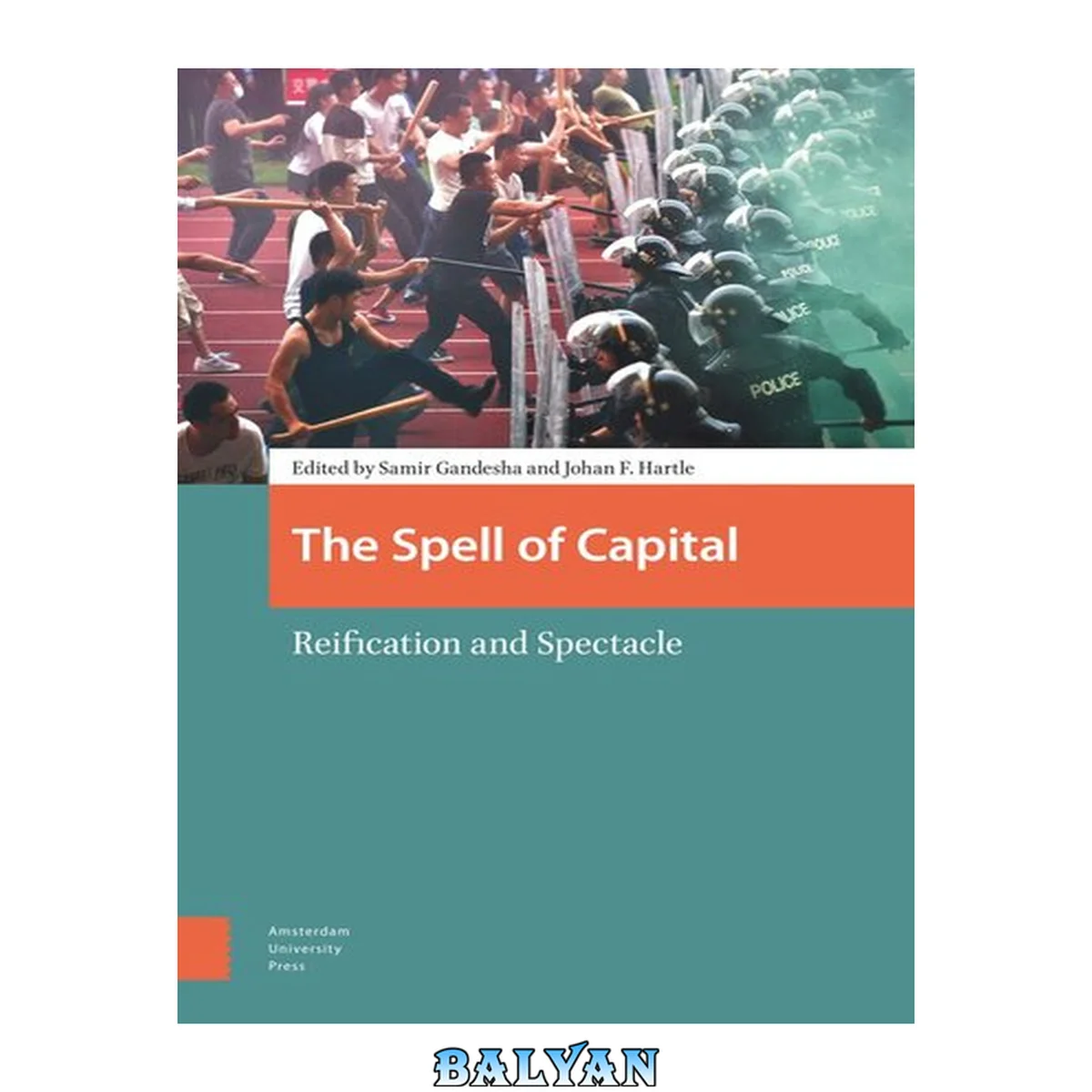
معرفی کتاب «The Spell of Capital : Reification and Spectacle Reification and Spectacle» نوشتهٔ Samir Gandesha (editor); Johan Frederik Hartle (editor)، منتشرشده توسط نشر Amsterdam University Press در سال 2017. این کتاب در 93 صفحه، فرمت pdf، زبان انگلیسی ارائه شده است.
This book explores the tradition, impact, and contemporary relevance of two key ideas from Western Marxism: Georg Lukács's concept of reification, in which social aspects of humanity are viewed in objectified terms, and Guy Debord's concept of the spectacle, where the world is packaged and presented to consumers in uniquely mediated ways. Bringing the original, yet now often forgotten, theoretical contexts for these terms back to the fore, Johan Hartle and Samir Gandesha offer a new look at the importance of Western Marxism from its early days to the present moment-and reveal why Marxist cultural critique must continue to play a vital role in any serious sociological analysis of contemporary society. Contents Introduction 1. Reification as Structural Depoliticization: The Political Ontology of Lukács and Debord 2. ‘Reification’ between Autonomy and Authenticity: Adorno on Musical Experience 3. ‘All Reification Is a Forgetting’: Benjamin, Adorno, and the Dialectic of Reification 4. Utopian Interiors: The Art of Situationist Urbanism from Reification to Play 5. ‘The Brilliance of Invisibility’: Tracking the Body in the Society of the Spectacle 6. Art Criticism in the Society of the Spectacle: The Case of October 7. Spectacle and Politics: Is There a Political Reality in the Spectacle of Society? 8. Reification, Sexual Objectification, and Feminist Activism 9. Reified Life: Vitalism, Environmentalism, and Reification in Guy Debord’s The Society of the Spectacle and A Sick Planet 10. Images of Capital: An Interview with Zachary Formwalt Notes Index
This book offers a groundbreaking perspective on Judeo-Christian coexistence in medieval Spain, in particular on the Camino de Santiago (Way of St. James), one of the most important pilgrimage routes in Europe. The author uncovers new evidence of Judeo-Christian cooperation in Castilian monasteries on the Camino. It reveals that a collaborative climate endured in these monasteries as demonstrated by the transmission of cuaderna vía poetry from Christians to Jews. The research focuses on poems written by Jews in Castilian (Spanish) during the thirteenth and fourteenth centuries that illustrate a progressive mastery of cuaderna vía poetry, which is the product of interaction in monastic schools between Jews and Christian clerics who created and cultivated this Castilian poetic form.