The Ship of Dreams : The Sinking of the Titanic and the End of the Edwardian Era
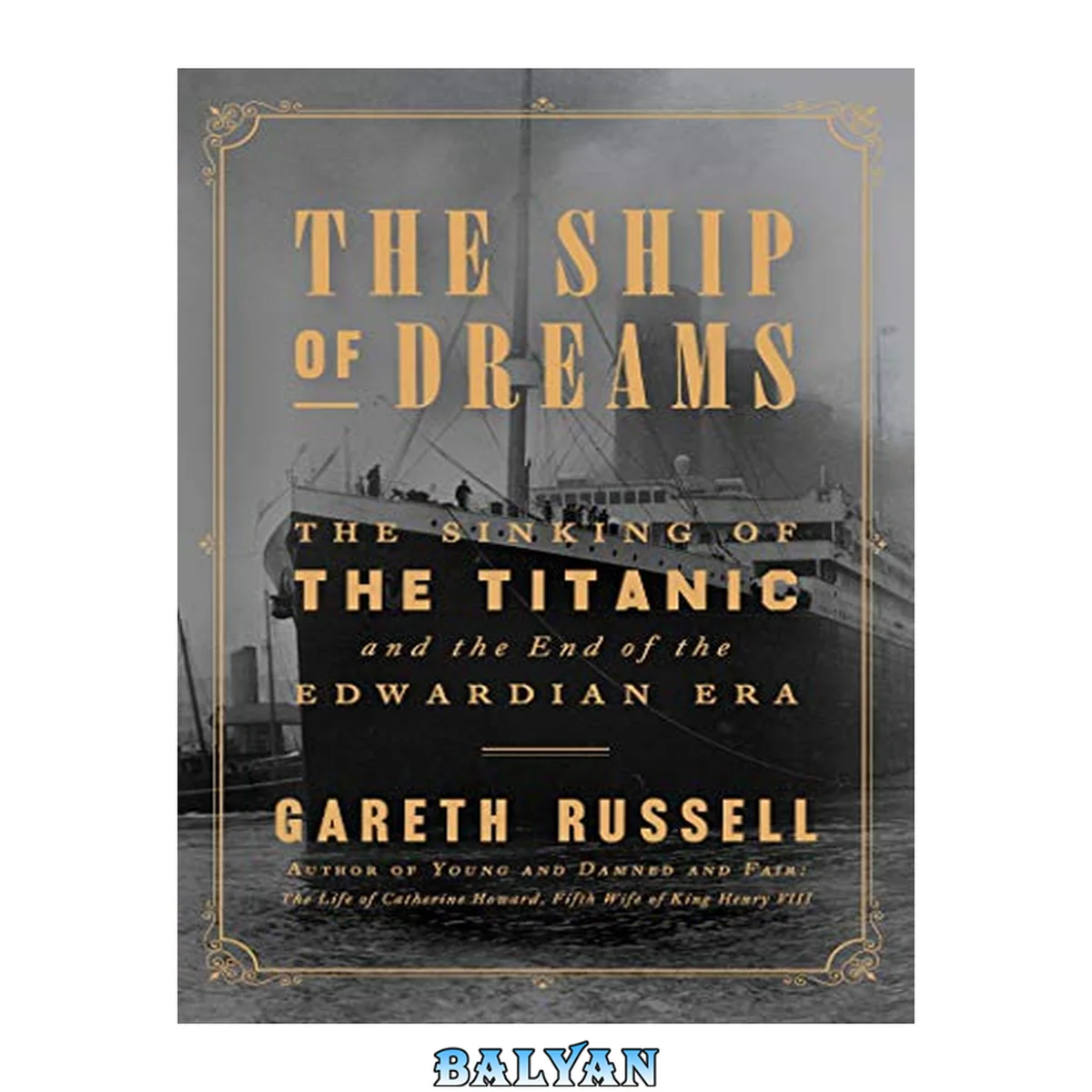
معرفی کتاب «The Ship of Dreams : The Sinking of the Titanic and the End of the Edwardian Era» نوشتهٔ Gareth Russell، منتشرشده توسط نشر Atria Books در سال 2019. این کتاب در فرمت epub، زبان انگلیسی ارائه شده است.
Gareth Russell, "The Ship of Dreams: The Sinking of the Titanic and the End of the Edwardian Era" “Gareth Russell has chosen a handful of passengers on the doomed liner and by training a spotlight on every detail of their lives, he has given us a meticulous, sensitive, and at times harsh picture of the early 20th century in Britain and America. A marvelous piece of work.” —Julian Fellowes, creator of Downton Abbey A riveting account of the Titanic disaster and the unraveling of the gilded Edwardian society that had created it. In April 1912, six notable people were among those privileged to experience the height of luxury—first class passage on “the ship of dreams,” the RMS Titanic: Lucy Leslie, Countess of Rothes; son of the British Empire, Tommy Andrews; American captain of industry John Thayer and his son Jack; Jewish-American immigrant Ida Straus; and American model and movie star Dorothy Gibson. Within a week of setting sail, they were all caught up in the horrifying disaster of the Titanic’s sinking, one of the biggest news stories of the century. Today, we can see their stories and the Titanic’s voyage as the beginning of the end of the established hierarchy of the Edwardian era. Writing in his elegant signature prose and using previously unpublished sources, deck plans, journal entries, and surviving artifacts, Gareth Russell peers through the portholes of these first-class travelers to immerse us in a time of unprecedented change in British and American history. Through their intertwining lives, he examines social, technological, political, and economic forces such as the nuances of the British class system, the explosion of competition in the shipping trade, the birth of the movie industry, the Irish Home Rule Crisis, and the Jewish-American immigrant experience while also recounting their intimate stories of bravery, tragedy, and selflessness. Masterful in its superb grasp of the forces of history, gripping in its moment-by-moment account of the sinking, revelatory in discounting long-held myths, and lavishly illustrated with color and black and white photographs, this absorbing, accessible, and authoritative account of the Titanic’s life and death is destined to become the definitive book on the subject. "Gareth Russell has chosen a handful of passengers on the doomed liner and by training a spotlight on every detail of their lives, he has given us a meticulous, sensitive, and at times harsh picture of the early 20th century in Britain and America. A marvelous piece of work." ?Julian Fellowes, creator of Downton Abbey A riveting account of the Titanic disaster and the unraveling of the gilded Edwardian society that had created it. In April 1912, six notable people were among those privileged to experience the height of luxury?first class passage on "the ship of dreams," the RMS Titanic : Lucy Leslie, Countess of Rothes; son of the British Empire, Tommy Andrews; American captain of industry John Thayer and his son Jack; Jewish-American immigrant Ida Straus; and American model and movie star Dorothy Gibson. Within a week of setting sail, they were all caught up in the horrifying disaster of the Titanic 's sinking, one of the biggest news stories of the century. Today, we can see their stories and the Titanic 's voyage as the beginning of the end of the established hierarchy of the Edwardian era. Writing in his elegant signature prose and using previously unpublished sources, deck plans, journal entries, and surviving artifacts, Gareth Russell peers through the portholes of these first-class travelers to immerse us in a time of unprecedented change in British and American history. Through their intertwining lives, he examines social, technological, political, and economic forces such as the nuances of the British class system, the explosion of competition in the shipping trade, the birth of the movie industry, the Irish Home Rule Crisis, and the Jewish-American immigrant experience while also recounting their intimate stories of bravery, tragedy, and selflessness. Masterful in its superb grasp of the forces of history, gripping in its moment-by-moment account of the sinking, revelatory in discounting long-held myths, and lavishly illustrated with color and black and white photographs, this absorbing, accessible, and authoritative account of the Titanic 's life and death is destined to become the definitive book on the subject This original and "meticulously researched retelling of history's most infamous voyage" (Denise Kiernan, New York Times bestselling author) uses the sinking of the Titanic as a prism through which to examine the end of the Edwardian era and the seismic shift modernity brought to the Western world. "While there are many Titanic books, this is one readers will consider a favorite" ( Voyage ). In April 1912, six notable people were among those privileged to experience the height of luxury—first class passage on "the ship of dreams," the RMS Titanic : Lucy Leslie, Countess of Rothes; son of the British Empire Tommy Andrews; American captain of industry John Thayer and his son Jack; Jewish-American immigrant Ida Straus; and American model and movie star Dorothy Gibson. Within a week of setting sail, they were all caught up in the horrifying disaster of the Titanic 's sinking, one of the biggest news stories of the century. Today, we can see their stories and the Titanic 's voyage as the beginning of the end of the established hierarchy of the Edwardian era. Writing in his signature elegant prose and using previously unpublished sources, deck plans, journal entries, and surviving artifacts, Gareth Russell peers through the portholes of these first-class travelers to immerse us in a time of unprecedented change in British and American history. Through their intertwining lives, he examines social, technological, political, and economic forces such as the nuances of the British class system, the explosion of competition in the shipping trade, the birth of the movie industry, the Irish Home Rule Crisis, and the Jewish-American immigrant experience while also recounting their intimate stories of bravery, tragedy, and selflessness. Lavishly illustrated with color and black and white photographs, this is "a beautiful requiem" ( The Wall Street Journal ) in which "readers get the story of this particular floating Tower of Babel in riveting detail, and with all the wider context they could want" ( Christian Science Monitor ). In this original and meticulously researched narrative history, the author of the "stunning" ( The Sunday Times ) Young and Damned and Fair uses the sinking of the Titanic as a prism through which to examine the end of the Edwardian era and the seismic shift modernity brought to the Anglo-American world. In April 1912, six notable people were among those privileged to experience the height of luxury?first class passage on "the ship of dreams," the RMs Titanic : Lucy Leslie, Countess of Rothes; son of the British Empire, Tommy Andrews; American captain of industry John Thayer and his son Jack; Jewish-American immigrant Ida Straus; and American model and movie star Dorothy Gibson. Within a week of setting sail, they were all caught up in the horrifying disaster of the Titanic 's sinking, one of the biggest news stories of the century. Today, we can see their stories and the Titanic 's voyage as the beginning of the end of the established hierarchy of the Edwardian era. Writing in his elegant signature prose and using previously unpublished sources, deck plans, journal entries, and surviving artifacts, Gareth Russell peers through the portholes of these first-class travelers to immerse us in a time of unprecedented change in British and American history. Through their intertwining lives, he examines social, technological, political, and economic forces such as the nuances of the British class system, the explosion of competition in the shipping trade, the birth of the movie industry, the Irish Home Rule Crisis, and the Jewish-American immigrant experience while also recounting their intimate stories of bravery, tragedy, and selflessness. Masterful in its superb grasp of the forces of history, gripping in its moment-by-moment account of the sinking, revelatory in discounting long-held myths, and lavishly illustrated with color and black and white photographs, this absorbing, accessible, and authoritative account of the Titanic 's life and death is destined to become the definitive book on the subject "A product of Anglo-American capitalism, built by a generation that had never known trauma and was bored by its own prosperity and success, the Titanic set sail into a world that was about to change forever. Modernity was shaking the class system, the Industrial Revolution was creating new kinds of wealth, and revolutionary fervor would lead to The Great War. Exploring the infamous disaster from the perspectives of six of her first-class passengers--a British aristocrat, a celebrated maritime architect, an American railway tycoon and his son, a first-generation American philanthropist, and a silent movie star--The Ship of Dreams uses the ship's creation and her tragic fate as a window into the changing, unsettled world at the end of the Edwardian era. Utilizing previously unpublished sources, deck plans, and surviving artifacts, it disproves many of the most established myths about the Titanic, including the treatment of her third-class passengers, the conspiracies surrounding her construction, and the lives of some of her most famous passengers. As it places the Titanic in the sweep of history, The Ship of Dreams holds a wealth of riches for history lovers, encompassing the birth of the movie industry, the Irish Home Rule crisis, the American Civil War, the escalating wars between the great shipping companies, the technological inventions that changed ship design, changing political relationships across the globe; and the social nuances at play among the ship's passengers. Representing the limitless technological and financial possibilities of its time, The Titanic was also the embodiment of the the splendors and injustices of the Edwardian society, a world as doomed as the infamous ship sailing into dangerous, dark waters"-- Provided by publisher
دانلود کتاب The Ship of Dreams : The Sinking of the Titanic and the End of the Edwardian Era