The science of Leonardo : inside the mind of the great genius of the Renaissance
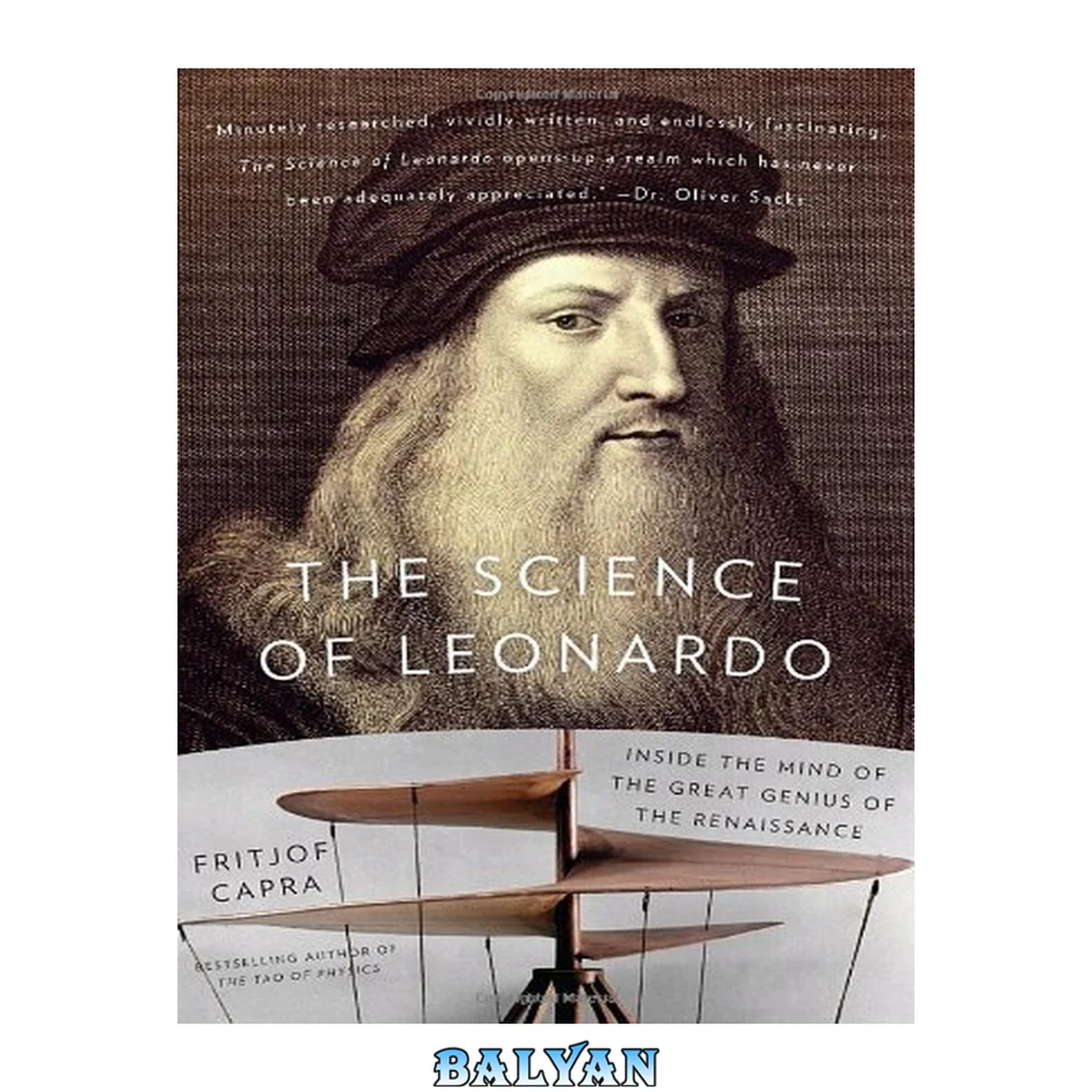
معرفی کتاب «The science of Leonardo : inside the mind of the great genius of the Renaissance» نوشتهٔ Fritjof Capra، منتشرشده توسط نشر Anchor Books در سال 2008. این کتاب در فرمت pdf، زبان انگلیسی ارائه شده است.
leonardo Da Vinci's Scientific Explorations Were Virtually Unknown During His Lifetime, Despite Their Extraordinarily Wide Range. He Studied The Flight Patterns Of Birds To Create Some Of The First Human Flying Machines; Designed Military Weapons And Defenses; Studied Optics, Hydraulics, And The Workings Of The Human Circulatory System; And Created Designs For Rebuilding Milan, Employing Principles Still Used By City Planners Today. Perhaps Most Importantly, Leonardo Pioneered An Empirical, Systematic Approach To The Observation Of Nature-what Is Known Today As The Scientific Method. drawing On Over 6,000 Pages Of Leonardo's Surviving Notebooks, Acclaimed Scientist And Bestselling Author Fritjof Capra Reveals Leonardo's Artistic Approach To Scientific Knowledge And His Organic And Ecological Worldview. In This Fascinating Portrait Of A Thinker Centuries Ahead Of His Time, Leonardo Singularly Emerges As The Unacknowledged “father Of Modern Science.” the Barnes & Noble Review much As Harold Bloom Discerned The Roots Of Our Modern Sensibilities In The Figure Of A Single Phenomenal Writer In His Study shakespeare: The Invention Of The Human (1998), So Too Does Fritjof Capra, Author Of The Classic the Tao Of Physics (1975), Trace The Genesis Of The Scientific Method -- As Well As Prescient Foreshadowings Of Contemporary Fields Such As Complexity Theory And Deep Ecology -- To A Lone Pioneering Genius, In the Science Of Leonardo . In Capra's Thesis, Da Vinci's Unique Blend Of Art, Science, And Design -- Rationalism, Empiricism, And Empathetic Imagination United In A Holistic Matrix -- Earns The Renaissance Polymath The Designation Of The True Founder Of Modern Science. Drawing On Recent Scholarship That Has, Finally, Arrayed In Chronological Order And Definitively Annotated The Entire 6,000 Surviving Pages Of Leonardo's Notes (out Of A Reputed 13,000!) In Accessible Facsimile Editions, Capra Presents An Enthralling Portrait Of Both Leonardo, The Man And Leonardo, The Scientist. Historical Context Is Rendered Crystal Clear, As Are The Scientific Principles Of Leonardo's Researches And His Painterly Techniques. No Mystical Flights Of Fancy Obtain -- Illuminati Need Not Apply -- Since The Simple Truth Of The Man's Far-flung Accomplishments Are Nearly Unbelievable. Capra Notes That Each Era Reinvents Its Own Version Of Leonardo, And This Volume Gives Us A Gaia-loving, Sfx-creating über-geek Leonardo, Who Would Fit Right Into Some Google R&d Facility, Where He Could Zestily Blue-sky The Utopian Future We All Long To Inhabit. -- paul Difilippo Leonardo da Vinci's pioneering scientific work was virtually unknown during his lifetime. Now acclaimed scientist and bestselling author Fritjof Capra reveals that Leonardo was in many ways the unacknowledged "father of modern science." Drawing on an examination of over 6,000 pages of Leonardo's surviving notebooks, Capra explains that Leonardo approached scientific knowledge with the eyes of an artist. Through his studies of living and nonliving forms, from architecture and human anatomy to the turbulence of water and the growth patterns of grasses, he pioneered the empirical, systematic approach to the observation of nature--what is now known as the scientific method. Leonardo's scientific explorations were extraordinarily wide-ranging. He studied the flight patterns of birds to create some of the first human flying machines. Using his understanding of weights and levers and trajectories and forces, he designed military weapons and defenses, and was in fact regarded as one of the foremost military engineers of his era. He studied optics, the nature of light, and the workings of the human heart and circulatory system. Because of his vast knowledge of hydraulics, he was hired to create designs for rebuilding the infrastructure of Milan and the plain of Lombardy, employing the very principles still used by city planners today. He was a mechanical genius, and yet his worldview was not mechanistic but organic and ecological. This is why, in Capra's view, Leonardo's science--centuries ahead of his time in a host of fields--is eminently relevant to our time.Enhanced with fifty beautiful sepia-toned illustrations, The Science of Leonardo is a fresh and important portrait of a colossal figure in the world of science and the arts. Leonardo da Vinci's pioneering scientific work was virtually unknown during his lifetime. Now, author Fritjof Capra reveals that Leonardo was in many ways the unacknowledged "father of modern science." Drawing on an examination of over 6,000 pages of Leonardo's surviving Notebooks, Capra explains that Leonardo approached scientific knowledge with the eyes of an artist. Through his studies of living and nonliving forms, from architecture and human anatomy to the turbulence of water and the growth patterns of grasses, he pioneered the empirical, systematic approach to the observation of nature - what is now known as the scientific method. Leonardo's scientific explorations were extraordinarily wide-ranging. He studied the flight patterns of birds to create some of the first human flying machines. Using his understanding of weights and levers and trajectories and forces, he designed military weapons and defences, and was in fact regarded as one of the foremost military engineers of his era. He studied optics, the nature of light and the workings of the human heart and circulatory system. Because of his vast knowledge of hydraulics, he was hired to create designs for rebuilding the infrastructure of Milan and the plain of Lombardy, employing the very principles still used by city planners today. He was a mechanical genius, and yet his worldview was not mechanistic, but organic and ecological. This is why, in Capra's view, Leonardo's science - centuries ahead of his time in a host of fields - is eminently relevant to our time Leonardo da Vinci's scientific explorations were virtually unknown during his lifetime, despite their extraordinarily wide range. He studied flight patterns of birds to create some of the first human flying machines; designed military weapons and defenses; studied optics, hydraulics, and the workings of the human circulatory system; and created designs for rebuilding Milan, employing principles still used by city planners today. Perhaps most importantly, Leonardo pioneered an empirical, systematic approach to the observations of nature- what is known today as the scientific method. Drawing on over 6,000 pages of Leonardo's surviving notebooks, acclaimed scientist and bestselling author Fritjof Capra reveals Leonardo's artistic approach to scientific knowledge and his organic and ecological worldview. In this fascinating portrait of a thinker centuries ahead of his time, Leonardo singularly emerges as the unacknowledged 'father of modern science.' -- Back Cover A biographical portrait of the Renaissance genius focuses on the scientific accomplishments of Leonardo da Vinci, examining thousands of pages of his surviving notebooks to describe his contributions to the study of human anatomy, engineering, the scientific method, optics, urban design, military technology, flight, and other key fields. Reprint. 20,000 first printing. pt. 1: Leonardo, the man Infinite grace The universal man The Florentine A well-employed life pt. 2: Leonardo, the scientist Science in the Renaissance Science born of experience Geometry done with motion Pyramids of light The eye, the senses, and the soul "Read me, O reader, if in my words you find delight". Drawing on an examination of Leonardo da Vinci's surviving notebooks, a biographical portrait of the Renaissance genius focuses on his scientific accomplishments, describing his contributions to such fields as human anatomy, engineering, and optics
دانلود کتاب The science of Leonardo : inside the mind of the great genius of the Renaissance