The Production, Use and Importance of Flint Tools in the Archaic Period and the Old Kingdom in Egypt
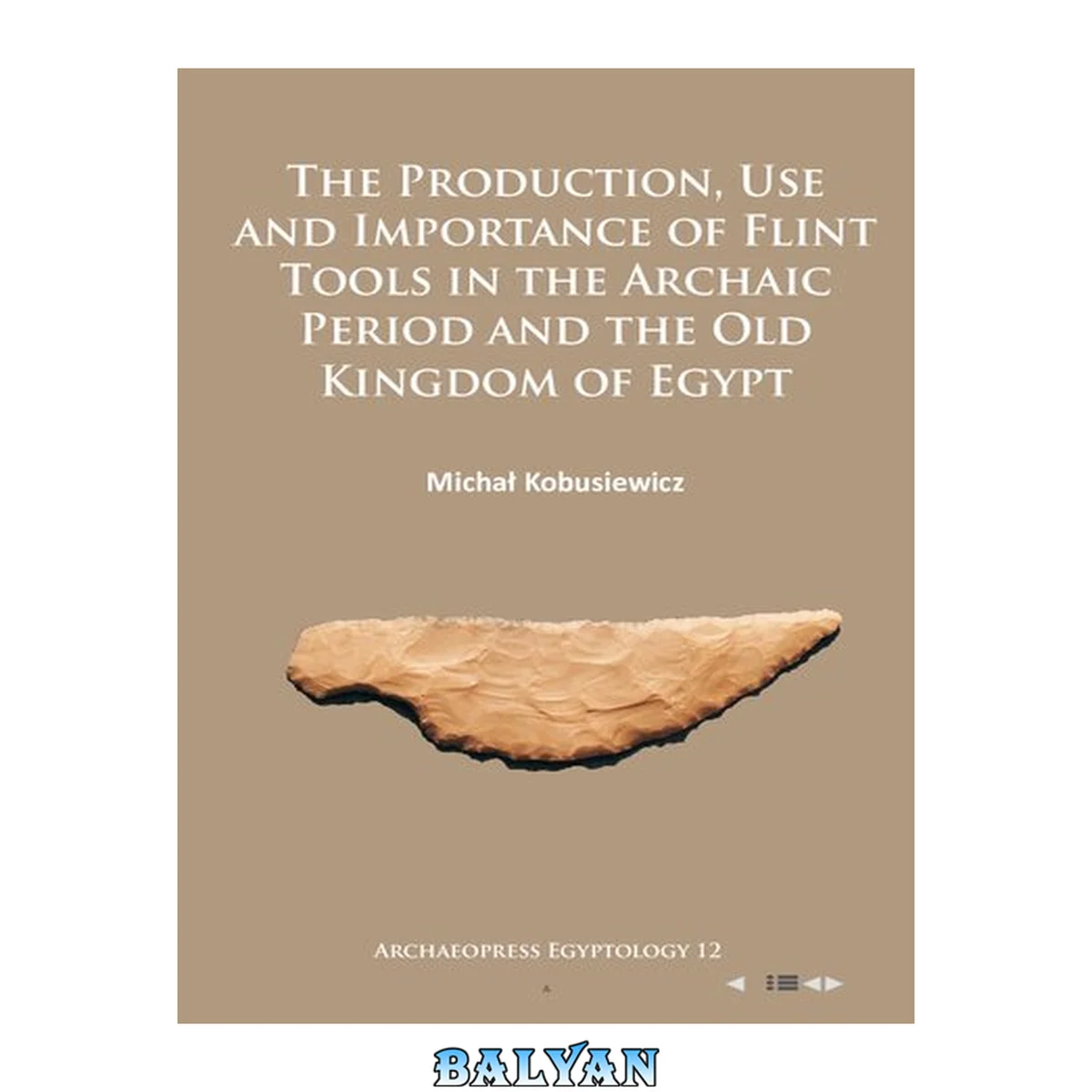
معرفی کتاب «The Production, Use and Importance of Flint Tools in the Archaic Period and the Old Kingdom in Egypt» نوشتهٔ Michał Kobusiewicz، منتشرشده توسط نشر Archaeopress Access Archaeology در سال 2016. این کتاب در فرمت pdf، زبان انگلیسی ارائه شده است.
This book seeks to explore the issues of production, use and importance of flint tools in the Archaic Period, known also as the Early Dynastic Period, and the Old Kingdom of Egypt, the epoch immediately following the unification of pre-state organisms of Upper and Lower Egypt into one political body. This volume provides an in-depth study of tools made of flint, which unceasingly fulfilled a major role in the period being considered. Flint, occurring in a number of varieties, substantially outnumbers other raw materials used for manufacturing tools, to wit: chalcedony, obsidian, quartzite, carnelian or rock crystal, all found in small or even minute amounts, which attests to their minor role in the first periods of Egyptian history. Notwithstanding a growing number of implements made of copper, then bronze, flint tools constituted an essential element of a broad-based culture, and not only material culture, in the Archaic Period, the Old Kingdom and beyond. This book explores previously often neglected issues of the production, use and importance of flint tools in the ancient Egyptian civilisation. Focusing on the Archaic Period and the Old Kingdom of Egypt, when flint implements and weapons still played an essential role in the everyday life, Michał Kobusiewicz discusses rock types and sources of raw flint, types of tools, typology, technology and organisation of their production and their role in economy-related activities, rituals and prestige. He provides a comprehensive overview of flint assemblages and presents hitherto unpublished material from archaeological sites in the Dakhla Oasis in the Western Desert and the Nile Delta, classified in accordance to a specifically designed list of types. The study of flintwork has provided insights into the question of the organisation of a centralised state, acculturation of indigenous communities, colonised by Egyptians from the Nile valley, and has demonstrated how flint was implicated in far-flung trade connections and relations with adjacent areas. The book will be of interest to Egyptologists and readers interested in the ancient Middle East. Addressing such issues as state organisation, acculturation and trade relations at the dawn of Egyptian civilisation, it will make a compelling read for all historians. Cover 1 Title Page 3 Copyright Page 4 Contents 5 List of Figures 6 Acknowledgments 9 Acknowledgments 9 Chapter 1 Introduction 11 1.1. The scope of the study 11 1.2. History of research 12 Chapter 2 Production of Tools 16 2.1. Types of splintery rocks 16 2.2. Sources of raw materials 17 2.3. Lithic technology 17 2.4. Typology 19 2.5. Organisation of lithic production 20 Chapter 3 Types of Flint Artefacts in the Archaic Period and the Old Kingdom 23 Figure 1. Metrical data on rectangular sickle blades from Kom el-Hisn, Ain el-Gazzareen, Ain Asil and Elephantine (measurements in mm). Measurements for Ain Asil are given for the most numerous group of sickle blades at the site, made of auburn and black- 26 Figure 2. Comparison of measurements and proportions of rectangular sickle blades of the Predynastic period and the Old Kingdom (Nagada, Hamemieh, Badari according to Holmes 1989, Ain Asil according to Midant-Reynes 1998, Elephantine according to Hikade 2 27 Chapter 4 Flint Assemblages from Recently Investigated Old Kingdom Sites 36 4.1. The Dakhla Oasis 36 4.1.1. Ain el-Gazzareen (Site 32/390/K2-2) 36 4.1.2. List of types for the site of Ain el-Gazzareen 40 4.1.3. Watch-posts 43 4.1.4. The temple of Mut el-Khorab (Site 31/405 – G9 – 1) 48 4.1.5. Ain Asil 49 4.1.6. Comparison of sites from the Dakhla Oasis 50 4.2. Kom el-Hisn, the western Nile Delta 53 4.3. Elephantine 58 Figure 3. Ain el-Gazzareen. Sample collection. Absolute and percentage frequencies of types of cores. 37 Figure 4. Ain el-Gazzareen. Sample collection. Metrical data on cores (measurements in mm). 38 Figure 5. Ain el-Gazzareen. Sample collection. Absolute and percentage frequencies of debitage types 39 Figure 6. Ain el-Gazzareen. Sample collection. Metrical data on debitage (measurements in mm) 40 Figure 7. Ain el-Gazzareen. Absolute and percentage frequencies of particular types of retouched tools along with the absolute and percentage frequencies of burnt pieces calculated within particular types . 41 Figure 8. Ain el-Gazzareen. Type and location of retouch on sickle blades 43 Figure 9. Ain el-Gazzareen. Absolute and percentage frequencies of particular types of raw materials counted for each type of retouched tools 44 Figure 10. Seth Hill. Absolute and percentage frequencies of debitage types 45 Figure 11. Seth Hill. Absolute and percentage frequencies of retouched tools 46 Figure 12. Bee’s Lookout. Absolute and percentage frequencies of debitage types 47 Figure 13. Bee’s Lookout. Absolute and percentage frequencies of retouched tools 48 Figure 14. Ain Asil. Absolute and percentage frequencies of retouched tools (according to Midant-Reynes 1998) 51 Figure 15. Comparison of flint inventories recovered from the late Old Kingdom sites in the Dakhla Oasis. XXX – very frequent, XX – frequent, X – scarce. 52 Figure 16. Kom el-Hisn. Absolute and percentage frequencies of debitage types 54 Figure 17. Kom el-Hisn. Absolute and percentage frequencies of tool types 54 Figure 18. Kom el-Hisn. Bifacial knifes. Absolute and percentage frequencies of different raw materials. 55 Figure 19. Kom el-Hisn. Bifacial knifes. Absolute and percentage frequencies of different types of blanks 55 Figure 20. Kom el-Hisn. Sickle blades. Absolute and percentage frequencies of the location of retouch. 55 Figure 21. Kom el-Hisn. Sickle blades. Absolute and percentage frequencies of different raw materials. 56 Figure 22. Kom el-Hisn. Sickle blades. Absolute and percentage frequencies of different types of blanks. 56 Figure 23. Kom el-Hisn. Sickle blades. Different sections for blades used for sickle production. 56 Figure 24. Comparison of percentages of different tool types from selected sites. Percentages based on the total number of tools (Helwan, Elephantine, Giza, Ibrahim Awad and Ain Asil according to Hikade 2005. For Ain el-Gazzareen and Kom el-Hisn see this 58 Figure 25. Elephantine. Northern Group. Types of raw material (according to Hikade 2013) 58 Figure 26. Elephantine. Northern Group. Absolute and percentage frequencies of debitage types (according to Hikade 2013) 59 Figure 27. Elephantine. Northern Group. Absolute and percentage frequencies of tool types (according to Hikade 2013). 60 Figure 28. Elephantine. Southern Group. Types of raw material (according to Hikade 2013) 60 Figure 29. Elephantine. Southern Group. Absolute and percentage frequencies of debitage types (according to Hikade 2013) 61 Figure 30. Elephantine. Southern Group. Absolute and percentage frequencies of tool types (according to Hikade 2013). 62 Chapter 5 Comparison of Flint Assemblages Dated to the Old Kingdom: Sites from Dakhla Oasis, Kom el Hisn and Elephantine 63 Figure 31. Comparison of flint inventories from Kom el-Hisn, the Dakhla Oasis and Elephantine. XXX – very frequent, XX – frequent, X – scarce. (Elephantine according to Hikade 2013) 64 Figure 32. The percentage frequencies of major types of flint tool from watch-posts Seth Hill and Bee’s Lookout. Compare to Figure 25. 65 Chapter 6 El Kharafish 66 Figure 33. El Kharafish 02/5-1. Absolute and percentage frequencies of tool types. (according to Riemer 2011b) 67 Chapter 7 Three Lithic Complexes 68 Chapter 8 The Importance of Flint Tools in the Culture of Early Dynasties of Egypt 69 8.1. Economic importance 69 8.2. Ritual importance 69 8.3. Prestige 70 Chapter 9 The Cognitive Potential of Flint Materials 71 9.1. Centralised rule 71 9.2. Acculturation 72 9.3. External contacts 74 Figure 34. Similarities and differences between flint inventories from the sites of Ain el-Gazzareen and El Kharafish (according to H. Riemer 2011a) 74 Chapter 10 Continued Interest in Flint 76 Chapter 11 Conclusions 77 Figure 35. Map of sites mentioned in the text. 1 Tell el Fara’in/Buto; 2 Kom el Hisn; 3 Tell el Iswid; 4 Tell Ibrahim Awad; 5 Tell el Farkha; 6 Abu Rawash; 7 Giza; 8 Abusir; 9 Heluan; 10 Dahshur; 11 Fayum; 12 Wadi Sheikh; 13 Beni Hassan; 14 Abydos; 15 79 Figures 79 Figure 36. Bifacial knife type 2 (Abydos, according to Hikade 1997). 80 Figure 37. Bifacial knife type „fish teil” type 1 (Abydos, tomb U-127, according to Hikade 1996). 81 Figure 38. 1- Bifacial knife type 3 (Saqqara, according to Macramallah 1940); 2- bifacial knife type 4 (according to Kromer 1978); 3-4 bifacial knifes worn by grainding (Abydos, according to Svoboda 2006) 82 Figure 39. Bifacial knife type 5 (Ain Asil VI dynasty, according to Midant-Reynes 1998) 83 Figure 40. Scene of dividing a cow’s carcass using bifacial knife. (Saqqara, mastaba of Ptahetep, V dynasty, according to Davies 1901). 83 Figure 41.1-9 Rectangular sickle blades 1-4 Kom el Hisn; 5-7 Ain el Gazzareen; 8-9 Ain Asil (according to Midant-Reynes 1998) 84 Figure 42. 1-3 half-finished sickle blades, 4 wooden sickle with visible row of sickle blades. 85 Figure 43. 1 Scene of harvesting by sickle with flint inserts (Tomb of Sennediem, XIX dynasty, according to Tristant 2009); 2 reconstruction of hafting sickle inserts based on traces of bitumite (Middle east, according to Cauvin 1973) 86 Figure 44. 1-5 masive rectangular sickle blades; 6-7 massive triangular sickle blades 87 Figure 45. 1-5,9 bitruncated regular blade tools („rasor blades”) older phase (Saqqara, according to Macramallah 1940); 6-8, 10 bitruncated regular blade tools („rasor blades”) younger phase (Elephantine, according to Hikade 2002); 88 Figure 46. 1 massive scraper (Ain el Gazzareen); 2 flat scraper (Ain el Gazzareen); 3 scraper with denticulated edge (Ain Asil, according to Midant-Reynes 1998) 89 Figure 47. 1 flat scraper (Ain el Gazzareen); 2 triangular scraper (Tell el Fara’in/Buto, according to Schmidt 1992b; 3-5 end-scrapers (3-4 Ain el Gazzareen, 5 Ain Asil (according to Midant-Reynes 1998) 90 Figure 48. 1 crescent shaped drill (Tell el Fara’in/Buto (according to Schmidt 1986); 2-5 microperforators (Ain el Gazzareen); 6-8 notches (Ain el Gazzareen) 91 Figure 49. 1-2 nosed scrapers (Ain el Gazzareen); 3-5 tanged arrow heads (3,5 Ain el Gazzareen); 6-7 bifacially retouched arrow heads (6 – Abydos, tomb of Djer, according to Hikade 2003; 7 – Ain el Gazzareen); 8 trapezoidal arrow head (Elephantine, accord 92 Figure 50. 1-5 borers (Ain el Gazzareen); 6-7 denticulates (6 – Ain Asil, according to Midant-Reynes 1998, 7 – Ain el Gazzareen) 93 Figure 51. 1,3 strangled pieces (1 – Ain Asil, according to Midant-Reynes 1998, 3 – Ain el Gazzareen); 2,4 scaled pieces (Ain el Gazzareen); 5-6 retouched flakes (Ain el Gazzareen); 94 Figure 52. 1-4 burins (Elephantine, according to Katthagen 1985); 5 backed piece (Helwan, according to Hikade 2005); 6-7 bracelets of flint (6 – Tell el Fara’in/Buto, according to Schmidt 1992b), 7 – Elephantine (according to Katthagen 1985) 95 Figure 53. Axe (Giza, afer Kromer 1978) 96 Figure 54. Hoe (Ain el Gazzareen) 97 Figure 55. Pebble tool (Dahshur) 98 Figure 56. Ain el Gazzareen, 1-3 cores 99 Figure 57. Ain el Gazzareen, 1-4 cores 100 Figure 58. Type list. 1 - bifacial knife; 2 – rectangular sickle blade; 3 – triangular sickle blade; 4 – half-finished sickle blade; 5 – massive rectangular sickle insert; 6 – massive triangular sickle insert; 7 – massive scraper; 8 – flat scraper; 9 – en 101 Figure 59. Ain el Gazzareen, bifacial knife 102 Figure 60. Ain el Gazzareen, 1-2 bifacial knifes 103 Figure 61. Ain el Gazzareen, 1-2 worn bifacial knifes 104 Figure 62. Ain el Gazzareen, 1-2 fragments of bifacial knifes 105 Figure 63. Ain el Gazzareen, 1-4 worn bifacial knifes 106 Figure 64. Ain el Gazzareen, 1-9 rectanglar sickle blades 107 Figure 65. Ain el Gazzareen, 1-3 triangular sickle blades; 4-6 half-finished sickle blades; 7-8 massive rectangular sickle blades 108 Figure 66. Ain el Gazzarn, 1-8 massive rectangular sickle blades 109 Figure 67. Ain el Gazzareen, 1-5 massive triangular sickle blades 110 Figure 68. Ain el Gazzareen, 1-3 masive scrapers 111 Figure 69. Ain el Gazzareen, 1-2 flat scrapers 112 Figure 70. Ain el Gazzareen, 1-5 flat scrapers 113 Figure 71. Ain el Gazzareen, 1-5 end-scrapers 114 Figure 72. Ain el Gazzareen, 1-3 nosed scrapers. 115 Figure 73. Ain el Gazzareen, 1-4 rabots 116 Figure 74. Ain el Gazzareen, 1,4 crescent shaped drills; 2,5 tanged arrow heads; 3,6 bifacially retouched arrow heads, 7 retouched flake. 117 Figure 75. Ain el Gazzareen, 1-9 micro-perforators; 10-12 noches 118 Figure 76. Ain el Gazzareen, 1-8 borers 119 Figure 77. Ain el Gazareen, 1-6 denticulate tools 120 Figure 78. Ain el Gazzareen, 1,3 strangled pieces; 2,4-6 scaled pieces 121 Figure 79. Ain el Gazzareen, 1,4 retouched blades; 2,3,5 retouched flakes 122 Figure 80. Dakhla Oasis. Location of watch-posts. 1- Seth Hill; 2 – Bee’s Lookout; 3 – Nephtys Hill; 4 – Trigpoint Hill; 5 – Meidum Hill; 6 – Darb el Tawil; 7 – E-99/38, E-99/39; 8- El Kharafish 123 Figure 81. Seth Hill. 1-2 cores; 3 Double patinated Middle Palaeolithic levallois core. 124 Figure 82. Seth hill. 1 sickle blade; 2 massive triangular sickle blade; 3 flat scraper, 4 massive scraper 125 Figure 83. Seth Hill. 1 end scraper; 2-3 tanged arrow heads; 4 retouched flake; 5 microperforator; 6 borer ; 7 denticulated tool; 8 notch; 9 scaled piece. 1,6-7 and 9 are double patinated Midlle Palaeolithic tools. 126 Figure 84. Bee’s Lookout. Core of chalcedony. 127 Figure 85. Bee’s Lookout. 1-2 cores; 3,5 flat scrapers; 4 massive scraper; 6 mikroperforator; 7 borer. Number 4 is double patinated Middle Palaeolithic tool. 128 Figure 86. Bee’s Lookout. 1-2 borers; 3 crescent shaped drill; 5 denticulated tool; 6 scaled piece; 4,7 retouched flakes. 129 Figure 87. Kom el Hisn. 1 core; 2 obsidian core; 3 notch; 4 borer; 5-6 truncations 130 Figure 88. Kom el Hisn. 1,3 fragments of bifacial knife; 2 – burin; 4 flat scraper 131 Figure 89. Kom el Hisn. 1-9 rectangular sickle blades 132 Figure 90. Kom el Hisn. 1-3 rectangular sickle blades; 4-6 triangular sickle blades, 7-10 half- finished sickle blades 133 Figure 91. Kom el Hisn. 1 end scraper; 2 retouched flake; 3 retouched blade. 134 Figure 92. El Kharafish 02/5. 1-4 cores (according to Riemer 2011a) 135 Figure 93. El Kharafish 02/5. 1-3 scrapers with flat retouch; 4-7 scrapers with steep retouch (according to Riemer 2011a) 136 Figure 94. El Kharafish 02/5. 1-2 scrapers made on Middle Palaeolithic double patinated flakes; 3-9 borers (according to Riemer 2011a) 137 Figure 95. El Kharafish 02/5. 1-3 perforators; 4-5 denticulated tools; 6-7 noches (according to Riemer 2011a) 138 Figure 96. El Kharafish 02/5. 1-2 bifacially retouched arrow heads; 3 Ounan point; 4-6 fragments of knifes; 7 retouched blade; 8 truncation (according to Riemer 2011a). 4,7 and 8 seem to be rather sickle blades. 139 Figure 97. Beni Hasan. XII dynasty Manufacture of flint knifes: a Tomb 2; b Tomb 15, (according to Griffith 1896) 140 Figure 100. Tabular flint 141 Figure 98. Eastern Desert. 1-2 heavy duty tools (according to Seton Karr 1905) 141 Figure 99. Nodular flint 141 Figure 101. Dahshur. Surface concentration of pebble flint 142 Figure 102. Naqlun. Layer containing pebble flints 142 Figure 103. Ain el Gazzareen. Hammerstone of quartz 143 Figure 104. Ain el Gazzareen. Cores 143 Figure 105. Ain el Gazzareen. Bifacial knife 143 Figure 106. Dakhla Oasis. Rite of bifacial knife on sandstone rock. 144 Figure 107. Ain el Gazzareen. Rectangular and triangular sickle blades 144 Figure 108. Ain el Gazzareen. Half-products of sickle blades 144 Figure 109. Ain el Gazzaren. Massive rectangular sickle inserts 145 Figure 110. Ain el Gazzareen. Massive triangular sickle inserts 145 Figure 111. Ain el Gazzareen. Massive scrapers 146 Figure 112. Ain el Gazzareen. Flat scrapers 146 Figure 113. Ain el Gazzareen. Nosed scrapers 147 Figure 114. Ain el Gazzareen. Crescent shaped drill 147 Figure 115. Ain el Gazzareen. Tanged arrow heads 147 Figure 116. Ain el Gazzareen. Bifacially retouched arrow heads 148 Figure 117. Ain el Gazzareen. Microperforators 148 Figure 118. Ain el Gazzareen. Borers 148 Figure 119. Ain el Gazzaren. Denticulated pieces 148 Figure 120. Ain el Gazzareen. Scaled pieces 148 Figure 121. Ain el Gazzareen. Strangled pieces 149 Figure 122. Dahshur. Pebble tool 149 Figure 123. Stone construction on the wathpost 150 References 151 Appendix Contribution to the Functional Identification of Flint Tools used during the Old Kingdom of Egypt. A Case Study of Kom el Hisn and Ain el Gazzareen 157 1. Research methods 157 Introduction 157 2. The characteristics of the inventories and the results of use-wear analysis 158 Kom El Hisn 158 Ain el-Gazzareen 159 References 160 Summary 160 Appendix: Figure 1. Kom el-Hisn. Blade for smoothing non-organic material (a – microscopic photo, magnification 12x) and for plant cutting (b – microscopic photo, magnification 100x) 162 Appendix: Figure 2. Kom el-Hisn. Blade with edge polish (a – microscopic photo, magnification 12x) used for cereal cutting (b, c – microscopic photos, magnification 100x) 163 Appendix: Figure 3. Kom el-Hisn. Blade used for cereal cutting (a - microscopic photo, magnification 12x, b - microscopic photo, magnification 100x) 164 Appendix: Figure 4. Kom El-Hisn. Blade used for plant cutting (a - microscopic photo, magnification 12x, b - microscopic photo, magnification 100x) 165 Appendix: Figure 5. Kom el-Hisn. Blade used for cereal cutting (a, b – microscopic photos, magnification 100x) 166 Appendix: Figure 6. Kom el-Hisn. Blade with modified edges caused by hard material processing (microscopic photo, magnification 12x). 167 Appendix: Figure 7. Kom el-Hisn. Bifacial knife with modified edges caused by hard material processing (microscopic photo, magnification 12x) 167 Appendix: Figure 8. Ain El-Gazzareen: 1 - 6 heavy duty scrapers 168 Appendix: Figure 9. Ain El-Gazzareen: 1 - 7 heavy duty scrapers; 8 - 11 nosed scrapers 169 Appendix: Figure 10. Ain El-Gazzareen: 1 - 7 end scrapers; 8 - 9 bifacial knifes 170 Appendix: Figure 11. Ain El-Gazzareen: 1 - 5 bifacial knifes; 6 - 9 flat scrapers 171 Appendix: Figure 12. Ain El-Gazzareen: 1 - 4 flat scrapers; 5 - 11 massive rectangular sickle inserts; 12 bifacial knife 172 Appendix: Figure 13. Ain El-Gazzareen: 1 - 10 massive rectangular sickle inserts; 11 - 17 massive triangular sickle inserts 173 Appendix: Figure 14. Ain El-Gazzareen: 1 - 4 massive triangular sickle inserts; 5 - 12 lamellar sickle inserts; 13 - 14 half-products of lamellar sickle inserts 174 Appendix: Figure 15. Ain El-Gazzareen: 1 bifacially retouched projectile point; 2 - 4 groovers; 5 - 6 double backed perforators; 7 perforator; 8 - 9 scaled pieces 175 Appendix: Figure 16. Ain el-Gazareen. Massive triangular sickle inserts with traces of use-polish (a, b – microscopic photos, magnification 12x) 176 Appendix: Figure 17. Ain el- Gazareen. Massive rectangular sickle inserts with traces of use-polish (a, b – microscopic photos, magnification 12x, c- microscopic photo of plant processing photo, magnification, pow. 200x) 177 Appendix: Figure 18. Ain el-Gazareen, Lamellar sickle insert (microscopic photo, magnification 200x) 178 Appendix: Figure 19. Ain El-Gazzareen. Groovers and perforator with traces of boring hard material 178 flint tools,Old Kingodm,Egypt,Archaic Period This volume represents a selection of contributions on Mediterranean themes from a wider international interdisciplinary conference on Magical Texts in Ancient Civilizations, organised by the Centre for Comparative Studies of Civilizations at Jagiellonian University in Krakow in Poland between 27-28 June 2013.
دانلود کتاب The Production, Use and Importance of Flint Tools in the Archaic Period and the Old Kingdom in Egypt