The Price for Their Pound of Flesh : The Value of the Enslaved, From Womb to Grave, in the Building of a Nation
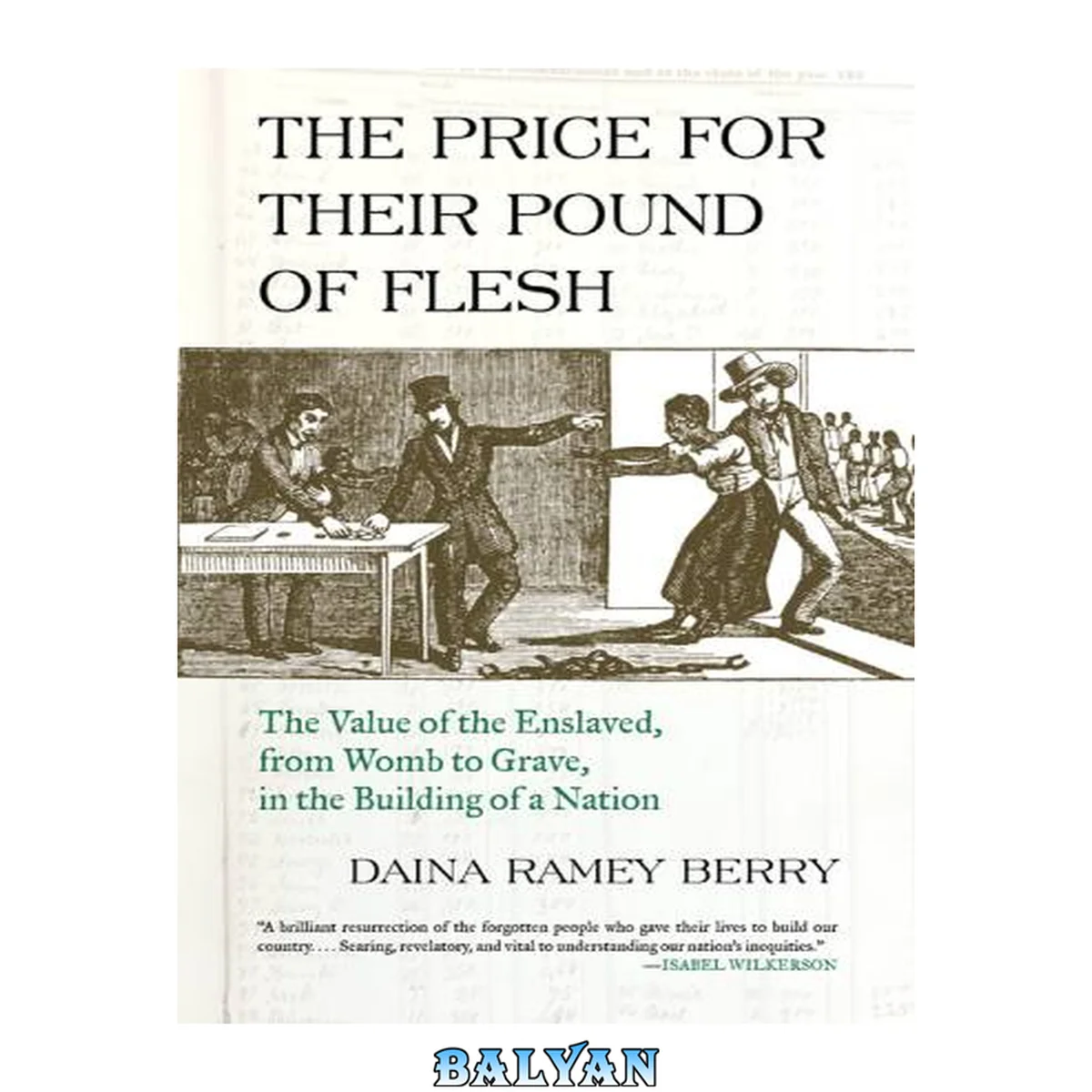
معرفی کتاب «The Price for Their Pound of Flesh : The Value of the Enslaved, From Womb to Grave, in the Building of a Nation» نوشتهٔ Berry, Daina Ramey، منتشرشده توسط نشر Beacon Press در سال 2017. این کتاب در فرمت epub، زبان انگلیسی ارائه شده است.
The Value of Life and Death -- Preconception, Women, and Future Increase -- Infancy and Childhood -- Adolescence, Young Adulthood, and Soul Values -- Mid-Life and Older Adulthood -- Elderly and Superannuated -- Postmortem, Death, and Ghost Values -- Epilogue: The Afterlives of Slavery.;"Groundbreaking look at slaves as commodities through every phase of life, from birth to death and beyond, in early America The Price for Their Pound of Flesh is the first book to explore the economic value of enslaved people through every phase of their lives--including from before birth to after death--in the American domestic slave trades. Covering the full "life cycle" (including preconception, infancy, childhood, adolescence, adulthood, the senior years, and death), historian Daina Berry shows the lengths to which slaveholders would go to maximize profits. She draws from over ten years of research to explore how enslaved people responded to being appraised, bartered, and sold. By illuminating their lives, Berry ensures that the individuals she studies are regarded as people, not merely commodities. Analyzing the depth of this monetization of human property will change the way we think about slavery, reparations, capitalism, and nineteenth-century medical education". Groundbreaking look at slaves as commodities through every phase of life, from birth to death and beyond, in early America In life and in death, slaves were commodities, their monetary value assigned based on their age, gender, health, and the demands of the market. The Price for Their Pound of Flesh is the first book to explore the economic value of enslaved people through every phase of their lives—including preconception, infancy, childhood, adolescence, adulthood, the senior years, and death—in the early American domestic slave trade. Covering the full “life cycle,” historian Daina Ramey Berry shows the lengths to which enslavers would go to maximize profits and protect their investments. Illuminating “ghost values” or the prices placed on dead enslaved people, Berry explores the little-known domestic cadaver trade and traces the illicit sales of dead bodies to medical schools. This book is the culmination of more than ten years of Berry’s exhaustive research on enslaved values, drawing on data unearthed from sources such as slave-trading records, insurance policies, cemetery records, and life insurance policies. Writing with sensitivity and depth, she resurrects the voices of the enslaved and provides a rare window into enslaved peoples’ experiences and thoughts, revealing how enslaved people recalled and responded to being appraised, bartered, and sold throughout the course of their lives. Reaching out from these pages, they compel the reader to bear witness to their stories, to see them as human beings, not merely commodities. A profoundly humane look at an inhumane institution, The Price for Their Pound of Flesh will have a major impact how we think about slavery, reparations, capitalism, nineteenth-century medical education, and the value of life and death. Winner of the 2018 Hamilton Book Award – from the University Coop (Austin, TX) Winner of the 2018 Society for Historians of the Early American Republic Book Prize (SHEAR) Winner of the 2018 Phillis Wheatley Literary Award, from the Sons and Daughters of the US Middle Passage Finalist for the 2018 Frederick Douglass Book Prize from Yale University’s Gilder Lehrman Center for the Study of Slavery, Resistance, and Abolition This “must-read for anyone interested in understanding American history” reframes how we think about slavery, reparations, 19th-century medical education—and the value of life and death (Sven Beckert, author of Empire of Cotton).“A brilliant resurrection of the forgotten people who gave their lives to build our country.” —Isabel Wilkerson, author of Caste: The Origins of Our Discontents In life and in death, slaves were commodities, their monetary value assigned based on their age, gender, health, and the demands of the market. The Price for Their Pound of Flesh is the first book to explore the economic value of enslaved people through every phase of their lives—including preconception, infancy, childhood, adolescence, adulthood, the senior years, and death—in the early American domestic slave trade. Covering the full “life cycle,” historian Daina Ramey Berry shows the lengths to which enslavers would go to maximize profits and protect their investments. Illuminating “ghost values” or the prices placed on dead enslaved people, Berry explores the little-known domestic cadaver trade and traces the illicit sales of dead bodies to medical schools.This book is the culmination of more than 10 years of Berry's exhaustive research on enslaved values, drawing on data unearthed from sources such as slave-trading records, insurance policies, cemetery records, and life insurance policies. Writing with sensitivity and depth, she resurrects the voices of the enslaved and provides a rare window into enslaved peoples'experiences and thoughts, revealing how enslaved people recalled and responded to being appraised, bartered, and sold throughout the course of their lives.A profoundly humane look at an inhumane institution, The Price for Their Pound of Flesh will have a major impact how we think about slavery, reparations, capitalism, 19th-century medical education, and the value of life and death. A groundbreaking look at slaves as commodities in early America that “reminds us of the cold calculus at the intersection of slavery and capitalism” ( Kirkus Reviews ). “Searing, revelatory, and vital to understanding our nation’s inequities.” —Isabel Wilkerson, author of The Warmth of Other Suns In life and in death, slaves were commodities, their monetary value assigned based on their age, gender, health, and the demands of the market. The Price for Their Pound of Flesh is the first book to explore the economic value of enslaved people through every phase of their lives—including preconception, infancy, childhood, adolescence, adulthood, the senior years, and death—in the early American domestic slave trade. Covering the full “life cycle,” historian Daina Ramey Berry shows the lengths to which enslavers would go to maximize profits and protect their investments. Illuminating “ghost values” or the prices placed on dead enslaved people, Berry explores the little-known domestic cadaver trade and traces the illicit sales of dead bodies to medical schools. This book is the culmination of more than 10 years of Berry’s exhaustive research on enslaved values, drawing on data unearthed from sources such as slave-trading records, insurance policies, cemetery records, and life insurance policies. Writing with sensitivity and depth, she resurrects the voices of the enslaved and provides a rare window into enslaved peoples’ experiences and thoughts, revealing how enslaved people recalled and responded to being appraised, bartered, and sold throughout the course of their lives. A profoundly humane look at an inhumane institution, The Price for Their Pound of Flesh will have a major impact how we think about slavery, reparations, capitalism, 19th-century medical education, and the value of life and death. "Groundbreaking look at slaves as commodities through every phase of life, from birth to death and beyond, in early America The Price for Their Pound of Flesh is the first book to explore the economic value of enslaved people through every phase of their lives--including from before birth to after death--in the American domestic slave trades. Covering the full "life cycle" (including preconception, infancy, childhood, adolescence, adulthood, the senior years, and death), historian Daina Berry shows the lengths to which slaveholders would go to maximize profits. She draws from over ten years of research to explore how enslaved people responded to being appraised, bartered, and sold. By illuminating their lives, Berry ensures that the individuals she studies are regarded as people, not merely commodities. Analyzing the depth of this monetization of human property will change the way we think about slavery, reparations, capitalism, and nineteenth-century medical education"-- Contains primary source material. "Groundbreaking look at slaves as commodities through every phase of life, from birth to death and beyond, in early America The Price for Their Pound of Flesh is the first book to explore the economic value of enslaved people through every phase of their lives--including from before birth to after death--in the American domestic slave trades. Covering the full "life cycle" (including preconception, infancy, childhood, adolescence, adulthood, the senior years, and death), historian Daina Berry shows the lengths to which slaveholders would go to maximize profits. She draws from over ten years of research to explore how enslaved people responded to being appraised, bartered, and sold. By illuminating their lives, Berry ensures that the individuals she studies are regarded as people, not merely commodities. Analyzing the depth of this monetization of human property will change the way we think about slavery, reparations, capitalism, and nineteenth-century medical education"-- Description de l'éditeur "Groundbreaking look at slaves as commodities through every phase of life, from birth to death and beyond, in early America. The Price for Their Pound of Flesh is the first book to explore the economic value of enslaved people through every phase of their lives--including from before birth to after death--in the American domestic slave trades. Covering the full "life cycle" (including preconception, infancy, childhood, adolescence, adulthood, the senior years, and death), historian Daina Berry shows the lengths to which slaveholders would go to maximize profits. She draws from over ten years of research to explore how enslaved people responded to being appraised, bartered, and sold. By illuminating their lives, Berry ensures that the individuals she studies are regarded as people, not merely commodities. Analyzing the depth of this monetization of human property will change the way we think about slavery, reparations, capitalism, and nineteenth-century medical education"-- Provided by publisher
دانلود کتاب The Price for Their Pound of Flesh : The Value of the Enslaved, From Womb to Grave, in the Building of a Nation