The Oxford Handbook of Freedom (Oxford Handbooks)
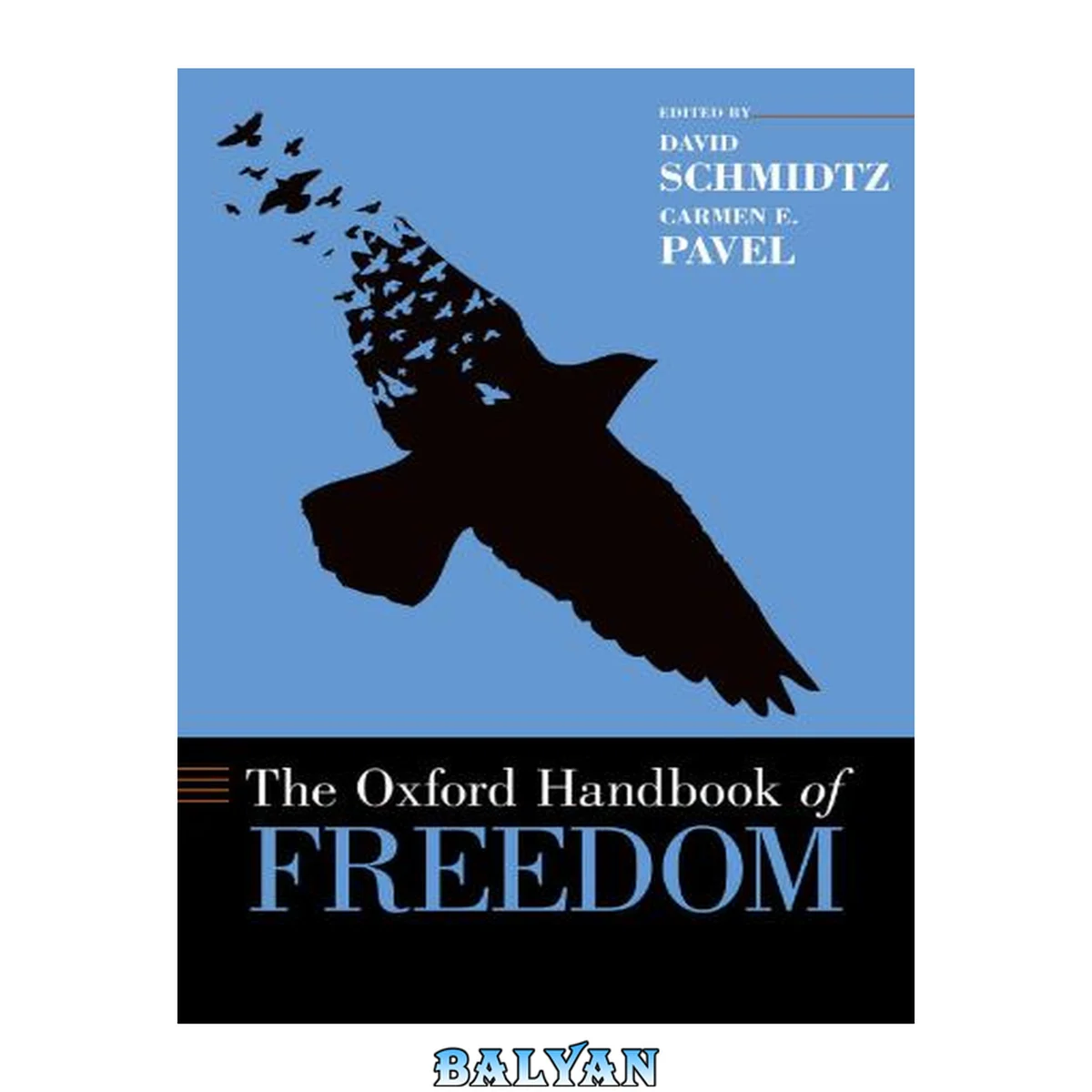
معرفی کتاب «The Oxford Handbook of Freedom (Oxford Handbooks)» نوشتهٔ David Schmidtz, Carmen E. Pavel، منتشرشده توسط نشر Oxford University Press در سال 2016. این کتاب در فرمت epub، زبان انگلیسی ارائه شده است.
We speak of being 'free’ to speak our minds, free to go to college, free to move about; we can be cancer-free, debt-free, worry-free, or free from doubt. The concept of freedom (and relatedly the notion of liberty) is ubiquitous but not everyone agrees what the term means, and the philosophical analysis of freedom that has grown over the last two decades has revealed it to be a complex notion whose meaning is dependent on the context. The Oxford Handbook of Freedom will crystallize this work and craft the first wide-ranging analysis of freedom in all its dimensions: legal, cultural, religious, economic, political, and psychological. This volume includes 28 new essays by well regarded philosophers, as well some historians and political theorists, in order to reflect the breadth of the topic. This handbook covers both current scholarship as well as historical trends, with an overall eye to how current ideas on freedom developed. The volume is divided into six sections: conceptual frames (framing the overall debates about freedom), historical frames (freedom in key historical periods, from the ancients onward), institutional frames (freedom and the law), cultural frames (mutual expectations on our 'right’ to be free), economic frames (freedom and the market), and lastly psychological frames (free will in philosophy and psychology). Introduction / David Schmidtz And Carmen E. Pavel -- Self-ownership As A Form Of Ownership / Daniel C. Russell -- Positive Freedom And The General Will / Piper L. Bringhurst And Gerald Gaus -- Moralized Conceptions Of Liberty / Ralf M. Bader -- On The Conflict Between Liberty And Equality / Hillel Steiner -- Freedom And Equality / Elizabeth Anderson -- Non-domination / Frank Lovett -- The Point Of Self-ownership / David Sobel -- Platonic Freedom / Fred D. Miller, Jr -- Aristotelian Freedom / David Keyt -- Freedom In The Scholastic Tradition / Edward Feser -- Freedom, Slavery, And Identity In Renaissance Florence: The Faces Of Leon Battista Alberti / Orlando Patterson -- Freedom And Enlightenment / Ryan Patrick Hanley -- Adam Smith's Libertarian Paternalism / James R. Otteson -- Market Failure, The Tragedy Of The Commons, And Default Libertarianism In Contemporary Economics And Policy / Mark Bryant Budolfson -- Planning, Freedom, And The Rule Of Law / Steven Wall -- Freedom, Regulation, And Public Policy / Mark Pennington -- Boundaries, Subjection To Laws, And Affected Interests / Carmen E. Pavel -- Democracy And Freedom / Jason Brennan -- Can Constitutions Limit Government? / Michael Huemer -- Freedom And Religion / Richard J. Arneson -- Freedom And Influence In Formative Education / Kyla Ebels-duggan -- Freedom And The (posthumous) Harm Principle / David Boonin -- Exploitation And Freedom / Matt Zwolinski -- Voluntariness, Coercion, Self-ownership / Serena Olsaretti -- The Impartial Spectator And The Moral Teachings Of Markets / Virgil Henry Storr -- Disciplinary Specialization And Thinking For Yourself / Elijah Millgram -- Free Will As A Psychological Accomplishment / Eddy Nahmias -- Prisoners Of Misbelief: The Epistemic Conditions Of Freedom / Allen Buchanan. Edited By David Schmidtz And Carmen Pavel. Includes Bibliographical References And Index (pages 525-533). "We speak of being 'free' to speak our minds, free to go to college, free to move about; we can be cancer-free, debt-free, worry-free, or free from doubt. The concept of freedom (and relatedly the notion of liberty) is ubiquitous but not everyone agrees what the term means, and the philosophical analysis of freedom that has grown over the last two decades has revealed it to be a complex notion whose meaning is dependent on the context. The Oxford Handbook of Freedom will crystallize this work and craft the first wide-ranging analysis of freedom in all its dimensions: legal, cultural, religious, economic, political, and psychological. This volume includes 28 new essays by well regarded philosophers, as well some historians and political theorists, in order to reflect the breadth of the topic.This handbook covers both current scholarship as well as historical trends, with an overall eye to how current ideas on freedom developed. The volume is divided into six sections: conceptual frames (framing the overall debates about freedom), historical frames (freedom in key historical periods, from the ancients onward), institutional frames (freedom and the law), cultural frames (mutual expectations on our 'right' to be free), economic frames (freedom and the market), and lastly psychological frames (free will in philosophy and psychology)."--Publisher's website Debates about freedom traditionally focus on a few central themes. The chapters of this volume update those debates and launch new ones. Whether the freedom worth pursuing is one or many, whether it conflicts with equality, whether it can be secured by the institutions of the modern state, and whether it is compatible with a deterministic understanding of the universe are some of the central questions that animate the chapters in this volume. Our contributors show both that we have made real progress in our understanding of the many faces of freedom and its enabling conditions, and that threats to our freedoms remain various, serious, and real. The Oxford Handbook of Freedom crafts the first wide-ranging analysis of freedom in all its dimensions: legal, cultural, religious, economic, political, and psychological. This volume includes 28 new essays by well regarded philosophers, as well some historians and political theorists.
دانلود کتاب The Oxford Handbook of Freedom (Oxford Handbooks)