The Land of the Solstices: Myth, geography and astronomy in ancient Greece (International)
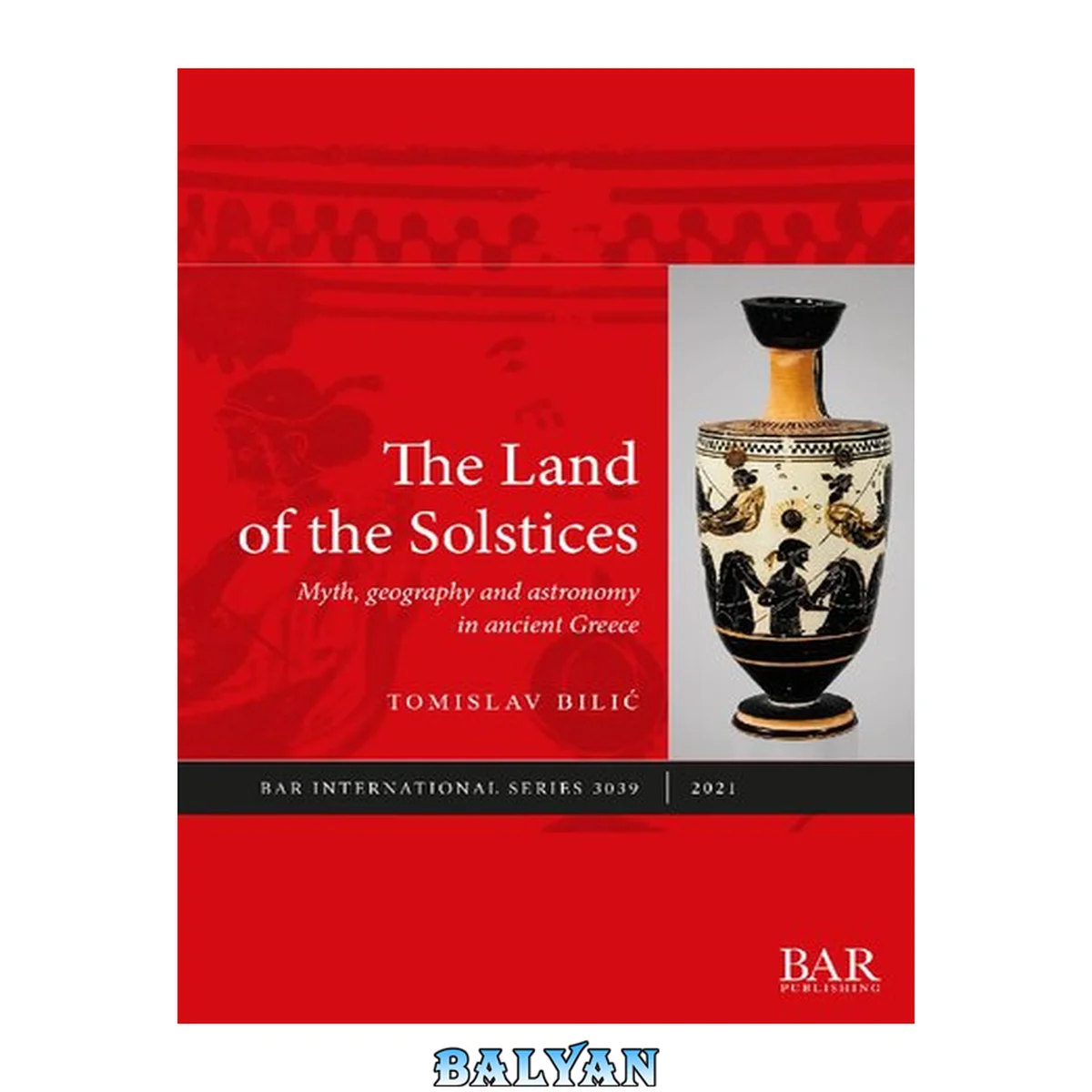
معرفی کتاب «The Land of the Solstices: Myth, geography and astronomy in ancient Greece (International)» نوشتهٔ Tomislav Bilić، منتشرشده توسط نشر BaR Publishing. این کتاب در فرمت pdf، زبان انگلیسی ارائه شده است.
Following the recent upsurge of interest in ancient geography and astronomy, together with the ever-present fascination with myth, this book offers a fresh study of what is commonly but erroneously known as ‘solar myth’. This subject has been at the margins of scholarly interest, mainly due to the now-outdated theories of myth that used solar phenomena as an interpretative key to explain the majority of traditional narratives. This book offers a more rigorous methodology and more selective interpretation applicable to a group of particular myths, those referencing solar phenomena. The class of ‘solar’ myths discussed in this book is thus formed out of traditional narratives that either explicitly include references to solar movement or the recognition of such references does not require strained interpretations. Abstract 1 Introduction 1.1. Selective interpretation of myth 1.2. Ethnographic context 1.3. Inclusive definitions of science 1.4. Myth and physical phenomena 1.5. Myth and ancient science 1.6. Anthropomorphisation and narrativisation 1.7. Observational data in myths 1.8. Mythic models 1.9. Conclusion 2 The Laestrygonians and the geographical arctic circle 2.1. Interpreting the ‘meteorological’ facet of the Lastrygonian episode 2.2. Crates’ interpretation of the Laestrygonian passage 2.3. Crates’ interpretation and arctic circle 2.4. The limits of the annual solar movement 2.5. Arctic circle in epic poetry 2.6. Laestrygonia, the sun and the Otherworld 2.7. Conclusion 3 The Bear Mountain 3.1. The Cyzicus episode 3.2. Celestial bears at the solstice island 3.3. A pre-Homeric Argonautica 3.4. Conclusion 4 Snatched away by the gust of wind 4.1. The island of turning 4.2. The Harpies and eschatology 4.3. Other mythic snatchings 4.4. The snatchings in their solar context 4.5. An alternative model—cosmological solstice mountain 4.6. A reinterpretation of the northern mountains model 4.7. A region outside the sun’s course in non-Greek traditions 4.8. Conclusion 5 The island of the sun’s turning 5.1. The concept of solstices in early Greek tradition 5.2. Heliotropia and the localisations of Homeric tropai êelioio 5.3. The localisations of Homeric tropai êelioio in the context of solar movement 5.4. Pytheas’ Thule and the turnings of the sun 5.5. Conclusion 6 Pytheas and Hecataeus: Britain and Hyperborea 6.1. Pytheas and the northern barbarians 6.2. Britain in the wake of Pytheas 6.3. Hecataeus’ Hyperborea 6.4. Hyperboreans, Apollo and Celts 6.5. Conclusion 7 Apollo’s Hyperborean voyage: a narrative model of solar movement 7.1. Delphian traditions 7.2. Athenian and Delian traditions 7.3. Beyond calendar 7.4. Apollo and the solstice island 7.5. Conclusion 8 ‘Hyperborean Apollo’s’ swan chariot 8.1. Hyacinthus—a convergence of literary and iconographic testimonies 8.2. Archaeological evidence 8.2.1. Dupljaja 8.2.2. Northern Europe 8.2.3. Italy 8.2.4. Eastern Alpine region 8.2.5. Possible Central European parallels 8.2.6. The Aegean 8.3. Methodological procedure for comparison of literary and iconographic record 8.3.1. Material evidence for past beliefs 8.3.2. Reading the visual language 8.3.3. Structural analysis of visual language 8.3.4. The transfer of meaning 8.3.5. The transfer of beliefs 8.3.6. Transfer of complex symbolic structures 8.3.7. The Dupljaja model as a complex symbolic structure accompanied by a muthos 8.3.8. Comparison of literary sources with iconography 8.4. Concluding remarks: large-scale context, anthropomorphism and the contents of the muthos 9 Diurnal path of the Sun in Greek tradition 9.1. The high northern mountain Figure 5.1 Ephorus’ schematic diagram of the oikoumenê (drawn by the author) Figure 8.1 Dupljaja model (after Bilić 2016b: 449 Fig. 1. Reproduced courtesy of University of Ljubljana, Faculty of Arts). Figure 9.1 Cosmas’ conical elevation of the earth and the sun’s diurnal movement (drawn by the author) _Hlk75178779 _Hlk75178786 _Hlk75178793 _Hlk75178802 _Hlk75178809 _Hlk75178816 _Hlk75178824 _Hlk75178833 _Hlk75178848 _Hlk75178856 _Hlk75178864 _Hlk75178872 _Hlk75178880 _Hlk75178890 _Hlk75178897 _Hlk75178904 _Hlk75178911 _Hlk75178917 _Hlk75178929 _Hlk75178936 _Hlk75178944 _Hlk75178955 _Hlk75178962 _Hlk75178973 _Hlk75178980 _Hlk75178990 _Hlk75179004 _Hlk75179009 _Hlk75179019 _Hlk75179023 _Hlk75179034 _Hlk75179039 _Hlk75179043 _Hlk75179049 _Hlk75179054 _Hlk75179059 _Hlk75179068 _Hlk75179085 _Hlk75179092 _Hlk75179099 _Hlk75179109 _Hlk75179135 _Hlk75540790 9.2. The southerly path of the sun 9.3. Diurnal solar movement in Homer (Figure 9.2) 9.4. The sun’s cup and its southerly course (Figure 9.2) 9.5. Stesichorus’ account of the sun’s voyage in a cup 9.6. Hesiod’s house of Night in the light of the ‘uni-polar’ model 9.7. The sun’s cup and Heracles (Figure 9.2) 9.8. Iconographical testimonies for the sun in a cup 9.9. The Presocratic tradition of the sun’s bowl 9.10. Non-Greek traditions of the sun travelling in a boat 9.11. Conclusion 10 Liminal imagery in the accounts of solar movement assimilated to the world of the dead 10.1. Hesiods’ concept of the daylight/night exchange 10.2. Corresponding models in Mesopotamian tradition 10.3. Homer, Hesiod and the liminal features in Hades 10.4. Gates of the otherworld assimilated to the gates of the sun 10.5. The Pylian gates 10.6. The White Rock and the Odyssey 10.7. Pherecydes’ gates 10.8. Conclusion 11 Aea and the voyage of the Argonauts 11.1. The return of the Argonauts 11.2. Circe, Calypso and the Argonauts’ return voyage 11.3. Conclusion 12 World of the Dead at the Antipodes 12.1. Hades at the antipodes conceived in terms of the diurnal solar movement 12.2. Later testimonies for an antipodal Hades conceived in terms of solar movement 12.3. Hades at the celestial ‘antipodes’ 12.4. The antipodal world of the dead in non-Greek traditions 12.5. Navigating to the Otherworld in Greek and non-Greek traditions 12.6. Conclusion 13 Beyond Odysseus: Gilgameš 13.1. Gilgameš breaking a path for Odysseus 13.2. The twin mountain 13.3. Scorpion-men 13.4. Gilgameš on the diurnal course of the sun 13.5. Gilgameš arrives at the mouth of the rivers 13.6. Dilmun 13.7. ‘The mouth of the rivers’ outside the Mesopotamian tradition 13.8. From Gilgameš to Odysseus 13.9. Conclusion 14 Beyond Odysseus: Alexander 14.1. Hellenistic tradition 14.2. Land of Darkness 14.3. Mount Mûsās 14.4. Mount Mûsās in later tradition 14.5. Alexander in the far north in the Islamic tradition 14.6. Conclusion 15 Conclusion 15.1. An outline of the main argument of the book 15.2. The ‘practical’ main points of the book 15.3. A final word List of citations Appendix 1 Diurnal solar movement in Mesopotamian tradition A1.1. Solar mountains and gates A1.2. Interacting conceptual domains: solar movement and eschatology A1.3. The Mesopotamian sun-god’s ‘house of Night’ Appendix 2 Diurnal solar movement in Egyptian tradition A2.1. Books of the Netherworld A2.2. Gates and mountains A2.3. The horizon-sign Figure 9.2 Cosmological voyages following the diurnal solar movement discussed in the text (drawn by the author) Figure 12.1 The antipodes: mutual relations of the quarters upon the sphere of the earth as understood in antiquity (drawn by the author) Figure 13.1 Crates’ world map (drawn by the author) _Hlk75179143 _Hlk75179151 _Hlk75179169 _Hlk75179184 _Hlk75179191 _Hlk75179200 _Hlk75179209 _Hlk75179216 _Hlk75179224 _Hlk75179230 _Hlk75179242 _Hlk75179249 _Hlk75179256 _Hlk75179263 _Hlk75179272 _Hlk75179278 _Hlk75179285 _Hlk75179291 _Hlk75179302 _Hlk75179308 _Hlk75179314 _Hlk75179326 _Hlk75179333 _Hlk75179341 _Hlk75179347 _Hlk75179357 _Hlk75179367 _Hlk75179377 _Hlk75179384 _Hlk75179390 _Hlk75179397 _Hlk75179403 _Hlk75179409 _Hlk75179416 _Hlk75179422 _Hlk75179429 _Hlk75179439 _Hlk75179446 _Hlk75179453 _Hlk75179461 _Hlk75179468 _Hlk75179474 _Hlk75179486 _Hlk75179493 _Hlk75179499 _Hlk75328724 _Hlk75195958 _Hlk75284869 _Hlk75284847 _Hlk75284855 _Hlk75284837 _Hlk75284810 _Hlk75284820 _Hlk75328886 _Hlk75286491 _Hlk75286540 _Hlk75287085 _Hlk75286953 _Hlk75328743 _Hlk75332129 _Hlk75332369 _Hlk75328628 _Hlk75287043 _Hlk75287358 _Hlk75337854 _Hlk75344436 _Hlk75329300 _Hlk75337277 _Hlk75370788 _heading=h.1fob9te _Hlk75179528 _Hlk75179538 _Hlk75179548 _Hlk75179585 _Hlk75179609 _Hlk75179623 Abstract 1 Introduction 1.1. Selective interpretation of myth 1.2. Ethnographic context 1.3. Inclusive definitions of science 1.4. Myth and physical phenomena 1.5. Myth and ancient science 1.6. Anthropomorphisation and narrativisation 1.7. Observational data in myths 1.8. Mythic models 1.9. Conclusion 2 The Laestrygonians and the geographical arctic circle 2.1. Interpreting the ‘meteorological’ facet of the Lastrygonian episode 2.2. Crates’ interpretation of the Laestrygonian passage 2.3. Crates’ interpretation and arctic circle 2.4. The limits of the annual solar movement 2.5. Arctic circle in epic poetry 2.6. Laestrygonia, the sun and the Otherworld 2.7. Conclusion 3 The Bear Mountain 3.1. The Cyzicus episode 3.2. Celestial bears at the solstice island 3.3. A pre-Homeric Argonautica 3.4. Conclusion 4 Snatched away by the gust of wind 4.1. The island of turning 4.2. The Harpies and eschatology 4.3. Other mythic snatchings 4.4. The snatchings in their solar context 4.5. An alternative model—cosmological solstice mountain 4.6. A reinterpretation of the northern mountains model 4.7. A region outside the sun’s course in non-Greek traditions 4.8. Conclusion 5 The island of the sun’s turning 5.1. The concept of solstices in early Greek tradition 5.2. Heliotropia and the localisations of Homeric tropai êelioio 5.3. The localisations of Homeric tropai êelioio in the context of solar movement 5.4. Pytheas’ Thule and the turnings of the sun 5.5. Conclusion 6 Pytheas and Hecataeus: Britain and Hyperborea 6.1. Pytheas and the northern barbarians 6.2. Britain in the wake of Pytheas 6.3. Hecataeus’ Hyperborea 6.4. Hyperboreans, Apollo and Celts 6.5. Conclusion 7 Apollo’s Hyperborean voyage: a narrative model of solar movement 7.1. Delphian traditions 7.2. Athenian and Delian traditions 7.3. Beyond calendar 7.4. Apollo and the solstice island 7.5. Conclusion 8 ‘Hyperborean Apollo’s’ swan chariot 8.1. Hyacinthus—a convergence of literary and iconographic testimonies 8.2. Archaeological evidence 8.2.1. Dupljaja 8.2.2. Northern Europe 8.2.3. Italy 8.2.4. Eastern Alpine region 8.2.5. Possible Central European parallels 8.2.6. The Aegean 8.3. Methodological procedure for comparison of literary and iconographic record 8.3.1. Material evidence for past beliefs 8.3.2. Reading the visual language 8.3.3. Structural analysis of visual language 8.3.4. The transfer of meaning 8.3.5. The transfer of beliefs 8.3.6. Transfer of complex symbolic structures 8.3.7. The Dupljaja model as a complex symbolic structure accompanied by a muthos 8.3.8. Comparison of literary sources with iconography 8.4. Concluding remarks: large-scale context, anthropomorphism and the contents of the muthos 9 Diurnal path of the Sun in Greek tradition 9.1. The high northern mountain Figure 5.1 Ephorus’ schematic diagram of the oikoumenê (drawn by the author) Figure 8.1 Dupljaja model (after Bilić 2016b: 449 Fig. 1. Reproduced courtesy of University of Ljubljana, Faculty of Arts). Figure 9.1 Cosmas’ conical elevation of the earth and the sun’s diurnal movement (drawn by the author) _Hlk75178779 _Hlk75178786 _Hlk75178793 _Hlk75178802 _Hlk75178809 _Hlk75178816 _Hlk75178824 _Hlk75178833 _Hlk75178848 _Hlk75178856 _Hlk75178864 _Hlk75178872 _Hlk75178880 _Hlk75178890 _Hlk75178897 _Hlk75178904 _Hlk75178911 _Hlk75178917 _Hlk75178929 _Hlk75178936 _Hlk75178944 _Hlk75178955 _Hlk75178962 _Hlk75178973 _Hlk75178980 _Hlk75178990 _Hlk75179004 _Hlk75179009 _Hlk75179019 _Hlk75179023 _Hlk75179034 _Hlk75179039 _Hlk75179043 _Hlk75179049 _Hlk75179054 _Hlk75179059 _Hlk75179068 _Hlk75179085 _Hlk75179092 _Hlk75179099 _Hlk75179109 _Hlk75179135 _Hlk75540790 9.2. The southerly path of the sun 9.3. Diurnal solar movement in Homer (Figure 9.2) 9.4. The sun’s cup and its southerly course (Figure 9.2) 9.5. Stesichorus’ account of the sun’s voyage in a cup 9.6. Hesiod’s house of Night in the light of the ‘uni-polar’ model 9.7. The sun’s cup and Heracles (Figure 9.2) 9.8. Iconographical testimonies for the sun in a cup 9.9. The Presocratic tradition of the sun’s bowl 9.10. Non-Greek traditions of the sun travelling in a boat 9.11. Conclusion 10 Liminal imagery in the accounts of solar movement assimilated to the world of the dead 10.1. Hesiods’ concept of the daylight/night exchange 10.2. Corresponding models in Mesopotamian tradition 10.3. Homer, Hesiod and the liminal features in Hades 10.4. Gates of the otherworld assimilated to the gates of the sun 10.5. The Pylian gates 10.6. The White Rock and the Odyssey 10.7. Pherecydes’ gates 10.8. Conclusion 11 Aea and the voyage of the Argonauts 11.1. The return of the Argonauts 11.2. Circe, Calypso and the Argonauts’ return voyage 11.3. Conclusion 12 World of the Dead at the Antipodes 12.1. Hades at the antipodes conceived in terms of the diurnal solar movement 12.2. Later testimonies for an antipodal Hades conceived in terms of solar movement 12.3. Hades at the celestial ‘antipodes’ 12.4. The antipodal world of the dead in non-Greek traditions 12.5. Navigating to the Otherworld in Greek and non-Greek traditions 12.6. Conclusion 13 Beyond Odysseus: Gilgameš 13.1. Gilgameš breaking a path for Odysseus 13.2. The twin mountain 13.3. Scorpion-men 13.4. Gilgameš on the diurnal course of the sun 13.5. Gilgameš arrives at the mouth of the rivers 13.6. Dilmun 13.7. ‘The mouth of the rivers’ outside the Mesopotamian tradition 13.8. From Gilgameš to Odysseus 13.9. Conclusion 14 Beyond Odysseus: Alexander 14.1. Hellenistic tradition 14.2. Land of Darkness 14.3. Mount Mûsās 14.4. Mount Mûsās in later tradition 14.5. Alexander in the far north in the Islamic tradition 14.6. Conclusion 15 Conclusion 15.1. An outline of the main argument of the book 15.2. The ‘practical’ main points of the book 15.3. A final word List of citations Appendix 1 Diurnal solar movement in Mesopotamian tradition A1.1. Solar mountains and gates A1.2. Interacting conceptual domains: solar movement and eschatology A1.3. The Mesopotamian sun-god’s ‘house of Night’ Appendix 2 Diurnal solar movement in Egyptian tradition A2.1. Books of the Netherworld A2.2. Gates and mountains A2.3. The horizon-sign Figure 9.2 Cosmological voyages following the diurnal solar movement discussed in the text (drawn by the author) Figure 12.1 The antipodes: mutual relations of the quarters upon the sphere of the earth as understood in antiquity (drawn by the author) Figure 13.1 Crates’ world map (drawn by the author) _Hlk75179143 _Hlk75179151 _Hlk75179169 _Hlk75179184 _Hlk75179191 _Hlk75179200 _Hlk75179209 _Hlk75179216 _Hlk75179224 _Hlk75179230 _Hlk75179242 _Hlk75179249 _Hlk75179256 _Hlk75179263 _Hlk75179272 _Hlk75179278 _Hlk75179285 _Hlk75179291 _Hlk75179302 _Hlk75179308 _Hlk75179314 _Hlk75179326 _Hlk75179333 _Hlk75179341 _Hlk75179347 _Hlk75179357 _Hlk75179367 _Hlk75179377 _Hlk75179384 _Hlk75179390 _Hlk75179397 _Hlk75179403 _Hlk75179409 _Hlk75179416 _Hlk75179422 _Hlk75179429 _Hlk75179439 _Hlk75179446 _Hlk75179453 _Hlk75179461 _Hlk75179468 _Hlk75179474 _Hlk75179486 _Hlk75179493 _Hlk75179499 _Hlk75328724 _Hlk75195958 _Hlk75284869 _Hlk75284847 _Hlk75284855 _Hlk75284837 _Hlk75284810 _Hlk75284820 _Hlk75328886 _Hlk75286491 _Hlk75286540 _Hlk75287085 _Hlk75286953 _Hlk75328743 _Hlk75332129 _Hlk75332369 _Hlk75328628 _Hlk75287043 _Hlk75287358 _Hlk75337854 _Hlk75344436 _Hlk75329300 _Hlk75337277 _Hlk75370788 _heading=h.1fob9te _Hlk75179528 _Hlk75179538 _Hlk75179548 _Hlk75179585 _Hlk75179609 _Hlk75179623
دانلود کتاب The Land of the Solstices: Myth, geography and astronomy in ancient Greece (International)