راهنمای فرآیندهای چندحسی (کتاب برادفورد)
The Handbook of Multisensory Processes (A Bradford Book)
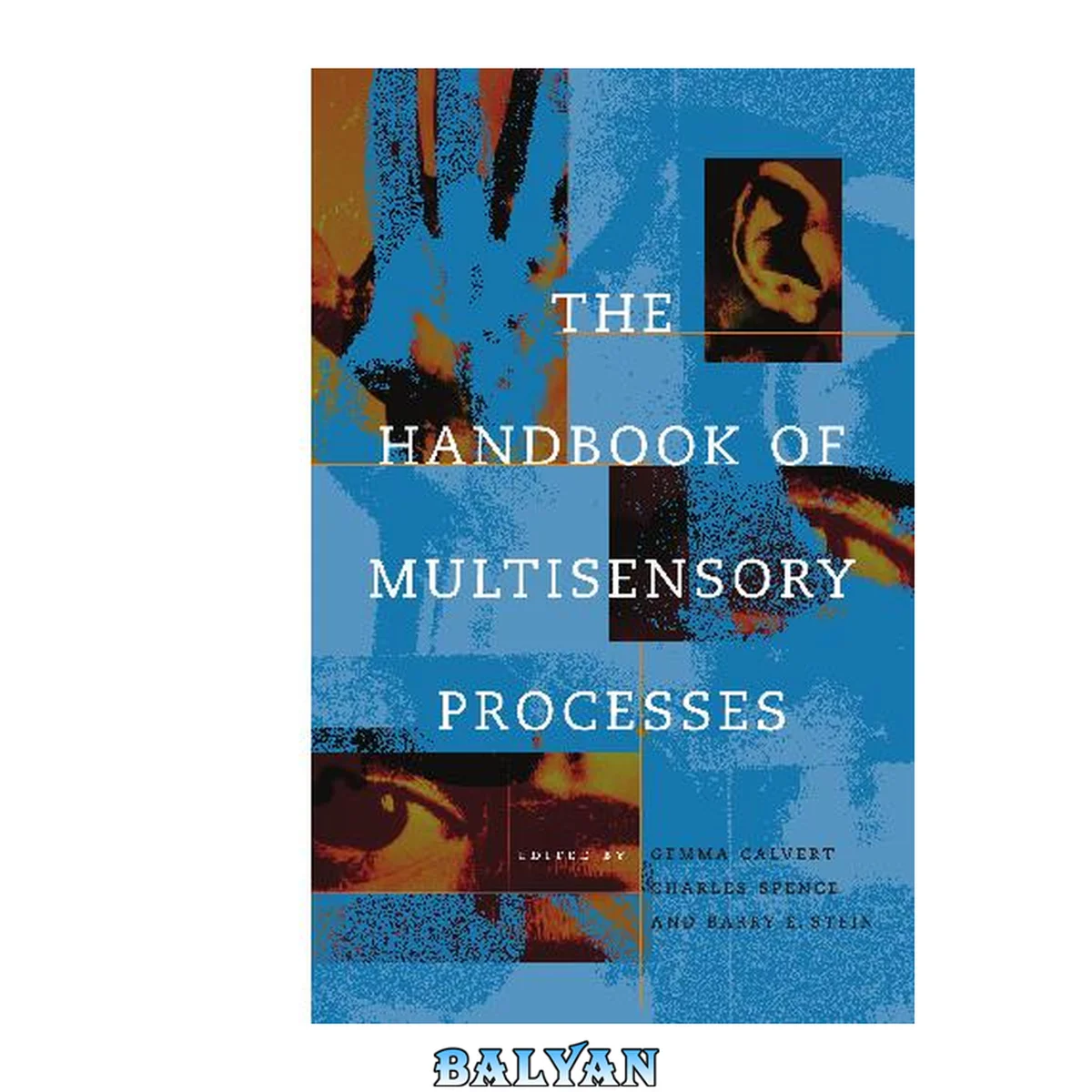
معرفی کتاب «راهنمای فرآیندهای چندحسی (کتاب برادفورد)» (با عنوان لاتین The Handbook of Multisensory Processes (A Bradford Book)) نوشتهٔ Gemma A. Calvert, Charles Spence, Barry E. Stein، منتشرشده توسط نشر A Bradford Book در سال 2004. این کتاب در فرمت pdf، زبان انگلیسی ارائه شده است.
A reference work for the emerging field of multisensory integration, covering multidisciplinary research that goes beyond the traditional "sense-by-sense" approach and recognizes that perception is fundamentally a multisensory experience. This landmark reference work brings together for the first time in one volume the most recent research from different areas of the emerging field of multisensory integration. After many years of using a modality-specific "sense-by-sense" approach, researchers across different disciplines in neuroscience and psychology now recognize that perception is fundamentally a multisensory experience. To understand how the brain synthesizes information from the different senses, we must study not only how information from each sensory modality is decoded but also how this information interacts with the sensory processing taking place within other sensory channels. The findings cited in The Handbook of Multisensory Processes suggest that there are broad underlying principles that govern this interaction, regardless of the specific senses involved. The book is organized thematically into eight sections; each of the 55 chapters presents a state-of-the-art review of its topic by leading researchers in the field. The key themes addressed include multisensory contributions to perception in humans; whether the sensory integration involved in speech perception is fundamentally different from other kinds of multisensory integration; multisensory processing in the midbrain and cortex in model species, including rat, cat, and monkey; behavioral consequences of multisensory integration; modern neuroimaging techniques, including EEG, PET, and fMRI, now being used to reveal the many sites of multisensory processing in the brain; multisensory processes that require postnatal sensory experience to emerge, with examples from multiple species; brain specialization and possible equivalence of brain regions; and clinical studies of such breakdowns of normal sensory integration as brain damage and synesthesia. Cover......Page 1 Introduction......Page 6 I Perceptual Consequences of Multiple Sensory Systems......Page 20 1 The Cross-Modal Consequences of the Exogenous Spatial Orienting of Attention......Page 22 2 Modulations of Visual Perception by Sound......Page 46 3 Cross-Modal Interactions Evidenced by the Ventriloquism Effect in Humans and Monkeys......Page 54 4 Multisensory Integration of Dynamic Information......Page 68 5 Sweet and Sour Smells......Page 88 6 Cross-Modal Interactions in Speeded Classification......Page 104 7 Multisensory Texture Perception......Page 126 8 Cross-Modal Object Recognition......Page 142 9 Perceptual Effects of Cross-Modal Stimulation......Page 160 II Is Speech a Special Case of Multisensory Integration?......Page 170 10 From Multisensory Integration to Talking Heads and Language Learning......Page 172 11 Spatial and Temporal Constraints on Audiovisual Speech Perception......Page 196 12 Speech as a Supramodal or Amodal Phenomenon......Page 208 13 Audiovisual Speech Binding: Convergence or Association?......Page 222 14 Multisensory Animal Communication......Page 244 III The Neural Mechanisms Underlying the Integration of Cross-Modal Cues......Page 260 15 Multisensory Integration in Single Neurons of the Midbrain......Page 262 16 Analysis and Modeling of Multisensory Enhancement in the Deep Superior Colliculus......Page 284 17 The Resurrection of Multisensory Cortex in Primates: Connection Patterns That Integrate Modalities......Page 304 18 Multisensory Convergence in Early Cortical Processing......Page 314 19 Multisensory Neuronal Convergence of Taste, Somatosensory, Visual, Olfactory, and Auditory Inputs......Page 330 20 Cross-Modal Memory in Primates......Page 352 21 Corticocortical Connectivity of Cross-Modal Circuits......Page 362 22 Multisensory-Evoked Potentials in Rat Cortex......Page 376 IV Multisensory Mechanisms in Orientation......Page 390 23 Auditory-Visual Interactions Subserving Primate Gaze Orienting......Page 392 24 Modeling the Time Course of Multisensory Interaction in Manual and Saccadic Responses......Page 414 25 Multisensory Influences on Orientation and Movement Control......Page 428 26 Action as a Binding Key to Multisensory Integration......Page 444 27 Multisensory Neurons for the Control of Defensive Movements......Page 462 28 Cortical Mechanisms of Tool Use Subserved by Multisensory Integration......Page 472 29 Multisensory Representations of Space in the Posterior Parietal Cortex......Page 482 V Human Brain Studies of Multisensory Processes......Page 500 30 Hemodynamic Studies of Audiovisual Interactions......Page 502 31 Multiple Electrophysiological Mechanisms of Audiovisual Integration in Human Perception......Page 522 32 MEG Studies of Cross-Modal Integration and Plasticity......Page 534 33 Functional Imaging Evidence for Multisensory Spatial Representations......Page 548 34 Electrophysiological Studies of Multisensory Attention......Page 568 35 Neuroimaging Studies of Cross-Modal Integration for Emotion......Page 582 36 Multisensory Perception of Emotion......Page 600 VI The Maturation and Plasticity of Multisensory Processes......Page 616 37 Epigenetic Factors That Align Visual and Auditory Maps in the Ferret Midbrain......Page 618 38 Visual Instruction of the Auditory Space Map in the Midbrain......Page 632 39 The Development of Multisensory Integration......Page 644 40 Perceptual Development and the Origins of Multisensory Responsiveness......Page 662 41 The Value of Multisensory Redundancy in the Development of Intersensory Perception......Page 674 VII Cross-modal Plasticity......Page 698 42 Rewiring Cortex......Page 700 43 Cross-Modal Consequences of Visual Deprivation in Animals......Page 714 44 Visual Cortical Involvement in Normal Tactile Perception......Page 722 45 Visual Cortex Engagement in Tactile Function in the Presence of Blindness......Page 730 46 Compensatory Plasticity as a Consequence of Sensory Loss......Page 738 47 Audiovisual Speech Perception in Deaf Adults and Children Following Cochlear Implantation......Page 768 48 Neuroimaging Studies of Cross-Modal Plasticity and Language Processing in Deaf People......Page 792 VIII Perspectives Derived from Clinical Studies......Page 802 49 Multisensory Integration......Page 804 50 Neuropsychological Evidence of Integrated Multisensory Representation of Space in Humans......Page 818 51 Cross-Modal Integration and Spatial Attention in Relation to Tool Use and Mirror Use......Page 838 52 Grapheme-Color Synesthesia......Page 856 53 Behavioral and Brain Correlates of Multisensory Experience in Synesthesia......Page 870 54 Synesthesia, Cross-Activation, and the Foundations of Neuroepistemology......Page 886 Contributors......Page 904 Index......Page 908 "This landmark reference work brings together for the first time in one volume the most recent research from different areas of the emerging field of multisensory integration. After many years of using a modality-specific 'sense-by-sense' approach, researchers across different disciplines in neuroscience and psychology now recognize that perception is fundamentally a multisensory experience. To understand how the brain synthesizes information from the different senses, we must study not only how information from each sensory modality is decoded but also how this information interacts with the sensory processing taking place within other sensory channels. The findings cited in The Handbook of Multisensory Processes suggest that there are broad underlying principles that govern this interaction, regardless of the specific senses involved. The book is organized thematically into eight sections; each of the 55 chapters presents a state-of-the-art review of its topic by leading researchers in the field. The key themes addressed include multisensory contributions to perception in humans; whether the sensory integration involved in speech perception is fundamentally different from other kinds of multisensory integration; multisensory processing in the midbrain and cortex in model species, including rat, cat, and monkey; behavioral consequences of multisensory integration; modern neuroimaging techniques, including EEG, PET, and fMRI, now being used to reveal the many sites of multisensory processing in the brain; multisensory processes that require postnatal sensory experience to emerge, with examples from multiple species; brain specialization and possible equivalence of brain regions; and clinical studies of such breakdowns of normal sensory integration as brain damage and synesthesia"--MIT CogNet I. Perceptual Consequences Of Multiple Sensory Systems -- 1. The Cross-modal Consequences Of The Exogenous Spatial Orienting Of Attention / Charles Spence And John Mcdonald -- 2. Modulations Of Visual Perception By Sound / Ladan Shams, Yukiyasu Kamitani And Shinsuke Shimojo -- 3. Cross-modal Interactions Evidenced By The Ventriloquism Effect In Humans And Monkeys / Timothy M. Woods And Gregg H. Recanzone -- 4. Multisensory Integration Of Dynamic Information / Salvador Soto-faraco And Alan Kingstone -- 5. Sweet And Sour Smells : Learned Synesthesia Between The Senses Of Taste And Smell / Richard J. Stevenson And Robert A. Boakes -- 6. Cross-modal Interactions In Speeded Classification / Lawrence E. Marks. Edited By Gemma A. Calvert, Charles Spence, Barry E. Stein. A Bradford Book. Includes Bibliographical References And Index.
دانلود کتاب راهنمای فرآیندهای چندحسی (کتاب برادفورد)