The Handbook of Historical Economics
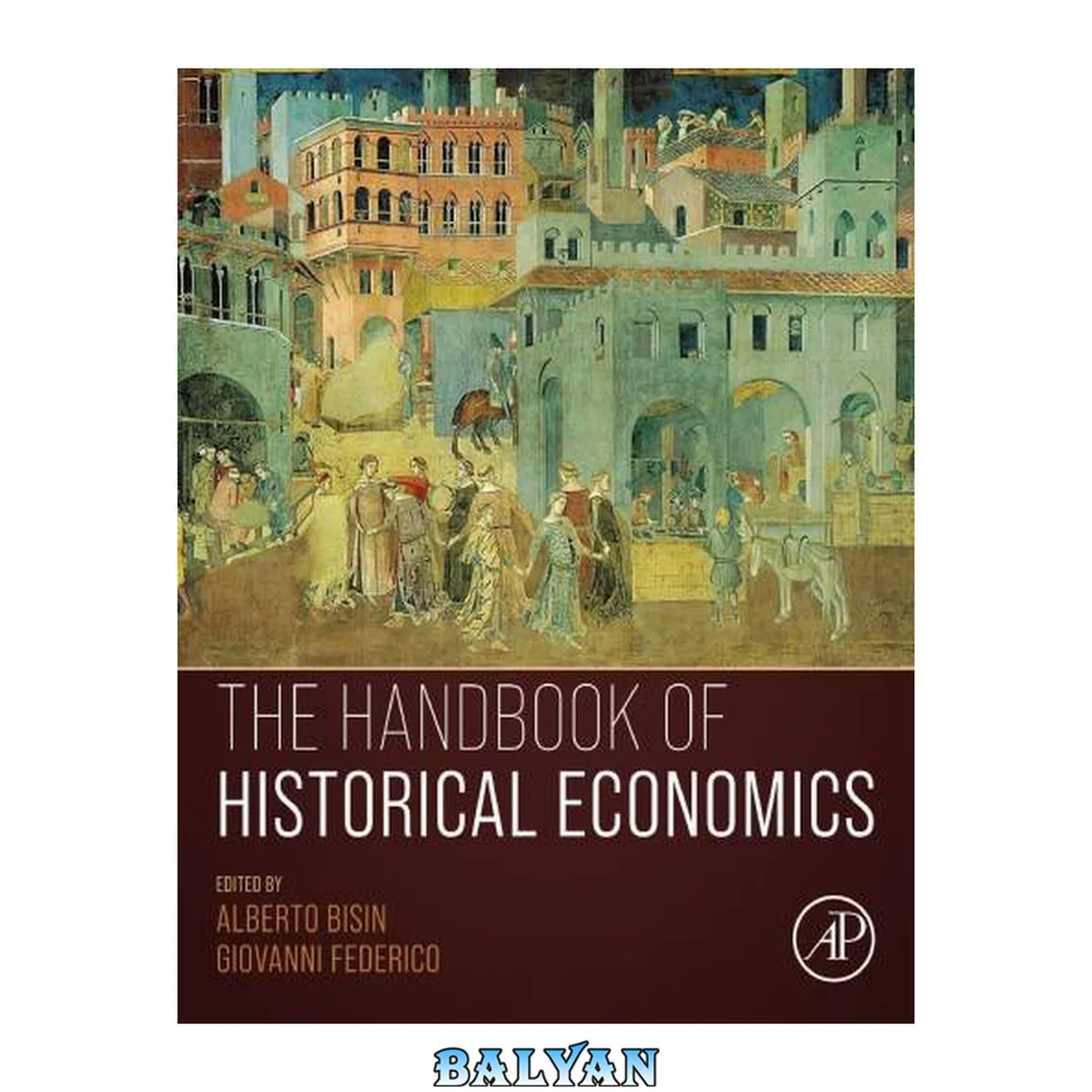
معرفی کتاب «The Handbook of Historical Economics» نوشتهٔ Mollie Goins و Alberto Bisin & Giovanni Federico، منتشرشده توسط نشر Academic Press is an imprint of Elsevier در سال 2021. این کتاب در فرمت pdf، زبان انگلیسی ارائه شده است.
The Handbook of Historical Economics guides students and researchers through a quantitative economic history that uses fully up-to-date econometric methods. The book's coverage of statistics applied to the social sciences makes it invaluable to a broad readership. As new sources and applications of data in every economic field are enabling economists to ask and answer new fundamental questions, this book presents an up-to-date reference on the topics at hand. Provides an historical outline of the two cliometric revolutions, highlighting the similarities and the differences between the two Surveys the issues and principal results of the "second cliometric revolution" Explores innovations in formulating hypotheses and statistical testing, relating them to wider trends in data-driven, empirical economicsISBN : 9780128158746 Front Cover The Handbook of Historical Economics Copyright Contents List of contributors Merger or acquisition? An introduction to The Handbook of Historical Economics 1 Historical Economics 2 Sources, methods, models, topics 2.1 Part 1: The evolution of the discipline 2.2 Part 2: Sources, methods, and models 2.3 Part 3: Topics 3 The challenges of Historical Economics 4 Conclusions References Part 1 What is historical economics 1 The economic history of economic history: the evolution of a field in economics 1.1 Introduction 1.2 Economics and economic history in the United States before World War Two 1.3 The cliometrics revolution 1.4 Not your father's economic history Acknowledgments References 2 The two revolutions in economic history 2.1 Introduction 2.2 The Cliometric Revolution 2.3 Intermezzo: economic history at the turn of the 20th century 2.4 The Second Revolution: a general view 2.5 The Second Revolution: beyond the traditional boundaries of economic history 2.6 Conclusions 2.7 Appendix Acknowledgments References 3 History as evolution 3.1 Introduction 3.2 The benefits of cultural evolution 3.2.1 Cultural evolution saves on information costs 3.2.1.1 Theory 3.2.1.2 Evidence 3.2.2 Cultural evolution is cumulative 3.2.2.1 Theory 3.2.2.2 Evidence 3.3 Insights from a recognition of history as evolution 3.3.1 Environmental mismatch 3.3.1.1 Endogenous mismatch 3.3.2 Education and cultural evolution 3.3.2.1 Innovation and the collective brain 3.3.3 How and why history matters 3.3.3.1 Kludges 3.3.4 Group-level selection 3.3.5 Biology, sex, and gender 3.4 Contributions of economics to cultural evolution 3.5 Conclusions References Part 2 Sources and methods 4 Historical data: where to find them, how to use them 4.1 Introduction 4.2 Geographical data 4.2.1 Assessing the suitability of geographic data 4.2.2 Projections, inaccurate or sketched maps, distance measures 4.2.3 Reconciling changing unit boundaries 4.2.4 Detailed data presentation: a practical guide using GIS 4.2.5 Other geographical data 4.2.5.1 FAO GAEZ 4.2.5.2 Rivers 4.2.5.3 Elevation 4.2.5.4 Climate data 4.3 Ethnographic data 4.3.1 Political characteristics 4.3.2 Economic characteristics 4.3.3 Cultural characteristics 4.3.4 Connecting the past to the present 4.4 Censuses 4.4.1 The use of complete count population censuses 4.4.2 Linking historical information using names 4.4.3 Machine learning algorithm 4.5 Other historical data 4.5.1 Military history 4.5.2 Transportation networks 4.6 Conclusions References 5 The use of archaeological data in economics 5.1 Introduction 5.2 The stone age 5.2.1 The Paleolithic 5.2.2 The Neolithic 5.3 Persistent economic disparities 5.4 The rise of the state 5.5 The emergence of long-distance trade 5.6 Other available databases 5.6.1 Skeletal data 5.6.2 Paleoclimatic data 5.6.3 Structures 5.6.4 Inscriptions 5.7 Conclusion References 6 Ethnographic and field data in historical economics 6.1 Introduction 6.2 Ethnographic data sources 6.2.1 Ethnographic Atlas, Standard Cross Cultural Survey, and Murdock map 6.2.2 Validation and extension of the Ethnographic Atlas 6.2.2.1 Validation of the Ethnographic Atlas 6.2.2.2 Extensions of the Ethnographic Atlas 6.3 Additional data sources 6.3.1 Alternative culture and ethnographic data sets 6.3.1.1 Human relations area files 6.3.1.2 Seshat: global history databank 6.3.1.3 Database of religious history 6.3.1.4 Others 6.3.2 Cross-national data 6.3.2.1 Hofstede's values survey module 6.3.2.2 Global preferences survey 6.3.2.3 Honesty 6.3.2.4 Folklore 6.3.2.5 Names 6.3.2.6 Implicit association tests 6.3.2.7 Newspapers 6.3.2.8 Public attitude surveys 6.4 Lab-in-the-field experiments 6.4.1 What are lab-in-the-field experiments? 6.4.2 Lab-in-the-field experiments as outcomes 6.4.2.1 States, institutions, and colonialism 6.4.2.2 Environment 6.4.2.3 The Church and missionaries 6.4.2.4 Social exclusion and violence 6.4.2.5 Kinship structure 6.4.3 Lab-in-the-field experiments as mechanisms 6.4.4 Practical issues 6.5 Conclusion References 7 Historical Econometrics: Instrumental Variables and Regression Discontinuity Designs 7.1 Introduction 7.2 Identification in economic history 7.3 General trends: 2000-2020 7.4 First generation studies: 2001-2011 7.5 A second wave: 2012-2020 7.5.1 Classes of instruments 7.5.2 Other regression discontinuity designs 7.6 Technical refinements and regression diagnostics 7.6.1 Instrumental variables 7.6.2 Regression discontinuity designs 7.6.3 Regression diagnostics: a guide to practice 7.6.4 Other sources of identification 7.7 Concluding remarks 7.8 Appendix References 8 Historical natural experiments: bridging economics and economic history 8.1 Introduction 8.2 How did we get here? 8.3 What have we learned? 8.3.1 Experiments to understand history 8.3.2 Experiments to understand economics 8.3.3 Experiments to understand contemporary outcomes 8.4 Challenges to the analysis of historical natural experiments 8.4.1 Experiments to understand history 8.4.2 Experiments to understand economics 8.4.3 Experiments to understand contemporary outcomes 8.5 Concluding thoughts References 9 Persistence – myth and mystery 9.1 Conceptual challenges 9.1.1 The ``history curse'' – an illustration 9.1.2 Like father, like son 9.1.3 Mistakes and mechanisms 9.1.4 Change and re-emergence 9.2 Econometric challenges 9.2.1 Summary 9.3 Conclusion: vanishing for understanding References 10 LATE for history 10.1 Introduction 10.2 Persistence studies 10.2.1 Empirical model 10.2.2 Heterogeneity and LATE effects 10.3 Persistence studies that analyze relationships between current variables 10.3.1 Abstract models of treatment take-up and persistence 10.3.1.1 Treatment take-up at t-h 10.3.1.2 Treatment take-up at τ 10.3.1.3 Treatment take-up and reversals 10.3.1.4 Persistence of treatment 10.4 Pure persistence studies 10.4.1 Abstract models of persistence of treatment 10.4.1.1 No instrument 10.4.1.2 Instrumenting for persistence 10.5 Conclusions 10.6 Appendix LATE for school References 11 Dynamic general equilibrium modeling of long and short-run historical events 11.1 Introduction 11.2 Growth in the very long run 11.2.1 The ``Malthus to Solow'' model 11.2.1.1 Technology 11.2.1.2 Households 11.2.1.3 Competitive equilibrium 11.2.1.4 Characterizing the equilibrium 11.2.1.5 Calibration of population growth function 11.2.1.6 The Malthusian steady state 11.2.2 Quantitative exercise: England from 1245 to 1845 11.2.2.1 Model calibration 11.2.2.2 Benchmark simulation 11.2.2.3 No plagues 11.2.2.4 More plagues 11.2.2.5 Timing of the industrial revolution 11.3 Business cycle accounting of the 1889-1929 U.S. economy 11.3.1 Business cycle accounting findings 11.3.1.1 Contribution of the wedges 11.3.2 Business cycle accounting and the Panics of 1893 and 1907 11.3.2.1 The Panic of 1893 11.3.2.2 The Panic of 1907 11.3.3 Potential interpretations of the 1920s BCA findings 11.4 Conclusion Acknowledgments References 12 Money, banking, and old-school historical economics 12.1 Introduction 12.2 Financial development 12.2.1 The impact of legal regimes 12.2.2 The many paths of financial development 12.2.3 The role of regulation 12.2.4 Central banking 12.3 Banking and financial crises 12.3.1 Network and contagion 12.3.2 Mass digitization 12.3.3 The cost of crises 12.3.4 Central banks to the rescue 12.4 Different types of causal identification 12.4.1 Process tracing 12.4.2 Credibility revolution and interventionist causality 12.4.3 Structural causality 12.5 Historical macroeconomics and the science of story-telling 12.5.1 The macroeconomic tradition 12.5.2 History and macroeconomics 12.5.3 Models to structure a narrative: some examples 12.5.4 Experiments? 12.5.5 Off-the-rack or bespoke models 12.5.6 Models arguing: the Great Inflation debate 12.6 Summary and conclusion References 13 Institutional change and institutional persistence 13.1 Introduction 13.2 General framework 13.3 Institutional stasis: power begets power 13.4 Institutional change 13.5 Strategic stability 13.6 Path-dependent change 13.7 Designing persistence 13.8 Social mobility and institutional change 13.9 Culture and institutions 13.10 Conclusion References 14 How institutions and cultures change: an evolutionary perspective 14.1 Introduction 14.2 Evolutionary selection: the origin of private property 14.2.1 The long-term persistence of the hunter–gatherer convention 14.2.2 The Neolithic revolution: a puzzle 14.3 Wars and revolutions: a unified model of equilibrium selection 14.3.1 A dual process equilibrium selection mechanism 14.3.2 The stakes of the game are the rules of the game 14.4 Within-population transitions 14.4.1 Best response and intentional deviations from the status quo 14.4.2 Decentralized transitions and stochastically stable states 14.4.3 Equilibrium selection by productivity, inequality, and class size 14.4.4 Contrast with the undirected model of transitions within populations 14.5 Evolutionary selection within and between populations 14.5.1 Equilibrium selection by between-population competition 14.5.2 A unified model of cultural-institutional change 14.6 Darwin, Marx, and the evolutionary selection of institutions 14.6.1 ``Efficient design'' in biology and history 14.6.2 A new contract set 14.6.3 Collective action and the evolution of institutions 14.7 The demise of serfdom and the rise of the national state 14.7.1 The demise of serfdom 14.7.2 The emergence of the national state 14.8 The 20th-century evolution of collective bargaining in the U.S. 14.8.1 Collective bargaining and equilibrium selection 14.8.2 The rise and demise of private sector trade unions in the U.S. 14.8.3 Formal vs informal institutions 14.9 Conclusion References 15 State power and conflict driven evolution 15.1 Introduction and historical contest 15.1.1 Geography 15.1.2 Hegemony 15.1.3 Malthus 15.1.4 Theory motivated analysis of facts 15.1.5 Gradual versus stochastic evolution 15.1.6 Balance of power 15.2 A model 15.2.1 A theory of hegemony 15.3 The fall of Malthus 15.3.1 Jewelry versus swords 15.3.2 Wolves versus sheep 15.3.3 The weakest link 15.4 The fall of the Qing dynasty 15.4.1 China 15.5 Peace 15.5.1 Two competing societies 15.5.2 Outside intervention and the balance of power 15.5.3 Peace and war 15.5.4 History of modern war 15.6 Prosperity 15.6.1 Model basics 15.6.2 The initiation of conflict 15.6.3 Conflict resolution 15.6.4 Incentives: transfers and utility 15.6.5 Equilibrium 15.6.6 Stochastic stability 15.6.7 History References 16 Culture, institutions, and policy 16.1 Introduction 16.1.1 Referencing 16.1.2 Organization of the chapter 16.2 A model of political agency 16.2.1 Political institutions and candidate objectives 16.2.2 Political culture and voter values 16.2.3 Electoral competition 16.2.4 Equilibrium policy 16.2.5 Substitutes or complements 16.2.6 Notes on the literature 16.3 Cultural evolution 16.3.1 Relative cultural fitness 16.3.2 A threshold culture 16.3.3 Dynamics 16.3.4 Dynamic complementarity of culture 16.3.5 Discussion 16.3.6 Notes on the literature 16.4 Institutional choice 16.4.1 Within-period timing 16.4.2 Civic protests (stage 2) 16.4.3 The incumbent objective 16.4.4 Equilibrium institutions (stage 1) 16.4.5 Discussion 16.4.6 Notes on the literature 16.5 Cultural evolution and institutional change 16.5.1 Combining the building blocks 16.5.2 Mutual feedbacks 16.5.3 Discussion 16.5.4 Notes on the literature 16.6 Taking stock References 17 Phase diagrams in historical economics: culture and institutions 17.1 Introduction 17.2 Institutional and cultural change 17.2.1 (Top-down) models of institutional change 17.2.2 (Bottom-up) models of cultural change 17.3 The interaction of culture and institutions 17.4 Property rights and conflict 17.5 Conclusions 17.6 Appendix Property rights and conflict References Part 3 Topics 18 The economic history of commodity market development 18.1 Introduction 18.2 What happened: the growth of markets over the very long run 18.3 Why it happened: trade costs 18.4 Why it happened: institutions and efficient markets 18.5 On the effects of the development of markets 18.6 Conclusions References 19 Why Africa is not that poor 19.1 Introduction 19.2 Africa in the spotlight 19.3 Historical causes of African underdevelopment 19.3.1 Africa's biogeographic misfortunes 19.3.2 Indirect effects of African endowments 19.3.3 The African slave trades 19.3.4 Colonial institutions 19.3.5 Indigenous institutions and cultural roots 19.3.6 Summing up 19.4 Why Africa is not that poor 19.5 Epilogue Acknowledgments References 20 Religion in economic history: a survey 20.1 Introduction 20.2 Judaism 20.2.1 Jewish occupational specialization, human capital, and emancipation 20.2.2 Jewish persecution 20.3 Christianity 20.3.1 Catholicism 20.3.2 Protestantism 20.3.2.1 Socioeconomic consequences of the reformation 20.3.2.2 Socioeconomic causes of the reformation, of its spread, and of Protestant religiosity 20.3.3 Missionaries 20.4 Islam 20.4.1 Politics and law 20.4.2 Finance and trade 20.4.3 Human capital 20.5 Cross-country studies 20.6 Conclusion References 21 Persistent failure? International interventions since World War II 21.1 Introduction 21.2 Scope, definitions, and data sources 21.2.1 Defining intervention 21.2.2 Data sources 21.2.2.1 Data on military interventions 21.2.2.2 Data on non-military interventions 21.2.2.3 Implications for empirical research 21.2.3 Topics omitted from this review 21.3 Summary of findings 21.3.1 Military interventions 21.3.1.1 Military interventions and conflict outcomes 21.3.1.2 Military interventions and governance and development outcomes 21.3.2 Non-military interventions 21.3.2.1 Economic aid 21.3.2.2 Election monitoring 21.3.2.3 Sanctions 21.3.2.4 FIRC, covert intervention, and electoral intervention 21.3.3 Some bright spots 21.3.3.1 Multilateral intervention 21.3.3.2 Hearts and minds 21.3.3.3 Bottom line 21.4 Explaining intervention failure 21.4.1 Econometric issues 21.4.1.1 Selection on unobservables Approaches to causal identification Implications 21.4.1.2 Defining the sample of analysis and accounting for off-path interventions 21.4.1.3 Measuring and substitutability of intervention strategies 21.4.2 Interveners' objectives 21.4.3 Persistent failure 21.5 Future directions 21.5.1 New research designs 21.5.2 New forms of intervention 21.5.3 Changing balance of power References 22 The ancient origins of the wealth of nations 22.1 Introduction 22.2 Evolutionary processes and the transition from stagnation to growth 22.2.1 Evolution of preference for child quality 22.2.1.1 Theory 22.2.1.2 Evidence 22.2.2 Evolution of time preference 22.2.2.1 Theory 22.2.2.2 Evidence 22.2.3 Evolution of loss aversion 22.2.3.1 Theory 22.2.3.2 Evidence 22.2.4 Causes and consequences of other evolutionary processes 22.2.4.1 Evolution of entrepreneurial spirit 22.2.4.2 Evolution of physical and biological traits 22.2.4.3 Barrier effects 22.2.5 Evolutionary processes in genetic traits since the Neolithic Revolution 22.3 The ``out of Africa'' hypothesis of comparative development 22.3.1 The main hypothesis 22.3.2 The origins of worldwide variations in human population diversity 22.3.3 Predicted population diversity 22.3.3.1 Measurement and identification at the country level 22.3.3.2 Measurement and identification at the ethnic-group level 22.3.4 Empirical findings 22.3.4.1 Population diversity and comparative development across countries The relative importance of population diversity and other fundamental determinants 22.3.4.2 Population diversity and comparative development across ethnic homelands 22.3.4.3 Mechanisms of the influence of population diversity Mechanisms capturing the adverse impact of diversity on social cohesiveness Impact on internal conflicts Impact on ethnocultural fragmentation Impact on reduced interpersonal trust Impact on divergence in political preferences Impact on extractive institutions Mechanisms capturing the beneficial impact of diversity on productivity Impact on innovative activities Impact on the division of labor and gains from trade Impact via cross-fertilization of ideas in cognitive and human capital development 22.3.5 Policy implications 22.3.6 Common misconceptions 22.3.6.1 Potential underestimation of population density in pre-Columbian Americas 22.3.6.2 The mapping from diversity in neutral genetic markers to social outcomes 22.3.6.3 Potential misuse 22.4 Concluding remarks References 23 Social mobility in historical economics 23.1 Introduction 23.2 Conventional measures of social mobility 23.3 Measuring social mobility rates from surnames 23.4 Estimating long run mobility rates from surnames, Australia 1903-1980 23.5 Estimating social mobility rates from surnames with less information 23.6 Are there immobile societies? 23.7 Conclusion References 24 The Industrial Revolution and the Great Divergence: recent findings from historical national accounting 24.1 Introduction 24.2 Data and methods 24.2.1 Data for the pre-1870 period 24.2.2 Methods for data-abundant nations 24.2.3 Methods for data-scarce nations 24.2.4 Dealing with data reliability 24.3 The Industrial Revolution 24.3.1 British economic growth in long run perspective 24.3.2 Structural change in Britain 24.4 The Great Divergence 24.4.1 Europe's Little Divergence 24.4.2 Asia's Little Divergence 24.4.3 Dating the Great Divergence 24.4.4 The dynamics of the Great Divergence 24.5 Conclusions References 25 Attitudes, aptitudes, and the roots of the great enrichment 25.1 Introduction 25.2 Europe and the world 25.3 Attitudes 25.4 Aptitudes 25.5 Apprenticeship and human capital 25.6 Conclusion References 26 The interplay among wages, technology, and globalization: the labor market and inequality, 1620-2020 26.1 The framework of analysis 26.2 Phase 1: pre-industrial economic growth: 1620-1770 26.3 Phase 2: Industrial Revolution, 1770-1867: wages affected technology 26.4 Phase 2: Industrial Revolution: technology affected wages 26.5 Phase 3: the age of manufactures, 1867-1973: wages affected technology 26.6 Phase 3: the age of manufactures, 1867-1973: technology and globalization influenced wages 26.7 Phase 4: the shift to services, 1973-present: wages affect technology 26.8 Phase 4: the shift to services, 1973-present: technology affects the labor market 26.9 Conclusion References 27 Debt and taxes in eight U.S. wars and two insurrections 27.1 Introduction 27.1.1 Reader's guide 27.2 Two theories of war finance 27.2.1 Optimal tax-borrowing plan: Barro's model 27.2.2 Optimal tax-borrowing plan: Lucas and Stokey's model 27.2.2.1 Two state Markov example 27.2.2.2 Continuous state Markov example 27.2.3 U.S. government debt: risk-free or state-contingent? 27.3 Government budget constraint 27.3.1 Decomposing wartime changes in revenue 27.3.2 Decomposing postwar changes in the debt/GDP ratio 27.4 Expenditures and tax revenue 27.5 Returns to bondholders 27.6 Debt design, marketing, and management 27.6.1 The war of 1812 27.6.2 The Mexican War 27.6.3 The Civil War: 7-30s and 5-20s 27.6.4 The Spanish-American War: 10-20s of 1908-1918 27.6.5 World War I: options and federal reserve ``Borrow and buy'' 27.6.6 World War II: non-marketable debt, fixed yield curve, fed support 27.6.7 Korean War and treasury-federal reserve accord 27.6.8 Vietnam 27.7 Insurrections 27.8 Qualifications 27.9 Appendix A Accounting 27.10 Appendix B Data sources 27.10.1 Pre-1790 27.10.2 Confederate States of America 27.10.3 Federal reserve balance sheets References 28 Biogeography, writing, and the origins of the state 28.1 Biogeography and state origins 28.2 Technology and state origins 28.3 The origins of writing 28.3.1 Three points of origin 28.3.2 The process of diffusion 28.4 Data and empirical strategy 28.4.1 State origins 28.4.2 Writing 28.4.3 Basic cross tabulations 28.4.4 Estimation strategy 28.5 First stage estimates 28.6 Second stage estimates 28.7 Writing and specific state characteristics 28.8 Conclusion References 29 The wife's protector: a quantitative theory linking contraceptive technology with the decline in marriage 29.1 Introduction 29.1.1 Quantitative-theoretic history: some examples 29.2 The decline in marriage 29.3 Contraception in the 19th and 20th centuries 29.3.1 Dissemination of information 29.3.2 Technological advance 29.4 Setup 29.5 Married or single life? 29.6 An abstinent or sexual non-marital relationship? 29.7 Statistical mechanics 29.7.1 Marriage by age 29.7.2 Premarital sex 29.7.3 Number of sexual partners 29.7.4 Out-of-wedlock births 29.8 Calibration 29.8.1 The procedure 29.8.2 The failure rate for contraception, 1900 to 2015-2018 29.8.3 Findings 29.8.4 Opening the black box 29.9 Conclusions 29.10 Literature review 29.10.1 Contraception and the age of marriage 29.10.2 Premarital sex and out-of-wedlock births 29.10.3 Other factors affecting the timing of marriage 29.10.3.1 Rising wages 29.10.3.2 Household technologies 29.10.3.3 The welfare state 29.10.3.4 Lack of marriageable men 29.10.3.5 Changes in the sex ratio 29.11 Appendix A Beers's specification of letters patent 29.12 Appendix B Theory 29.13 Appendix C Data sources 29.13.1 Figures and tables 29.13.2 Contraceptive use 29.13.3 Contraceptive effectiveness References Index Back Cover
دانلود کتاب The Handbook of Historical Economics