The fortress : the siege of Przemyśl and the making of Europe's bloodlands
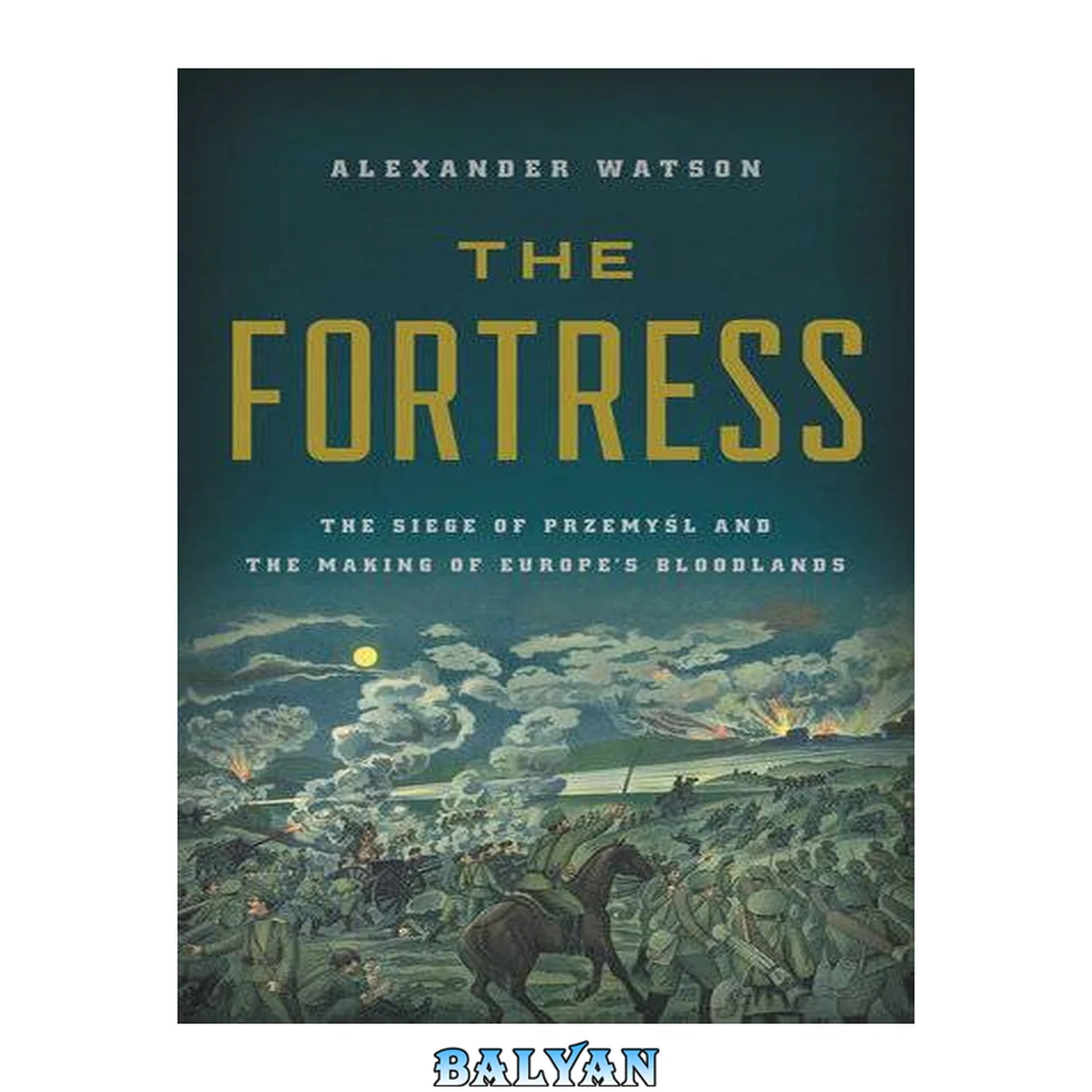
معرفی کتاب «The fortress : the siege of Przemyśl and the making of Europe's bloodlands» نوشتهٔ Stefanie Stahl، Elisabeth Lauffer و Alexander Watson، منتشرشده توسط نشر Basic Books در سال 2020. این کتاب در فرمت epub، زبان انگلیسی ارائه شده است.
A prizewinning historian tells the dramatic story of the siege that changed the course of the First World War In September 1914, just a month into World War I, the Russian army laid siege to the fortress city of Przemysl, the Hapsburg Empire's most important bulwark against invasion. For six months, against storm and starvation, the ragtag garrison bitterly resisted, denying the Russians a quick victory. Only in March 1915 did the city fall, bringing occupation, persecution, and brutal ethnic cleansing. In The Fortress, historian Alexander Watson tells the story of the battle for Przemysl, showing how it marked the dawn of total war in Europe and how it laid the roots of the bloody century that followed. Vividly told, with close attention to the unfolding of combat in the forts and trenches and to the experiences of civilians trapped in the city, The Fortress offers an unprecedentedly intimate perspective on the eastern front's horror and human tragedy. Editorial Reviews Review "The Fortress takes us into the tense, claustrophobic atmosphere of the front-line in a crucial few months of the war...Watson's book is an impressive telling of a story almost entirely unknown, and it makes clear how much we have yet to learn about the first world war away from the western front."―Mark Mazower, Financial Times "Watson's splendid book combines great evocative power (and flashes of sharp humour) with the ethical authority of the best history writing. The story it tells is unsettling, because it resists any attempt to encompass the death and violence of war within a narrative of redemption. It recalls instead a war that never really ended, but rather spilled out into cascades of further violence whose toxic effects are still with us today."―Guardian (UK) "Watson's account of these men's experience of battle is a brilliant distillation of their letters, diaries and memories. The voices of the siege convey its horror and the terror of men who had to endure it and suppress their fear of death... The vividly written and well-researched The Fortress is a masterpiece. It deserves to become a classic of military history."―The Times (UK) "[The Fortress] is excellent history, a marvelously readable, though tragic, story of its time and of how the clock can be made to turn backwards under siege conditions; and in its account of the Habsburg commanders' unshakable vanity, philandering and cockiness it has plenty of modern resonances as a parable of arrogant exceptionalism, imperial conceit and perilous isolationism."―The Daily Telegraph (UK) "The Fortress is based on extraordinarily impressive research, yet is also vivid, imaginative, and humane. It recaptures one of the most terrible episodes in a terrible war, which -- as Watson rightly argues -- presaged even greater horrors to come."―David Stevenson, London School of Economics and Political Science "Przemysl, Habsburg Austria's easternmost fortress, lay in Galicia, a flat borderland between the turbulent German, Austrian, and Russian empires. Watson reconstructs the Russian siege in engrossing detail, and also proves that the eastern 'bloodlands' later ravaged by the Nazis and Soviets had already been desolated once before -- during World War I and its chaotic aftermath, when the Russians and Austro-Hungarians, desperate to hold Galicia, taught Hitler and Stalin how to weaken and destroy unwanted peoples like the Jews or Ukrainians."― Geoffrey Wawro, author of A Mad Catastrophe: The Outbreak of World War I and the Collapse of the Habsburg Empire "Przemysl is best known for its challenges to orthography and pronunciation. But Watson contextualizes the history of this remote Habsburg fortress-city from its beginnings as a strategic pivot to its development as a focal point for overlapping imperial and nationalist aspirations. The defining event was the great siege of 1914, whose everyday routines and long term consequences Watson presents with a verve and clarity making this a must read for students of the Great War in the east."―Dennis Showalter, professor emeritus, Colorado College About the Author Alexander Watson is professor of history at Goldsmiths, University of London. He is the author of Ring of Steel: Germany and Austria-Hungary in World War I, which won the Wolfson History Prize and the Guggenheim-Lehrman Prize in Military History, and Enduring the Great War, winner of the Fraenkel Prize. "In September 1914, less than a month into World War I, the Russian army laid siege to the multiethnic fortress city of Przemysl, the Hapsburg Empire's most important bulwark against an invasion of Central Europe. For six months, the city's ragtag garrison bitterly resisted, winning critical time for the Habsburg Army to regenerate and denying the Russians a quick victory. But in March 1915, in a deathblow to Hapsburg prestige, the city fell to Russian occupation and over the war's remaining years, descended into ethnic hatred and bloodshed. In The Fortress, historian Alexander Watson tells the riveting story of the pivotal battle for Przemysl, showing how it marked the dawn of total war in Europe and how it laid the roots the bloody century that followed in Europe's East. In the common telling, the First World War evolved slowly into a vicious war of attrition. But in Przemysl, radical violence came with stunning immediacy. Brutal combat, lethal epidemics of cholera and typhus, aerial bombing, civilian starvation, and vicious persecutions motivated by racial prejudice were all integral to the fortress-city's early war experience. Most ominously, around and later in the city the Russian Army perpetrated the first ambitious program of ethnic cleansing in the region-decades before the totalitarian regimes of Hitler and Stalin came to power. The violence that war unleashed in 1914 would ultimately come to consume both the Hapsburg and Russian empires, mutating and radicalizing as those empires disintegrated. Vividly told, and with close attention both to the unfolding of combat in the forts and trenches and to the experiences of civilians trapped within the city, The Fortress offers an unprecedentedly dramatic and intimate perspective on the Eastern Front's horror and human tragedy."-- Provided by publisher In the autumn of 1914 Europe was at war. The battling powers had already suffered casualties on a scale previously unimaginable. On both the Western and Eastern fronts elaborate war plans lay in ruins and had been discarded in favour of desperate improvisation. In the West this resulted in the remorseless world of the trenches; in the East all eyes were focused on the old, beleaguered Austro-Hungarian fortress of Przemysl. The great siege that unfolded at Przemysl was the longest of the whole war. In the defence of the fortress and the struggle to relieve it Austria-Hungary suffered some 800,000 casualties. Almost unknown in the West, this was one of the great turning points of the conflict. If the Russians had broken through they could have invaded Central Europe, but by the time the fortress fell their strength was so sapped they could go no further. Alexander Watson, prize-winning author of Ring of Steel, has written one of the great epics of the First World War. Comparable to Stalingrad in 1942-3, Przemysl shaped the course of Europe's future. Neither Russians nor Austro-Hungarians ever recovered from their disasters. Using a huge range of sources, Watson brilliantly recreates a world of long-gone empires, broken armies and a cut-off community sliding into chaos. The siege was central to the war itself, but also a chilling harbinger of what would engulf the entire region in the coming decades, as nationalism, anti-semitism and an exterminatory fury took hold
دانلود کتاب The fortress : the siege of Przemyśl and the making of Europe's bloodlands