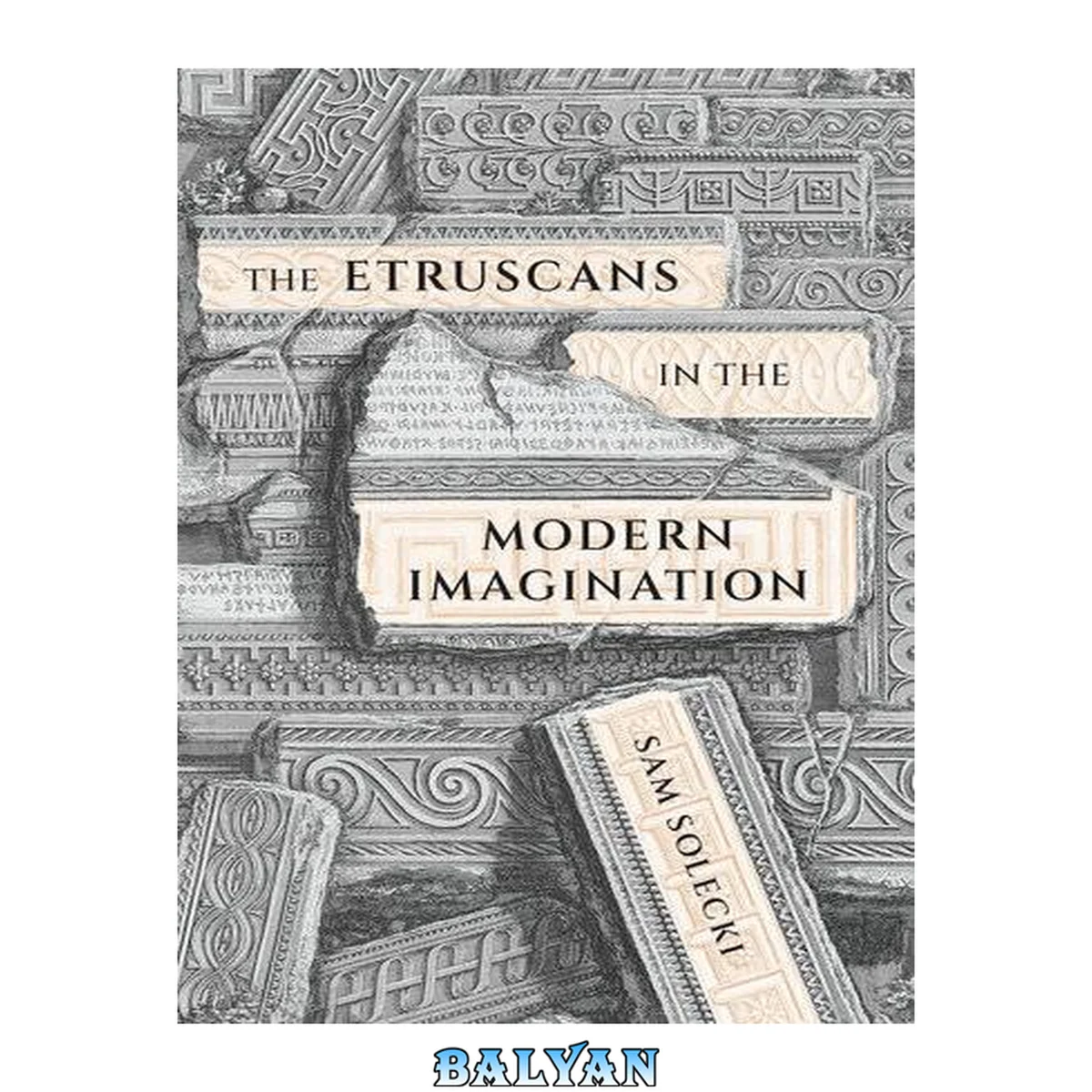
The Etruscans in the Modern Imagination (McGill-Queen's Studies in the History of Ideas Book 85)
معرفی کتاب «اتروسکها در تخیل مدرن (مطالعات مکگیل-کوئین در تاریخ ایدهها، کتاب ۸۵)» (با عنوان لاتین The Etruscans in the Modern Imagination (McGill-Queen's Studies in the History of Ideas Book 85)) نوشتهٔ Sam Solecki;، منتشرشده توسط نشر ACP - McGill Queen's University Press در سال 2022. این کتاب در فرمت epub، زبان انگلیسی ارائه شده است.
The Etruscans, a revenant and unusual people, had an Italian empire before the Greeks and Romans did. By the start of the Christian era their wooden temples and writings had vanished, the Romans and the early church had melted their bronze statues, and the people had assimilated. After the last Etruscan augur served the Romans as they fought back the Visigoths in 408 CE, the civilization disappeared but for ruins, tombs, art, and vases. No other lost culture disappeared as completely and then returned to the same extent as the Etruscans. Indeed, no other ancient Mediterranean people was as controversial both in its time and in posterity. Though the Greeks and Romans tarred them as superstitious and decadent, D.H. Lawrence praised their way of life as offering an alternative to modernity. In The Etruscans in the Modern Imagination Sam Solecki chronicles their unexpected return to intellectual and cultural history, beginning with eighteenth-century scholars, collectors, and archaeologists. The resurrection of this vanished kingdom occurred with remarkable vigour in philosophy, literature, music, history, mythology, and the plastic arts. From Wedgwood to Picasso, Proust to Lawrence, Emily Dickinson to Anne Carson, Solecki reads the disembodied traces of Etruscan culture for what they tell us about cultural knowledge and mindsets in different times and places, for the way that ideas about the Etruscans can serve as a reflection or foil to a particular cultural moment, and for the creative alchemy whereby artists turn to the past for the raw materials of contemporary creation. The Etruscans are a cultural curiosity because of their disputed origin, unique language, and distinctive religion and customs, but their destination is no less worthy of our curiosity. The Etruscans in the Modern Imagination provides a fascinating meditation on cultural transmission between ancient and modern civilizations. "The Etruscans, a revenant and unusual people, had an Italian empire before the Greeks and Romans did. By the start of the Christian era their wooden temples and writings had vanished, the Romans and the early church had melted their bronze statues, and the people had assimilated. After the last Etruscan augur served the Romans as they fought back the Visigoths in 408 CE, the civilization disappeared but for ruins, tombs, art, and vases. No other lost culture disappeared as completely and then returned to the same extent as the Etruscans. Indeed, no other ancient Mediterranean people was as controversial both in its time and in posterity. Though the Greeks and Romans tarred them as superstitious and decadent, D.H. Lawrence praised their way of life as offering an alternative to modernity. In The Etruscans in the Modern Imagination Sam Solecki chronicles their unexpected return to intellectual and cultural history, beginning with eighteenth-century scholars, collectors, and archaeologists. The resurrection of their vanished kingdom occurred with remarkable vigour in philosophy, literature, music, history, mythology, and the plastic arts. From Wedgwood to Picasso, Proust to Lawrence, Emily Dickinson to Anne Carson, Solecki reads the disembodied traces of Etruscan culture for what they tell us about cultural knowledge and mindsets in different times and places, for the way that ideas about the Etruscans can serve as a reflection or foil to a particular cultural moment, and for the creative alchemy whereby artists turn to the past for the raw materials of contemporary creation. The Etruscans are a cultural curiosity because of their disputed origin, unique language, and distinctive religion and customs, but their destination is no less worthy of our curiosity. The Etruscans in the Modern Imagination provides a fascinating meditation on cultural transmission between ancient and modern civilizations."-- Provided by publisher
The Etruscans, a revenant and unusual people, had an Italianempire before the Greeks and Romans did. By the start of theChristian era their wooden temples and writings had vanished, theRomans and the early church had melted their bronze statues, andthe people had assimilated. After the last Etruscan augur servedthe Romans as they fought back the Visigoths in 408 CE, thecivilization disappeared but for ruins, tombs, art, and vases. Noother lost culture disappeared as completely and then returned tothe same extent as the Etruscans. Indeed, no other ancientMediterranean people was as controversial both in its time and inposterity. Though the Greeks and Romans tarred them assuperstitious and decadent, D.H. Lawrence praised their way of lifeas offering an alternative to modernity. In The Etruscans inthe Modern Imagination Sam Solecki chronicles their unexpectedreturn to intellectual and cultural history, beginning witheighteenth-century scholars, collectors, and archaeologists. Theresurrection of this vanished kingdom occurred with remarkablevigour in philosophy, literature, music, history, mythology, andthe plastic arts. From Wedgwood to Picasso, Proust to Lawrence,Emily Dickinson to Anne Carson, Solecki reads the disembodiedtraces of Etruscan culture for what they tell us about culturalknowledge and mindsets in different times and places, for the waythat ideas about the Etruscans can serve as a reflection or foil toa particular cultural moment, and for the creative alchemy wherebyartists turn to the past for the raw materials of contemporarycreation. The Etruscans are a cultural curiosity because of theirdisputed origin, unique language, and distinctive religion andcustoms, but their destination is no less worthy of our curiosity.The Etruscans in the Modern Imagination provides afascinating meditation on cultural transmission between ancient andmodern civilizations.
The Etruscans, a revenant and unusual people, had all but disappeared by the start of the Christian era. Sam Solecki chronicles their unexpected return to the intellectual and cultural history of the west, beginning with eighteenth-century scholars, collectors, and archaeologists, to provide a fascinating meditation on cultural transmission between ancient and modern civilizations