The Corpus Linguistics Discourse : In Honour of Wolfgang Teubert
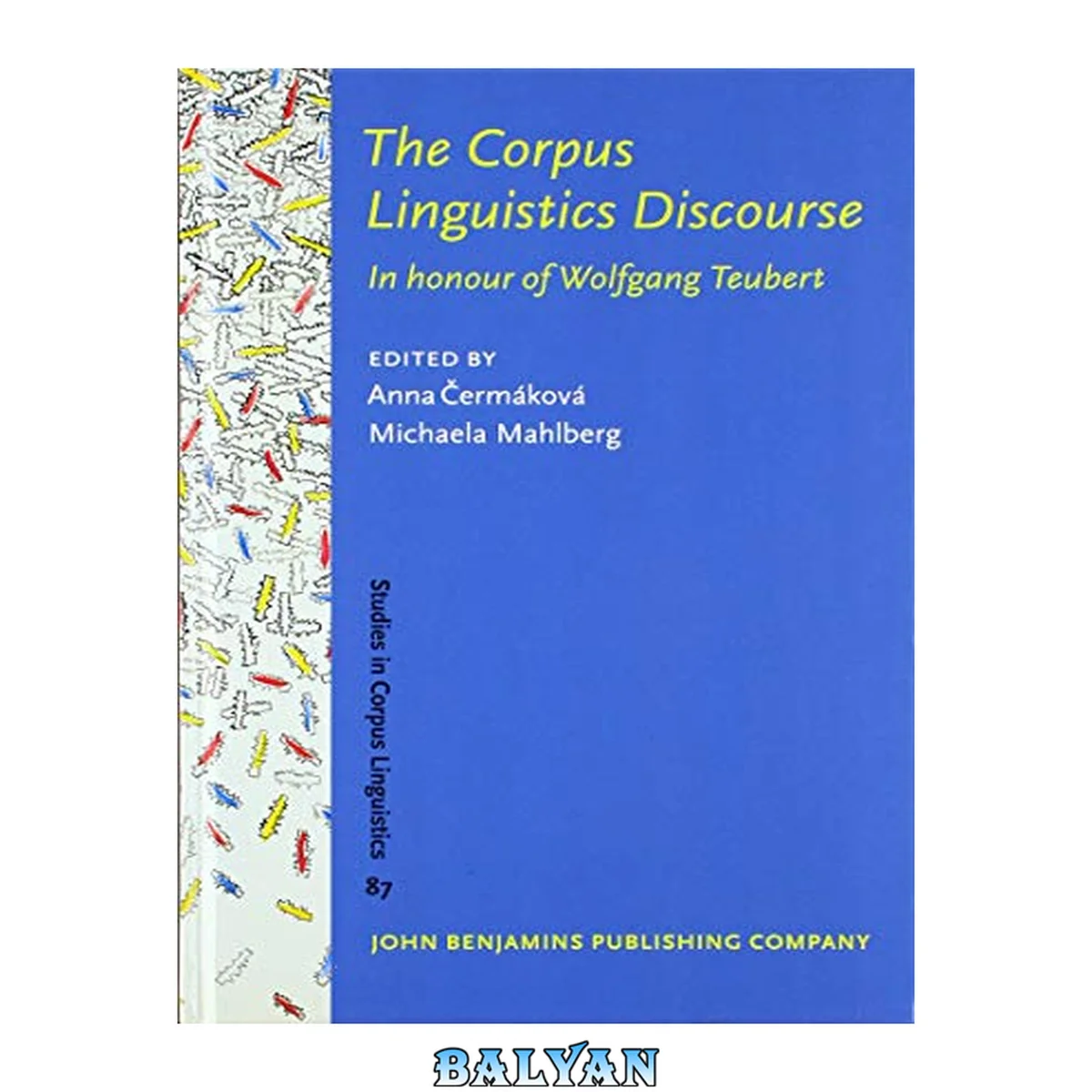
معرفی کتاب «The Corpus Linguistics Discourse : In Honour of Wolfgang Teubert» نوشتهٔ Anna Čermáková (editor), Michaela Mahlberg (editor)، منتشرشده توسط نشر Benjamins Publishing Company در سال 2018. این کتاب در فرمت pdf، زبان انگلیسی ارائه شده است.
With an ever-growing body of corpus linguistic tools, resources and applications, it becomes increasingly important to reflect critically on the underlying assumptions that corpus linguistics is based on. Focusing on meaning and methods, this book tackles fundamental concepts and approaches that define the discourse of the field. Internationally renowned contributors address topics that range from the history of corpus linguistics to contrastive perspectives between languages, to interpreting patterns in corpora as evidence of both mainstream discourses and individual voices within them. This collection not only adds to our understanding of the fundamentals of corpus linguistics, it also brings innovative meanings to the corpus linguistics discourse. It has been edited in honour of Wolfgang Teubert, who for decades has been a significant voice in this discourse. The Corpus Linguistics Discourse Editorial page Title page Copyright page Table of contents Introduction Meaning Methods Connections References The (very) long history of corpora, concordances, collocations and all that 1. Overview 2. Previous work 3. Concordancing content 4. Index, verbal concordance and “real” concordance 5. Concordancing form 6. Meaning and use 7. Practice and theory 8. Digital corpora 9. Collocation and phraseology 10. Meaningful quantification 11. KWIC (Key word in context) concordances 12. Concordance packages and programming languages 13. Conclusion Acknowledgements References Modes of analysis 1. Introduction 2. Ancient and modern linguistics 3. Corpus linguistics 4. Character mode 5. Morpheme mode 6. Word mode 7. Lemma mode 8. Concordance mode 9. Collocation mode 9.1 Adjacent collocations: N-grams 9.2 Non-adjacent collocations: Span and statistics 9.3 Collocation and phraseology 9.4 Collocation and grammar 9.5 Collocation and evaluation: Semantic prosody 10. Text and corpus mode 11. Discourse mode 12. Conclusions References Keywords 1. Introduction 2. Keywords 3. The keyword ‘Moslem’ 4. Reflexivity and keywords 5. Conclusion References Europhobes and Europhiles, Eurospats and Eurojibes 1. Introduction: Teubert’s 2001 study on Euroscepticism 2. The para-replication of Teubert’s study thirteen years later – 2013 2.1 Key item analysis 2.1.1 The ‘Mail’ key-items 2.1.2 The ‘Guardian’ key items 2.2 Qualitative analysis I: Concordancing metaphors and motifs 2.3 Qualitative analysis II: Leading articles 2.4 Who are we up against? 2.5 Representing ‘Eurosceptics’, ‘Europhobes’ and other ‘Euro-’animals 2.5.1 The ‘Guardian’ 2.5.2 The ‘Mail’ 2.6 Metaphors and evaluation 2.7 Conclusions on the 2013 discourses 3. 2016: The campaigns immediately before the vote and the reactions just after 3.1 Findings 3.1.1 The representation of the referendum 3.1.2 The theme of fear 3.1.3 Discourses on immigration 3.2 The result and post-vote Britain 3.2.1 First reactions 3.2.2 Pro-Leave reactions 3.2.3 Pro-Remain reactions 4. Conclusions References We can do without these words 1. Introduction 2. Style Guides: “plain language” and “proper meanings” 3. The language of politicians and politics 4. Data and methods 4.1 Online policy documents 4.2 Investigating the “banned words” 5. Pretexts for banning words 5.1 Difficult words, vague words, and metaphors 5.2 Always avoid metaphors 6. Metaphors in administrative prose 6.1 A closer look at metaphor: ‘fighting and defending’ 6.2 Collocational specialisation: ‘crime’, ‘disease’ and other collocates of ‘fighting and defending’ 6.3 Syntactical specialisation 6.4 Summary 7. Phraseological environments, “wrong” meanings and vague language 8. A final word about the words Acknowledgements References The individual and the group from a corpus perspective 1. Introduction 2. The individual and the group 2.1 Research on individual speech 2.2 Individuals and groups in corpus linguistics 3. Results 3.1 Negation 3.2 Present perfect 3.3 Correspondence analysis 4. Conclusion References Tracking the third code 1. Introduction 2. The issue of interpretation 3. Phraseology: A prime locus for the third code 4. Metadiscursive markers in original and translated English 4.1 Data and methodology 4.2 Over- and underused metadiscursive markers 4.3 Translation universal or systemic cross-linguistic difference? 5. Conclusion Acknowledgement References Epistemic ‘must’ in an English-Swedish contrastive perspective 1. Introduction 2. Material and method 3. Epistemic and evidential meaning 4. Frequencies 5. The Swedish correspondences of English ‘must’ 5.1 ‘Must’ translated by expressions of certainty 5.2 ‘Must’ translated by epistemic particles 5.3 ‘Must’ with inferential meaning 5.4 Zero-correspondence 6. The English correspondences of Swedish ‘måste’ 6.1 ‘Måste’ translated by expressions of certainty 6.2 ‘Måste’ translated by expressions of evidentiality 7. Conclusion References Translating fictional characters – ‘Alice’ and ‘the Queen’ from the Wonderland in English and Czech 1. Introduction 2. Repetition and reporting verbs 3. ‘Said’ and other reporting verbs in ‘Alice’s Adventures in Wonderland’ 4. Translating ‘Alice’ and ‘the Queen’ 4.1 ‘Alice’ 4.1.1 ‘Alice’ in English 4.1.2 ‘Alice’ in Czech 4.2 The Queen 4.2.1 ‘The Queen’ in English 4.2.2 ‘The Queen’ in Czech 5. Conclusions Acknowledgements References Subject index
دانلود کتاب The Corpus Linguistics Discourse : In Honour of Wolfgang Teubert