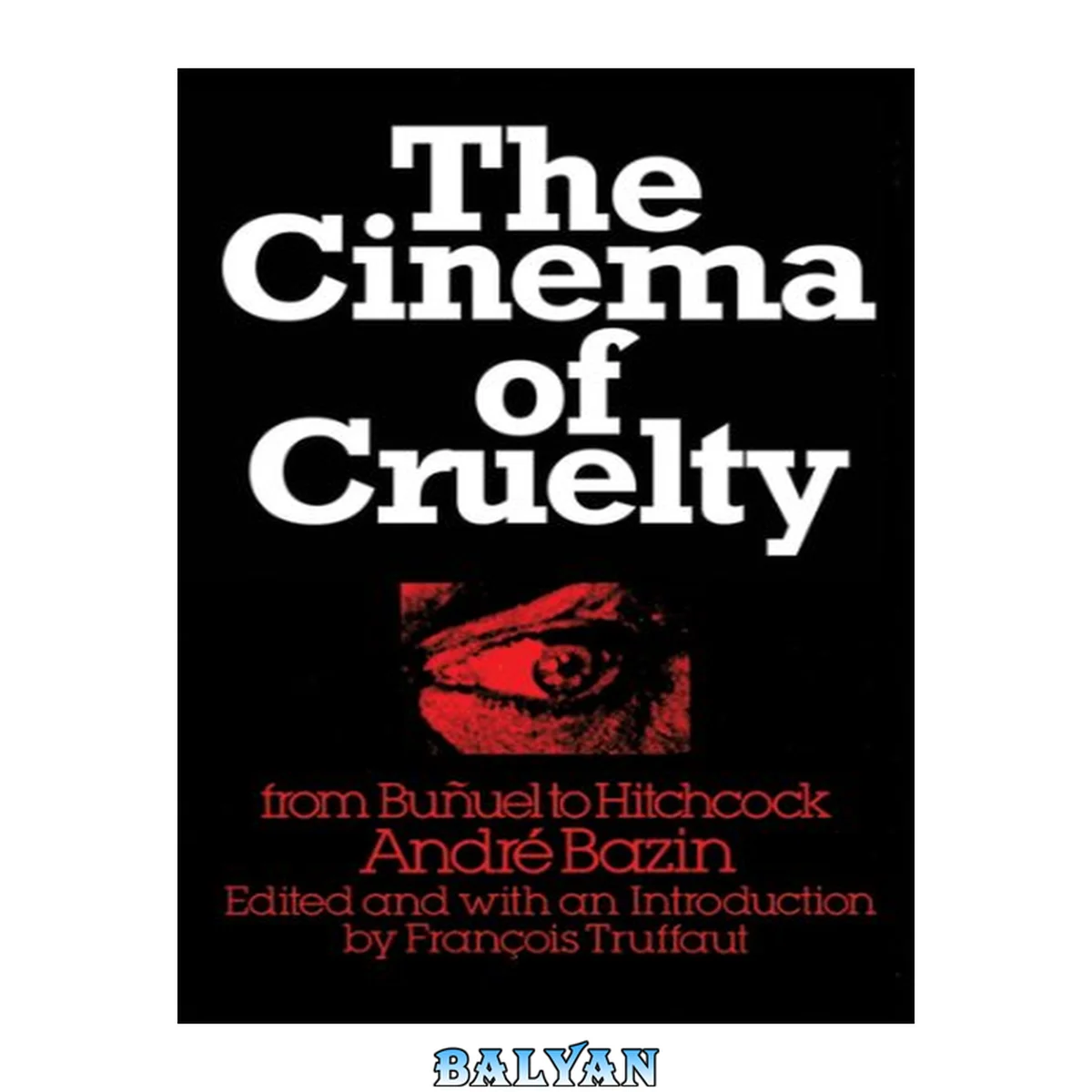
معرفی کتاب «The Cinema of Cruelty : From Buñuel to Hitchcock» نوشتهٔ Cathy Caruth (ed.) و Bazin, André; Truffaut, Francois (Editor)، منتشرشده توسط نشر Arcade Publishing در سال 2013. این کتاب در فرمت epub، زبان انگلیسی ارائه شده است.
Perhaps the single most important voice of cinema in the twentieth century, André Bazin profoundly influenced the development of the scholarship that we know now as film criticism. Bazin has acutely analyzed the cinematic values of our time, extending to his international audiences “the impact of art for the understanding and discrimination of his readers.” The depth and logic of his commentary has elevated film criticism to new heights. The reputation of André Bazin continues to grow as his writings are published and studied by filmmakers and filmgoers alike. Often referred to as the Edmund Wilson of film, Bazin was more than a critic. “He made me see certain aspects of my work that I was unaware of,” said Luis Buñuel. “He was our conscience,” wrote Jean Renoir. “He was a logician in action,” echoed François Truffaut. In The Cinema of Cruelty, François Truffaut, one of France’s most celebrated and versatile filmmakers, has collected Bazin’s writings on six film “greats”: Erich von Stroheim, Carl Dreyer, Preston Sturges, Luis Buñuel, Alfred Hitchcock, and Akira Kurosawa. The result is a major collection of film criticism.Language NotesText: English, French (translation) About the AuthorAndré Bazin was born in Angers, France, in 1918. Critic, theorist, essayist, and teacher, Bazin is, as Truffaut notes, “the most widely published and translated film critic outside of France.” Bazin’s work and writings have attracted an international audience of filmmakers, directors, and viewers. He passed away in 1958 at the age of forty. François Truffaut was an influential film critic and filmmaker and one of the founders of the French New Wave. He is most notably known for his 1962 film, Jules and Jim, and was not only one of the most respected filmmakers of his time, but was also a close personal friend of Andre Bazin. Truffaut passed away in 1984 at the age of 52. “There is no denying his importance in the development of film theory. As an introduction to Bazin’s views, The Cinema of Cruelty is excellent” (Columbia Spectator). Perhaps the single most important voice of cinema in the twentieth century, André Bazin profoundly influenced the development of the scholarship that we know now as film criticism. Bazin has acutely analyzed the cinematic values of our time, extending to his international audiences “the impact of art for the understanding and discrimination of his readers.” The depth and logic of his commentary has elevated film criticism to new heights. The reputation of André Bazin continues to grow as his writings are published and studied by filmmakers and filmgoers alike. Often referred to as the Edmund Wilson of film, Bazin was more than a critic. “He made me see certain aspects of my work that I was unaware of,” said Luis Buñuel. “He was our conscience,” wrote Jean Renoir. “He was a logician in action,” echoed François Truffaut. In The Cinema of Cruelty, François Truffaut, one of France’s most celebrated and versatile filmmakers, has collected Bazin’s writings on six film “greats”: Erich von Stroheim, Carl Dreyer, Preston Sturges, Luis Buñuel, Alfred Hitchcock, and Akira Kurosawa. The result is a major collection of film criticism. “There’s no denying his status as a giant in the field. He was an important voice silenced too soon, and The Cinema of Cruelty was and remains an important book that I hope wins him new fans.” —Bookgasm “Alive with Bazin’s deservedly legendary eloquence, warmth, and un-stuffy intelligence.” —Kirkus Reviews
An amazing collection of essays from the father of film criticism.
Perhaps the single most important voice of cinema in the twentieth century, André Bazin profoundly influenced the development of the scholarship that we know now as film criticism. Bazin has acutely analyzed the cinematic values of our time, extending to his international audiences “the impact of art for the understanding and discrimination of his readers.”
The depth and logic of his commentary has elevated film criticism to new heights. The reputation of André Bazin continues to grow as his writings are published and studied by filmmakers and filmgoers alike. Often referred to as the Edmund Wilson of film, Bazin was more than a critic. “He made me see certain aspects of my work that I was unaware of,” said Luis Buñuel. “He was our conscience,” wrote Jean Renoir. “He was a logician in action,” echoed François Truffaut.
In The Cinema of Cruelty, François Truffaut, one of France’s most celebrated and versatile filmmakers, has collected Bazin’s writings on six film “greats”: Erich von Stroheim, Carl Dreyer, Preston Sturges, Luis Buñuel, Alfred Hitchcock, and Akira Kurosawa. The result is a major collection of film criticism.
An amazing collection of essays from the father of film criticism. Perhaps the single most important voice of cinema in the twentieth century, Andr Bazin profoundly influenced the development of the scholarship that we know now as film criticism. Bazin has acutely analyzed the cinematic values of our time, extending to his international audiences?the impact of art for the understanding and discrimination of his readers.? The depth and logic of his commentary has elevated film criticism to new heights. The reputation of Andr Bazin continues to grow as his writings are published and studied by filmmakers and filmgoers alike. Often referred to as the Edmund Wilson of film, Bazin was more than a critic.?He made me see certain aspects of my work that I was unaware of,? said Luis Buuel.?He was our conscience,? wrote Jean Renoir.?He was a logician in action,? echoed Franois Truffaut. In The Cinema of Cruelty, Franois Truffaut, one of France?s most celebrated and versatile filmmakers, has collected Bazin?s writings on six film?greats?: Erich von Stroheim, Carl Dreyer, Preston Sturges, Luis Buuel, Alfred Hitchcock, and Akira Kurosawa. The result is a major collection of film criticism. 2 black-and-white photographs