The Castles of Mallorca: Fortification and state-formation during the Islamic period (International)
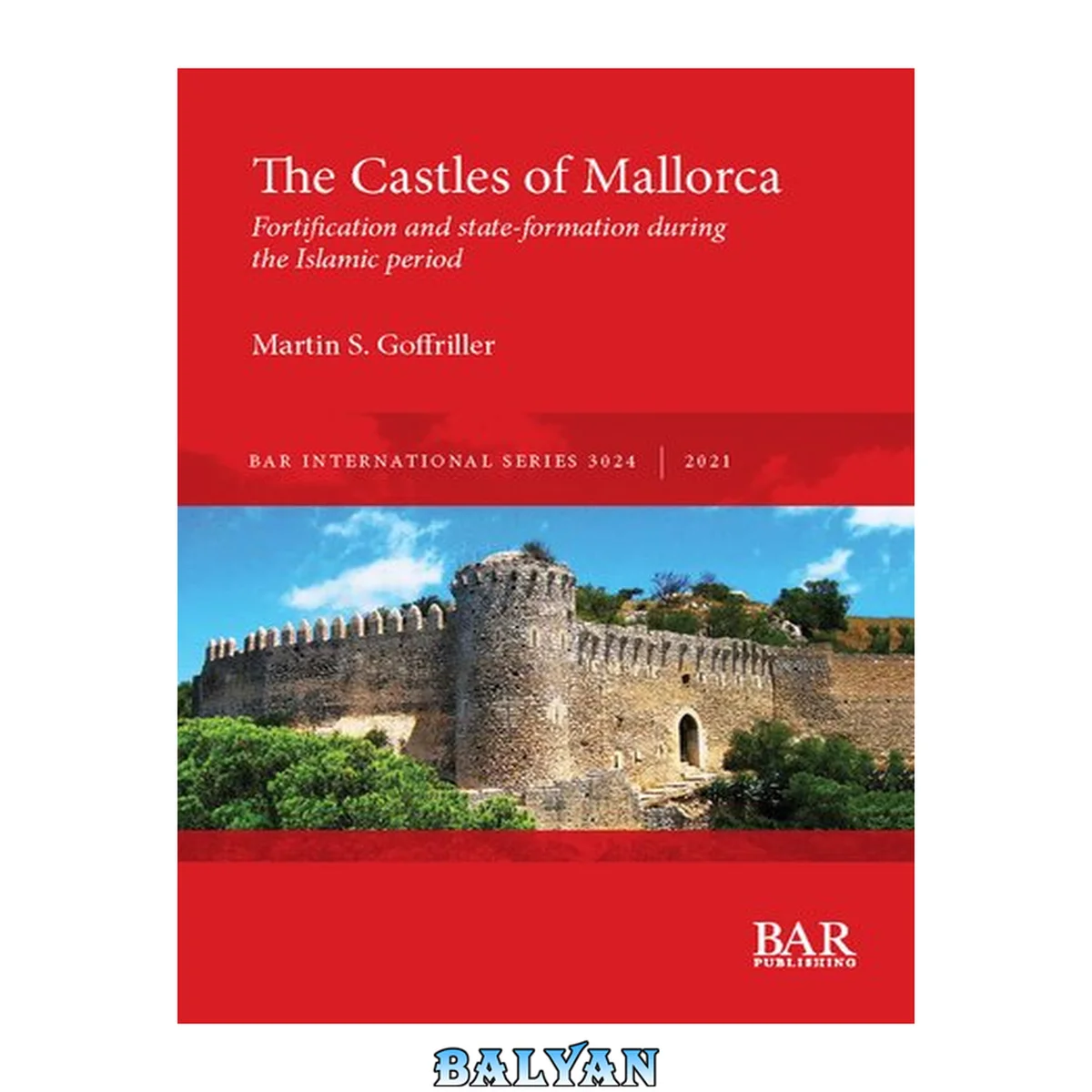
معرفی کتاب «The Castles of Mallorca: Fortification and state-formation during the Islamic period (International)» نوشتهٔ Martin S. Goffriller، منتشرشده توسط نشر BaR Publishing. این کتاب در 2 صفحه، فرمت pdf، زبان انگلیسی ارائه شده است.
Martin Goffriller’s research presents a study in the dynamics of territorial control of the island of Mallorca from ca. 902-1300 AD, with the aim of providing the first holistic and systematic study of the known Islamic fortresses of this island and determining the reasons which account for the lack of the so-called hisn/qarya complex there. The scientific focus of this book explores the effects that island contexts may have had on the identity-forming processes of their population and how these in turn affect the socio-political makeup of these ‘bounded’ polities. More specifically, in the case of Mallorca, the core of this study is devoted to the relation between the hinterland fortifications of the Islamic period and the island’s capital city Madīna Mayūrqa, concluding that due to the relative isolation of Mallorca’s segmentary communities from their mainland analogues they evolved a distinctive meta-identity which gradually supplanted their traditional tribal allegiances and redefined their relation with the state and political authority in general. Also detailed are the mechanisms of territorial and administrative integration of Islamic Mayūrqa into the feudal structures of the Kingdom of Aragon in the aftermath of the Catalan conquest of 1229. Front cover Title page Copyright Of Related Interest Acknowledgements Contents List of Figures List of Plates List of Abbreviations Summary 1. Introduction to the Study of Islamic Iberia,Its Fortification & Settlement 1.1 Researching Islamic Iberia: problems andchallenges 1.1.1 The Medieval Spains of ClaudioSánchez-Albornoz and Américo Castro 1.1.2 Pierre Guichard on Islamic tribalism andSpanish identity 1.1.3 Critiques of structural-functionalist anthropology:Chelhod, Manzano and Epalza 1.2 Other debates on the socio-political realities ofMedieval Iberia: conversion and settlement 1.2.1 On conversion to Islam: Bulliet and Glick 1.2.2 On Islamic settlement and Christian re-settlement:Kennedy and Fletcher 1.2.3 The emergence of landscape archaeology in thestudy of medieval Spain 1.3 Fortress and village: the hisn/qarya complexand its existence in Mallorca 2. Aims and Methodologies 2.1 Aims of the study 2.2 Methodology 2.2.1 The historical sources 2.2.2 The use of viewshed analysis 3. Fortification and Urbanism in Al-Andalus 3.1 The physical fortress: the morphology of the hisn 3.2 The conceptual fortress: function and locationof the Islamic fortress 3.3 Other types of fortification in al-Andalus 3.3.1 The Ribat / Ribāt 3.3.2 Alquería towers / guelâa 3.3.3 Fortified Granaries / agadir 3.4 Urban Islam: Madīna Mayūrqa and its role withinMallorca’s territory 3.4.1 The ‘Islamic’ city: research history and stateof the question 4. Mayūrqa: Island and History 4.1 Geography and climate of Mallorca 4.2 A political history of Mallorca 4.2.1 The Classical period and Late Antiquity 4.2.2 The Islamic Period 4.2.2.1 The integration of the archipelago into al-Andalus 4.2.2.2 Conquest and creation of Mayūrqa 4.2.2.2.1 Emirate and Caliphate 4.2.2.2.2 The Taifa of 4.2.2.2.3 The 1st Taifa of Mallorca 4.2.2.2.4 Almoravid Period 4.2.2.2.5 The Ghaniyids 4.2.2.2.6 The 3rd Taifa of Mallorca and the Catalanconquest 1212–1229 5. Madīna Mayūrqa and the Fortresses of Alaró,Castell Del Rei and Santueri 5.1 Madīna Mayūrqa, Palma de Mallorca 5.1.1 Almudaina of Palma 5.1.2 Almudaina of the Gumāra 5.2 Castell d’Alaró, Hisn al-Rum 5.2.1 History 5.2.2 Architectural analysis 5.2.3 Viewshed analysis 5.2.4 Conclusion 5.3 Castell del Rei, Hisn Bulānsa 5.3.1 History 5.3.2 Architectural Analysis 5.3.2.1 Outworks and gates 5.3.2.2 Southern Section: spur, shooting chamber, curtainwalls and ‘Latrine’ tower 5.3.2.3 Mid-Section: courtyard, kitchen, oven andancillary chamber 5.3.2.4 The Hall/Chapel: functional changes inthe use of the fortress 5.3.2.5 The Cisterns: a potential dating sequencefor Castell del Rei 5.3.2.6 The Northern Tip: postern and watch tower 5.3.2.7 Channels and water catchment 5.3.3 Viewshed analysis 5.3.4 Conclusion 5.4 Castell de Santueri, Hisn Falanis 5.4.1 History 5.4.2 Archaeological finds 5.4.2.1 Coinage finds 5.4.2.2 Other finds 5.4.3 Historical documentation 5.4.4 Architectural analysis 5.4.4.1 Sector 1. Main Defences: outworks, curtainsand round tower 5.4.4.2 Sector 2. Secondary defences: Wall towers,cistern and graffito 5.4.4.3 Sector 3. The Plateau: Hall, cisterns and northerndefences 5.4.4.4 Sector 4. The Eastern End: cisterns andopen-backed tower 5.4.5 Viewshed analysis 6. The Minor Fortifications of Mallorca 6.1 Introduction 6.2 Puig de Sa Bastida 6.1.2 Architectural analysis 6.1.2.1 The Walls 6.1.2.2 The Cisterns 6.1.3 Other architectural remains 6.1.4 Viewshed analysis 6.1.5 Conclusion 6.3 The Tower of Canyamel/Montsó 6.3.1 History and documentation 6.3.2 Architectural analysis 6.3.3 Viewshed analysis 6.3.4 Conclusion 6.4 Castell de Moros/Castell d’es Moro, Deiá 6.4.1 Viewshed analysis 6.5 Palau dels Reis de Mallorca, Sineu 6.5.1 Architectural analysis 6.5.2 Conclusion 6.6 Almudaina d’Artá 6.6.1 Architectural analysis 6.6.2 Viewshed analysis 6.7 Torre d’en Nunís 6.7.1 Architectural analysis 6.7.2 Viewshed analysis 6.8 Puig de n’Escuder, Caimari 6.8.1 Architectural analysis 6.8.2 Ceramic remains 6.8.3 Viewshed analysis 6.9 Torre de Son Más, Andratx 6.9.1 Viewshed analysis 6.10 Puig de Randa 6.10.1 Viewshed Analysis 6.11 Castellet d’Esporles 6.12 Unsubstantiated place names and other sites 7. Synthesis and Discussion 7.1 The changing roles of the fortresses within theirsocio-political environment 7.1.1 Madīna Mayūrqa/Ciutat de Mallorca 7.1.2 The Castles 7.1.3 Mountain Refuges and Towers 7.2 Interconnectivity: Viewsheds and theirinterpretation 7.3 Geography and identity 7.3.1 Factors leading to Mallorca’s administrationaldivergence form the mainland 7.3.2 Christian conquest of an Islamic island:transformation and adaptation of the territory 7.4 Fortification and politics on the mainland:Al-Andalus and the Maghreb 8. Conclusion 8.1 Scope for future enquiries Glossary Appendix: Tables, Plates & Archival Documents Bibliography This research presents a study in the dynamics of territorial control of the island of Mallorca from ca. 902-1300 AD, with the aim of providing the first holistic and systematic study of the known Islamic fortresses of this island and determining the reasons which account for the lack of the so-called hisn/qarya complex there. The scientific focus of this project explores the effects that island contexts may have had on the identity-forming processes of their population and how these in turn affect the socio-political makeup of these ?bounded? polities. More specifically, in the case of Mallorca the core of this study is devoted to the relation between the hinterland fortifications of the Islamic period and the island?s capital city Mad?na May?rqa, concluding that due to the relative isolation of Mallorca?s segmentary communities from their mainland analogues they evolved a distinctive meta-identity which gradually supplanted their traditional tribal allegiances and redefined their relation with the state and political authority in general. Discussed at length are also the mechanisms of territorial and administrative integration of Islamic May?rqa into the feudal structures of the Kingdom of Aragon in the aftermath of the Catalan conquest of 1229
دانلود کتاب The Castles of Mallorca: Fortification and state-formation during the Islamic period (International)