The battle of belonging : on nationalism, patriotism, and what it means to be Indian
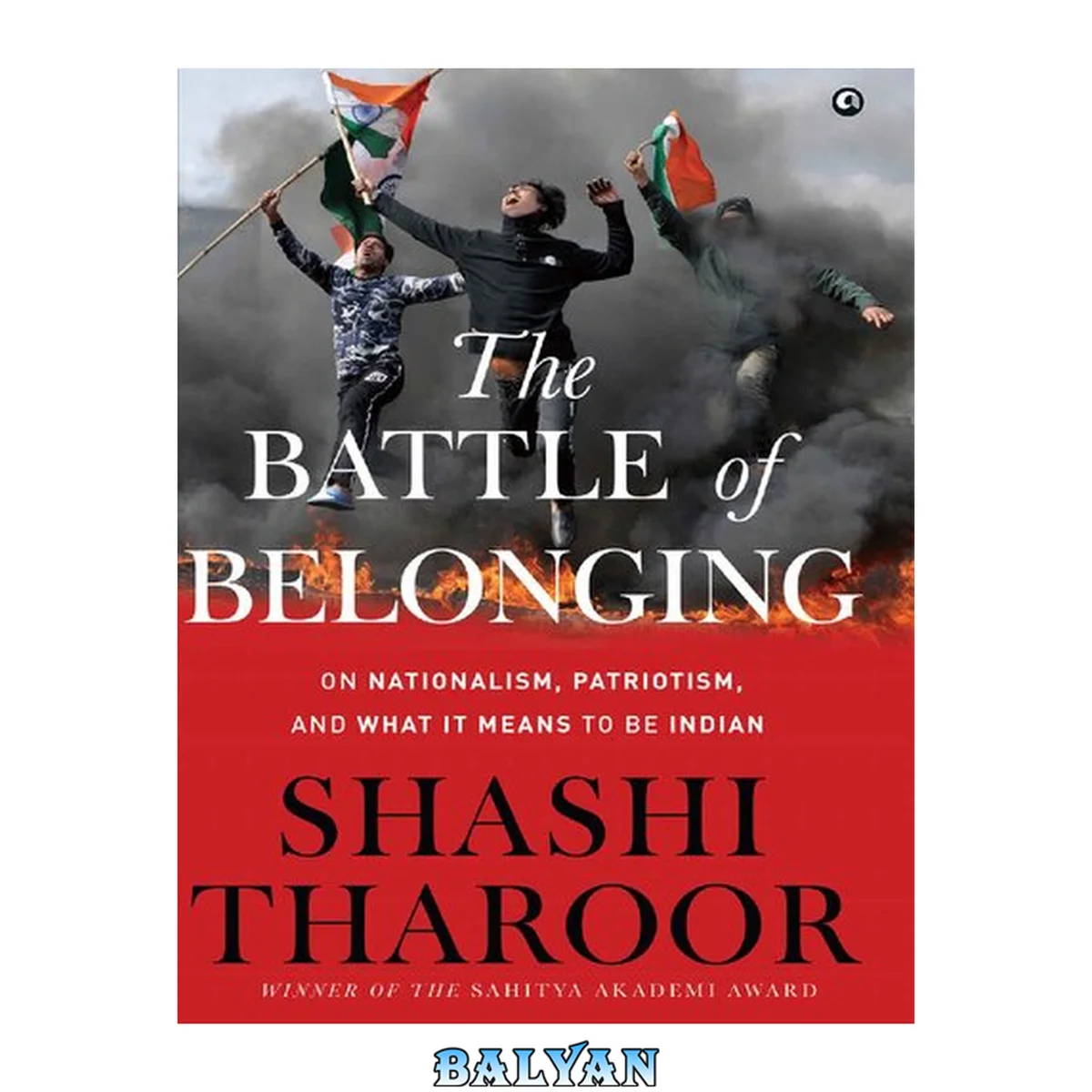
معرفی کتاب «The battle of belonging : on nationalism, patriotism, and what it means to be Indian» نوشتهٔ Suzanne Collins، et al، Sylke Hachmeister و Shashi Tharoor، منتشرشده توسط نشر Aleph Book Company در سال 2020. این کتاب در فرمت pdf، زبان انگلیسی ارائه شده است.
There are over a billion Indians alive today. But are some Indians more Indian than others? To answer this question, one that is central to the identity of every man, woman, and child who belongs to the modern Republic of India, eminent thinker and bestselling writer Shashi Tharoor explores hotly contested ideas of nationalism, patriotism, citizenship, and belonging. In the course of his study, he explains what nationalism is, and can be, reveals who is anti-national, what patriotism actually means, and explores the nature and future of Indian nationhood. He gives us a clear-sighted view of the forces working to undermine the ‘idea of India’ (a phrase coined by Rabindranath Tagore) that has evolved through history and which, in its modern form, was enshrined in India’s Constitution by its founding fathers. Divided into six sections, the book starts off by exploring historical and contemporary ideas of nationalism, patriotism, liberalism, democracy, and humanism, many of which emerged in the West in the eighteenth and nineteenth centuries, and quickly spread throughout the world. The author then summarizes India’s liberal constitutionalism, exploring the enlightened values that towering leaders and thinkers like Gandhi, Nehru, Tagore, Ambedkar, Patel, Azad, and others invested the nation with. These are contrasted with the narrow-minded, divisive, sectarian, ‘us vs them’ alternatives formulated by Hindutva ideologues, and propagated by their followers who are now in office. Today, the battle is between these two opposing ideas of India, or what might be described as ethno-religious nationalism vs civic nationalism. The struggle for India’s soul has heightened, deepened, and broadened, and threatens to hollow out and destroy the remarkable concepts of pluralism, secularism, and inclusive nationhood that were bestowed upon the nation at Independence. The Constitution is under siege, institutions are being undermined, mythical pasts propagated, universities assailed, minorities demonized, and worse. Every passing month sees new attacks on the ideals that India has long been admired for, as authoritarian leaders and their bigoted supporters push the country towards a state of illiberalism and intolerance. If they succeed, millions will be stripped of their identity, and bogus theories of Indianness will take root in the soil of the subcontinent. However, all is not yet lost, and this erudite and lucid book shows us what will need to be done to win the battle of belonging and strengthen everything that is unique and valuable about India. Firmly anchored in incontestable scholarship, yet passionately and fiercely argued, The Battle of Belonging is a book that unambiguously establishes what true Indianness is and what it means to be a patriotic and nationalistic Indian in the twenty-first century. There are over a billion Indians alive today. But are some Indians more Indian than others? To answer this question, one that is central to the identity of every man, woman, and child who belongs to the modern Republic of India, eminent thinker and bestselling writer Shashi Tharoor explores hotly contested ideas of nationalism, patriotism, citizenship, and belonging. In the course of his study, he explains what nationalism is, and can be, reveals who is anti-national, what patriotism actually means, and explores the nature and future of Indian nationhood. He gives us a clear-sighted view of the forces working to undermine the 'idea of India' (a phrase coined by Rabindranath Tagore) that has developed through history and which, in its modern form, was enshrined in India's Constitution by its founding fathers. Divided into six sections, the book starts off by exploring historical and contemporary ideas of nationalism, patriotism, liberalism, democracy, and humanism, many of which emerged in the West in the eighteenth and nineteenth centuries, and quickly spread throughout the world. The author then summarizes India's liberal constitutionalism, exploring the enlightened values that towering leaders and thinkers like Gandhi, Nehru, Tagore, Ambedkar, Patel, Azad, and others invested the nation with. These are contrasted with the narrow-minded, divisive, sectarian, 'us vs them' alternatives formulated by Hindutva ideologues, and propagated by their followers who are now in office. Today, the battle is between these two opposing ideas of India, or what might be described as ethno-religious nationalism vs civic nationalism. The struggle for India's soul has heightened, deepened, and broadened, and threatened to hollow out and destroy the remarkable concepts of pluralism, secularism, and inclusive nationhood that were bestowed upon the nation at Independence. The Constitution is under siege, institutions are being undermined, mythical pasts propagated, universities assailed, minorities demonized, and worse. Every passing month sees new attacks on the ideals that India has long been admired for, as authoritarian leaders and their bigoted supporters push the country towards a state of illiberalism and intolerance. If they succeed, millions will be stripped of their identity, and bogus theories of Indianness will take root in the soil of the subcontinent. However, all is not yet lost, and this erudite and lucid book shows us what will need to be done to win the battle of belonging and strengthening everything that is unique and valuable about India. Firmly anchored in incontestable scholarship, yet passionately and fiercely argued, The Battle of Belonging is a book that unambiguously establishes what true Indianness is and what it means to be a patriotic and nationalistic Indian in the twenty-first century. Half-Title Page Title Page Copyright Page Dedication Contents Prologue: A Congenital Indian Nationalist SECTION ONE: THE IDEA OF NATIONALISM 1. The Emergence of Nationalism 2. A Very Recent Idea 3. The Significance of Culture 4. The Prism of Identity 5. What Makes Patriotism Different? 6. Janus-faced Nationalism 7. The Era of Globalization 8. The Better Nationalism 9. A Sense of Belonging SECTION TWO: THE IDEA OF INDIA 10. The Basics 11. The Challenge of Definition 12. We Are All Minorities in India 13. The Constitution and Indian Nationhood 14. A Living Document 15. ‘Indic Civilization’ and Indianness SECTION THREE: THE HINDUTVA IDEA OF INDIA 16. The Doctrine of Hindutva 17. Hindu Rashtra Updated 18. A ‘Hindu Pakistan’ 19. The Fabrication of History 20. Bharat Mata ki Jai SECTION FOUR: THE ONGOING BATTLE OF BELONGING 21. A Partition in the Indian Soul 22. Where We Are, and How We Got Here 23. The Renewed Modi-fication of India 24. The Etiolation of Democratic Institutions 25. The Assertion of Hindi 26. The Citizenship (Amendment) Act and the National Register of Citizens 27. Kashmir and the End of Autonomy 28. Soft-signalling Bigotry 29. Ayodhya: Enshrining Hindu Rashtra SECTION FIVE: THE ANXIETY OF NATIONHOOD 30. Gandhi’s Hinduism vs Hindutva 31. Bharat vs India 32. Bending the Constitution 33. Beatitudes of Belonging 34. The North-South Divide 35. Reaffirming Civic Nationalism and Patriotism SECTION SIX: RECLAIMING INDIA’S SOUL 36. Where Do We Go from Here? 37. Fighting Back 38. Liberal Constitutionalism and Patriotism Epilogue: Winning the Battle of Belonging Acknowledgements Bibliography
دانلود کتاب The battle of belonging : on nationalism, patriotism, and what it means to be Indian