The AWK Programming Language
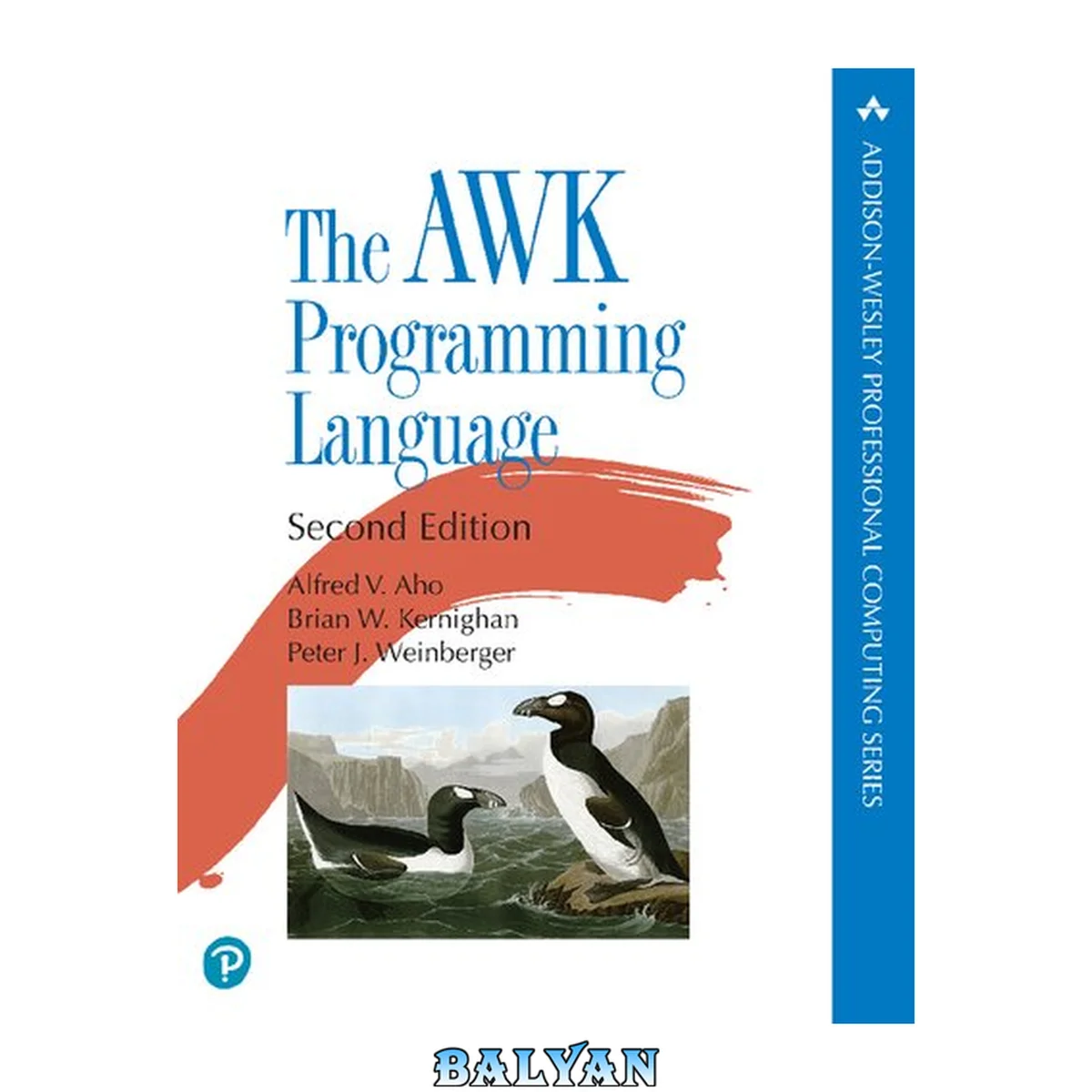
معرفی کتاب «The AWK Programming Language» نوشتهٔ Alfred Aho، Brian Kernighan، Peter Weinberger، Alfred V. Aho و Brian W. Kernighan، منتشرشده توسط نشر Addison-Wesley Professional در سال 2023. این کتاب در 3 صفحه، فرمت pdf، زبان انگلیسی ارائه شده است. «The AWK Programming Language» در دستهٔ برنامهنویسی قرار دارد.
Awk was developed in 1977 at Bell Labs, and it's still a remarkably useful tool for solving a wide variety of problems quickly and efficiently. In this update of the classic Awk book, the creators of the language show you what Awk can do and teach you how to use it effectively. Here's what programmers today are saying: "I love Awk." "Awk is amazing." "It is just so damn good." "Awk is just right." "Awk is awesome." "Awk has always been a language that I loved." It's easy: "Simple, fast and lightweight." "Absolutely efficient to learn because there isn't much to learn." "3-4 hours to learn the language from start to finish." "I can teach it to new engineers in less than 2 hours." It's productive: "Whenever I need to do a complex analysis of a semi-structured text file in less than a minute, Awk is my tool." "Learning Awk was the best bang for buck investment of time in my entire career." "Designed to chew through lines of text files with ease, with great defaults that minimize the amount of code you actually have to write to do anything." It's always available: "AWK runs everywhere." "A reliable Swiss Army knife that is always there when you need it." "Many systems lack Perl or Python, but include Awk." Register your book for convenient access to downloads, updates, and/or corrections as they become available. See inside book for details. Cover Half Title Title Page Copyright Page Table of Contents Preface 1. An AwkTutorial 1.1 Getting Started 1.2 Simple Output 1.3 Formatted Output 1.4 Selection 1.5 Computing with Awk 1.6 Control-Flow Statements 1.7 Arrays 1.8 Useful One-liners 1.9 What Next? 2. Awk in Action 2.1 Personal Computation 2.2 Selection 2.3 Transformation 2.4 Summarization 2.5 Personal Databases 2.6 A Personal Library 2.7 Summary 3. Exploratory Data Analysis 3.1 The Sinking of the Titanic 3.2 Beer Ratings 3.3 Grouping Data 3.4 Unicode Data 3.5 Basic Graphs and Charts 3.6 Summary 4. Data Processing 4.1 Data Transformation and Reduction 4.2 Data Validation 4.3 Bundle and Unbundle 4.4 Multiline Records 4.5 Summary 5. Reports and Databases 5.1 Generating Reports 5.2 Packaged Queries and Reports 5.3 A Relational Database System 5.4 Summary 6. Processing Words 6.1 Random Text Generation 6.2 Interactive Text-Manipulation 6.3 Text Processing 6.4 Making an Index 6.5 Summary 7. Little Languages 7.1 An Assembler and Interpreter 7.2 A Language for Drawing Graphs 7.3 A Sort Generator 7.4 A Reverse-Polish Calculator 7.5 A Different Approach 7.6 A Recursive-Descent Parser for Arithmetic Expressions 7.7 A Recursive-Descent Parser for a Subset of Awk 7.8 Summary 8. Experiments with Algorithms 8.1 Sorting 8.2 Profiling 8.3 Topological Sorting 8.4 Make: A File Updating Program 8.5 Summary 9. Epilogue 9.1 Awk as a Language 9.2 Performance 9.3 Conclusion Appendix A: Awk Reference Manual A.1 Patterns A.2 Actions A.3 User-Defined Functions A.4 Output A.5 Input A.6 Interaction with Other Programs A.7 Summary Index A B C D E F G H I J K L M N O P Q R S T U V W X Y Z
دانلود کتاب The AWK Programming Language