The American Psychiatric Association Publishing Textbook of Suicide Risk Assessment and Management, Third Edition
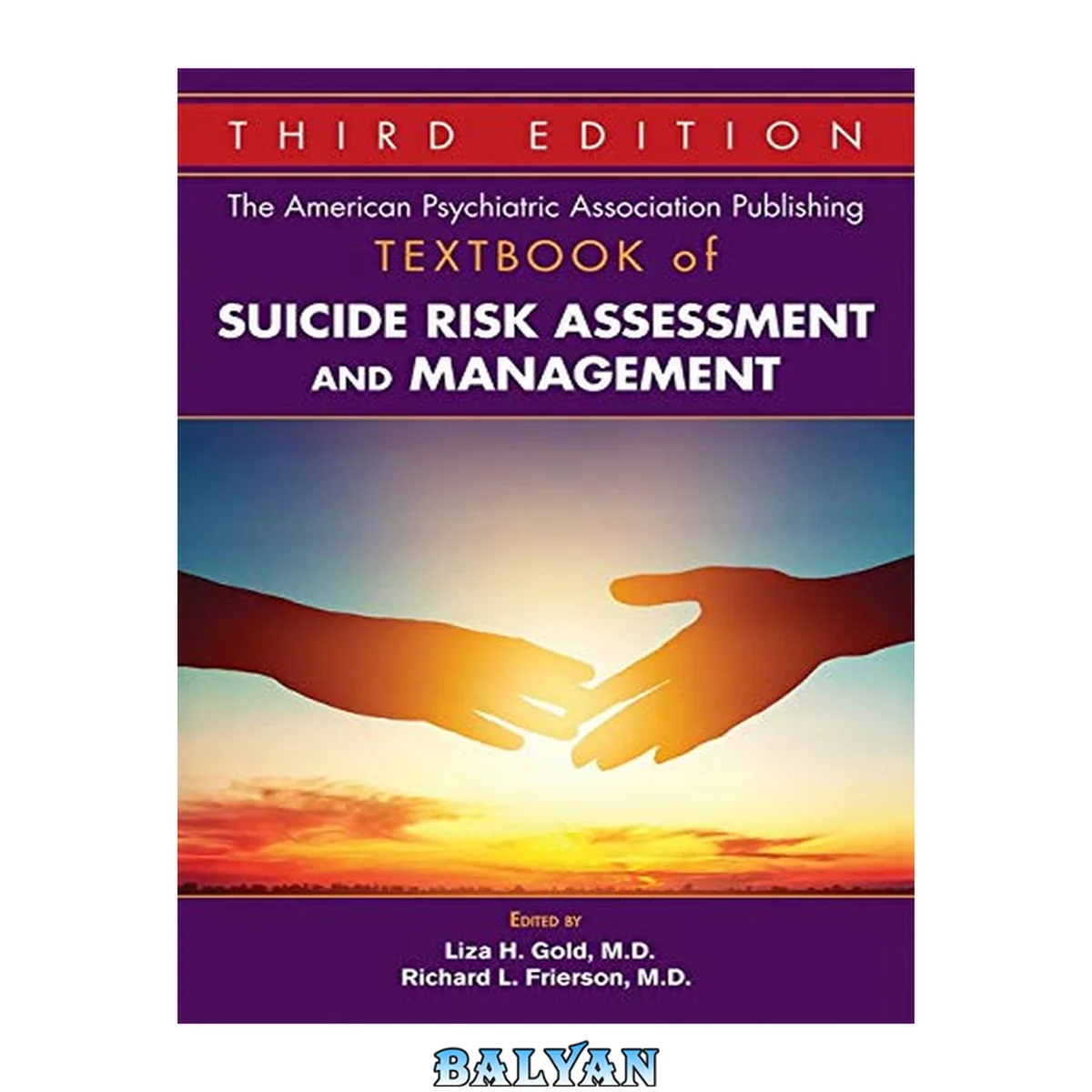
معرفی کتاب «The American Psychiatric Association Publishing Textbook of Suicide Risk Assessment and Management, Third Edition» نوشتهٔ Robert، Boyd، Silk، Joan B و Liza H. Gold, Richard L. Frierson, (eds.)، منتشرشده توسط نشر American Psychiatric Association Publishing در سال 2020. این کتاب در فرمت pdf، زبان انگلیسی ارائه شده است.
Charged with updating the preeminent text on suicide, the new editors of The American Psychiatric Association Publishing Textbook of Suicide Risk Assessment and Management opted not to simply revise existing chapters, but instead to steer a bold course, expanding, reconfiguring, and remaking the third edition to reflect the latest research, nomenclature, and clinical innovations. The editorial team and contributors -- two-thirds of whom are new to this edition -- have taken the intersection of suicide with both mental health and psychosocial issues as their organizing principle, exploring risk assessment and epidemiology in special populations, such as elderly patients, college students, military personnel, and the incarcerated as well as patients with a variety of psychological disorders, including bipolar spectrum, personality, depressive, anxiety, posttraumatic stress, and other disorders and schizophrenia. In addition, the book discusses treatment options (such as cognitive-behavioral therapy, dialectical behavioral therapy, and pharmacotherapy) and settings (such as emergency services, outpatient, inpatient, and civil commitment) in detail, with clinical cases to contextualize the material. The new and revised content is extensive: A chapter on the influence of sleep and sleep disorders on suicide risk has been included that considers possible mechanisms for this link and discusses practical ways of assessing and managing sleep disorders to mitigate suicide risk. Nonsuicidal self-injury, the prevalence of which is particularly high among youth, is addressed in detail, differentiating it from and comparing it to suicide attempts, discussing risk assessment, considering safety interventions, examining treatment options, and exploring suicide contagion. No text on suicide would be complete without a serious exploration of the role of social media and the internet. The book presents an update on current research as it pertains to social networking and behavior, information access, and artificial intelligence and software, and includes suggestions for clinicians treating patients at risk for suicide. Physician-assisted dying (PAD), also referred to as "aid-in-dying," is arguably a form of suicide, and the book includes a thoughtful chapter considering the ethical and practical implications of PAD, the murky professional and legal obligations that may arise, the demographics of these patients, the settings and conditions under which PAD may occur, and the role of the attendant clinicians. A number of pedagogical features are included to help the reader learn and remember the material, including key clinical concepts and abundant case examples. Its diverse range of perspectives, broad relevance to a wide variety of clinicians, and absolutely authoritative coverage makes this new edition of The American Psychiatric Association Publishing Textbook of Suicide Risk Assessment and Management a worthy and indispensable successor. Cover Half Title Title Page Copyright Contents Contributors Introduction PART I Suicide Risk Assessment and Treatment 1 Suicide Risk Assessment 2 Psychopharmacology and Neuromodulation 3 Cognitive and Behavioral Therapy 4 Psychodynamic Treatment 5 Split Treatment: The Psychiatrist’s Role 6 Cultural Humility and Structural Competence in Suicide Risk Assessment PART II Major Mental Disorders 7 Depressive Disorders 8 Anxiety Disorders, Obsessive-Compulsive Disorder, and Posttraumatic Stress Disorder 9 Substance-Related Disorders 10 Bipolar Spectrum Disorders 11 Schizophrenia and Other Psychotic Disorders 12 Personality Disorders 13 Sleep and Suicide PART III Treatment Settings 14 Emergency Services 15 Outpatient Treatment of the Suicidal Patient 16 Inpatient Treatment 17 Civil Commitment PART IV Special Populations 18 Children and Adolescents 19 College and University Students 20 Suicide in the Elderly Population 21 Jails and Prisons 22 Military Personnel and Veterans 23 Suicide and Gender 24 Self-Injurious Behavior PART V Special Topics 25 Social Media and the Internet 26 Physician-Assisted Dying 27 Suicide Risk Management: Mitigating Professional Liability 28 The Psychological Autopsy and Retrospective Evaluation of Suicidal Intent PART VI Prevention 29 Suicide and Firearms 30 Suicide Prevention Programs 31 Teaching Suicide Risk Assessment in Psychiatric Residency Training PART VII Aftermath of Suicide 32 Psychiatrist Reactions to Patient Suicide and the Clinician’s Role Index "This edition offers new perspectives on suicide at a variety of levels, such as the medical and social use of destigmatizing and more precise language. In addition, chapter authors review research that identifies additional suicide risk factors and their clinical implications. Current issues related to suicide are also discussed, including nonfatal, self-injurious behavior; physician-assisted suicide; and teaching suicide risk assessment and management during psychiatric residency. This third edition also examines the increased rates of suicide among specific populations, including children, adolescents, and college students, and makes recommendations regarding suicide risk management in these populations"-- Provided by publisher The Third Edition Represents The Editors' Cutting-edge Vision While Preserving The Down-to-earth, Accessible, And Trustworthy Style That Has Made The Book A Staple. It Offers Up-to-date Perspectives On Assessment And Management Of Suicide Risk In A Reorganized And Easy-to-use Volume.
دانلود کتاب The American Psychiatric Association Publishing Textbook of Suicide Risk Assessment and Management, Third Edition