The Ahmadis and the Politics of Religious Exclusion in Pakistan (Anthem Modern South Asian History)
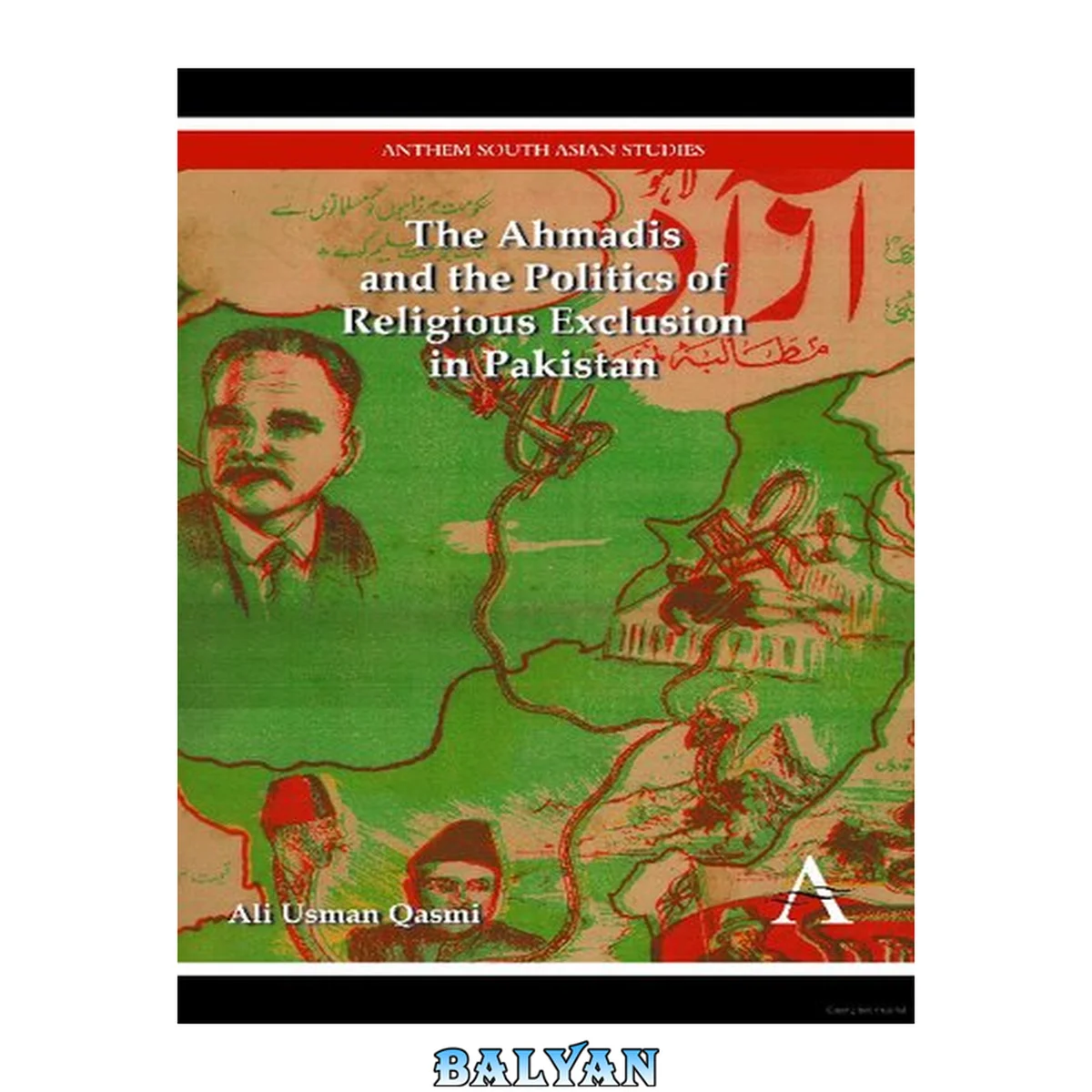
معرفی کتاب «The Ahmadis and the Politics of Religious Exclusion in Pakistan (Anthem Modern South Asian History)» نوشتهٔ Ali Usman Qasmi، منتشرشده توسط نشر Anthem Press در سال 2014. این کتاب در فرمت pdf، زبان انگلیسی ارائه شده است.
In this path-breaking new work, Ali Usman Qasmi traces the history of the political exclusion of the Ahmadiyya religious minority in Pakistan by drawing on revealing new sources. This volume is the first scholarly study of the declassified material of the court of inquiry that produced the Munir–Kiyani report of 1954, and the proceedings of the national assembly that declared the Ahmadis non-Muslims through the second constitutional amendment in 1974. The Ahmadis and the Politics of Religious Exclusion in Pakistan chronicles anti-Ahmadi violence and the legal and administrative measures adopted against them, and also addresses wider issues of the politics of Islam in postcolonial Muslim nation-states and their disputative engagements with ideas of modernity and citizenship. Winner of the Karachi Literary Festival Peace Prize 2015. The Ahmadis and the Politics of Religious Exclusion in Pakistan Title Copyright CONTENTS ACKNOWLEDGMENTS INTRODUCTION Background Outline of the Book Part I Chapter I THE RECORDS OF THE COURT OF INQUIRY AND THE MUNIR–KIYANI REPORT Introduction I The court of inquiry II Significance of the Munir–Kiyani report Conclusion Chapter II THE BACKGROUND TO JAMA‘AT AHMADIYYAH AND THE ORIGINS OF THE ANTI-AHMADI MOVEMENT: THE ROLE OF MAJLIS-I-AHRAR AND MAJLIS-I-‘AMAL Introduction I Mirza Ghulam Ahmad: From polemics to prophethood II Rhetoric and religion: Background to the history and politics of Majlis-i-Ahrar Conclusion Chapter III THE POLITICAL HIERARCHY AND ADMINISTRATIVE STRUCTURE OF PAKISTAN: CONTEXTUALIZING THE EVENTS OF 1952–53 Introduction I The British colonial order in the Punjab: The aura of the district officer II The political dynamics of Punjab and the Muslim League, 1947–53 Conclusion Chapter IV DISTURBANCES IN LAHORE AND THE IMPOSITION OF MARTIAL LAW Introduction I The breakdown of negotiations and the call for direct action II The colonial legacy of anti-disturbances strategy III The aftermath of the movement Conclusion Chapter V THE FINDINGS OF THE MUNIR–KIYANI REPORT Introduction I The court drama II Fixing the responsibility III The court of inquiry and the discourse on Islam Conclusion Summary and Conclusion to Part I Part II Chapter VI UNDERSTANDING THE EVENTS OF 1974 Introduction I The transitions in Pakistan’s politics of Islam II The religio-political parties in power III The records Conclusion Chapter VII THE “FINAL SOLUTION” OF THE “90-YEAR-OLD PROBLEM”?: THE PARLIAMENTARY PROCEEDINGS OF 1974 Introduction I Polemics and counter-polemics II The assembly proceedings III The Second Amendment Conclusion Summary and Conclusion to Part II DEBATES ON THE AHMADIS AFTER 1974: A POSTSCRIPT NOTES Introduction Chapter I: The Records of the Court of Inquiry and the Munir–Kiyani Report Chapter II: The Background to Jama'at Ahmadiyyah and the Origins of the Anti-Ahmadi Movement: The Role of Majlis-i-Ahrar and Majlis-i-'Amal Chapter III: The Political Hierarchy and Administrative Structure of Pakistan: Contextualizing the Events of 1952–53 Chapter IV: Disturbances in Lahore and the Imposition of Martial Law Chapter V: The Findings of the Munir–Kiyani Report Chapter VI: Understanding the Events of 1974 Chapter VII: The “Final Solution” of the “90-Year-Old Problem”?: The Parliamentary Proceedings of 1974 Debates on the Ahmadis after 1974: A Postscript BIBLIOGRAPHY Archival Sources and Private Collections Journals and Newspapers Other Sources Interviews INDEX Winner of the Karachi Literary Festival Peace Prize 2015, The Ahmadis and the Politics of Religious Exclusion in Pakistan traces the history of the political exclusion of the Ahmadiyya religious minority in Pakistan by drawing on revealing new sources. The Ahmadis believe Mirza Ghulam Ahmad of Qadiyan (1835 1908) was a prophet (in a nuanced understanding of this term) and promised messiah. This led to the group s condemnation as infidels during the colonial period, setting in course a painful history of religious exclusion. Part I of this volume traces the development of the anti-Ahmadi movement from its origin in Punjab province, where an agitation movement was launched calling upon the central government to declare the Ahmadis officially non-Muslim. After the movement intensified, leading to proclamation of martial law in Lahore in 1953, the Punjab government held a court of inquiry, which released its report in 1954. The proceedings of the Munir-Kiyani inquiry commission has now become available to scholars, and is a key focus of analysis. Part II focuses on the developments in Pakistan s politics that created a discursive space where legislative measures against the Ahmadis could be deliberated and adopted by the national assembly, and argues Pakistan s first general elections in 1970 reflected the entrenchment of religious leaders in Pakistan s power politics. The national assembly s 1974 session saw Ahmadis unanimously declared as non-Muslims; the records of this session s debates are extensively reviewed in this book. A truly path-breaking study, this work goes beyond merely chronicling the details of anti-Ahmadi violence and the legal and administrative measures adopted against them, to address wider issues of the politics of Islam in postcolonial Muslim nation-states and their disputative engagements with the ideas of modernity and citizenship. " In this path-breaking new work, Ali Usman Qasmi traces the history of the political exclusion of the Ahmadiyya religious minority in Pakistan by drawing on revealing new sources. This volume is the first scholarly study of the declassified material of the court of inquiry that produced the Munir-Kiyani report of 1954, and the proceedings of the national assembly that declared the Ahmadis non-Muslims through the second constitutional amendment in 1974. The Ahmadis and the Politics of Religious Exclusion in Pakistan chronicles anti-Ahmadi violence and the legal and administrative measures adopted against them, and also addresses wider issues of the politics of Islam in postcolonial Muslim nation-states and their disputative engagements with ideas of modernity and citizenship. Book jacket
دانلود کتاب The Ahmadis and the Politics of Religious Exclusion in Pakistan (Anthem Modern South Asian History)