Telegrams Of The Soul: Selected Prose Pearls Of Peter Altenberg
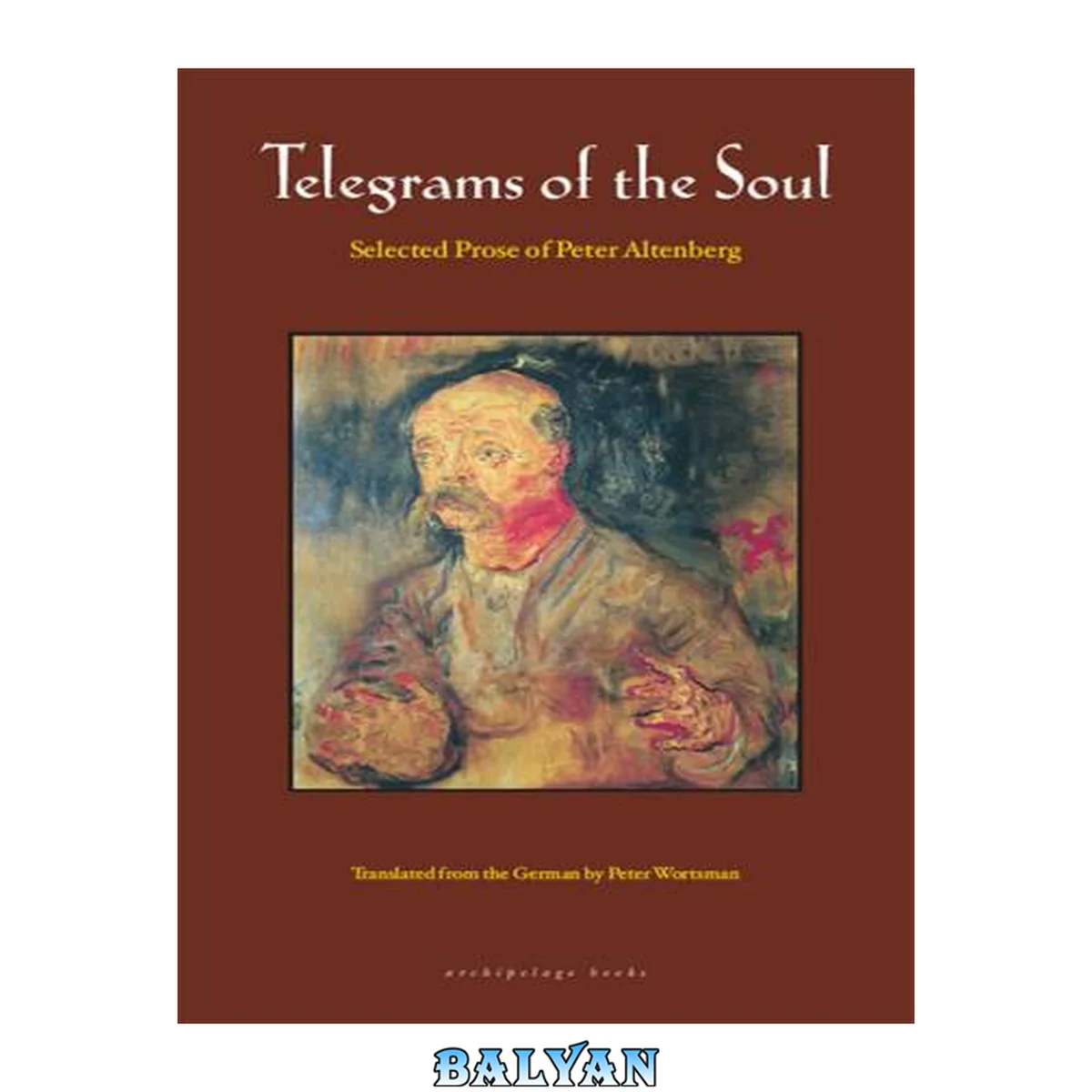
معرفی کتاب «Telegrams Of The Soul: Selected Prose Pearls Of Peter Altenberg» نوشتهٔ Peter Altenberg, Peter Wortsman، منتشرشده توسط نشر Archipelago Books ; Distributed by Consortium Books Sales and Distribution در سال 2005. این کتاب در فرمت epub، زبان انگلیسی ارائه شده است.
"Altenberg discovers the splendors of this world like cigarette butts in the ashtrays of coffee houses."-Franz Kafka
Kirkus Reviews
Short prose pieces by a Viennese eccentric gifted with the lost art of high sentimentality. These tales and essays, some only a few lines long, convey the fleeting intoxications of a fin-de-siecle idler. A dedicated admirer of the fair sex-especially, and no doubt disturbingly for many modern readers, as represented by 13-year-old charmers-Altenberg (1859-1919) passed his life in the coffee shops and brothels of Vienna. The pieces he wrote about his experiences there were admired by, among others, Thomas Mann, Arthur Schnitzler and Franz Kafka. A perennial enthusiast, the author cannot write four sentences running without resorting to the exclamation point. Rapture is triggered by the mundane: a dock in the sun, artificial flowers, a turn of phrase. His passion for women and young girls is exalted by attentive and unfailing compassion. In one piece, learning of a working-class nymphet's passion for silk swatches, he obtains a box of them from the manufacturer. His ensuing description of the party she creates for her fellow urchins, presiding over their admiration of the rags like a queen, ends with the child's peremptory dismissal of her benefactor. Another series recounts the everyday life of the Ashanti inhabitants of an African village transported to serve as a tourist attraction in the Viennese zoo. Altenberg developed close friendships with many of the Ashanti; his portraits of them are as sensitive as his renderings of family members, literary and professional acquaintances, and prostitutes. While the prose here is often overblown, it proceeds from genuine excesses of feeling; the writer has been carried away, and in almost every case, he takes the reader with him. Winningexpressions of pleasure, at once lyrical, incisive and funny.
If it be permitted to speak of love at first syllable, then thats what I experienced in my first encounter with this poet of prose. So wrote Thomas Mann of the work of Peter Altenberg. A virtuoso Fin de Siecle Viennese innovator of what he called the telegram style of writing, Altenbergs signature short prose straddles the line between the lyrical and the narrative, fiction and observation, harsh verity and whimsical vignette. Inspired by the prose poems of Charles Baudelaire, the tales of Hans Christian Andersen and the Viennese Feuilleton, a light journalistic reflection current in his day, Altenberg carved out a spare, strikingly modern aesthetic that speaks with an eerie prescience to our own impatient time. Peter Wortsmans new selection and translation reads like a sly lyrical wink from the turn-of-the-century of the telegram to the turn-of-the-millennium of e-mail. Peter Altenberg , also known as Richard Englnder, 18591919, was born into a well-to-do Viennese Jewish family, lived in hotels and listed as his official address the Caf Central, Viennas intellectual clubhouse (also the sometime haunt of Leon Trotsky and his chess partner Vladimir Ilyich Lenin). A renowned eccentric, Altenberg pioneered the very notion of loose-fitting leisure attire, designed a line of necklaces and favored sandals, walking sticks, slivovitz and the company of prostitutes. His literary admirers included Karl Kraus, Heinrich and Thomas Mann, Robert Musil and Arthur Schnitzler. Recipient of the Beards Fund Short Story Award, Peter Wortsman is the author of A Modern Way To Die: Small Stories and Microtales and the play The Tattooed Man Tells All . His translations from the German include Posthumous Papers of a Living Author by Robert Musil and Peter Schlemiel: The Man Who Sold His Shadow by Adelbert von Chamisso. "A virtuoso Fin-de-Siecle Viennese innovator of what he called the "telegram style" of writing, Peter Altenberg's signature short prose straddles the line between the poetic and the prosaic, fiction and observation, harsh verity and whimsical vignette. Inspired by the prose poems of Charles Baudelaire and the Feuilleton - a light journalistic reflection of his day - Altenberg carved out a spare, strikingly modern aesthetic that speaks with an eerie prescience to our own impatient time."--BOOK JACKET