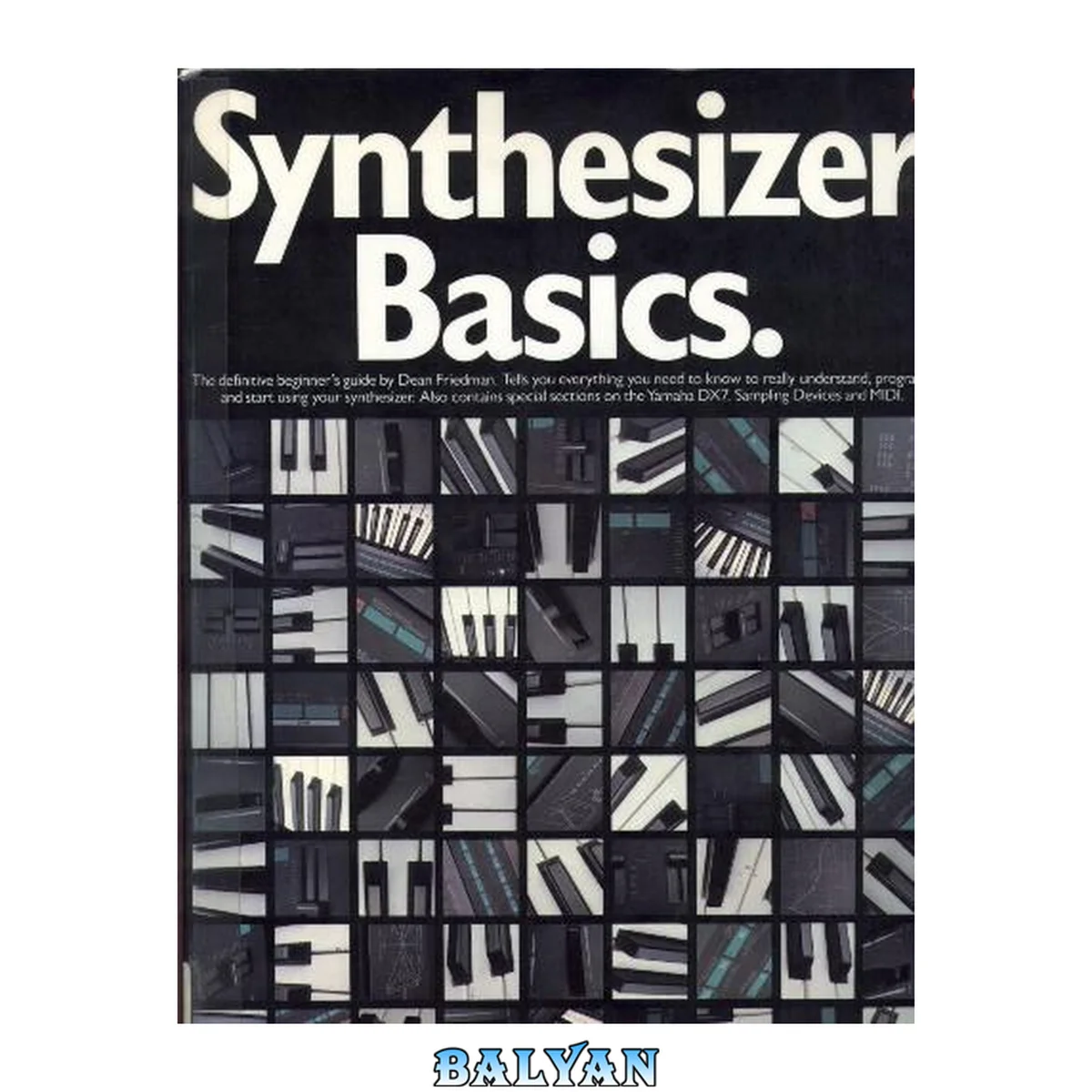
معرفی کتاب «Synthesizer Basics» نوشتهٔ THOMAS. BIESSEK BAILEY (ALESSANDRO.)، Alessandro Biessek و by Dean Friedman، منتشرشده توسط نشر Amsco Publications; Exclusive distributor در سال 1985. این کتاب در فرمت pdf، زبان انگلیسی ارائه شده است.
آشنایی با مبانی سینتسایزر (Synthesizer Basics) نوشتهی دین فریدمن، کتابی کلاسیک و راهگشا برای علاقهمندان به موسیقی الکترونیک است که در سال ۱۹۸۵ منتشر شده است. این کتاب با بیانی ساده و تصاویری گویا، دانش بنیادین برای درک و نواختن سینتسایزرهای صفحهکلیدی را در اختیار نوازندگان مبتدی و متوسط قرار میدهد.
دربارهٔ کتاب —
این کتاب که توسط انتشارات مشهور موسیقی «ایمسکو» (Amsco Publications) به چاپ رسیده، پاسخی است به پرسش بنیادین بسیاری از نوازندگان تازهکار که از کجا باید آغاز کنند. فریدمن در این اثر، سفری ساختاریافته را از تاریخچهی مختصر سینتسایزر آغاز میکند و سپس به کالبدشکافی امواج صوتی، تولید الکترونیک صدا و اصلاح آن در مراحل مختلف آنالوگ میپردازد. این کتاب با زبانی خودمانی و همراه با طنزی ملایم، مفاهیمی چون سینتساز افام (FM synthesis) و تفاوتهای دنیای آنالوگ و دیجیتال را نیز پوشش میدهد تا خواننده را برای رویارویی با تکنولوژیهای گوناگون آماده سازد. وجهی متمایز این کتاب، تأکید بر «تجربهی عملی» است. فریدمن با ارائهی توضیحات گامبهگام و توصیههای کاربردی، به خواننده میآموزد که صرفاً به تئوری اکتفا نکند و با «دستبهکار شدن» با دستگاه، دنیای شگفتانگیز خلق صدا را کشف کند. هرچند برخی از فناوریهای اشارهشده در کتاب ممکن است امروزه اندکی کهنه به نظر برسند، اما مفاهیم بنیادین و اصول فیزیک صدا که در این کتاب توضیح داده شدهاند، همچنان سنگبنای دانش هر موزیسین الکترونیکی به شمار میروند.
دربارهٔ نویسنده
دین فریدمن، نویسندهی این کتاب، خود چهرهای شناختهشده در عرصهی موسیقی است. او افزون بر نگارش این اثر، کتاب جامعتری با عنوان «راهنمای کامل سینتسایزرها، سکوئنسرها و درام ماشینها» (The Complete Guide to Synthesizers, Sequencers & Drum Machines) نیز تألیف کرده که نشاندهندهی تخصص و آگاهی عمیق او در زمینهی سازهای الکترونیک است.
چرا باید «مبانی سینتسایزر» را بخوانید؟
- درک اصول پایه و بنیادین: این کتاب به عنوان یکی از بهترین مقدمههای موجود، مفاهیم اصلی مانند ماهیت امواج صوتی، اجزای تشکیلدهندهی سینتسایزر و نحوهی تولید صدا را به زبانی ساده و قابلهضم توضیح میدهد.
- منبعی کلاسیک و معتبر: «مبانی سینتسایزر» به عنوان اولین و همچنان یکی از بهترین راهنماهای مقدماتی برای ورود به دنیای موسیقی الکترونیک شناخته میشود.
- آموزش گامبهگام و تصویری: متن کتاب با عکسها و نمودارهای خطی آموزنده همراه است که درک مطالب را برای خوانندهی کمتجربه بسیار آسانتر میکند.
- پوشش تکنولوژیهای متنوع: کتاب صرفاً به یک نوع خاص از سینتسایزر محدود نمیشود و به بررسی روشهای مختلف از جمله سینتساز آنالوگ و افام میپردازد که دیدی جامع به خواننده میدهد.
- ارائهی نگاه تاریخی و عملی: فریدمن با مروری کوتاه بر تاریخچهی سینتسایزر و تأکید بر اهمیت «تجربهی عملی»، خواننده را هم از نظر دانش تاریخی و هم از نظر رویکرد کاربردی، غنی میسازد.
این کتاب برای چه کسانی مناسب است؟
این کتاب بهطور خاص برای نوازندگان مبتدی و متوسطی طراحی شده است که به تازگی پا به عرصهی موسیقی الکترونیک گذاشتهاند و به دنبال منبعی معتبر برای درک ساز خود هستند. همچنین برای علاقهمندان به تاریخچهی فناوری موسیقی و هر کسی که کنجکاو است بداند پشت صدای جادویی سینتسایزرها چه چیزی نهفته است، مطالعهی این اثر میتواند تجربهای لذتبخش و روشنگر باشد.
سوالات متداول
آیا مطالب این کتاب با وجود قدمت، هنوز هم کاربردی هستند؟
بله، اگرچه فناوری سینتسایزرها پیشرفت زیادی کرده، اصول فیزیک صدا و مبانی آنالوگ که در این کتاب توضیح داده شده، ثابت و پایدار هستند. این مبانی، پایهای ضروری برای درک هر نوع سینتسایزر مدرنی به شمار میروند.
آیا این کتاب به مباحث دیجیتال و نرمافزاری نیز میپردازد؟
این کتاب عمدتاً بر روی مبانی آنالوگ و مفاهیم اولیه متمرکز است، اگرچه به فناوریهای دیجیتال اولیه مانند سینتساز افام نیز اشارهای دارد. با این حال، هدف اصلی آن آموزش زبان مشترک و اصول پایهای است که برای کار با هر نوع سینتسایزری، چه سختافزاری و چه نرمافزاری، لازم است.
آیا برای خواندن این کتاب به دانش قبلی موسیقی نیاز است؟
خیر، این کتاب برای افرادی که هیچگونه پیشزمینهای در زمینهی موسیقی الکترونیک ندارند، طراحی شده است و مطالب را از صفر تا صد به زبانی ساده و با مثالهای ملموس آموزش میدهد.
Follow this step-by-step illustrated guide to launch your own Flutter apps and gain hands-on experience Key Features: Get up to speed with the basics of Dart programming and delve into Flutter development Learn about Flutter widgets, plugins, and animations to create a high-quality, user-friendly app Package and deploy your Flutter apps to achieve native-like performance Purchase of the print or Kindle book includes a free PDF eBook Book Description: There have been many attempts at creating frameworks that are truly cross-platform, but most struggle to create a native-like experience at high-performance levels. Flutter achieves this with an elegant design and a wealth of third-party plugins, solidifying its status as the future of mobile app development. If you are a mobile developer who wants to create rich and expressive native apps with the latest Google Flutter framework, this book is for you. You'll start with the basics of cross-platform development frameworks, specifically Flutter. You'll then explore the Dart programming language which is the foundation of the Flutter framework. Next, you'll get a feel for Flutter and how to create your first app, followed by an exploration of the various popular plugins that supplement the Flutter framework. Finally, you'll explore testing and app release, including some common glitches that you may experience. By the end of this book, you'll be well-equipped to create and release a basic Flutter app along with gaining a solid understanding of the Flutter framework and Dart language. What You Will Learn: Understand the Flutter framework and cross-platform development Acclimate the fundamentals of the Dart programming language Explore Flutter widgets, the core widget library, and stateful and stateless widgets Discover the complete development lifecycle, including testing and debugging Get familiar with both the mobile and web app release processes Dig deeper into more advanced Flutter concepts like animation Explore common Flutter plugins ad how to use them Discover the Flutter community and how to stay up-to-date Who this book is for: If you are an existing mobile developer seeking a better way to develop cross-platform apps, an existing software developer looking to explore mobile app development, or someone investigating mobile apps and simply wants to know what the Flutter fuss is about, this is the book for you. Prior knowledge of Flutter and Dart is not required. Cover Title Page Copyright Dedication Foreword Contributors Table of Contents Preface Part 1:Learning the Core Concepts Chapter 1: What Is Flutter and Why Should I Use It? Technical requirements What is Flutter? Backed by Google Fuchsia OS and Flutter Dart One code base to rule them all Open source framework Hello Flutter – a first glimpse of Flutter Installing Flutter Development environment Hello world! Widgets, widgets, everywhere Flutter rendering Flutter – rendering by itself Composability Immutability Everything is a widget Building and running Flutter Debug mode Release mode Profile mode Supported platforms The pubspec.yaml file Running the generated project Summary Chapter review questions Further reading Chapter 2: An Introduction to Dart Technical requirements Getting started with Dart The evolution of Dart How to run Dart Introducing the structure of the Dart language Hands-on with Dart Variables and data types Variable declaration Null safety Built-in types final and const dynamic and using ‘as’ Dart operators Control flows and looping if/else while and do-while loops for loops break and continue switch Hands-on, continued Functions and methods Function parameters Summary Questions Further reading Chapter 3: Flutter versus Other Frameworks Native development Developer skillset Project management Defect reports Performance Platform features Hot reload User experience App size New platforms Retired platforms Development resources Overview Cross-platform frameworks React Native Xamarin Cordova Framework popularity The Flutter community Events News and discussion Resources Flutter strengths and weaknesses Strengths Weaknesses Live Flutter apps Summary Questions Further reading Chapter 4: Dart Classes and Constructs Object orientation in Dart Objects and classes Other OOP artifacts Encapsulation Inheritance and composition Abstraction Polymorphism Functions as objects Understanding classes in Dart Class structure Constructors Class inheritance Abstract classes Interfaces Mixins Files and imports The enum type Using generics When and why to use generics Asynchronous programming Dart Futures Dart Isolates Summary Questions Further reading Part 2:Building a Basic Flutter App Chapter 5: Building Your User Interface through Widgets Technical requirements Stateful/stateless widgets Stateless widgets Stateful widgets Inherited widgets The widget key property Built-in widgets Display widgets User interaction widgets Layouts Advanced widgets (gestures, animations, and transformations) Summary Questions Further reading Chapter 6: Handling User Input and Gestures Technical requirements Handling user gestures Pointers Gestures GestureDetector Gestures in Material widgets A deeper look at the stateful widget life cycle Key life cycle states Mounted Input widgets and forms Getting input through the onChanged callback Getting input through a controller Form and FormField Accessing FormField’s state Form Custom input and FormField Creating custom inputs Custom input widget example Summary Questions Further reading Chapter 7: Let’s Get Graphical! Technical requirements Make me pretty Using colors Text style Container decoration Buttons The Scaffold widget Drawer Snackbar And there’s much more... Creating elegant content lists Understanding image types in Flutter Out-of-the-box support SVG Lottie files Slivers Lists with navigation SliverAppBar Summary Questions Further reading Chapter 8: Routing – Navigating between Screens Technical requirements Understanding the Navigator widget Navigator 1.0 and 2.0 Navigator Navigator 1.0 Navigator 2.0 Screen transitions PageRouteBuilder Custom transitions in practice Passing data between screens Passing state in widget parameters InheritedWidget BLoC Redux Other options Summary Questions Further reading Part 3:Turning a Simple App into an Awesome App Chapter 9: Flutter Plugins – Get Great Functionality for Free! Technical requirements What is a plugin? Benefits Drawbacks Where can I find plugins? How do I add a plugin to my project? The pubspec.yaml file flutter pub Using a plugin in your code How do plugins work on iOS and Android? MethodChannel CocoaPods Gradle Common issues Plugin breaking change Plugin not working PR not merged Inconsistent dependencies MissingPluginException Summary Questions Further reading Chapter 10: Popular Third-Party Plugins Technical requirements Exploring Firebase plugins Firebase registration Connecting the Flutter app to Firebase FlutterFire plugins Firebase initialization Authentication Realtime Database Firestore Analytics and Crashlytics Cloud Storage AdMob Cloud Functions ML with Google ML Kit Messaging Understanding Google Maps and Places Exploring mobile device features Camera and QR codes Opening web pages Local storage Video Payment providers In-app purchases Opening files Plugins to help with your app support App version Device information Summary Questions Further reading Chapter 11: Using Widget Manipulations and Animations Technical requirements Transforming widgets with the Transform class The Transform widget Understanding the Matrix4 class Exploring the types of transformations Introducing animations The Animation class AnimationController CurvedAnimation Tween Using animations Rotate animation Scale animation Translate animation Using AnimatedBuilder The AnimatedBuilder class Revisiting our animation Implicitly animated widgets AnimatedContainer AnimatedFoo Summary Questions Further reading Part 4:Testing and Releasing Your App Chapter 12: Testing and Debugging Technical requirements Unit testing The Dart test package Writing unit tests Unit test mocking Widget testing The WidgetTester class Widget test example Running a widget test Debugging your app Debugging in the IDE Additional debugging features DevTools The widget inspector Profile mode Summary Questions Further reading Chapter 13: Releasing Your App to the World Technical requirements Preparing your app for deployment Preparing the stores Preparing for the web Releasing your app on Android AndroidManifest and build.gradle Building and uploading your appbundle Releasing your app on iOS App Store Connect Xcode Building and uploading Releasing your app on the web Firebase hosting PWA support Tracking app usage and crashes Crashlytics Google Analytics Summary Questions Further reading Index About Packt Other Books You May Enjoy