Step by Step Drawing Ocean Animals For Kids: How to Draw Book For Kids, Sharks, Whales, Clownfish, Dolphins, Seals, Crabs, Seahorse, Turtles, Octopus and Many More
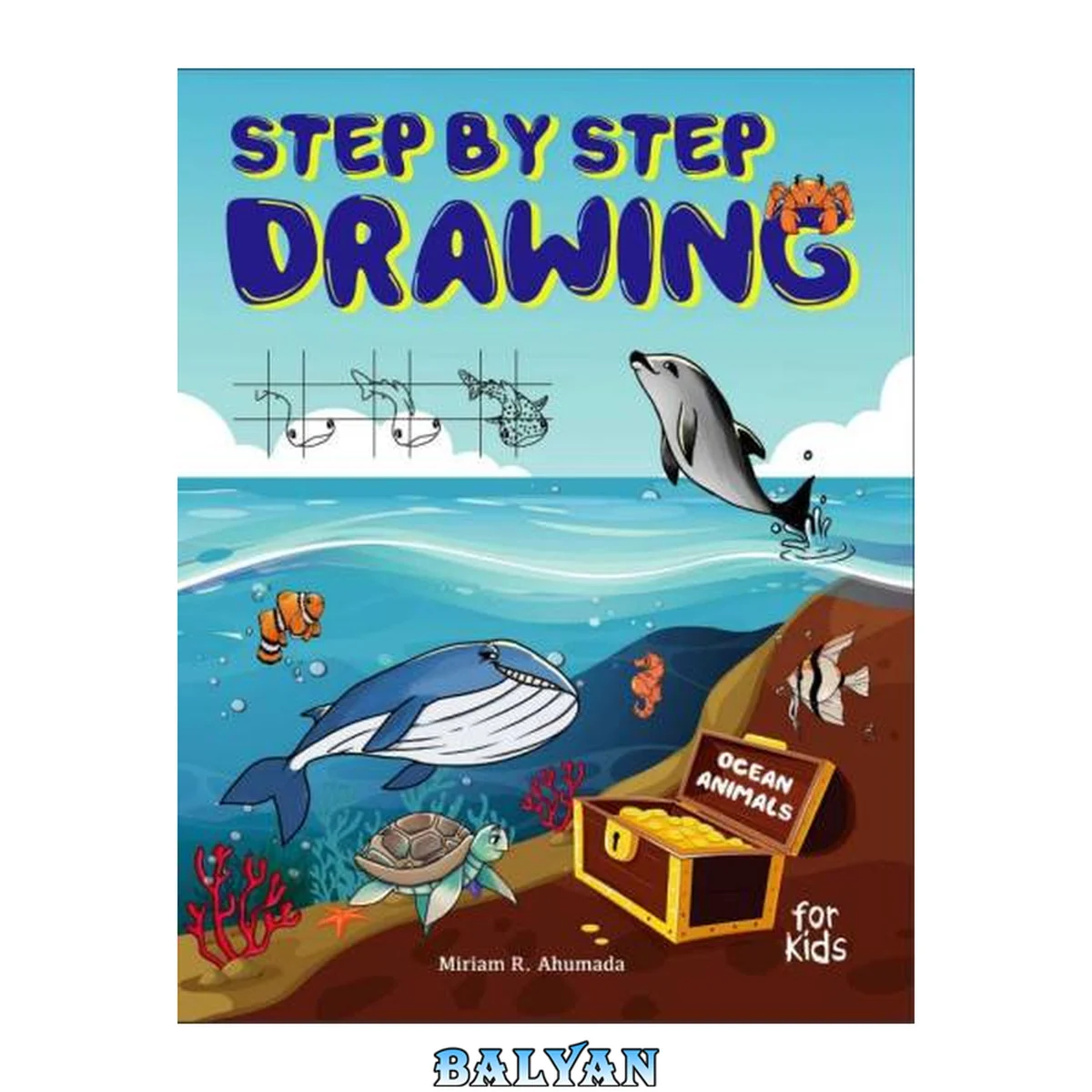
معرفی کتاب «Step by Step Drawing Ocean Animals For Kids: How to Draw Book For Kids, Sharks, Whales, Clownfish, Dolphins, Seals, Crabs, Seahorse, Turtles, Octopus and Many More» نوشتهٔ Little Pencil Press، منتشرشده توسط نشر Amazon Digital Services LLC - KDP Print US در سال 2020. این کتاب در فرمت pdf، زبان انگلیسی ارائه شده است.
Easy Ocean Animal art for beginners: DIFFICULTY LEVEL 2 OF 5, CHECK OUT OUR OTHER BOOKS IN THE STEP BY STEP SERIES FOR OTHER DIFFICULTY LEVELS. You'll start out feeling like a rookie and finish with the confidence of the most prestigious artist. In this book, you'll learn how to transform your ocean animals from a simple sketch to a complex drawing in the easiest way possible without having to spend tons of money on drawing lessons. With this book you'll get 50+ different ocean animals , starting with a basic shape and progressing onto more complicated techniques, guiding you until you can create drawings like a pro! As you advance, you'll learn to draw different poses and angles, and these simple line drawings will allow you to branch out and have fun with your own personal style. From a basic generic fish to a detailed Tiger Shark, you'll be able to draw them all! Quirky, funny, and scaly friends are here for aspiring artists to learn how to draw various types of ocean animals including: Angelfish Barracuda Basking Shark Blue Whale Bottlenose Dolphin Bull Shark Butterfly Fish Clownfish Coral Crab Cuttlefish Dolphin Dugong Dusky Dolphin Elephant Seal Fin Whale Fish Flounder Fur Seal Giant Clam Great White Shark Grey Reef Shark Hammerhead Shark Hermit Crab Horn Shark Horseshoe Crab Humpback Whale Jellyfish Killer Whale King Crab Lionfish Lobster Manta Ray Minke Whale Moray Eel Nurse Shark Octopus Oyster Prawn Puffer Fish Scorpion Fish Sea Dragon Sea Slug Sea Squirt Sea Turtle Seahorse Sea Urchin Shrimp Sperm Whale Spiny Dogfish Sponge Squid Starfish Stingray Tang Tiger Shark Whale Shark Wrasse Zebra Shark In the insides of this book you'll discover: Professional tips and tricks to help you draw Easy to follow steps Different sides or poses 50 awesome drawings This book is perfect for getting started drawing forest animals and is also great for: Working on your sketching skills Improving your drawing abilities Learning how to draw animals the right way Nurturing your confidence Versatile and quick way to learn Strengthening your focus and concentration Developing your creativity Relaxing and soothing your mind Increasing your cognitive capacities Review the lesson anywhere and anytime and improve faster by doing so Gain a new hobby And much more! Learn how to draw all your incredible creations in an effective and cheap way. By purchasing this drawing book, you'll learn the basic concepts that any artist needs to draw realistic and professional drawings, as well as inspire you to add flourishes to other projects. Practice will make you feel confident and improving your skill will be easier having the knowledge at the reach of your fingertips in this book! Review each step and as often as you need to, whenever and wherever you are. Each step gives detailed demonstrations of how to draw each part of the animal. Everything you need in order to draw animals is contained in this book. The book is a Step by Step guide that shows exactly the type or shape the animal is. For more, be sure to check out Step by Step Fat Pets or Step by Step Zoo Animals by Little Pencil. Have fun and be creative! Número de diapositiva 1 Número de diapositiva 2 Número de diapositiva 3 Número de diapositiva 4 About the author Número de diapositiva 6 Número de diapositiva 7 PETS FACTS 1. How big is the ocean? Our oceans cover more than 70% of the world’s surface. 2. How old is the ocean? 4 billion years old. 3. How much life is in the ocean? The majority of life on this planet lives in the ocean! Over 90% of all creatures live underwater. 4. How many oceans are there? There are 4 oceans, the Pacific, Atlantic, Indian, and Arctic. 5. Which ocean is the biggest? The Pacific ocean. 6. What is the difference between an ocean and a sea? The sea is a small portion of the ocean that has land on several sides. 7. How many animals are in the ocean? It is unknown how many animals are in the ocean but it is estimated that over one million different species dwell in the dark depths. 8. What is the biggest creature in the ocean? The Blue Whale! It grows up to 100 feet and weighs 200 pounds. 9. What is the loudest animal in the ocean? The Blue Whale as well! Not only are they the loudest animal in the ocean, but they’re also the loudest in the world with songs of 188 decibels that travel up to 99 miles. 10. What is the most dangerous ocean animal? You might think the most dangerous animal would be a large predator, like a shark or whale, but actually, the most dangerous ocean animal is the Box Jellyfish, the world’s most venomous creature. 11. What is the biggest predator in the ocean? The Great White Shark. 12. What is something only sharks can do? They keep growing teeth for their whole lives! Sharks might grow as many as 30,000 teeth in their lifetime. Wow! 13. What is the smallest creature in the ocean? Plankton – microscopic creatures that live on the surface of the ocean. 14. What is the name of the fish that lures other fishes with its light? The Anglerfish! It lives deep in the ocean where there’s no light and uses a glowing lure to hunt other sea creatures. 15. What is the friendliest animal in the ocean? The Dolphin! They are one of the happiest creatures in the world – and are incredibly clever as well! 16. How do dolphins sleep? They sleep with only half their brain at a time, and always keep an eye open to look for predators. 17. What ocean animal has blue blood? The Octopus! 18. What is the only male animal that gives birth? The Seahorse is the only male animal that gives birth to their babies. 19. What ocean animal is older than the dinosaurs? The Sponge! 20. What ocean animal can regrow their limbs? The Lobsters and the Sea Star. ANimals DESCRIPTIONS Angelfish Angelfish are small pancake-shaped fish that lives on algae. Their shape helps them move fast and turn swiftly through the coral reefs. There are many different color patterns for Angelfish, including black and yellow or blue and yellow. Barracuda Barracuda are serpent-shaped fish. They have large heads with long jaws and very sharp teeth! They live in tropical waters and usually hunt together or follow sharks to eat their leftovers. Basking Shark Basking Shark, also known as the Elephant Shark, is a huge shark that can grow up to 40 feet. It has a snout shaped like a cone and a massive jaw with hundreds of tiny teeth. They feed by swimming through the water with their mouths open, sucking in large amounts of water, and filtering out the tiny fish that get swept in it – which make a good meal for them! Blue Whale The Blue Whale is the largest animal that lives on planet Earth. They can grow up to 98 feet and weigh 190 tons. Their tongue weighs as much as an elephant and they don’t have any teeth – instead, they have baleen, a fibrous material that looks sort of like a toothbrush, which filters their food (krill). Bottlenose Dolphin Bottlenose Dolphins are one of the few sea creatures that breathe air, which means they often hang around near the surface of the ocean. Despite that, they’re excellent divers, and often dive up to 150 feet! Bottlenose Dolphins live in groups called “pods”. They can grow to 12 feet long and weigh 600 pounds. Bull Shark Bull Sharks can live in both salt and freshwater. Female Bull Sharks are bigger than males, weighing 290 pounds. The males are much smaller, only usually getting to 210 pounds. They can live for 16 years in the wild. Butterfly Fish Butterfly Fish are small fish that live in groups. They display a variety of patterns and shades including black, white, blue, red, orange, and yellow. This helps them blend into their surroundings, as they live mostly in colorful coral reefs. Clown Fish Clown Fish live in warm waters and make their homes in anemones. This is because they are slow swimmers, and the anemone protects them, stinging any fish that might try to eat them. They are orange and white and with thin black stripes, and feed on plankton. Coral Corals are made up of tiny little creatures called polyps. They live together and protect themselves by building hard cases of minerals. Many coral reefs have been for growing over a million years and provide a home to many other animals. Crab Crabs are crustaceans with a hard exterior. They have eight legs and two claws. In some species of crab, the color of their claws differs by sex – despite being called the blue crab, males of that species have blue claws while females have red ones. Crabs live together and work in groups to gather food and protect their families. Cuttlefish Cuttlefish are a mollusk with large eyes, eight arms, and two tentacles that they use to hunt their food. They eat smaller mollusks, shrimp, crabs, and fish. They also have color-changing skin they use to hide from predators – and their unsuspecting prey! Dugong Dugongs, also known as Sea Cows, are mammals that live their whole life in the ocean. They can grow up to 10 feet and weigh 882 pounds. This sounds massive, but is actually surprisingly small, as Dugong are distantly related to elephants. Dusky Dolphin Dusky Dolphins are grey or dark blue with two creamy lines that go between their fins and tail. They can grow up to 7 feet and weigh 264 pounds. Dusky Dolphins are more active during the night and hunt with other dolphins. Elephant Seal The Elephant Seal isn’t picky about where it lives – it can be found in the freezing waters of the Arctic or the warm seas off the coast of California and Mexico. They are the largest animal that lives both in the water and land. Elephants Seals grow up to be 11 feet and can weigh up to 1,375 pounds. Fin Whale The Fin Whale is the second largest animal on earth. They are long and slender which makes them swim really fast, up to 23 mph. They like to swim in either warm or cold waters. Flounder Flounders are flatfishes that live at the bottom of lagoons or oceans. When they are born they have an eye on each side of their head, but as they grow older, one eye moves until they are both on the same side. Weird! Fur Seal Fur Seals are related to Sea Lions. They have two flippers, which let them both walk on land and swim in the ocean. They have a thick layer of fat underneath brown fur to help them stay warm while swimming in the cold ocean. Giant Clam The Giant Clam is the biggest mollusk growing up to 4 feet and weighing more than 500 pounds. It prefers warmer waters and eats algae. Great White Shark Great White Sharks grow up to be 21 feet and weigh 7,000 pounds. Great White Sharks have 300 pointy teeth arranged in 7 rows, and with their powerful tail they gather up speed that propels them 37 mph making them the biggest predatory fish. Grey Reef Shark Grey Reef Shark can reach 6.6 feet in length and 66 pounds of weight. They have long bodies with a round snout and round large eyes. They even get sunburnt - Grey Reef Sharks often tan from the sun because they live in shallow waters! Hammerhead Shark Hammerhead Sharks can grow up to a length of 20 feet and weigh around 1,000 pounds. Their name comes from the shape of their head, which looks uncannily like a hammer! Hermit Crab Hermit Crabs have soft bodies and live in the shells of other animals. They continue growing throughout their lives, and when they outgrow their current shells, they search for a bigger one to move to. They spend a lot of time on land but they have gills like fish so that they can also breathe underwater. Horn Shark Horn Sharks live in warm waters near the Pacific Ocean. Just like Hammerhead Sharks, the Horn Sharks are named because of how the unusual shapes of their heads. They have brown or grey skin with dark spots. Horseshoe Crab Horseshoe Crabs have four eyes! They have two at the sides of their carapace and the other two at the front. They also have 12 legs and a tail they use to steer or to flip their bodies over. Humpback Whale Humpback Whales are known for being their acrobatic moves. They have long flippers, heads covered in knobs, and can grow up to be 46 feet and weigh 66,000 pounds. Unlike most whales, Humpback whales aren’t picky about where they live, and you can find them in most oceans. Jellyfish Jellyfish have a bag-shaped body with long stringy tentacles. They have no brain, eyes, heart, or bones, and tend to float aimlessly through the water. But don’t be fooled – their tentacles pack a nasty punch, and they use these to sting their prey! Killer Whale Killer Whales are warm-blooded, much like other mammals, and they use their body fat to stay warm in the cold ocean waters. They are known as “Killer” Whales because they are really good at hunting and eat around 500 pounds of food a day! King Crab King Crabs live in shells made up of bright colors, including dark red, golden-orange, or brown-blue. They have five pairs of legs, but two of them are claws, and the ones on the right are always bigger. Lionfish Lionfish have brown and white striped bodies. They are venomous creatures that can be fatal to small (and even large) creatures, but they only use their venom to protect themselves. Lobster Lobsters are related to crabs and just like them, they have hard shells that cover their bodies. Lobsters have thin bodies, big claws, and long antennae. Their shells are usually blueish with black patches, but when they’re cooked they turn red. Manta Ray Manta Rays have slim triangular-shaped fins, flat bodies, and eyes on the sides of their broadheads. They grow up to be 25 feet and weigh 2,900 pounds. Mantas may travel alone or in groups of other mantas - and even some species of fish. They eat shrimp, krill, and plankton. Minke Whale Minke Whales are the second smallest species of whale, growing up to 30 feet and weighing 2,000 pounds. That sounds big, but for a whale, it’s tiny! They are grey, black, and sometimes a purplish tone, with a white belly, and are known for swimming very fast. Moray eEl Moray Eel are shaped like snakes with a thin fin that runs down their back. There are various sizes and colors of eels but they can grow up to be 13 feet long. They are nocturnal animals and prefer to live between rocks or coral reefs. Nurse Shark Nurse Sharks like to swim by the bottom of the sea. They grow up to be 8.8 feet and weigh 264.5 pounds. They like to eat crabs, coral, and small fish. They are nocturnal and are social animals that swim in groups of up to 40 other sharks. Octopus Octopuses have a balloon-like body with two eyes, eight long tentacles, and a beak they use to eat. Their tentacles are covered in suckers, which they use to feel their way around the ocean floor. They are invertebrates, which means they have no bones and can fit tight spaces. Oyster Oysters can grow to 12 inches and, like mollusks, they have soft bodies that are enclosed in oval-shaped shells. They are found on shallow waters and shores where they attach themselves to rocks or shells. Prawn Prawns are crustaceans that look a lot like regular shrimp, except they’re a bit larger. They can often be found in calmer waters, perfect for laying their eggs. Pufferfish Pufferfish, also known as Blowfish, get their name from their ability to fight predators by inflating their body up to twice their normal size. They do this by gulping water. This technique makes their spines more dangerous –they release a toxin that is foul-tasting and potentially deadly to other fish. Scorpion Fish Scorpion Fish, also known as Rockfish, live on the surface of the ocean in coral reefs, which they use to hide from other predators. They have feathery flaps and are a dull yellow, brown, or red color. Scorpion Fish have very potent venom and are one of the most poisonous animals in the ocean. Sea Slug Sea Slugs are small marine invertebrates that resemble normal land slugs. They are often brightly colored as a warning to other animals to tell them not to eat them – they’re both toxic and venomous. Not a nice meal for an unsuspecting sea creature! Sea Squirt Sea Squirts are marine animals that are almost completely immobile. They live in warm temperatures and tropical waters, usually in coral reefs. Sea Turtle Sea Turtles are one of the oldest creatures that inhabit the earth. They can hold their breath for up to 5 hours underwater. While other animals think Jellyfish are dangerous, Sea Turtles think they are delicious, and it makes up most of their diet. Seahorse Seahorses are tiny creatures that are named after the shape of their heads. They are the only male species that gives birth and cares for their little ones and they can be found in tropical waters. Sea Urchin Sea Urchins are globe-shaped animals covered by spines – a lot like hedgehogs. They have five individual sets of jaws that have only one tooth each, which they use to eat small animals and algae. Shrimp Shrimp are small crustaceans that vary in size depending on species. They can be so tiny you can barely see them, or grow up to be 12 inches. Shrimp live in groups called ‘schools’ and talk to each other by making snapping noises. Sperm Whale Sperm Whales have the biggest head of any animal, making up a third of their bodies and their brains can weigh over 17 pounds. Sperm Whales can grow up to be 68 feet long and weigh 160,000 pounds. Spiny Dogfish Spiny Dogfish is one of the most common sharks. They can grow up to be 35 inches and weigh 22 pounds. Spiny Dogfish generally live in the Atlantic and Pacific Oceans. Sponge Sponges are an animal with no mouth, heart, or brain. Instead, their bodies are full of pores. Just like plants, Sponges grow all their life in the same spot. Squid Did you know Squid has no bones? Their bodies are shaped like a tub, with arms and tentacles hidden in their bodies, but can shoot out to capture their prey. They like to live in both the shallow waters and depths of the ocean. Starfish Starfish are also called Sea Stars. Their bodies are invertebrates with five arms that they use to move around. Starfish have the ability to regrow their limbs if they ever lose them. Stingray Stingrays are often mistaken for Manta-Ray, but they are two completely different species. Stingrays have two eyes at the top of their flat bodies, and at the bottom, they have their mouth and gills. Because of this, they hunt their prey by smell instead of sight. Tang The Tang, also known as Palette Tang, gets its name because its body looks like an artist’s paint palette. They grow up to be 12 inches and their diet consists of plankton and algae. Tiger Shark Tiger Sharks are nocturnal, solitary, and very aggressive. They grow up to be 18 feet and weigh 2000 pounds. Tiger sharks usually like to swim in tropical waters but they may explore all types of water. Whale Shark Whale Sharks are the biggest fish that we know of, growing up to 41.5 feet and weight 43,000 pounds. They are docile, slow animals that eat krill, squid, and small fishes. Wrasse Wrasses are really bright colors and have an elongated body shape and distinctive thick lips. They are usually quite small, growing up to 7.9 inches. Zebra Shark Zebra sharks are named after the stripes they display when they’re young, but as they mature their stripes evolve into spots. They are easy-going and like to spend their day swimming on the ocean floor. Número de diapositiva 28 Head’s Structure The head, just like the body, is formed by different basic geometrical figures, dots and lines. Proportions When we are drawing our environment, we can discover our own style of drawing by altering certain features and creating a completely different drawing than the one you started with. Some variations may be to magnify or minimize your drawing’s eyes, tracing thicker or thinner or even to change the drawing’s original head, hands and feet proportions. Beware! Always remember to respect certain features’ proportions or your drawing can turn out to look deformed. Número de diapositiva 31 Número de diapositiva 32 Número de diapositiva 33 Número de diapositiva 34 Stop right there! Número de diapositiva 36 Número de diapositiva 37 Angelfish Número de diapositiva 39 Barracuda Número de diapositiva 41 Basking shark Número de diapositiva 43 black-tailed damselfish Número de diapositiva 45 Blowfish Número de diapositiva 47 blue surgeonfish Número de diapositiva 49 blue whale Número de diapositiva 51 Bottlenose Dolphin Número de diapositiva 53 bull shark Número de diapositiva 55 Butterfly fish Número de diapositiva 57 cachalot Número de diapositiva 59 clown fish Número de diapositiva 61 coral Número de diapositiva 63 crab Número de diapositiva 65 Cuttlefish Número de diapositiva 67 Dugong Número de diapositiva 69 dusky dolphin Número de diapositiva 71 elephant seal Número de diapositiva 73 Flounder Número de diapositiva 75 Fur seal Número de diapositiva 77 Great white shark Número de diapositiva 79 Grey reef shark Número de diapositiva 81 Hammerhead Shark Número de diapositiva 83 hermit crab Número de diapositiva 85 horn shark Número de diapositiva 87 Humpback Whale Número de diapositiva 89 Número de diapositiva 90 Número de diapositiva 91 Jelly fish Número de diapositiva 93 killer whale Número de diapositiva 95 Narwhal Número de diapositiva 97 Nurse shark Número de diapositiva 99 Octopus Número de diapositiva 101 pacific cleaner shrimp Número de diapositiva 103 Prawn Número de diapositiva 105 Scorpion fish Número de diapositiva 107 Sea dragon Número de diapositiva 109 Seahorse Número de diapositiva 111 Sea slug sheep Número de diapositiva 113 Sea turtle Número de diapositiva 115 Spiny Dogfish Número de diapositiva 117 Squid Número de diapositiva 119 Star fish Número de diapositiva 121 Tiger shark Número de diapositiva 123 Whale shark Número de diapositiva 125 Wrasse Número de diapositiva 127 Zebra shark Número de diapositiva 129 Número de diapositiva 130 cthulhu Número de diapositiva 132 Island Turtle Número de diapositiva 134 Kraken Número de diapositiva 136 Sea Dragon Número de diapositiva 138 Sea Mermaid Número de diapositiva 140 Número de diapositiva 141 Did you like this book? Número de diapositiva 143 You can stop dreading meeting new peopleAs vital as networking or building relationships are to your career, the good news is you can master the process without a complete personality makeover. If you¿re like a lot of people, the idea of going to an event full of strangers is right up there with a root canal. You get tongue-tied simply knowing how to start up a conversation and after a couple of painful minutes you run out of things to say. Awkward. You never have to dread encounters with new people ever again. Written by an Introvert for other Introverts, you don¿t have to be one to discover it works for everyone. Designed as a 4-part guide, each part (or Pillar as the author calls them) builds on the other to give you a framework you can apply now and throughout your career. Here¿s how you¿ll benefit by reading this book:Pillar #1 ¿ Discover the building blocks necessary to develop ALL relationships both professional and personal that you can use immediatelyPillar #2- Where the best ¿ and worst places are to expand your network and meet new people- don¿t waste your time where you don¿t naturally connectPillar #3- Effective (and easy) ways to engage and interact with everyone including new people starting from how you begin a conversation all the way to how to end a conversation Pillar #4- How to maintain your network long-term and keep your momentum going Finally guidance on networking that won¿t make you cringe or embarrass you. You will quickly gain the confidence and mastery of networking that you thought was only for a lucky few people. If you liked ¿Quiet¿ or ¿How to Win Friends & Influence People¿ you¿ll want to put this book on your list.
دانلود کتاب Step by Step Drawing Ocean Animals For Kids: How to Draw Book For Kids, Sharks, Whales, Clownfish, Dolphins, Seals, Crabs, Seahorse, Turtles, Octopus and Many More