دولتسازی در سودان جنوبی: مداخله بینالمللی و شکلگیری یک دولت تکهتکهشده
State-building South Sudan : International Intervention and the Formation of a Fragmented State
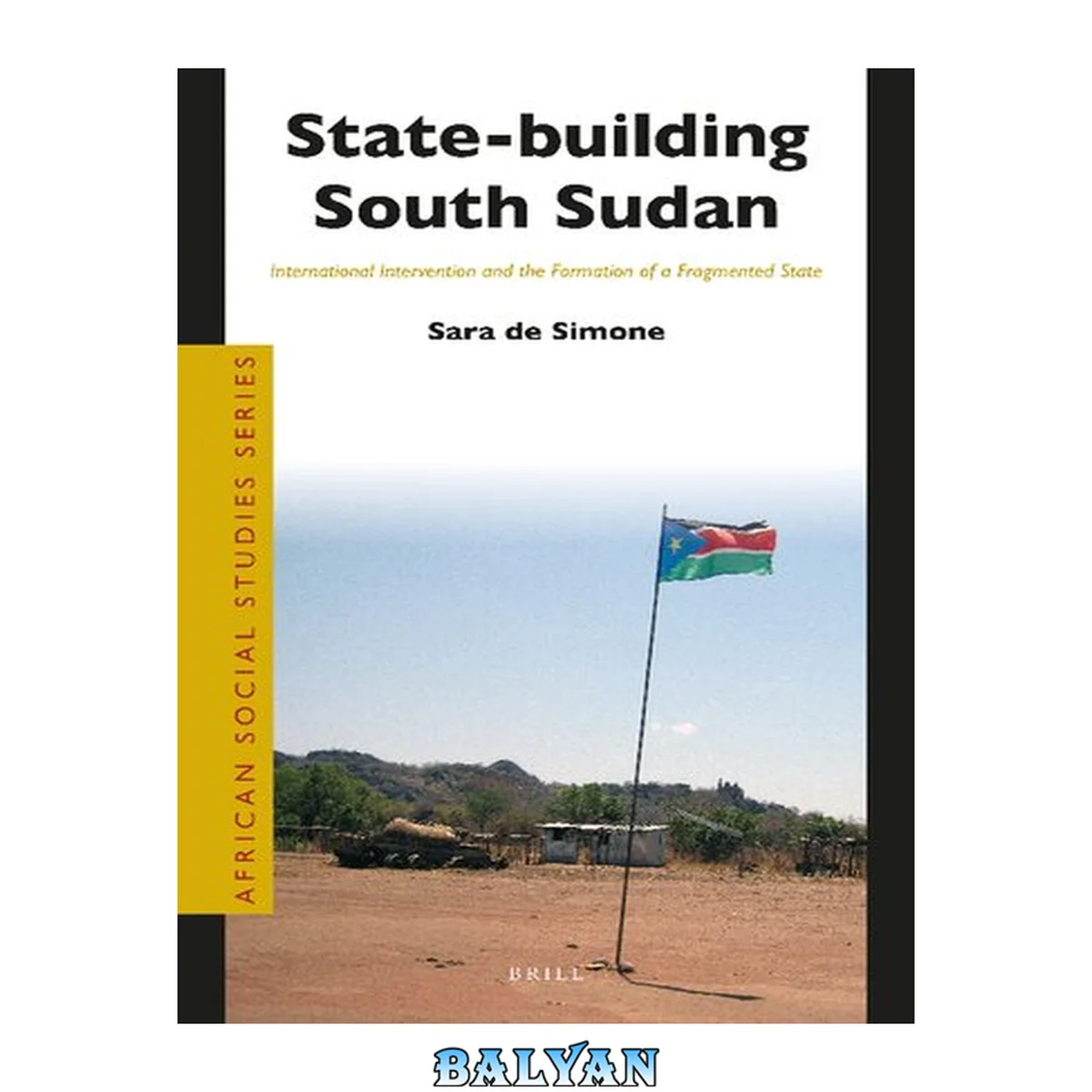
معرفی کتاب «دولتسازی در سودان جنوبی: مداخله بینالمللی و شکلگیری یک دولت تکهتکهشده» (با عنوان لاتین State-building South Sudan : International Intervention and the Formation of a Fragmented State) نوشتهٔ Sara de Simone;، منتشرشده توسط نشر African Social Studies در سال 2022. این کتاب در فرمت pdf، زبان انگلیسی ارائه شده است.
"How did South Sudan become one of the most striking examples of state-building failure and state collapse after years of international support? What went wrong in the state-building enterprise? How did external intervention overlap and intertwine with local processes of accumulation of power and of state formation? This book addresses these questions analysing the intersection between international and local actors and processes. Based on original ethnographic and archival data, it provides a unique account of how state-building resources were captured and manipulated by local actors at various levels, contributing to the deepening of ethnic fragmentation and the politicization of ethnicity"-- Provided by publisher Contents 6 Acknowledgments 10 Figures and Tables 11 Abbreviations 12 Introduction 15 1 State-Building in “Post-Conflict” South Sudan 18 2 Between Politics and Policies 20 3 Extraversion and the Agency of Local Actors 22 4 State-Building or State Formation? 24 5 Methodology 26 5.1 Space 27 5.2 Time 28 5.3 Positionality 29 5.4 Sources 29 6 Outline of the Book 32 1. Patterns of State-building in Southern Sudan in a Historical Perspective 36 1 Introduction 36 2 The Pattern of Physical Force: Violent Encounters 38 2.1 From Commerce to Rehearsal of Government 38 2.2 The Anglo-Egyptian Condominium 41 3 Building Predictability: Localized Bureaucratization 42 3.1 Government’s First Steps: Monetization and Taxation 42 3.2 The Development of Administrative Theory 44 3.3 The Southern Policy: Territorializing Communities 45 3.4 The Creation of Intra-South Inequalities 48 4 Rise and Fall of Modern State Legitimacy 50 4.1 The Emergence of Local Power Brokers 50 4.2 The State as a Source of Legitimate Power 53 5 The Post-Colonial State and War 54 5.1 The Anyanya Rebel Movement: Attempts at Controlling the Territory and Establishing (a Little) Legitimacy 54 5.2 The Local State in Times of Peace: Attempts at Changing the Pattern of State Formation 57 5.3 Strengthening Centralization: The Management of Land 59 5.4 The Crumbling of State Legitimacy: Failure of the Addis Ababa Agreement 60 6 Conclusions 63 2. SPLM and State-Building: Playing the “Fragile State” Card 64 1 Introduction 64 2 The SPLM: Local Guerrilla Government 67 2.1 A Unifying Narrative (and Contradictory Practices) 67 2.2 The Embryo Administration 68 2.3 The Civil Administration of the New Sudan 70 3 The Role of Relief Aid in Establishing splm/a’s “State-within-a-State” 74 3.1 Building splm’s Legitimacy: Operation Lifeline Sudan 75 3.2 A Difficult Relationship 80 3.3 Preventing Governance Failures: The star Project 81 4 Taking State-Building “Out of the Bush” 87 4.1 State-Building the splm 88 4.2 Workshops as a “Negotiation Arena” 92 5 Conclusion 97 3. Post-Conflict Decentralization 98 1 Introduction 98 2 The Benefit of Post-Conflict Decentralization: Dream or Reality? 100 3 The Establishment of the Local Government 103 4 Looking Like a State 107 4.1 The Aesthetics of the State 110 4.2 The Legibility of Local Government 113 5 Decentralization: A Rashomon Effect? 116 5.1 Effectiveness or Inclusion? 117 6 Conclusion 121 4. The State’s Delivery Function 123 1 Introduction 123 2 The Traditional Temptation 124 2.1 Traditional Resurgence with Donors’ Support 124 2.2 Local Chiefs and the splm 126 2.3 The Operationalization of Chiefs’ Inclusion in the Local Government 129 3 Providing Services to Southern Sudan 133 3.1 Service Delivery and Legitimate State-Building 133 3.2 Chiefs, Local Governments and the “Delivery Function” 135 3.3 International Support to Local Service Delivery 138 4 Using the Local State: Service Delivery Discourses and Practices 142 4.1 Yirol West: “Taking Towns to the People” or People Going to Town? 142 4.2 Drivers of “Administrative Independence” 147 4.3 The Politics of “Taking Towns to the People” 151 5 Conclusion 154 5. Land Governance and State-building 156 1 Introduction 156 2 Land Governance and State-building in Southern Sudan 157 2.1 The Community as a Right-Bearing Subject 157 2.2 “The Land Belongs to the Community” 160 3 Borders, Boundaries and Communities 164 3.1 The Demarcation Dilemma and the Politicization of Land Disputes 164 3.2 Claiming the Land, Pulling the Border 166 3.2.1 The Acholi–Madi Land Dispute 167 3.2.2 Manga between First-Comers and Late-Comers 170 3.2.3 Claiming Peri-Urban Land in Bentiu Town 173 3.3 Asserting Community Ownership of the Towns 177 3.3.1 Universal Rights of Citizens: A Contentious Issue 179 3.3.2 Customary Rights of the Community 180 4 Who is the Community? 181 4.1 (Flawed) Assumptions about Community Homogeneity 182 4.2 Representation or Patronage? 184 4.2.1 Community Participation Dynamics in Tindilo Payam 185 4.2.2 Concealing Exclusion in Lainya County 189 5 Conclusion 192 Conclusion 193 Bibliography 199 List of Documents from the Local Government Board Archive 219 List of Documents from Other Archives 222 List of Interviews 223 Individual Interviews 223 Collective Interviews/Discussions 228 Index 229 Blank Page 9 The rise and fall of the Southern Sudanese state explained through an in-depth and empirically grounded analysis of the intersection between externally supported state-building projects and the historical process of endogenous state formation.
دانلود کتاب دولتسازی در سودان جنوبی: مداخله بینالمللی و شکلگیری یک دولت تکهتکهشده