Staging the End of the World : Theatre in a Time of Climate Crisis
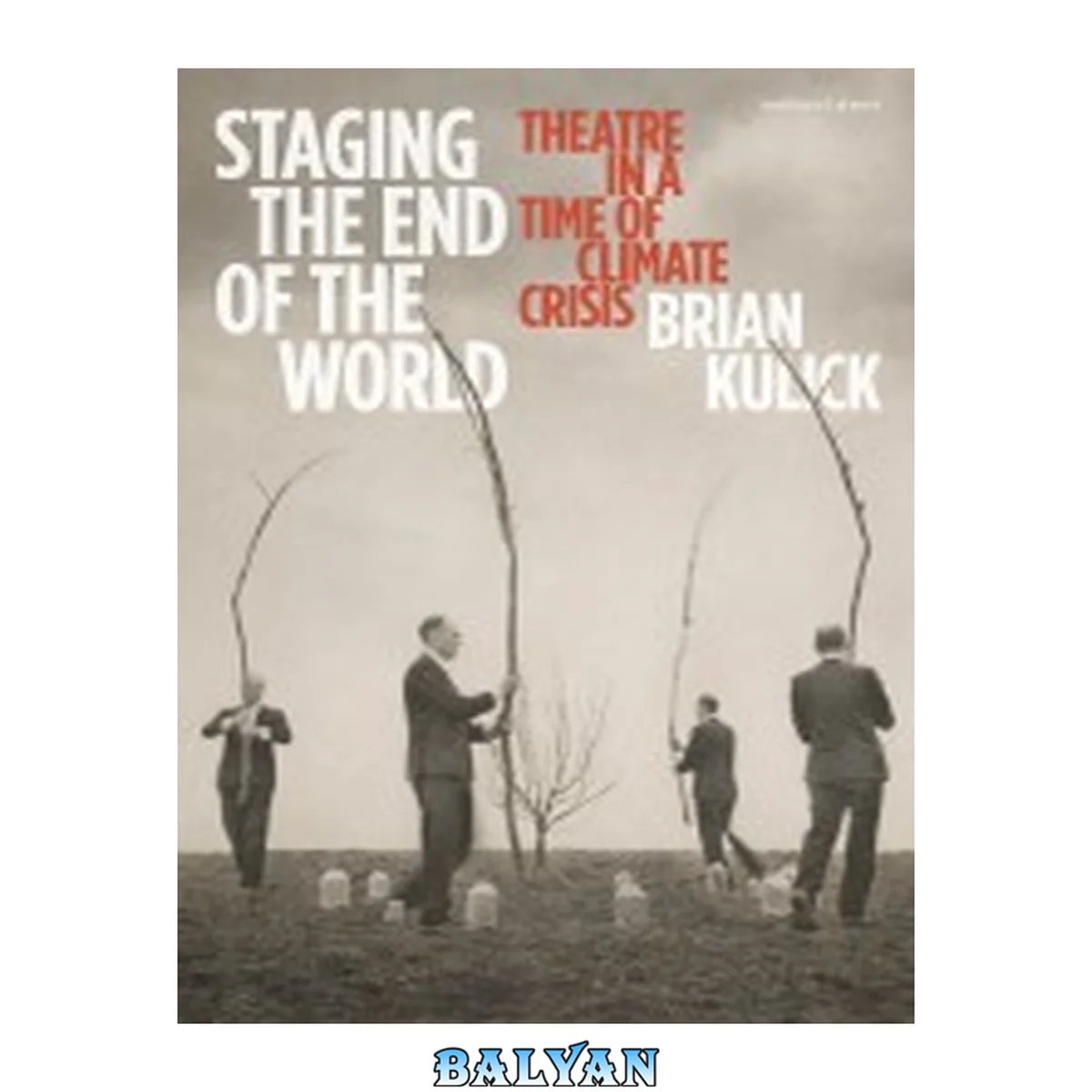
معرفی کتاب «Staging the End of the World : Theatre in a Time of Climate Crisis» نوشتهٔ Brian Kulick، منتشرشده توسط نشر Methuen Drama در سال 2022. این کتاب در 9 صفحه، فرمت pdf، زبان انگلیسی ارائه شده است.
This book is a brief history of the end of the world as seen through the eyes of theatre. Since its inception, theatre has staged the fall of empires, floods, doomsdays, shipwrecks, earthquakes, plagues, environmental degradations, warfare, nuclear annihilation, and the catastrophic effects of climate change. Using a wide range of plays alongside contemporary thinkers, this study helps guide and galvanize the reader in grappling with the climate crisis. It reminds us that theatre, through its communal nature, remains one of the best forms at our disposal for helping to effect collective change and, in this case, aid in the saving of our planet. Kulick divides this litany of theatrical cataclysms into four distinct historical phases: the Ancients, including Euripides and Bhasa, the legendary Sanskrit dramatist; the Age of Belief, with the anonymous authors of the medieval mystery cycles, Shakespeare, and Pushkin; The Moderns, with Ibsen, Chekhov, Brecht, and Beckett; and, finally, the way the world might end now, encompassing Edward Bond, Caryl Churchill, Tony Kushner, and Anne Washburn's Mr. Burns, A Post-Electric Play. Each of these ages and their respective authors have something essential to say, not only about humanity's potential end, but, more importantly, the possibility for our collective continuance. In tandem with the insights gleaned from these playwrights, the book draws upon the work of contemporary scientists, ecologists, and ethicists to further tease out the philosophical implications of such plays and their relevance to our own troubled times. Cover Contents Acknowledgments Introduction: On transforming our social imaginary Part One This is the way the world ends in ancient times 1 Lessons among the ruins; or what survives and why: How the cultural detritus of the ancients can be a kind of first philosophy 2 Slouching toward Kurukshetra: A brief look at the Mahābhāratas of Bhāsa, Bharati, and Brook 3 Diasporas old and new: What Euripides’ Children of Herakles can teach us about the coming climate wars and resulting refugee crisis Part Two This is the way the world ends in the age of faith 4 Noahs, arks, and floods: Why medieval mystery plays still have something to say about our own modern-day end of days 5 Shipwrecks, recursion, and the necessity of deep ecology: Surviving Shakespeare’s The Tempest and the breaking of our Anthropocene ways 6 On earthquakes and metaphors: Bouilly’s Disaster of Lisbon and the Fukushima variation Part Three This is the way the world ends in modern times 7 Plague’s threat to our immune and belief systems: A look at Pushkin’s A Feast in Time of Plague 8 A canary in the bourgeois coal mine: Part one. Pollution and direct critique in Ibsen’s An Enemy of the People 9 A canary in the bourgeois coal mine: Part two. Denial and indirect critique in Chekhov’s The Cherry Orchard Part Four This is the way the world ends now 10 Ethics during dark times: Brecht’s He Who Says Yes and He Who Says No 11 On the other side of the Apocalypse: The broken worlds of Beckett and Bond 12 Nostalgia for the future: The fraught tomorrows of Rivera, Churchill, Washburn, and Kushner Coda Notes Index This book is a brief history of the end of the world as seen through the eyes of theatre. Since its inception, theatre has staged the fall of empires, floods, doomsdays, shipwrecks, earthquakes, plagues, environmental degradations, warfare, nuclear annihilation, and the catastrophic effects of climate change. Using a wide range of plays alongside contemporary thinkers, this study helps guide and galvanize the reader in grappling with the climate crisis. Kulick divides this litany of theatrical cataclysms into four distinct historical phases: the Ancients, including Euripides and Bhasa, the legendary Sanskrit dramatist; the Age of Belief, with the anonymous authors of the medieval mystery cycles, Shakespeare, and Pushkin; the Moderns, with Ibsen, Chekhov, Brecht, Beckett, and Bond; and, finally, the way the world might end now, encompassing Caryl Churchill, Tony Kushner, and Anne Washburn . In tandem with the insights gleaned from these playwrights, the book draws upon the work of contemporary scientists, ecologists, and ethicists to further tease out the philosophical implications of such plays and their relevance to our own troubled times. In the end, Kulick shows how each of these ages and their respective authors have something essential to say, not only about humanity's potential end, but, more importantly, about the possibility for our collective continuance. "This book is a brief history of the end of the world as seen through the eyes of theatre. It examines a wide range of plays, from Euripides and Bhasa, to medieval mystery cycles, through Shakespeare, Pushkin, Ibsen, Chekhov, Brecht, and Samuel Beckett, to Caryl Churchill's Far Away, Tony Kushner's Slavs!, and Anne Washburn's Mr. Burns, A Post-Electric Play. Through analyzing these alongside contemporary thinkers, this study helps guide and galvanize the reader in grappling with the climate crisis"-- Provided by publisher
دانلود کتاب Staging the End of the World : Theatre in a Time of Climate Crisis