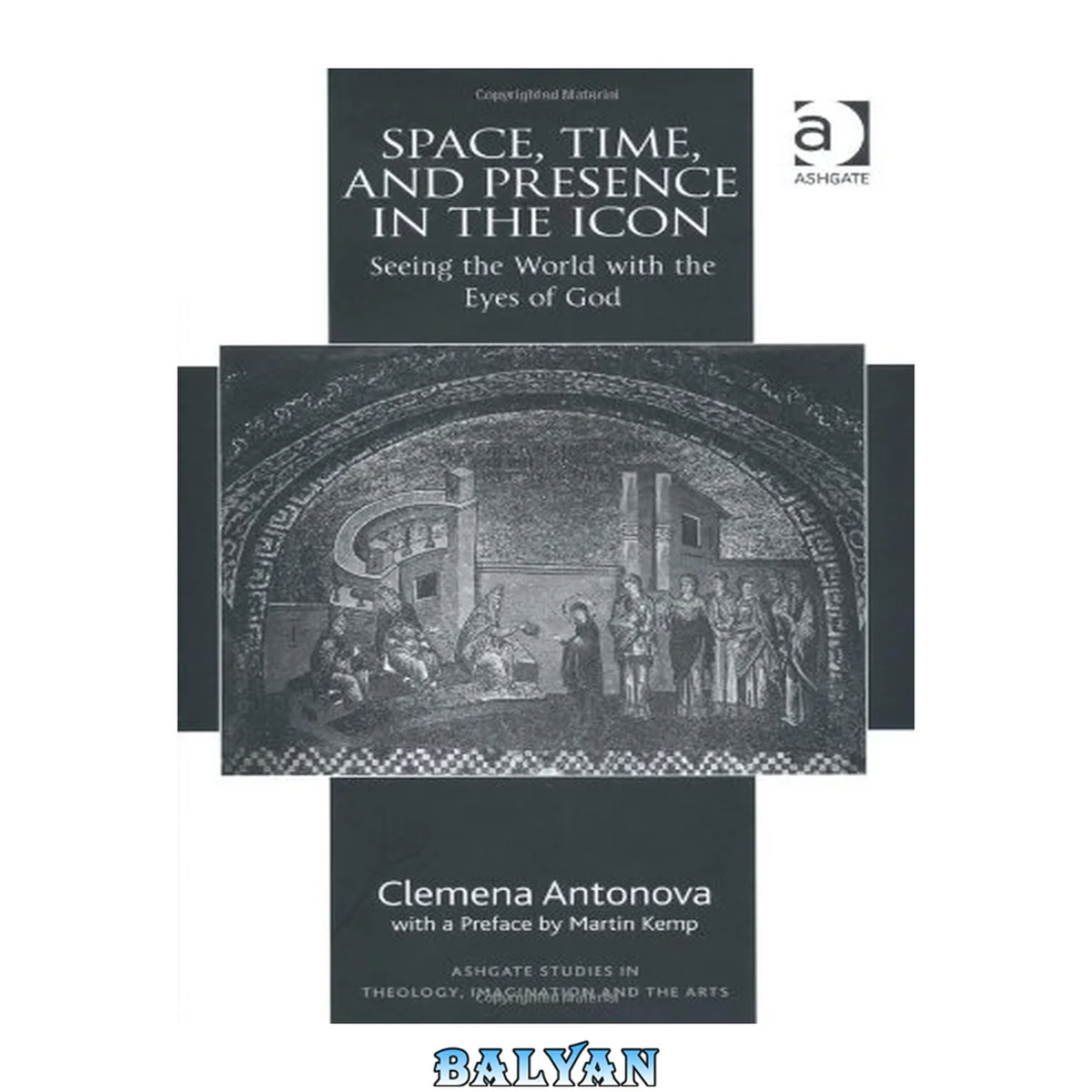
معرفی کتاب «Space, Time, And Presence In The Icon: Seeing The World With The Eyes Of God (ashgate Studies In Theology, Imagination And The Arts)» نوشتهٔ Leslie A. Miller، Robert L. Lovler، Sandra A. McIntire و Clemena Antonova, Martin Kemp، منتشرشده توسط نشر Ashgate Publishing Limited در سال 2010. این کتاب در فرمت pdf، زبان انگلیسی ارائه شده است.
This book contributes to the re-emerging field of 'theology through the arts' by proposing a way of approaching one of the most challenging theological concepts - divine timelessness - through the principle of construction of space in the icon. One of the main objectives of this book is to discuss critically the implications of 'reverse perspective', which is especially characteristic of Byzantine and Byzantining art. Drawing on the work of Pavel Florensky, one of the foremost Russian religious philosophers at the beginning of the 20th century, Antonova shows that Florensky's concept of 'supplementary planes' can be used productively within a new approach to the question. Antonova works up new criteria for the understanding of how space and time can be handled in a way that does not reverse standard linear perspective (as conventionally claimed) but acts in its own way to create eternalised images which are not involved with perspective at all. Arguing that the structure of the icon is This book contributes to the re-emerging field of'theology through the arts'by proposing a way of approaching one of the most challenging theological concepts - divine timelessness - through the principle of construction of space in the icon. One of the main objectives of this book is to discuss critically the implications of'reverse perspective', which is especially characteristic of Byzantine and Byzantining art. Drawing on the work of Pavel Florensky, one of the foremost Russian religious philosophers at the beginning of the 20th century, Antonova shows that Florensky's concept of'supplementary planes'can be used productively within a new approach to the question. Antonova works up new criteria for the understanding of how space and time can be handled in a way that does not reverse standard linear perspective (as conventionally claimed) but acts in its own way to create eternalised images which are not involved with perspective at all. Arguing that the structure of the icon is determined by a conception of God who exits in past, present, and future, simultaneously, Antonova develops an iconography of images done in the Byzantine style both in the East and in the West which is truer to their own cultural context than is generally provided for by western interpretations. This book draws upon philosophy, theology and liturgy to see how relatively abstract notions of a deity beyond time and space enter images made by painters. The role of time in pictorial art The role of time in the visual arts : seeing a picture in the twinkling of an eye The doctrine of the purity of art The problem of pictorial time in the icon : Florensky and remembering things that happened the week after next The problem of time in the pictorial arts Bakhtin's chronotope On reverse perspective : a critical reading Implications of the term reverse perspective : reverse of what? First stage : Florensky Second stage : Zhegin Third stage : Boris Uspensky An alternative view : Karl Doehlemann Registering presence in the icon The cult of images and Eastern Orthodox identity The western position : a critical reappraisal Icon and relic Real presence in the image Classical antique sources Christian sources : Byzantine theology of the image A modern view : the icon as symbol in Florensky's writings Seeing the world with the eyes of God : an alternative explanation of reverse perspective A new definition of reverse perspective as a prerequisite for the present hypothesis The cubist background The theosophical background Classical Greek sources on divine eternity Christian sources on divine eternity Theology through liturgy Theology through the arts The present hypothesis in context Leibniz and the way God sees things Schopenhauer and art as a repetition of eternity Worringer's eternalization of the object. Cover 1 Contents 6 List of Illustrations 8 Acknowledgements 10 Preface 12 Introduction 14 1 The Role of Time in the Pictorial Art 18 2 On Reverse Perspective – a Critical Reading 42 3 Registering Presence in the Icon 76 4 “Seeing the World with the Eyes of God”: An Alternative Explanation of “Reverse Perspective” 116 Conclusion 166 Sample Analysis An Analysis of Rublev’s Trinity Icon in the Terms, Proposed in this Book 170 Glossary of Terms 180 Bibliography 186 Index 204
this Book Contributes To The Re-emerging Field Of 'theology Through The Arts' By Proposing A Way Of Approaching One Of The Most Challenging Theological Concepts - Divine Timelessness - Through The Principle Of Construction Of Space In The Icon. One Of The Main Objectives Of This Book Is To Discuss Critically The Implications Of 'reverse Perspective', Which Is Especially Characteristic Of Byzantine And Byzantining Art.