نوازندگی گیتار سولو
Solo Guitar Playing
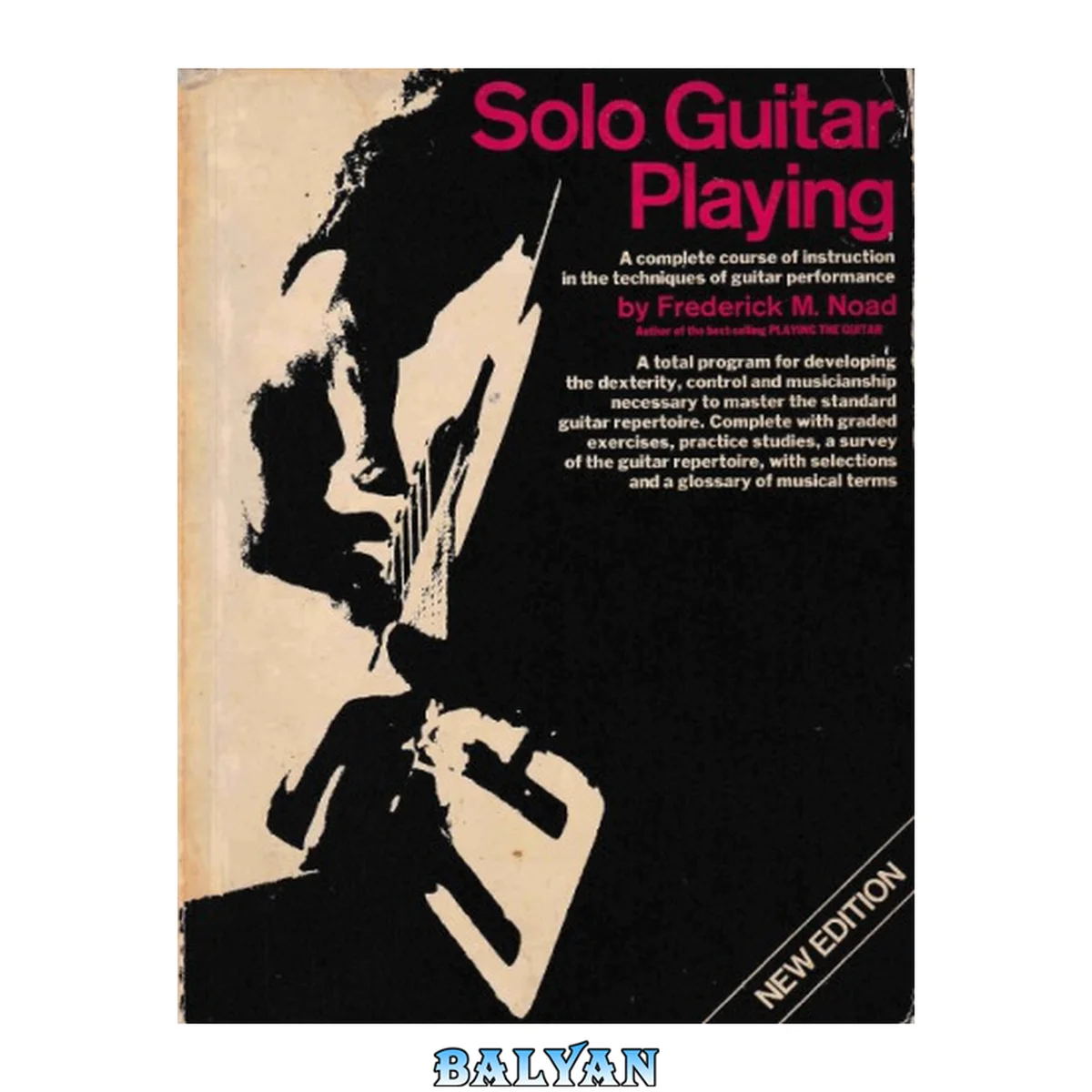
معرفی کتاب «نوازندگی گیتار سولو» (با عنوان لاتین Solo Guitar Playing) نوشتهٔ Roland Boer (auth.) و Frederick M. Noad، منتشرشده توسط نشر 0. این کتاب در فرمت pdf، زبان انگلیسی ارائه شده است.
This book covers the whole system of Socialism with Chinese Characteristics, dealing with Deng Xiaoping’s theory, the socialist market economy, a moderately well-off ( Xiaokang ) society, China’s practice and theory of socialist democracy, human rights, and Xi Jinping’s Marxism. In short, the resolute focus is the Reform and Opening-Up. Socialism with Chinese Characteristics is one of the most important global realities today. However, the concept and its practice remain largely misunderstood outside China. This book sets to redress such a lack of knowledge, by making available to non-Chinese speakers the sophisticated debates and conclusions in China concerning socialism with Chinese Characteristics. It presents this material in a way that is both accessible and thorough. Preface 6 Reference 8 Contents 9 About the Author 14 1 Introduction: Marxism as China’s Special Skill 15 1.1 General 15 1.2 Marxism as China’s Special Skill 15 1.2.1 Defining Marxist Philosophy 16 1.2.2 Philosophy and the Social Sciences 18 1.2.3 The General Secretary as a Thinker 21 1.3 Chinese Characteristics 22 1.4 Historical Nihilism 24 1.4.1 Typology of Western Genres 24 1.4.2 Using Western Categories to Understand China (yixi jiezhong) 27 1.5 Method 29 1.6 A Note on Sources 31 References 33 2 Reading Deng Xiaoping 39 2.1 Liberating Thought (jiefang sixiang) 41 2.1.1 Liberation From 41 2.1.2 Liberation For 43 2.2 Seek Truth from Facts (shishiqiushi) 46 2.3 Liberating the Forces of Production (jiefang shengchanli) 51 2.4 Conclusion: Laying the Foundations for Communism 55 References 58 3 Contradiction Analysis: History, Meaning, and Application 68 3.1 Opening Remarks 68 3.2 Lenin 70 3.3 Dialectical Materialism 73 3.4 Mao Zedong 78 3.4.1 Contradiction and Antagonism 80 3.4.2 Principal and Secondary Contradictions 84 3.4.3 Chinese Characteristics 86 3.5 Conclusion 88 References 90 4 The Marxist Basis of the Reform and Opening-Up 97 4.1 Opening Remarks 97 4.2 One Big Pot and Household Responsibility 98 4.2.1 Returning to the Countryside 98 4.2.2 Collective and Individual 99 4.2.3 Equality and Difference 100 4.3 Reform 101 4.3.1 Deepening Reform 102 4.3.2 Revolution and Reform 103 4.3.3 The Wild 90s 105 4.4 Opening up 109 4.4.1 How to Relate to Capitalist Countries 109 4.4.2 Self-Reliance and Globalisation 111 4.5 Class Analysis 112 4.5.1 Internal Class Contradictions 112 4.5.2 International Class Antagonisms 114 4.6 One Country, Two Systems 115 4.7 Conclusion: One Central Task and Two Basic Points 117 4.7.1 Reform and Opening-Up 119 4.7.2 Four Cardinal Principles 119 4.7.3 Both Hands Should Be Hard 120 References 121 5 China’s Socialist Market Economy and Planned Economy 127 5.1 Opening Remarks 127 5.2 De-Linking: Planning and the Market 128 5.2.1 Deng Xiaoping and the Socialist Market Economy 128 5.2.2 Market Economies in History 130 5.3 Contradiction Analysis 132 5.3.1 From Ownership to Liberating the Forces of Production 132 5.3.2 Primary Contradiction 133 5.4 Is It Socialist? Universality and Particularity 135 5.4.1 Universality and Particularity 135 5.4.2 What Makes It Socialist? 136 5.4.3 A Basis in Marx and Engels 138 5.5 Dialectical Transcendence: Beyond Planning and Market Economies 140 5.5.1 From Temporal Narratives to Managing the Contradiction 140 5.5.2 Dialectical Transcendence 142 5.6 Conclusion and Implications 145 References 146 6 Seeking a Xiaokang Society, or, Socialist Modernisation 150 6.1 Opening Remarks 150 6.2 The Four Modernisations 151 6.3 Datong: From the Confucian Tradition to Mao Zedong 155 6.3.1 The Book of Rites (Liji) 155 6.3.2 He Xiu’s Revision: Datong as Topos 156 6.3.3 Kang Youwei’s Confucian Reformism 158 6.3.4 Mao Zedong: Datong and Communism 161 6.4 Xiaokang: From the Book of Songs (Shijing) to Xi Jinping 163 6.4.1 The Book of Rites and the Book of Songs (Shijing) 163 6.4.2 Deng Xiaoping and Xiaokang Shehui 165 6.4.3 The Two Centenary Goals 167 6.5 Whither Datong? 168 References 169 7 The Chinese Marxist Approach to Sovereignty and Human Rights 175 7.1 Opening Remarks 175 7.2 On Universals, False and Rooted 176 7.2.1 False Universals 176 7.2.2 Rooted Universals 177 7.3 The Western Liberal Tradition of Human Rights 179 7.4 Sovereignty: From Westphalia to Anti-colonialism 181 7.4.1 Westphalia and Secularised Theology 182 7.4.2 Anti-colonial Sovereignty 183 7.4.3 Anti-hegemony, Non-interference, and Peaceful Coexistence 185 7.5 The Chinese Marxist Approach to Human Rights 186 7.5.1 The Prerequisite of Anti-hegemonic Sovereignty 186 7.5.2 The Right to Socio-Economic Well-Being 187 7.5.3 Policy Implications: From the Belt and Road Initiative to Minority Nationalities 189 7.5.4 The Rooted Universal of Chinese Marxist Human Rights 193 7.6 Conclusion: Mutual Recognition in a Multi-polar World 193 References 194 8 Socialist Democracy in Practice 200 8.1 Opening Remarks 200 8.2 Electoral Democracy and the People’s Congresses 202 8.3 Consultative Democracy 203 8.3.1 Philosophical and Historical Foundations: Non-Antagonistic Contradictions and the Mass Line 205 8.3.2 Chinese People’s Political Consultative Conferences 206 8.3.3 Comprehensive Consultation and Democratic Supervision 207 8.4 Grassroots Democracy 208 8.4.1 History: From Engels to Pre-Liberation Red Areas 209 8.4.2 Two Case Studies: Miaoba and Dengzhou 210 8.4.3 Improving Targeted Grassroots Democracy 212 8.5 Minority Nationalities 213 8.5.1 Defining ‘Minzu’ 213 8.5.2 Preferential Policies (youhui zhengce): Economics, Culture, and Governance 214 8.5.3 Autonomy and Unity 216 8.6 Rule of Law 218 8.6.1 Legal System and Rule of Law 218 8.6.2 Rule of Law and Rule of Virtue 220 8.6.3 Rule of Law Versus Rule of a Person 221 8.6.4 Governing the Country According to Law 223 8.7 Leadership of the Communist Party 225 8.7.1 From Historical to Practical Legitimacy 225 8.7.2 The Statutory Procedures of Practical Legitimacy 226 8.7.3 The Mutual Strength of Communist Party Leadership and Socialist Democracy 227 8.8 Conclusion: The Superiority of a Work in Progress 228 References 229 9 Socialist Democracy in Theory 239 9.1 Opening Remarks 239 9.1.1 Historical Forms of Democracy 240 9.2 Engels and Marx 242 9.2.1 Equating the Paris Commune with the Dictatorship of the Proletariat 242 9.2.2 The Seeds of Democratic Centralism 243 9.2.3 Principles of Socialist Democracy 243 9.3 Lenin and the ‘Highest Form of Democracy’ 245 9.3.1 Three Meanings of Democracy 245 9.3.2 The Superiority of Socialist Democracy 247 9.3.3 Democratic Centralism 248 9.4 Stalin and the Leadership of the Communist Party 249 9.4.1 Organic Leadership of the Communist Party 250 9.4.2 Proactive Human Rights Based on Freedom from Economic Exploitation 251 9.5 Mao Zedong 252 9.5.1 New Democracy 253 9.5.2 Democratic Dictatorship 255 9.5.3 Democratic Centralism 256 9.6 From Deng Xiaoping to Xi Jinping: The Problem of Democratic Centralism 259 9.6.1 Inner-Party Democratic Centralism 259 9.6.2 Separation of Party and Government 262 9.6.3 The Statutory Procedures of Socialist Democracy 263 9.6.4 Xi Jinping: Democratic Centralism and Country-Wide Governance 264 9.7 Conclusion: Stability and Social Health 265 9.7.1 Why Not Social Democracy? 266 9.7.2 Stability and Social Health 267 References 268 10 Xi Jinping on Marx and Engels 281 10.1 Setting the Scene: Why Xi Jinping’s Thought is Important 281 10.2 The Biography of an Engaged Intellectual 283 10.3 Marxism in China 284 10.3.1 Scientific Socialism 284 10.3.2 Marxism and Anti-colonial Struggles 285 10.4 Study Marx 287 10.4.1 Development of Human Society (renlei shehui fazhan) 287 10.4.2 Sticking to the People’s Standpoint (jianshou renmin lichang) 289 10.4.3 Productive Forces and Relations of Production (shengchanli he shengchan guanxi) 290 10.4.4 People’s Democracy (renmin minzhu) 292 10.4.5 Cultural Construction (wenhua jianshe) 294 10.4.6 Social Construction (shehui jianshe) 297 10.4.7 Human-Nature Relationship (ren yu ziran guanxi) 298 10.4.8 World History (shijie lishi) 299 10.4.9 Marxist Party Building (makesizhuyi zhengdang jianshe) 302 10.5 Conclusion: An Original Contribution to the Development of Marxism 304 References 306 11 Conclusion: On the Socialist System and Cultural Confidence 316 11.1 A Guide for Foreigners 316 11.2 Socialist System 317 11.3 Cultural Confidence 319 References 322
دانلود کتاب نوازندگی گیتار سولو