Solitude : a return to the self
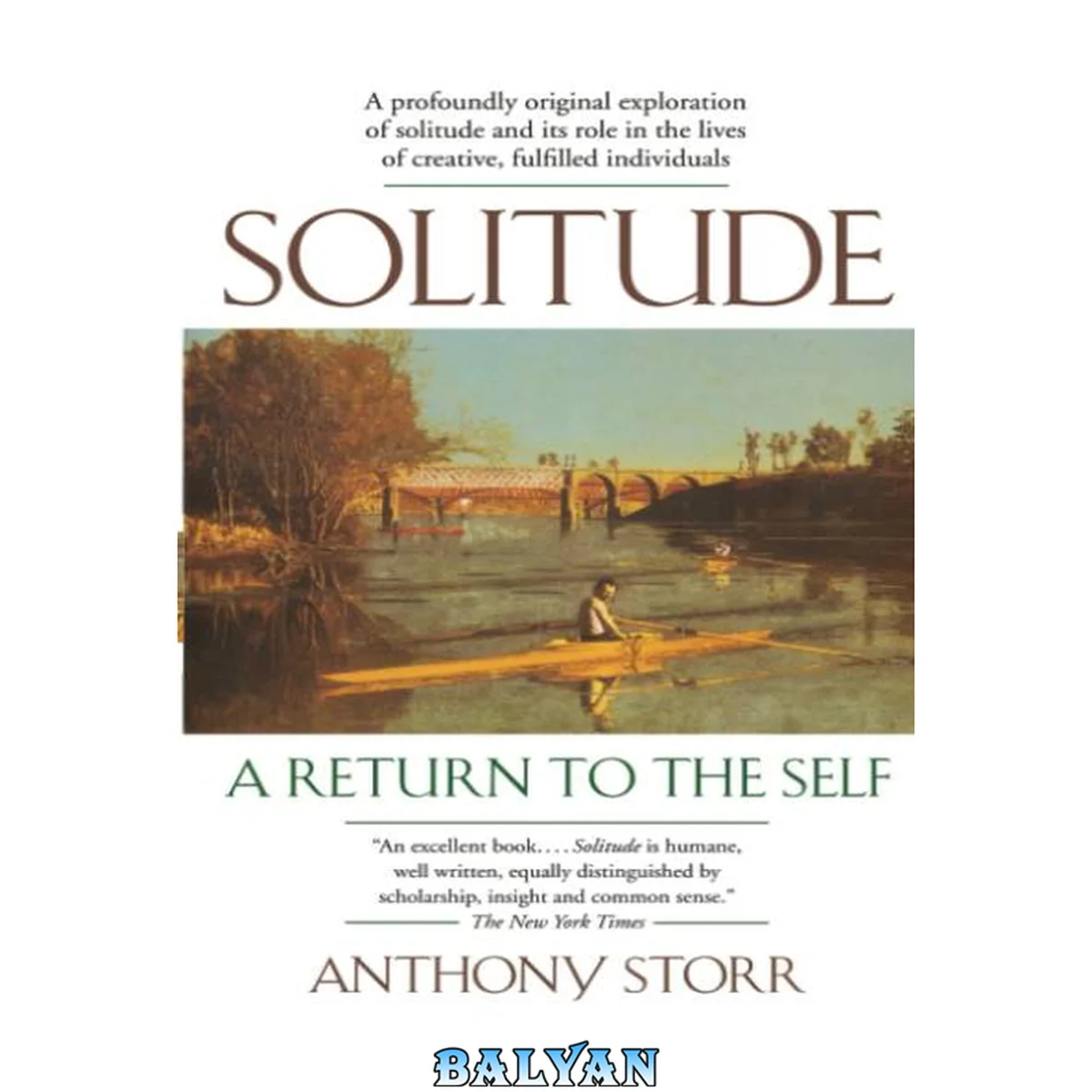
معرفی کتاب «Solitude : a return to the self» نوشتهٔ Francis Su و Anthony Storr، منتشرشده توسط نشر Ballantine Books در سال 2005. این کتاب در فرمت pdf، زبان انگلیسی ارائه شده است.
Originally published in 1988, Anthony Storr's enlightening meditation on the creative individual's need for solitude has become a classic.
Solitude was seminal in challenging the established belief that "interpersonal relationships of an intimate kind are the chief, if not the only, source of human happiness." Indeed, most self-help literature still places relationships at the center of human existence. Lucid and lyrical, Storr's book cites numerous examples of brilliant scholars and artists — from Beethoven and Kant to Anne Sexton and Beatrix Potter — to demonstrate that solitude ranks alongside relationships in its impact on an individual's well-being and productivity, as well as on society's progress and health. But solitary activity is essential not only for geniuses, says Storr; the average person, too, is enriched by spending time alone.
For fifteen years, readers have found inspiration and renewal in Storr's erudite, compassionate vision of human experience.
Publishers Weekly
Taking Goya, Kafka, Trollope, Kant and others as examples, the author links the capacity to be alone with self-discovery and becoming aware of one's deepest needs and feelings. ``Storr's celebration of creative solitude is a counterbalance to the chorus of self-help books extolling interpersonal relationships,'' wrote PW . (June)
Originally published in 1988, Anthony Storr's enlightening meditation on the creative individual's need for solitude has become a classic. Solitude was seminal in challenging the established belief that "interpersonal relationships of an intimate kind are the chief, if not the only, source of human happiness." Indeed, most self-help literature still places relationships at the center of human existence. Lucid and lyrical, Storr's book cites numerous examples of brilliant scholars and artists -- from Beethoven and Kant to Anne Sexton and Beatrix Potter -- to demonstrate that solitude ranks alongside relationships in its impact on an individual's well-being and productivity, as well as on society's progress and health. But solitary activity is essential not only for geniuses, says Storr; the average person, too, is enriched by spending time alone. For fifteen years, readers have found inspiration and renewal in Storr's erudite, compassionate vision of human experience. "Solitude was seminal in challenging the established belief that "interpersonal relationships of an intimate kind are the chief, if not the only, source of human happiness." Indeed, most self-help literature still places relationships at the center of human existence. Lucid and lyrical, Storr's book cites numerous examples of brilliant scholars and artists -- from Beethoven and Kant to Anne Sexton and Beatrix Potter -- to demonstrate that solitude ranks alongside relationships in its impact on an individual's well-being and productivity, as well as on society's progress and health. But solitary activity is essential not only for geniuses, says Storr ; the average person, too, is enriched by spending time alone."--Back cover Cover Title Copyright Acknowledgements Introduction 1. The Significance of Human Relationships 2. The Capacity to be Alone 3. The Uses of Solitude 4. Enforced Solitude 5. The Hunger of Imagination 6. The Significance of the Individual 7. Solitude and Temperament 8. Separation, Isolation and the Growth of Imagination 9. Bereavement, Depression and Repair 10. The Search for Coherence 11. The Third Period 12. The Desire and Pursuit of the Whole References Epigraphs About the Author The current emphasis upon intimate interpersonal relationships as the touchstone of health and happiness is a comparatively recent phenomenon.