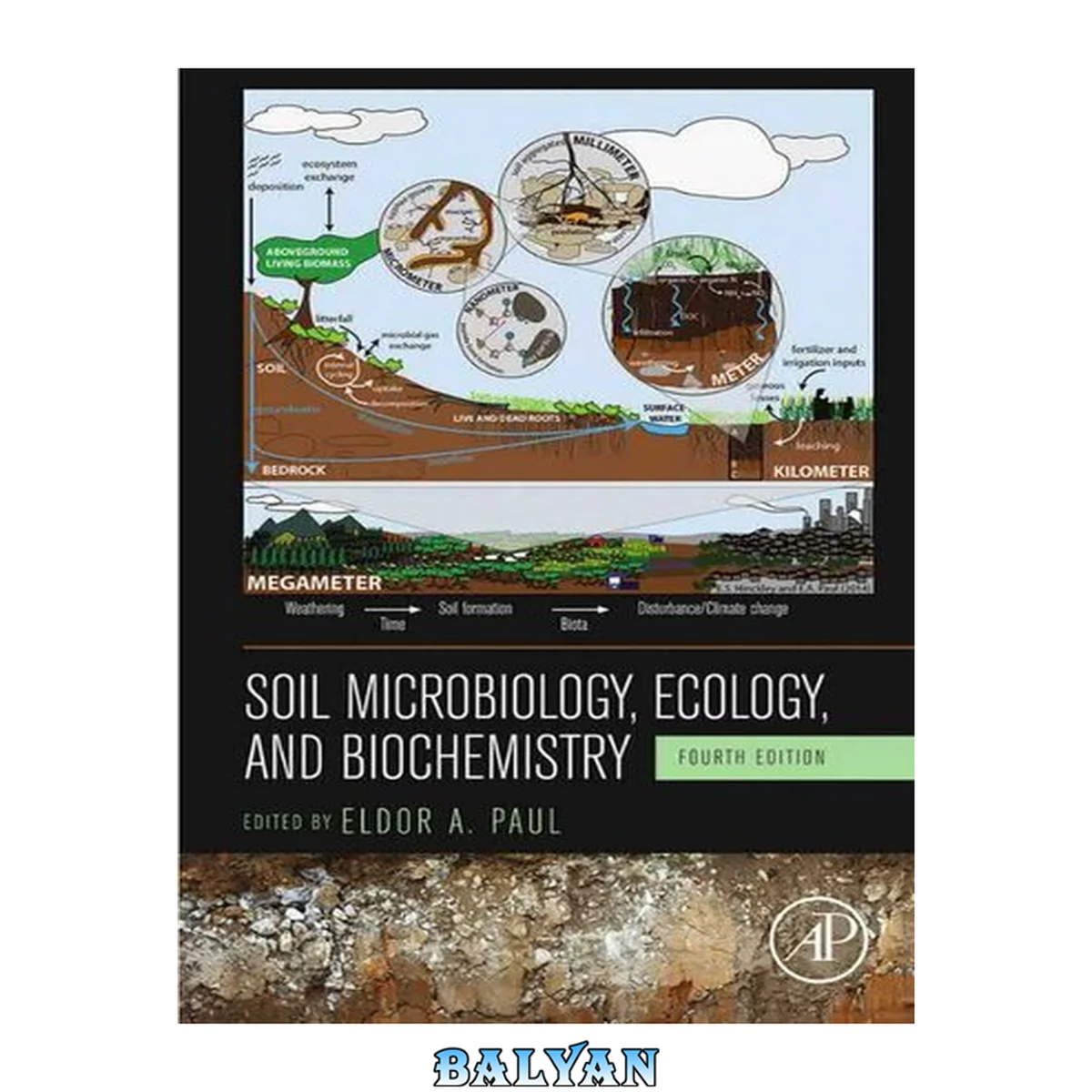
معرفی کتاب «Soil Microbiology, Ecology, and Biochemistry» نوشتهٔ Kennedy، Elle و Eldor Alvin Paul، منتشرشده توسط نشر Academic Press is an imprint of Elsevier در سال 2015. این کتاب در فرمت pdf، زبان انگلیسی ارائه شده است.
The fourth edition of __Soil Microbiology, Ecology and Biochemistry__ updates this widely used reference as the study and understanding of soil biota, their function, and the dynamics of soil organic matter has been revolutionized by molecular and instrumental techniques, and information technology. Knowledge of soil microbiology, ecology and biochemistry is central to our understanding of organisms and their processes and interactions with their environment. In a time of great global change and increased emphasis on biodiversity and food security, soil microbiology and ecology has become an increasingly important topic. Revised by a group of world-renowned authors in many institutions and disciplines, this work relates the breakthroughs in knowledge in this important field to its history as well as future applications. The new edition provides readable, practical, impactful information for its many applied and fundamental disciplines. Professionals turn to this text as a reference for fundamental knowledge in their field or to inform management practices. * New section on "Methods in Studying Soil Organic Matter Formation and Nutrient Dynamics" to balance the two successful chapters on microbial and physiological methodology * Includes expanded information on soil interactions with organisms involved in human and plant disease * Improved readability and integration for an ever-widening audience in his field * Integrated concepts related to soil biota, diversity, and function allow readers in multiple disciplines to understand the complex soil biota and their function Cover Soil Microbiology, Ecology, and Biochemistry Copyright Contributors Preface Soil Microbiology, Ecology, and Biochemistry: An Exciting Present and Great Future Built on Basic Knowledge and Unifying C ... Scope and Challenges The Controls and Unifying Principles in our Field The Special Role of Accessibility and Spatial Scaling of Biota and Soil Organic Matter Soil Organic Matter as a Control and Informational Storehouse of Biotic Functions Biotic Diversity and Microbial Products Unifying Concepts References The Soil Habitat Introduction Soil Genesis and Formation of the Soil Habitat Soil Profile Physical Aspects of Soil Soil Texture Aggregation of Soil Mineral Particles Soil Habitat and Scale of Observation Scale of Soil Habitat Pore Space Soil Solution Chemistry Soil pH Soil Redox Soil Aeration Environmental Factors, Temperature, and Moisture Interactions Soil Temperature Soil Water References The Bacteria and Archaea Introduction Phylogeny Cultivated Organisms Uncultivated Organisms Phylogeny and Function General Features of Prokaryotes Cell Structure Unicellular Growth Forms Filamentous and Mycelial Growth Cell Walls Internal Structure Motility Metabolism and Physiology The Diversity of Prokaryotic Metabolism Carbon and Energy Sources Oxygen Requirements Substrate Utilization Autochthony and Zymogeny Oligotrophy, Copiotrophy, and the r-K Continuum Facultative Activities Biodegradation Capacity Cellulose Pollutants Differentiation, Secondary Metabolism, and Antibiotic Production Conclusion References The Soil Fungi: Occurrence, Phylogeny, and Ecology Introduction Phylogeny Definition of Eumycota Present Phylogeny Novel Lineages Occurrence Extremophiles, Distribution Across the Planet Biomass, Growth, and Abundance Biodiversity Estimates of Species Richness Fungal Dispersal and Biogeography Fungal Communities Definition Abiotic Drivers Biotic Drivers Functions Introduction Nutrient Cycling Enzymes/Decomposition Nitrogen Phosphorus Bioremediation Fungus-like Organisms and Soil Food Webs Acknowledgements References Soil Fauna: Occurrence, Biodiversity, and Roles in Ecosystem Function Introduction Overview of Faunal Biodiversity in Soils Microfauna Protozoa Methods for Extracting and Counting Protozoa Impacts of Protozoa on Ecosystem Function Distribution of Protozoa in Soil Profiles Rotifera Mesofauna Nematoda Nematodes in Soil Food Webs Food Sources for Nematodes Zones of Nematode Activity in Soil Nematode Extraction Techniques Microarthropods Determining the Trophic Position of Microarthropods Enchytraeids Food Sources of Enchytraeids Distribution and Abundance of Enchytraeids Extraction of Enchytraeids Macrofauna Macroarthropods Oligochaeta Earthworms Earthworm Distribution and Abundance Biology and Ecology Influence on Soil Processes Earthworm Effects on Ecosystems Formicidae Ants Termitidae Termites Roles of Soil Fauna in Ecosystems Summary Acknowledgments References Further reading Molecular Approaches to Studying the Soil Biota Introduction Types and Structures of Nucleic Acids Nucleic acid Analyses in Soil Ecology Studies Direct Molecular Analysis of Soil Biota Nucleic Acid Hybridization Confocal Microscopy Biosensors and Marker Gene Technologies Extraction of Nucleic Acids DNA/RNA Choosing Between DNA and RNA for Studying Soil Biota Analysis of Nucleic Acid Extracts DNA:DNA Reassociation Kinetics Microarrays Restriction Fragment Length Polymorphism RFLP Analysis Cloning and Sequencing Stable Isotope Probing Partial Community Analyses-PCR-based Assays Electrophoresis of Nucleic Acids PCR Fingerprinting Metagenomics Metatranscriptomics Level of Resolution Factors that May Affect Molecular Analyses Future Promise References Physiological and Biochemical Methods for Studying Soil Biota and Their Functions Introduction Scale of Investigations and Collection of Samples Storage and Pretreatment of Samples Microbial Biomass Fumigation Incubation and Fumigation Extraction Methods Substrate-Induced Respiration Compound-Specific Analyses of Microbial Biomass and Microbial Community Structure ATP as a Measure of Active Microbial Biomass Microbial Membrane Components and Fatty Acids Phospholipid Etherlipids Respiratory Quinones Ergosterol as a Measure of Fungal Biomass Gene Abundance as a Measure of Biomass of Specific Groups of Soil Microorganisms Component-Specific Analyses of Microbial Products Isotopic Composition of MICROBIAL Biomass and Signal Molecules Isotopic Composition of Microbial Biomass Stable-Isotope Probing of Fatty Acids, Ergosterol, and Nucleic Acids Growth Rates from Signature Molecules and Leucine/Thymidine Incorporation Physiological Analyses Culture Studies Isolation and Characterization of Specific Organisms Microbial Growth and Respiration Nitrogen Mineralization Activities of Enzymes Spectrophotometric Methods Fluorescence Methods Imaging Microbial Activities Functional Diversity References The Spatial Distribution of Soil Biota Introduction The Biogeography of Soil Biota Vertical Distribution Within the Soil Profile Microscale Heterogeneity in Microbial Populations Drivers of Spatial Heterogeneity Summary References Further Reading The Metabolic Physiology of Soil Microorganisms Introduction Foundations of Microbial Metabolism Stoichiometry Redox Reactions Energetics Role of Enzymes in Metabolism Metabolic Classification of Soil Organisms Cellular Energy Transformations Substrate-Level Versus Oxidative Phosphorylation How ATP Production Varies for Different Metabolic Classes of Soil Microorganisms Examples of Soil Microbial Transformations Organotrophy Lithotrophy Phototrophy A Simplified View of Soil Microbial Metabolism Model of Interconnected Cycles of Electrons The Anoxygenic Cycle The Oxygenic Cycle References Further Reading The Ecology of the Soil Biota and their Function Introduction Mechanisms that Drive Community Structure Physiological Limitations to Survival Intraspecific Competition Dispersal in Space and Time Interspecific Competition Direct Effects of Exploitation Indirect Effects of Exploitation Mutualistic Interactions Community Impacts on Abiotic Factors Community Variation Among Soil Habitats Changes in Community Structure Through Time Historical and Geographic Contingency Leads to Biogeography Consequences of Microbial Community Structure for Ecosystem Function Energy Flow Nutrient Cycles Emergent Properties Conclusion References Plant-Soil Biota Interactions Soil Biota The Rhizosphere: Ecological Network of Soil Microbial Communities New Insights into Root/Soil Microbes Through Metagenomic/Metatranscriptomic Approaches An Important Rhizospheric Component: The Mycorrhizal Fungi The Contribution of Fungal Genome Projects Summary Acknowledgments References Carbon Cycling: The Dynamics and Formation of Organic Matter Introduction Geological Carbon Cycle Biological C Cycle Photosynthesis Decomposition of Plant and Microbial Products Cytoplasmic Constituents of Plants and Microorganisms Plant and Microbial Lipids Starch Hemicelluloses, Pectins, and Cellulose Lignin Plant Secondary Compounds Roots and Root-Derived Materials Cell Walls of Microorganisms Organic Matter Substrates for OM Formation Theories of SOM Stabilization Aggregate Protection of OM Fractions in Soil SOM Maintenance Quantity, Distribution, and Turnover of Carbon in Soil and Sediments Terrestrial Soil C Stocks Ocean C Pools Role of Climate Change on the Global C Cycle Results from Elevated CO2 Studies Soil Processes in a Warmer Climate Methane in the C Cycle Elevated CO2 and Ocean Processes Future Considerations References Further reading Methods for Studying Soil Organic Matter: Nature, Dynamics, Spatial Accessibility, and Interactions with Minerals Introduction Quantifying Soil organic matter Fractionation Methods Chemical and Thermal Fractionation Extraction Methods Dissolved Organic Matter Solubility in Bases and Acids: Humic Substances and Extracts Hydrolysis Methods Oxidation Methods Destruction of the Mineral Phase Calorimetric Methods Physical Fractionation Introduction and Definitions Soil Dispersion Particle Fractionation Aggregate Fractionation Characterization Methods Wet Chemical Methods for Analyses of Biochemical SOM Constituents Carbohydrates Aromatic Compounds Aliphatic Compounds Organic Nitrogen Spectroscopic Methods to Characterize Functional Groups of SOM Infrared Spectroscopy Solid-State NMR Spectroscopy Molecular Analysis of SOM Visualization Methods Light Microscopy Scanning Electron Microscopy Transmission Electron Microscopy Atomic Force Microscopy X-Ray Spectro-Microscopy NanoSIMS X-Ray Computed Microtomography Methods to Measure the Turnover Rate of SOM Soil Incubation and Modeling of CO2 Evolution Decomposition of Organic Materials Added to Soil 13C Natural Abundance 14C Dating Compound-Specific Assessment of SOM Turnover References Nitrogen Transformations Introduction Nitrogen Mineralization and Immobilization Nitrification The Biochemistry of Autotrophic Nitrification The Diversity of Autotrophic Nitrifiers Heterotrophic Nitrification Environmental Controls of Nitrification Inhibition of Nitrification Denitrification Denitrifier Diversity Environmental Controls of Denitrification Other Nitrogen Transformations in Soil Nitrogen Movement in the Landscape References Further Reading Biological N Inputs Global N Inputs Biological Nitrogen Fixation Measuring BNF Free Living N2-Fixing Bacteria Associative N2-Fixing Bacteria Phototrophic Bacteria Symbiotic N2-Fixing Associations Between Legumes and Rhizobia Formation of the Legume Symbiosis Rhizobial Nodulation Genes Plant Nodulation Genes Development of BNF and Nitrogen Assimilatory Processes in Nodules Symbiotic Associations between Actinorhizal Plants and Frankia Microbial Ecology of BNF Biotechnology of BNF Acknowledgments References Suggested Reading Biological Cycling of Inorganic Nutrients and Metals in Soils and Their Role in Soil Biogeochemistry Introduction Nutrient Needs of Soil Microorganisms Effect of Microorganisms on Element Cycles Phosphorus Cycle Sulfur Cycle Iron Cycle Cycles of Other Elements Examples of Interconnections Between Microbial Community/Activity and Element Cycles Element Cycles During Early Soil Development Coupling of Iron and Sulfur Transformations in Acid Mine Drainage Integration of Element Cycles in Wetland Systems References Modeling the Dynamics of Soil Organic Matter and Nutrient Cycling Introduction Reaction Kinetics Zero-Order Reactions First-Order Reactions Enzyme Kinetics Microbial Growth Modeling Soil Carbon and Nutrient Dynamics Analytical Models Substrate-Enzyme-Microbe Models Cohort Models Multicompartmental Models Nutrient Dynamics Models Ecosystem and Earth System Models Case Studies Century/DayCent The DeNitrification-DeComposition Model Ecosys Model Classification and Comparison Model Parameterization Model Selection Methods Conclusion References Suggested Reading Management of Soil Biota and Their Processes Introduction Changing Soil Organism Populations and Processes Tillage and Erosion Rangeland and Forest Health Alternative Agricultural Management Organic Agriculture Biodynamic Agriculture and Charcoal Crop Rotations and Green Manures The Potential for Managing Microorganisms and their Processes Management of Native and Introduced Microorganisms Managing Microbial Populations as Agents of Biological Control Control of Insects Weed Control Use of Synthetic and Natural Compounds to Modify Soil Communities or Functions Composting Manipulating Soil Populations for Bioremediation Xenobiotics Concluding Comments on Microbial Ecology References Suggested Reading Index A B C D E F G H I L M N O P Q R S T U V W X Y Z
The fourth edition of Soil Microbiology, Ecology and Biochemistry updates this widely used reference as the study and understanding of soil biota, their function, and the dynamics of soil organic matter has been revolutionized by molecular and instrumental techniques, and information technology. Knowledge of soil microbiology, ecology and biochemistry is central to our understanding of organisms and their processes and interactions with their environment. In a time of great global change and increased emphasis on biodiversity and food security, soil microbiology and ecology has become an increasingly important topic.
Revised by a group of world-renowned authors in many institutions and disciplines, this work relates the breakthroughs in knowledge in this important field to its history as well as future applications. The new edition provides readable, practical, impactful information for its many applied and fundamental disciplines. Professionals turn to this text as a reference for fundamental knowledge in their field or to inform management practices.
- New section on "Methods in Studying Soil Organic Matter Formation and Nutrient Dynamics" to balance the two successful chapters on microbial and physiological methodology
- Includes expanded information on soil interactions with organisms involved in human and plant disease
- Improved readability and integration for an ever-widening audience in his field
- Integrated concepts related to soil biota, diversity, and function allow readers in multiple disciplines to understand the complex soil biota and their function