تأیید و اعتبارسنجی نرمافزار برای حرفهایها و مدیران، ویرایش دوم
Software Verification and Validation for Practitioners and Managers, Second Edition
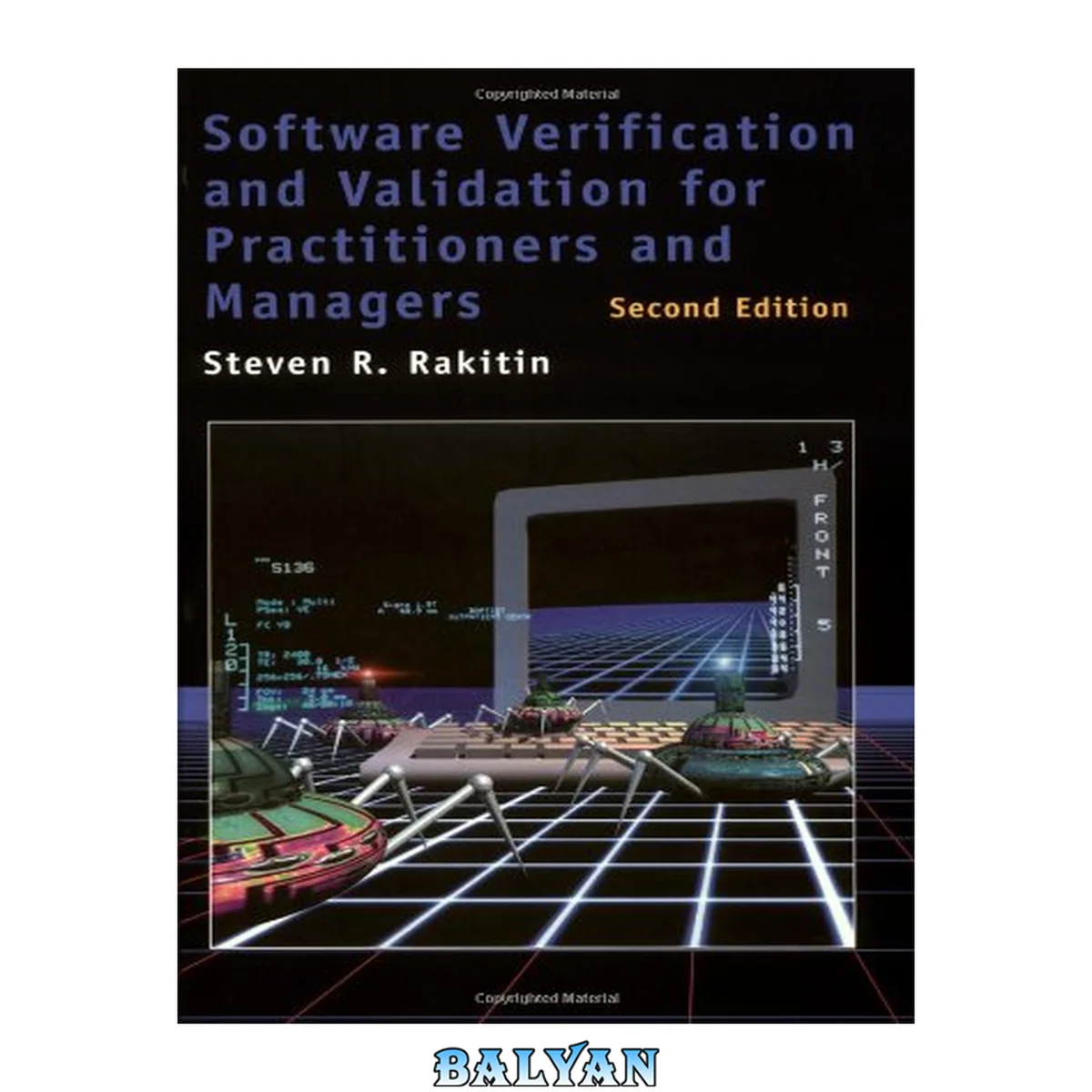
معرفی کتاب «تأیید و اعتبارسنجی نرمافزار برای حرفهایها و مدیران، ویرایش دوم» (با عنوان لاتین Software Verification and Validation for Practitioners and Managers, Second Edition) نوشتهٔ Steven R. Rakitin، منتشرشده توسط نشر Artech House در سال 2001. این کتاب در فرمت pdf، زبان انگلیسی ارائه شده است.
A concise and practical introduction to the basic principles of effective software verification and validation (V&V). This edition has been revised and includes five new chapters and five new appendices focused on management techniques to make your company's software V&V efforts more cost-effective. Managers should learn how to help their organization create more accurate estimates and schedules. Practitioners should learn fundamental software V&V practices such as the formal inspection process, configuration management, effective testing techniques, and how to use measurements to drive further process improvements. Contents......Page 8 Preface to the Second Edition......Page 22 Acknowledgments......Page 26 Part I Introduction......Page 28 1.1 The Software Crisis......Page 30 1.3.1 Formal Proof of Correctness......Page 32 1.3.4 Cleanroom Process......Page 33 1.4 Understanding the Nature of Software......Page 34 1.5.1 SEI Capability Maturity Model ( CMM SM)......Page 35 1.5.2 ISO SPICE......Page 36 1.5.3 Bootstrap......Page 37 1.5.5 Trillium......Page 38 1.6 Summary......Page 39 References......Page 40 Web Resources......Page 41 2 Software Development Life- Cycle Models......Page 44 2.1 The Waterfall Model......Page 45 2.2 Concurrent Development Model......Page 48 2.3 The Rapid Prototyping Model......Page 49 2.4 The Spiral Model......Page 51 2.6 Model- Based Development......Page 54 2.7 Object- Oriented Models......Page 56 References......Page 59 3 Software Development Process......Page 62 3.1 Software Development Process FAQs......Page 63 References......Page 69 4 Economic Justification......Page 72 4.1 Economic Justification......Page 74 4.2 Software Defect Cost Models......Page 76 4.3 Measuring the Cost of Quality......Page 80 4.4 Summary......Page 81 Selected Bibliography......Page 82 Part II Overview of Software Verification Activities......Page 84 Reference......Page 85 5 The Inspection Process......Page 86 5.1 Inspection Process FAQs......Page 88 Selected Bibliography......Page 98 Web Resources......Page 99 6.1 Attributes of a Good Process......Page 100 6.1.1 Institutionalizing Inspections......Page 101 6.1.2 Real- Life Experiences......Page 102 6.2 Requirements Inspections......Page 103 6.2.2 Requirements Inspection Process......Page 104 6.3 Design Inspection......Page 106 6.3.2 Design Inspection Process......Page 107 6.4.2 Code Inspection Process......Page 110 6.5.2 Test Procedure Inspection Process......Page 113 References......Page 115 7 Software Quality Metrics......Page 118 7.1 Strategy for Implementing a Software Metrics Program......Page 119 7.2 Software Quality Metrics Framework......Page 120 7.2.2 The Framework......Page 121 7.2.3 Applying the Software Quality Metrics Methodology......Page 122 7.3.1 Complexity......Page 130 7.3.2 Defect Metrics......Page 132 7.3.4 Process Metrics......Page 133 7.4 Summary......Page 134 Web References......Page 135 8 Configuration Management......Page 136 8.1 Software Configuration Managment Basics......Page 138 8.1.2 Example of a Manufacturing Process......Page 139 8.2 Identification......Page 141 8.2.1 Naming and Labeling......Page 142 8.2.2 Version Control......Page 143 8.3 Baseline Management......Page 145 8.3.1 Workspace Management......Page 150 8.4 Auditing and Reporting......Page 151 8.4.2 Configuration Status Accounting......Page 152 8.5 Summary......Page 153 References......Page 155 Part III Overview of Software Validation Activities......Page 156 Reference......Page 157 9 Testing......Page 158 9.1.1 Test Levels......Page 160 9.1.2 Test Methods......Page 167 9.1.3 Test Types......Page 168 9.2 Concurrent Development/ Validation Testing Model......Page 171 9.2.1 Informal Validation......Page 172 9.2.2 Validation Readiness Review......Page 173 9.2.3 Formal Validation......Page 174 9.3.1 Test Plan......Page 176 9.3.2 Test Procedure......Page 181 9.4 Summary......Page 182 References......Page 183 Web Resources......Page 184 10 Validation Metrics......Page 186 10.1.1 Find- Fix Cycle Time......Page 187 10.2.1 Code Coverage......Page 188 10.3 Quality Metrics......Page 190 10.3.3 Defect Detection Efficiency......Page 191 References......Page 192 11 Software Reliability Growth......Page 194 11.2 The Test- Analyze- Fix Process......Page 195 11.3 Reliability Growth Modeling......Page 196 11.3.2 Types of Models......Page 197 11.3.3 Model Assumptions......Page 199 11.3.4 Model Selection Process......Page 200 11.3.6 Reliability Modeling Tools......Page 201 11.4 Summary......Page 203 Web Resources......Page 204 Part IV Predictable Software Development......Page 206 Reference......Page 207 12 Motivation for Becoming Predictable......Page 208 12.1 Introduction to Predictable Software Development......Page 209 12.2 Characteristics of Unpredictable Organizations......Page 213 12.4 Management Can Change the Organization......Page 215 12.5 Summary......Page 219 References......Page 220 13 Balancing Quality, Features, and Schedule......Page 222 13.1 Quality......Page 224 13.1.1 The Impact of Poor Quality......Page 225 13.1.2 Quality and Risk......Page 227 13.2 Features......Page 229 13.3 Schedules......Page 230 13.3.2 We Don’t Teach Estimating and Scheduling Skills......Page 231 13.3.3 We Don’t Cultivate Software Project Management Skills......Page 232 13.3.5 We Don’t Manage Change......Page 233 13.5 Summary......Page 234 References......Page 238 Selected Bibliography......Page 239 14 Accurate Estimating and Scheduling......Page 240 14.1 Why Estimates and Schedules Are Wrong Most of the Time......Page 241 14.2 A Typical Scheduled Backwards Project......Page 244 14.3 Software Estimating Techniques......Page 245 14.3.2 COCOMO II......Page 246 14.3.3 Wideband Delphi Method......Page 247 14.4.1 PERT and CPM......Page 249 14.4.2 The Yellow Sticky Method......Page 251 14.5 Summary......Page 252 Selected Bibliography......Page 253 Web Resources......Page 254 15.1 Process......Page 256 15.1.1 Economic Motivation......Page 257 15.1.2 The Process- Oriented Organization......Page 258 15.1.3 Finding the Right Process......Page 260 15.2 People......Page 262 15.2.1 Provide Motivation......Page 264 15.2.3 Build Effective Teams......Page 266 15.2.4 Best Practices for Managing People......Page 267 15.3 Product......Page 269 15.3.1 Project Postmortems......Page 271 15.3.3 Root- Cause Analysis......Page 272 15.4 Summary......Page 273 References......Page 274 16.1 Managing Commitments......Page 276 16.3 Risk- Management Techniques......Page 279 References......Page 283 A. 1 Roles......Page 284 A. 2.1 Moderator......Page 285 A. 2.2 Producer......Page 286 A. 2.4 Inspectors......Page 287 A. 2.6 Manager......Page 288 Appendix B: A Sample Inspection Process......Page 290 B. 1.3 Activities......Page 291 B. 1.4 Exit Criteria......Page 292 B. 2.4 Exit Criteria......Page 293 B. 3.3 Activities......Page 294 B. 4.3 Activities......Page 295 B. 4.4 Exit Criteria......Page 296 B. 5.4 Exit Criteria......Page 297 B. 5.5 Metrics......Page 298 Appendix C: Inspection Process Forms......Page 300 D. 1 Requirements Inspection Checklist......Page 304 D. 2 Design Inspection Checklist: High- Level Design......Page 305 D. 3 Design Inspection Checklist: Detailed Design......Page 306 D. 4 Code Inspection Checklist for C Code......Page 309 D. 5.1 Variable Declarations......Page 311 D. 5.2 Data Usage......Page 314 D. 5.4 Macros......Page 315 D. 5.5 Sizing of Data......Page 316 D. 5.6 Dynamic Allocation......Page 317 D. 5.9 Computation......Page 318 D. 5.10 Conditionals......Page 319 D. 5.11 Flow Control......Page 320 D. 5.12 Assignment......Page 321 D. 5.14 Return Values......Page 322 D. 5.16 Files......Page 323 D. 5.17 Errors Due to Implicit Type Conversions......Page 324 D. 5.18 Errors Due to Loss of “ Precision” in Return Values......Page 325 D. 5.20 Copyright Notices......Page 326 D. 6 Test Procedure Inspection Checklist......Page 327 Appendix E: Attributes of Good Requirements Specifications......Page 328 Appendix F: Sample Criteria for Selecting Modules for Code Inspection......Page 330 G. 1 Requirements Analysis Phase......Page 332 G. 2 Requirements Definition Phase......Page 334 G. 3 Design Phase......Page 335 G. 4 Coding Phase......Page 337 G. 5 Testing Phase......Page 339 G. 6 Maintenance Phase......Page 340 Appendix H: Document Outlines......Page 342 H. 2 Software Requirements Specification ( SRS)......Page 343 H. 3 Software Design Description ( SDD)......Page 345 H. 4 Software Development Plan......Page 346 H. 5 Software Quality Assurance Plan......Page 350 H. 6 Software Validation Test Plan......Page 351 H. 8 Software Validation Test Report......Page 353 H. 9 Software Validation Test Script......Page 354 H. 10 Software Configuration Management Plan......Page 355 H. 11 Software Release Procedure......Page 357 Appendix I: Test Cases for the Triangle Program......Page 358 Reference......Page 359 J. 1 Jelinski- Moranda Model......Page 360 J. 2 Geometric Model......Page 361 J. 4 Goel- Okumoto Nonhomogeneous Poisson Process......Page 362 J. 6 Brooks- Motley Model......Page 363 Appendix K: The Yellow Sticky Method......Page 366 K. 2 Group Requirements into “ Must Haves” and “ Wants”......Page 367 K. 4 Yellow Sticky Estimating Rules......Page 368 K. 5 Identifying Tasks and Creating Initial Estimates......Page 369 K. 6 Building the Schedule Going Forward......Page 370 K. 7 Negotiate Based on Factual Information......Page 372 K. 9 Benefits......Page 373 Appendix L: Software Development Best Practices......Page 374 L. 1 Define Requirements First......Page 376 L. 2 Binary Quality Gates at the Inch- Pebble Level......Page 381 L. 6 Defect Tracking Against Quality Targets......Page 384 L. 7 People- Aware Management......Page 387 References......Page 388 Appendix M: Software Quality Best Practices......Page 390 Selected Bibliography......Page 393 Appendix N: Project Postmortems......Page 394 Appendix O: Root- Cause Analysis......Page 398 Reference......Page 401 About the Author......Page 402 Index......Page 404 Suitable for software quality assurance professionals, software engineers, project managers and senior managers, this book is a concise and practical introduction to the basic principles of effective software verification and validation (V&V). This new edition has been thoroughly revised and includes five new chapters and five new appendices focused on management techniques to make your company's software V&V efforts more cost-effective. For Managers, you learn how to help your organization create more accurate estimates and schedules. For practitioners, you learn fundamental software verification and validation practices such as the formal inspection process, configuration management, effective testing techniques, and how to use measurements to drive further process improvements.
This easy-to-use resource offers you guidance in essential software V&V techniques and helps you balance the conflicting demands of quality, features, and schedules. You also learn how to balance the conflicting needs of people, process, and product, and manage commitments and risk. Other key topics include: metrics, configuration management, and software reliability growth modeling. The 15 appendices contain checklists for several kinds of inspections, document templates, an outline for a software development process, information on using the "Yellow Sticky Method" for estimating and scheduling, a comparison of software development "Best Practices", Software Quality "Best Practices", Conducting Project Post-Mortems, and Performing Root Cause Analysis.
A concise and practical introduction to the basic principles of effective software verification and validation (V & V). This revised edition includes five new chapters and five new appendices focused on management techniques to make your company's software V & V efforts more cost-effective.
دانلود کتاب تأیید و اعتبارسنجی نرمافزار برای حرفهایها و مدیران، ویرایش دوم
This easy-to-use resource offers you guidance in essential software V&V techniques and helps you balance the conflicting demands of quality, features, and schedules. You also learn how to balance the conflicting needs of people, process, and product, and manage commitments and risk. Other key topics include: metrics, configuration management, and software reliability growth modeling. The 15 appendices contain checklists for several kinds of inspections, document templates, an outline for a software development process, information on using the "Yellow Sticky Method" for estimating and scheduling, a comparison of software development "Best Practices", Software Quality "Best Practices", Conducting Project Post-Mortems, and Performing Root Cause Analysis.
A concise and practical introduction to the basic principles of effective software verification and validation (V & V). This revised edition includes five new chapters and five new appendices focused on management techniques to make your company's software V & V efforts more cost-effective.