Skeleton Crew
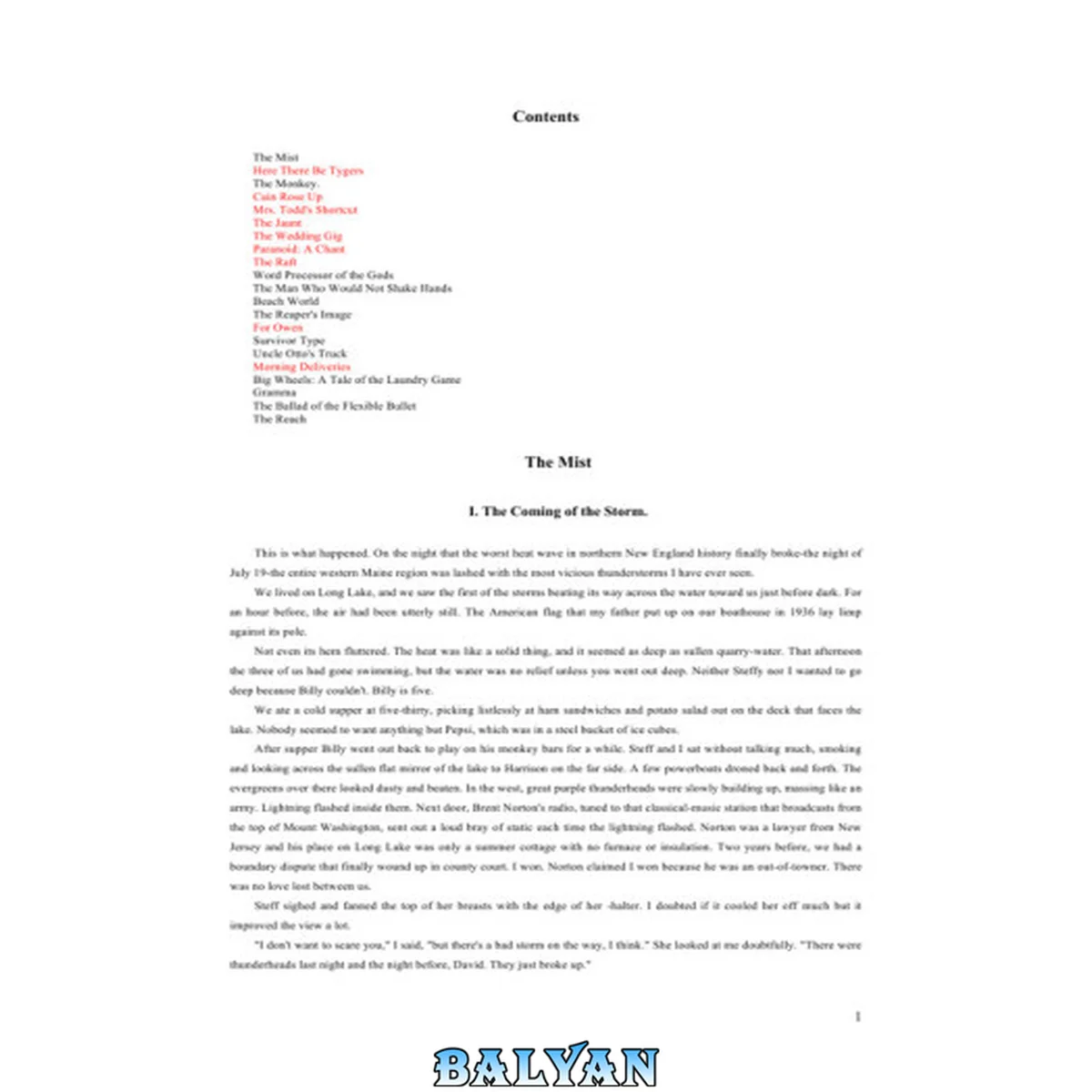
معرفی کتاب «Skeleton Crew» نوشتهٔ Robert Higgins، Jennifer Koski، King, Stephen و KING, STEPHEN، منتشرشده توسط نشر 2011 در سال 2011. این کتاب در فرمت epub، زبان انگلیسی ارائه شده است.
Like its predecessors, the thirteenth edition of Analysis for Financial Management is for nonfinancial executives and business students interested in the practice of financial management. It introduces standard techniques and recent advances in a practical, intuitive way. This product assumes no prior background beyond a rudimentary and perhaps rusty familiarity with financial statements—although a healthy curiosity about what makes business tick is also useful. The emphasis throughout is on the managerial implications of financial analysis.Analysis for Financial Management should prove valuable to individuals interested in sharpening their managerial skills and to executive program participants. This product has also found a home in university classrooms as the sole text in Executive MBA and applied finance courses, as a companion text in case-oriented courses, and as a supplementary reading in more theoretical courses. Cover Analysis for Financial Management Dedication Brief Contents Contents Preface Part One: Assessing the Financial Health of the Firm Chapter 1: Interpreting Financial Statements The Cash Flow Cycle Overview of Financial Statements The Balance Sheet Current Assets and Liabilities Shareholders' Equity The Income Statement Measuring Earnings Sources and Uses Statements The Two-Finger Approach The Cash Flow Statement Financial Statements and the Value Problem Market Value vs. Book Value Economic Income vs. Accounting Income Imputed Costs Summary Additional Resources Problems Chapter 2: Evaluating Financial Performance The Levers of Financial Performance Return on Equity The Three Determinants of ROE The Profit Margin Asset Turnover Financial Leverage Is ROE a Reliable Financial Yardstick? The Timing Problem The Risk Problem The Value Problem ROE or Market Price? Ratio Analysis Using Ratios Effectively Ratio Analysis of Polaris Inc. Summary Additional Resources Problems Part Two: Planning Future Financial Performance Chapter 3: Financial Forecasting Pro Forma Statements Percent-of-Sales Forecasting Interest Expense Seasonality Pro Forma Statements and Financial Planning Forecasting with Spreadsheets Coping with Uncertainty Sensitivity Analysis Scenario Analysis Simulation Cash Flow Forecasts Cash Budgets The Techniques Compared Summary Additional Resources Problems Chapter 4: Managing Growth Sustainable Growth The Sustainable Growth Equation Too Much Growth Balanced Growth DLH Holdings' Sustainable Growth Rate ÒWhat IfÓ Questions What to Do When Actual Growth Exceeds Sustainable Growth Sell New Equity Increase Leverage Reduce the Payout Ratio Profitable Pruning Outsourcing Pricing Is Merger the Answer? Too Little Growth What to Do When Sustainable Growth Exceeds Actual Growth Ignore the Problem Return the Money to Shareholders Buy Growth Sustainable Growth and Pro Forma Forecasts New Equity Financing Why Don't U.S. Corporations Issue More Equity? Summary Additional Resources Problems Part Three: Financing Operations Chapter 5: Financial Instruments and Markets Financial Instruments Bonds Common Stock Preferred Stock Financial Markets Venture Capital Financing Private Equity Initial Public Offerings Seasoned Issues Issue Costs Efficient Markets What Is an Efficient Market? Implications of Efficiency Appendix: Using Derivatives to Manage Risks Forward Markets Hedging with Forward Contracts Hedging with Futures Contracts Types of Forwards and Futures Hedging with Swaps Interest Rate Swaps Currency Swaps Hedging with Options Limitations of Financial Market Hedging Valuing Options Summary Additional Resources Problems Chapter 6: The Financing Decision Financial Leverage Measuring the Effects of Leverage on a Business Leverage and Risk Leverage and Earnings How Much to Borrow Irrelevance Tax Benefits Distress Costs Flexibility Market Signaling Management Incentives The Financing Decision and Growth Selecting a Maturity Structure Inflation and Financing Strategy Appendix: The Irrelevance Proposition No Taxes Taxes Summary Additional Resources Problems Part Four: Evaluating Investment Opportunities Chapter 7: Discounted Cash Flow Techniques Figures of Merit The Payback Period and the Accounting Rate of Return The Time Value of Money Equivalence The Net Present Value The Benefit-Cost Ratio The Internal Rate of Return Uneven Cash Flows A Few Applications and Extensions Mutually Exclusive Alternatives and Capital Rationing The IRR in Perspective Determining the Relevant Cash Flows Depreciation Working Capital and Spontaneous Sources Sunk Costs Allocated Costs Cannibalization Excess Capacity Financing Costs Appendix: Mutually Exclusive Alternatives and Capital Rationing What Happened to the Other $578,000? Unequal Lives Capital Rationing The Problem of Future Opportunities A Decision Tree Summary Additional Resources Problems Chapter 8: Risk Analysis in Investment Decisions Risk Defined Risk and Diversification Estimating Investment Risk Three Techniques for Estimating Investment Risk Including Risk in Investment Evaluation Risk-Adjusted Discount Rates The Cost of Capital The Cost of Capital Defined The Cost of Capital for Polaris The Cost of Capital in Investment Appraisal Multiple Hurdle Rates Four Pitfalls in the Use of Discounted Cash Flow Techniques The Enterprise Perspective vs. the Equity Perspective Inflation Real Options Excessive Risk Adjustment A Cautionary Note Appendix: Asset Beta and Adjusted Present Value Calculating Asset Beta Using Asset Beta to Estimate Equity Beta Asset Beta and Adjusted Present Value Summary Additional Resources Problems Chapter 9: Business Valuation and Corporate Restructuring Valuing a Business Assets or Equity? Dead or Alive? Minority Interest or Control? Discounted Cash Flow Valuation Free Cash Flow The Terminal Value A Numerical Example Problems with Present Value Approaches to Valuation Valuation Based on Comparable Trades Lack of Marketability The Market for Control The Premium for Control Financial Reasons for Restructuring The Empirical Evidence The LinkedIn Buyout Appendix: The Venture Capital Method of Valuation The Venture Capital Method-One Financing Round The Venture Capital Method-Multiple Financing Rounds Why Do Venture Capitalists Demand Such High Returns? Summary Additional Resources Problems Glossary Suggested Answers to Odd-Numbered Problems Index
دانلود کتاب Skeleton Crew