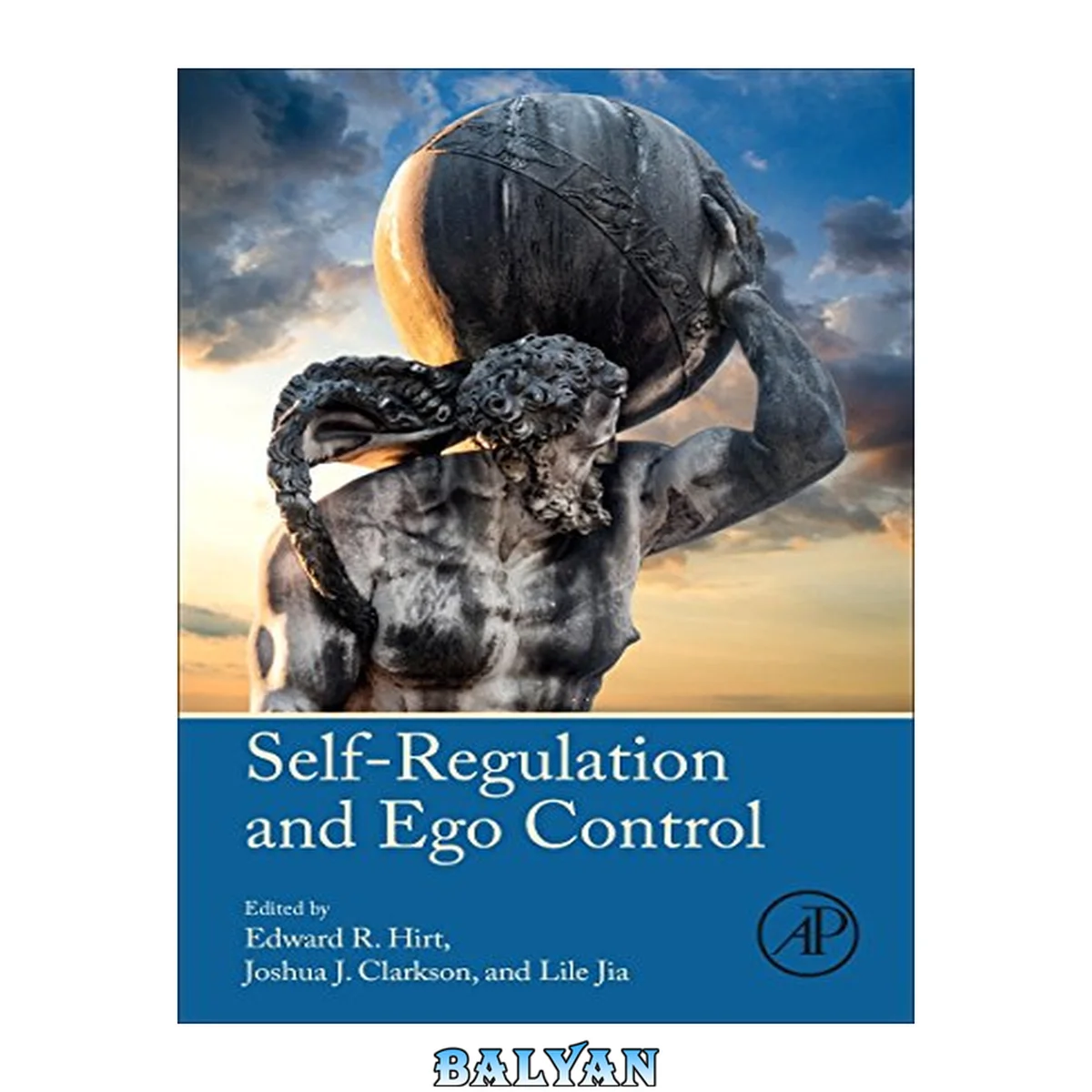
معرفی کتاب «Self-Regulation and Ego Control» نوشتهٔ Ludwig B. Chincarini، Daehwan Kim و Edward R. Hirt, Joshua John Clarkson, Lile Jia، منتشرشده توسط نشر Academic Press در سال 2016. این کتاب در فرمت pdf، زبان انگلیسی ارائه شده است.
__Self-Regulation and Ego Control__ examines the physiological effects of depletion, the effects of psychological variables in self-control depletion effects, the role of motivational and goal states on self-control depletion effects, and a number of cognitive perspectives on self-control exertion. This insightful book begins with an introduction of self-control theories, ego depletion phenomena, and experimental examples of research in self-control, and concludes by delineating more inclusive and comprehensive models of self-regulation that can account for the full spectrum of findings from current research. In recent years, researchers have had difficulty identifying the underlying resources responsible for depletion effects. Moreover, further research has identified several psychological and motivational factors that can ameliorate depletion effects. These findings have led many to question assumptions of the dominant strength model and suggest that capacity limitations alone cannot account for the observed effects of depletion. __Self-Regulation and Ego Control__ facilitates discourse across researchers from different ideological camps and advances more integrated views of self-regulation based on this research. * Covers the neuropsychological evidence for depletion effects, highlighting the roles of reward, valuation, and control in self-regulation * Reviews the roles of willpower, expectancies of mental energy change, and individual differences in the modulation of self-control exertion * Highlights the effects of various states such as positive mood, power, implementation intentions, mindfulness, and social rejection as moderators of depletion * Provides clarification of the distinctions between self-control in the context of goal-directed behavior versus related terms like self-regulation, executive control, and inhibition * Details the overlap between mental and physical depletion, and the potential interplay and substitutability of resources * Challenges the view that depletion reflects capacity limitations and includes newer models that take a more motivational account of resource allocation * Facilitates discourse across researchers from different ideological camps within the field. * Informs and enriches future research and advances more integrated views of self-regulation Content: Dedication,Front Matter,Copyright,List of Contributors,PrefaceEntitled to full textChapter 1 - Limited Resources for Self-Regulation: A Current Overview of the Strength Model, Pages 1-17, R.F. Baumeister Chapter 2 - Moderators of the Ego Depletion Effect, Pages 21-42, D.D. Loschelder, M. Friese Chapter 3 - Decoupling Goal Striving From Resource Depletion by Forming Implementation Intentions, Pages 43-65, F. Wieber, P.M. Gollwitzer Chapter 4 - On Enhancing and Diminishing Energy Through Psychological Means: Research on Vitality and Depletion From Self-Determination Theory, Pages 67-85, F. Martela, C.R. DeHaan, R.M. Ryan Chapter 5 - What Does Ego-Depletion Research Reveal About Self-Control? A Conceptual Analysis, Pages 87-108, J.J. Carnevale, K. Fujita Chapter 6 - Exercising Self-Control Increases Approach-Motivated Impulse Strength, Pages 111-124, B.J. Schmeichel, A. Crowell Chapter 7 - Self-Control and Motivation: Integration and Application, Pages 125-141, B.C. Ampel, E.E. O’Malley, M. Muraven Chapter 8 - Motivational Tuning in Response to Ego Depletion, Pages 143-164, L. Jia, R. Yu, E.R. Hirt, A. Fishbach Chapter 9 - Taming the Impulsive Beast: Understanding the Link Between Self-Regulation and Aggression, Pages 165-181, C.N. DeWall, D.S. Chester Chapter 10 - Perceived Mental Fatigue and Self-Control, Pages 185-202, J.J. Clarkson, A.S. Otto, R. Hassey, E.R. Hirt Chapter 11 - Implicit Theories About Willpower, Pages 203-225, V. Job Chapter 12 - Restoration Effects Following Depletion: Adventures in the Uncanny Resilience of Man, Pages 227-251, E.R. Hirt, J.J. Clarkson, P.M. Egan, J.R. Eyink Chapter 13 - Valuation as a Mechanism of Self-Control and Ego Depletion, Pages 255-279, E.T. Berkman, L.E. Kahn, J.L. Livingston Chapter 14 - What Can Cognitive Neuroscience Tell Us About the Mechanism of Ego Depletion?, Pages 281-300, D.D. Wagner, T.F. Heatherton Chapter 15 - Cognitive Control Processes Underlying Individual Differences in Self-Control, Pages 301-324, B.M. Wilkowski, M.D. Robinson Chapter 16 - Linking Diverse Resources to Action Control, Pages 325-346, E.J. Masicampo, M.L. Slepian Chapter 17 - On the Relation Between “Mental” and “Physical” Self-Control, Pages 347-370, P.M. Egan, E.R. Hirt Chapter 18 - Proximate and Ultimate Causes of Ego Depletion, Pages 373-398, Z.L. Francis, M. Inzlicht Chapter 19 - How Depletion Operates in an Integrative Theory of Self-Control, Pages 399-423, H.P. Kotabe, W. Hofmann Chapter 20 - Understanding Self-Regulation Failure: A Motivated Effort-Allocation Account, Pages 425-459, D.C. Molden, C.M. Hui, A.A. Scholer Index, Pages 461-470
Self-Regulation and Ego Control examines the physiological effects of depletion, the effects of psychological variables in self-control depletion effects, the role of motivational and goal states on self-control depletion effects, and a number of cognitive perspectives on self-control exertion. This insightful book begins with an introduction of self-control theories, ego depletion phenomena, and experimental examples of research in self-control, and concludes by delineating more inclusive and comprehensive models of self-regulation that can account for the full spectrum of findings from current research.
In recent years, researchers have had difficulty identifying the underlying resources responsible for depletion effects. Moreover, further research has identified several psychological and motivational factors that can ameliorate depletion effects. These findings have led many to question assumptions of the dominant strength model and suggest that capacity limitations alone cannot account for the observed effects of depletion. Self-Regulation and Ego Control facilitates discourse across researchers from different ideological camps and advances more integrated views of self-regulation based on this research.
- Covers the neuropsychological evidence for depletion effects, highlighting the roles of reward, valuation, and control in self-regulation
- Reviews the roles of willpower, expectancies of mental energy change, and individual differences in the modulation of self-control exertion
- Highlights the effects of various states such as positive mood, power, implementation intentions, mindfulness, and social rejection as moderators of depletion
- Provides clarification of the distinctions between self-control in the context of goal-directed behavior versus related terms like self-regulation, executive control, and inhibition
- Details the overlap between mental and physical depletion, and the potential interplay and substitutability of resources
- Challenges the view that depletion reflects capacity limitations and includes newer models that take a more motivational account of resource allocation
- Facilitates discourse across researchers from different ideological camps within the field.
- Informs and enriches future research and advances more integrated views of self-regulation