Rock Art, Water, and Ancestors: The semiotic construction of a sacred landscape in the central Andes (1800 BCE - CE 1820) (2969) (BAR International)
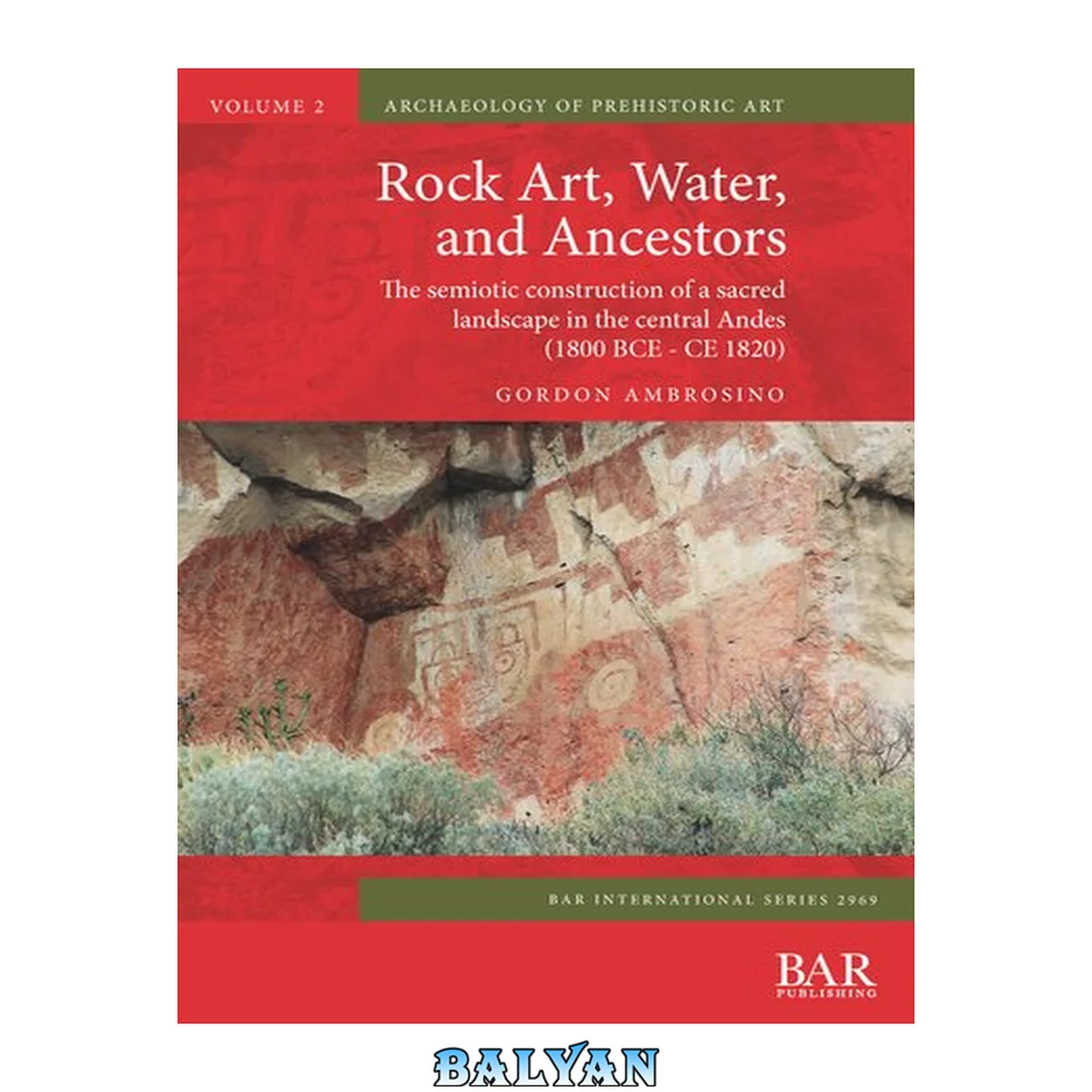
معرفی کتاب «Rock Art, Water, and Ancestors: The semiotic construction of a sacred landscape in the central Andes (1800 BCE - CE 1820) (2969) (BAR International)» نوشتهٔ Ambrosino, Gordon، منتشرشده توسط نشر BaR Publishing. این کتاب در فرمت pdf، زبان انگلیسی ارائه شده است.
As landscape art, the rock art of the central Andes offers clues regarding relationships between ancestor veneration and the negotiation of rights to water. To understand these relationships this book focuses on a large complement of rock art situated in highland Ancash, Peru, (3400 - 4250 m.a.s.l.). Regional survey excavation data from key rock art sites are synthesised to identify diachronic changes in imagery, production techniques and location, and to develop a typology and a spatio-temporal map for the rock art of the region that spans nearly 4,000 years (1800 BCE - CE 1820). These data are paired with 17th century Spanish Colonial accounts to trace back in time when specific, named groups socialised this landscape. A semiotic model, informed by interdisciplinary approaches, is applied to answer questions regarding the agency of these rock art places in socialising the land through establishing ancestral relations to water and rock features. Front Cover Contents List of Figures List of Tables List of Maps List of Graphs Chapter 1: Introduction and Setting Research Problems, Objectives and Questions Highland Landscapes in the Central Andes The Fortaleza Ignimbrite The Ethnohistory of the Cordillera Negra The Visits of Friar Rodrigo Hernández Príncipe (1621–1622) (1658) The Ceremonial Cycles of the Cordillera Negra Archaeology in the Fortaleza Ignimbrite The Excavation Sites Pallauta (3455 m.a.s.l) Hatun Machay (4259 m.a.s.l) Shacsha Machay (4224 m.a.s.l.) Diablo Retrato (4087 m.a.s.l.) Cosmology, Art, Social Life and Practice in the Ancient Andes The Andean World: Dualism, Reciprocity and Pacha8 Camac: Embodiment and Animism in the Andes Ancestors, Economy and Politics in the Andes Ceremony and Pilgrimage in the Andes Issues Regarding the Cultural Chronologies of the Central Andes Chapter Summary and Outlook Chapter 2: A Semiotic Model for Cultural Landscapes Archaeology and Landscape Research Archaeology and Rock Art Research Rock Art Research in the Central Andes Semiotics in Rock Art and Landscape Research Cultural Semiotics: Ferdinand de Saussure and Charles Sanders Peirce Semiotics in Landscape Archaeology and Rock Art Research Agency Studies and Rock Art Research Modeling Agency: Individuals, Relationships and Objects A Semiotic Model for Rock Art and Cultural Landscapes Firstness: Natural, Physical Realities—Rock, Sky and Water Secondness: Embodied Practices—Identity, Memory and Territory The Construction of Social Landscapes Chapter 3: Field Methods and Results Regional Survey of the FI Regional Survey Results Typology Documenting the FI’s Rock Art Documentation Results Excavations at the FI Pallauta Hatun Machay Shacsha Machay Diablo Retrato Conclusions: The Occupational Phases of the Fortaleza Ignimbrite Chapter 4: Rock Art and the Socialization of Highland Landscapes in the Central Andes A Typology for the Rock Art of the Fortaleza Ignimbrite The Petroglyph Art of the Fortaleza Ignimbrite The Incising Tradition Kiñan Tanka31 Hatun Machay SH-A-B1 Shacsha Machay, Panel 2 Shacsha Machay, Panel 1 Diablo Retrato, Panel 1 The Gouging Tradition The Gouging Tradition, Style I The Gouging Tradition, Style II The Abrading Tradition The Abrading Tradition, Style I The Abrading Traditon, Style II The Pictograph Art of the Fortaleza Ignimbrite37 Shacsha Machay Style I SH-A-B2 Shacsha Machay Style II Inca Huangaran Pictograph Style (1500–1200 BCE) Fortaleza Pictograph Style The Hatun Machay Colonial Pictograph Style Rock Art and the Semiotic Construction of the Fortaleza Ignimbrite The Incising Tradition The Gouging Tradition The Abrading Tradition The Fortaleza Pictograph Style40 Conclusion Chapter 5: Discussion: The Semiotic Construction of the Fortaleza Ignimbrite Rock Art and the FI in the Incising Tradition Rock Art and the FI in the Gouging Tradition Rock Art and the FI in the Abrading Tradition Rock Art and the FI in the Fortaleza Pictograph Style Palimpsest Rock Art and the Semiotic Construction of the FI Kiñan Tanka Hatun Machay Shacsha Machay Diablo Retrato Chapter 6: Conclusions Outlook for Future Research Appendix A Introduction Hatun Machay Hatun Machay Feature Descriptions Non-geolocated Features of Hatun Machay Shacsha Machay Shacsha Machay Feature Descriptions Cerro Capira Cerro Capira Feature Descriptions Cerro Juamarquin Cerro Juamarquin Feature Descriptions Cerro Allallashpunta Archaeological Features of Cerro Allallashpunta Non-geolocated Features of Cerro Allallashpunta Cerro Incahuangaran Archaeological Features of Cerro Incahuangaran Cerro Currumarca Archaeological Features of Cerro Currumarca Cerro Racpimarca Archaeological Features of Cerro Racpimarca Non-geolocated Features of Cero Racpimarca Cerro Pauranpunta Archaeological Features of Cerro Pauranpunta Non-geolocated Features of Cerro Pauranpunta Cerro Tapiac Archaeological Features of Cerro Tapiac Non-geolocated Features of Cerro Tapiac Full list of geolocated features of the Fortaleza Ignimbrite Appendix B1: Catalogue of Rock Art Images of the Fortaleza Ignimbrite Introduction 1-Horn and 2-Horn Motifs on the FI. “Arc” motifs “Wambra Ila” Bird motifs “Bar” Motif “Block” Motif “Camelids” Motif “Church” Motif “Circle and Dot” Motif Cupules “Face” Motifs (“Circular Face”, “Square Face” and “V-Face”) “Monkey” and “Feline” Motifs “Torso-Less” Anthropomorph and “Feet” Motifs “Red Blobs” “Ring” Motif “Shell Head” Motif “Snake Emerging From Rock” Motif “Serpent” Appendix B2: Digital, Vector renderings of select rock art images and panels of the Fortaleza Ignimbrite Diablo Retrato Shacsha Machay Hatun Machay Bibliography Back Cover
دانلود کتاب Rock Art, Water, and Ancestors: The semiotic construction of a sacred landscape in the central Andes (1800 BCE - CE 1820) (2969) (BAR International)