Revolutionary Constitutions : Charismatic Leadership and the Rule of Law
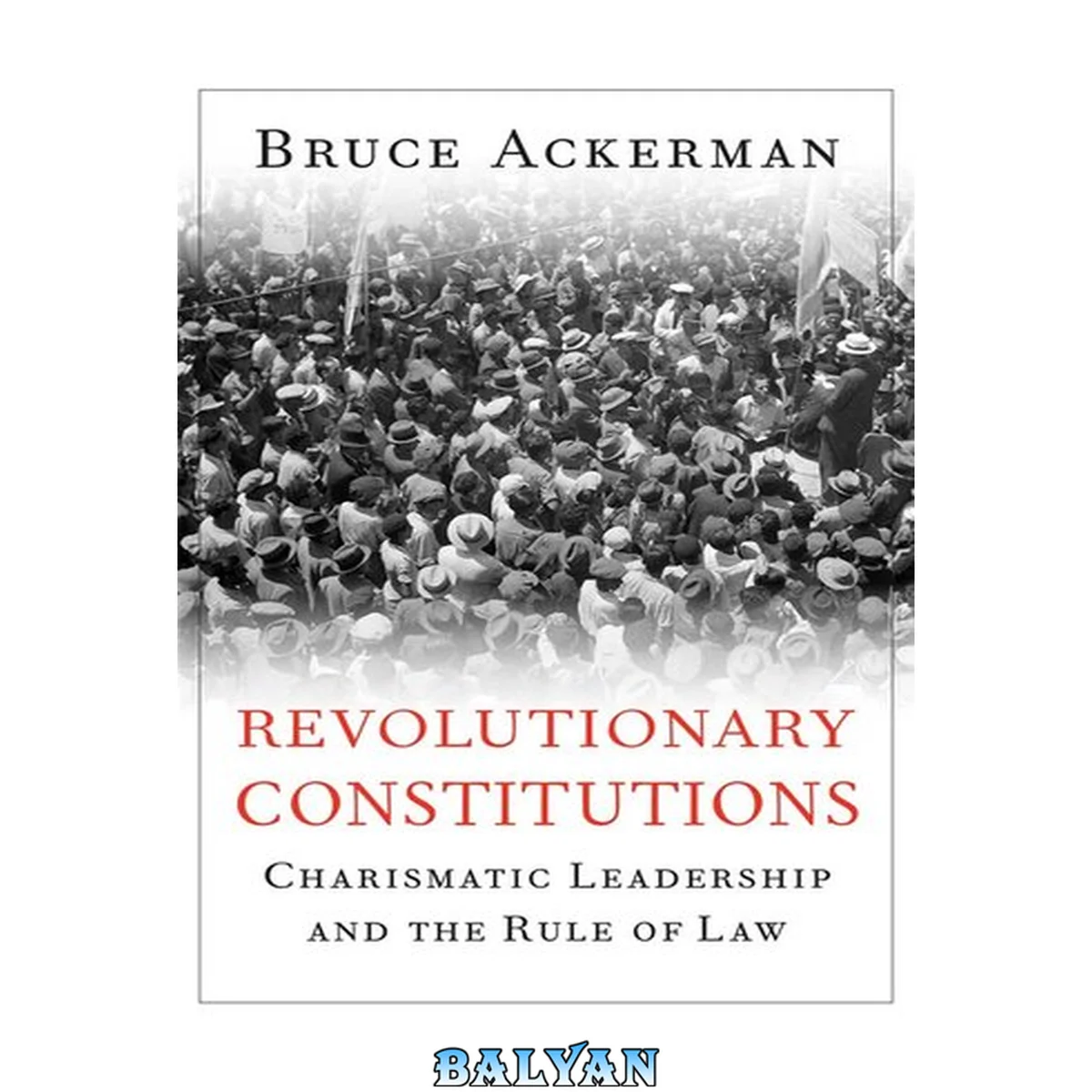
معرفی کتاب «Revolutionary Constitutions : Charismatic Leadership and the Rule of Law» نوشتهٔ Gordon Ramsay و Bruce A. Ackerman، منتشرشده توسط نشر Belknap Press: An Imprint of Harvard University Press در سال 2019. این کتاب در فرمت pdf، زبان انگلیسی ارائه شده است.
Populism is a threat to the democratic world, fuel for demagogues and reactionary crowds―or so its critics would have us believe. But in his award-winning trilogy We the People, Bruce Ackerman showed that Americans have repeatedly rejected this view. Now he draws on a quarter century of scholarship in this essential and surprising inquiry into the origins, successes, and threats to revolutionary constitutionalism around the world. He takes us to India, South Africa, Italy, France, Poland, Burma, Israel, and Iran and provides a blow-by-blow account of the tribulations that confronted popular movements in their insurgent campaigns for constitutional democracy. Despite their many differences, populist leaders such as Nehru, Mandela, and de Gaulle encountered similar dilemmas at critical turning points, and each managed something overlooked but essential. Rather than deploy their charismatic leadership to retain power, they instead used it to confer legitimacy to the citizens and institutions of constitutional democracy. Ackerman returns to the United States in his last chapter to provide new insights into the Founders’ acts of constitutional statesmanship as they met very similar challenges to those confronting populist leaders today. In the age of Trump, the democratic system of checks and balances will not survive unless ordinary citizens rally to its defense. Revolutionary Constitutions shows how activists can learn from their predecessors’ successes and profit from their mistakes, and sets up Ackerman’s next volume, which will address how elites and insiders co-opt and destroy the momentum of revolutionary movements. Reviewed in The Economist December 14, 2020 A robust defense of democratic populism by one of America's most renowned and controversial constitutional scholars—the award-winning author of We the People . Populism is a threat to the democratic world, fuel for demagogues and reactionary crowds—or so its critics would have us believe. But in his award-winning trilogy We the People , Bruce Ackerman showed that Americans have repeatedly rejected this view. Now he draws on a quarter century of scholarship in this essential and surprising inquiry into the origins, successes, and threats to revolutionary constitutionalism around the world. He takes us to India, South Africa, Italy, France, Poland, Burma, Israel, and Iran and provides a blow-by-blow account of the tribulations that confronted popular movements in their insurgent campaigns for constitutional democracy. Despite their many differences, populist leaders such as Nehru, Mandela, and de Gaulle encountered similar dilemmas at critical turning points, and each managed something overlooked but essential. Rather than deploy their charismatic leadership to retain power, they instead used it to confer legitimacy to the citizens and institutions of constitutional democracy. Ackerman returns to the United States in his last chapter to provide new insights into the Founders' acts of constitutional statesmanship as they met very similar challenges to those confronting populist leaders today. In the age of Trump, the democratic system of checks and balances will not survive unless ordinary citizens rally to its defense. Revolutionary Constitutions shows how activists can learn from their predecessors' successes and profit from their mistakes, and sets up Ackerman's next volume, which will address how elites and insiders co-opt and destroy the momentum of revolutionary movements. "Populism is a threat to the democratic world, fuel for demagogues and reactionary crowds--or so its critics would have us believe. But in his award-winning trilogy We the People, Bruce Ackerman showed that Americans have repeatedly rejected this view. Now he draws on a quarter century of scholarship in this essential and surprising inquiry into the origins, successes, and threats to revolutionary constitutionalism around the world. He takes us to India, South Africa, Italy, France, Poland, Burma, Israel, and Iran and provides a blow-by-blow account of the tribulations that confronted popular movements in their insurgent campaigns for constitutional democracy. Despite their many differences, populist leaders such as Nehru, Mandela, and de Gaulle encountered similar dilemmas at critical turning points, and each managed something overlooked but essential. Rather than deploy their charismatic leadership to retain power, they instead used it to confer legitimacy to the citizens and institutions of constitutional democracy. Ackerman returns to the United States in his last chapter to provide new insights into the Founders' acts of constitutional statesmanship as they met very similar challenges to those confronting populist leaders today. In the age of Trump, the democratic system of checks and balances will not survive unless ordinary citizens rally to its defense. Revolutionary Constitutions shows how activists can learn from their predecessors' successes and profit from their mistakes, and sets up the next volume in Ackerman's distinguished multivolume work, which will address how elites and insiders coopt and destroy the momentum of revolutionary movements"--Provided by publisher Populism is a threat to the democratic world, fuel for demagogues and reactionary crowds--or so its critics would have us believe. But in his award-winning trilogy We the People, Bruce Ackerman showed that Americans have repeatedly rejected this view. Now he draws on a quarter century of scholarship in this essential and surprising inquiry into the origins, successes, and threats to revolutionary constitutionalism around the world. He takes us to India, South Africa, Italy, France, Poland, Burma, Israel, and Iran and provides a blow-by-blow account of the tribulations that confronted popular movements in their insurgent campaigns for constitutional democracy. Despite their many differences, populist leaders such as Nehru, Mandela, and de Gaulle encountered similar dilemmas at critical turning points, and each managed something overlooked but essential. Rather than deploy their charismatic leadership to retain power, they instead used it to confer legitimacy to the citizens and institutions of constitutional democracy. Ackerman returns to the United States in his last chapter to provide new insights into the Founders' acts of constitutional statesmanship as they met very similar challenges to those confronting populist leaders today. In the age of Trump, the democratic system of checks and balances will not survive unless ordinary citizens rally to its defense. Revolutionary Constitutions shows how activists can learn from their predecessors' successes and profit from their mistakes, and sets up the next volume in Ackerman's distinguished multivolume work, which will address how elites and insiders coopt and destroy the momentum of revolutionary movements.-- Provided by publisher "Populism is a threat to the democratic world, fuel for demagogues and reactionary crowds--or so its critics would have us believe. But in his award-winning trilogy We the People, Bruce Ackerman showed that Americans have repeatedly rejected this view. Now he draws on a quarter century of scholarship in this essential and surprising inquiry into the origins, successes, and threats to revolutionary constitutionalism around the world. He takes us to India, South Africa, Italy, France, Poland, Burma, Israel, and Iran and provides a blow-by-blow account of the tribulations that confronted popular movements in their insurgent campaigns for constitutional democracy. Despite their many differences, populist leaders such as Nehru, Mandela, and de Gaulle encountered similar dilemmas at critical turning points, and each managed something overlooked but essential. Rather than deploy their charismatic leadership to retain power, they instead used it to confer legitimacy to the citizens and institutions of constitutional democracy. Ackerman returns to the United States in his last chapter to provide new insights into the Founders' acts of constitutional statesmanship as they met very similar challenges to those confronting populist leaders today. In the age of Trump, the democratic system of checks and balances will not survive unless ordinary citizens rally to its defense. Revolutionary Constitutions shows how activists can learn from their predecessors' successes and profit from their mistakes, and sets up the next volume in Ackerman's distinguished multivolume work, which will address how elites and insiders coopt and destroy the momentum of revolutionary movements"--Résumé de l'éditeur Cover Title Page Copyright Dedication Contents Introduction: Pathways Part One: Constitutional Revolutions 1. Constitutionalizing Revolution? 2. Movement-Party Constitutionalism: India 3. Struggling for Supremacy: South Africa 4. From the French Resistance to the Fourth Republic 5. Constitutional Revolution in Italy 6. A Progress Report? Part Two: Elaborations 7. De Gaulle’s Republic: The Outsider Returns 8. Reconstructing the Fifth Republic 9. Solidarity’s Triumph in Poland 10. Solidarity’s Collapse: The Perils of Presidentialism 11. The Race against Time: Burma and Israel 12. Constitutionalizing Charisma in Iran 13 American Exceptionalism? Notes Acknowledgments Index Offering Insights Into The Origins, Successes, And Threats To Revolutionary Constitutionalism, Bruce Ackerman Takes Us To India, South Africa, Italy, France, Poland, Burma, Israel, Iran, And The U.s. And Provides A Blow-by-blow Account Of The Tribulations That Confronted Popular Movements In Their Insurgent Campaigns For Constitutional Democracy.
دانلود کتاب Revolutionary Constitutions : Charismatic Leadership and the Rule of Law