REVOLUTIONARY CONSTITUTIONALISM : law, legitimacy, power;law, legitimacy, power
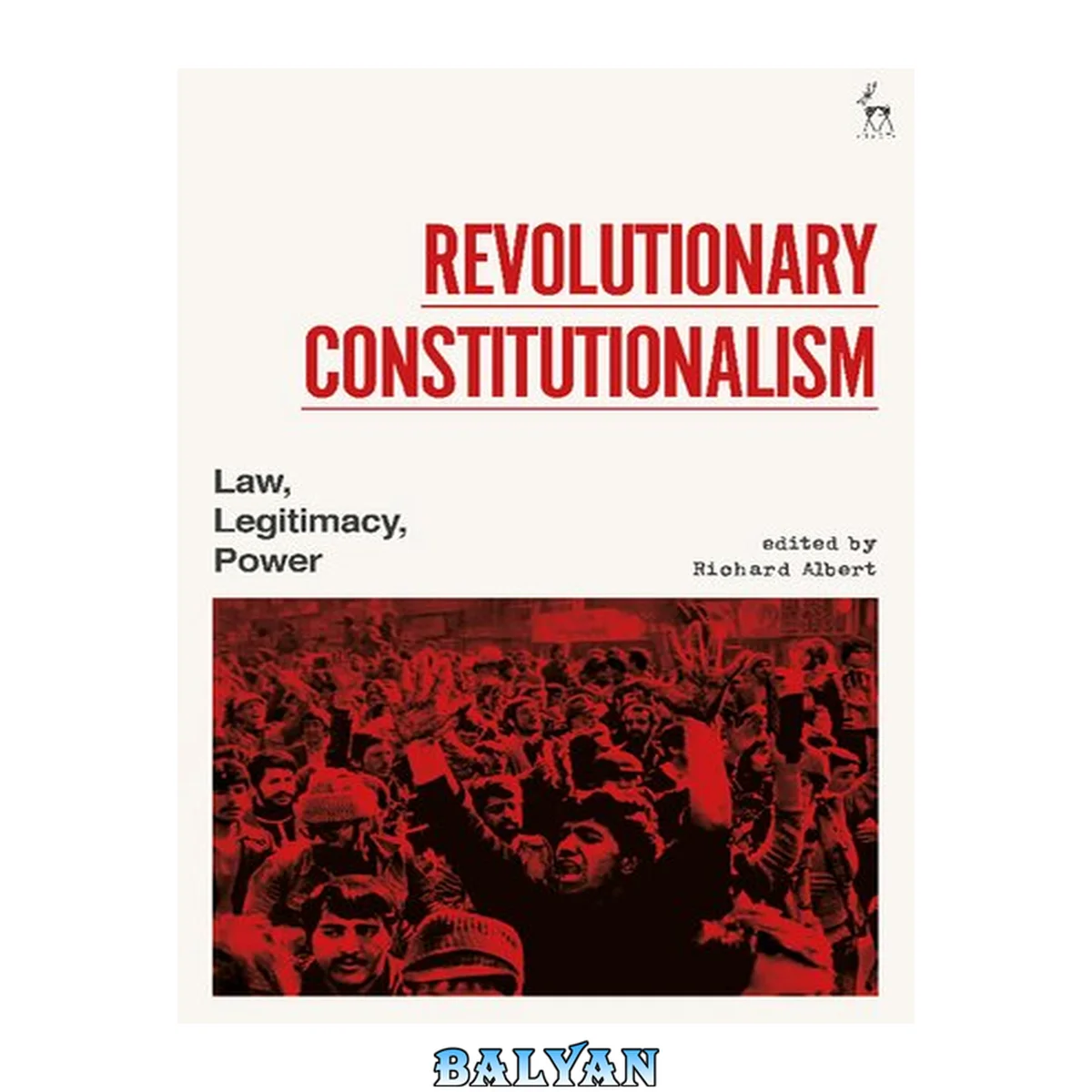
معرفی کتاب «REVOLUTIONARY CONSTITUTIONALISM : law, legitimacy, power;law, legitimacy, power» نوشتهٔ Albert, Richard (editor)، منتشرشده توسط نشر Beck/Hart Publishing در سال 2020. این کتاب در فرمت pdf، زبان انگلیسی ارائه شده است.
This book, the result of a major international conference held at Yale Law School, contains contributions from leading scholars in public law who engage critically with Bruce Ackerman's path-breaking book, Revolutionary Constitutions: Charismatic Leadership and the Rule of Law . The book also features a rebuttal chapter by Ackerman in which he responds directly to the contributors' essays. Some advance Ackerman's theory, others attack it, and still others refine it – but all agree that the ideas in his book reset the terms of debate on the most important subjects in constitutionalism today: from the promise and perils of populism to the causes and consequences of democratic backsliding, from the optimal models of constitutional design to the forms and limits of constitutional amendment, and from the role of courts in politics to how we identify when the mythical 'people' have spoken. A must-read for all interested in the current state of constitutionalism. Table Of Contents Notes on Contributors Introduction: A Global Tour of Constitutionalism A Celebration and a Challenge In this Volume A Word of Thanks 1. A Political, not a Legal History of the Rise of Worldwide Constitutionalism PART I: THE LEGITIMATING FOUNDATIONS OF REVOLUTIONARY CONSTITUTIONALISM 2. A Defence of Non-representational Constitutionalism: Why Constitutions Need not be Representational I. Introduction II. The Representational and the Reason-Based Modes of Legitimation III. Illustrations: Germany and Israel 3. Constitutionalism and Society: Ackerman on Worldwide Constitution-Makingand the Role of Social Forces I. Republican Narratives II. Constitutions at the Level of Society III. Systems of Government IV. A Darker Future? 4. Bruce Ackerman's Theory of History I. Introduction II. Constitutionalism's Different Pathways III. Descriptive Problems IV. A Procrustean Approach? V. Which Theory of History? VI. From 'We the People' to 'We the Judges' VII. The Normalisation of Domination 5. Constitutionalism and the Predicament of Postcolonial Independence I. Introduction II. The Spectre of Neo-colonialism and the Turn to Centralised Authority III. Who are the 'People' of the Postcolonial State? IV. Conclusion 6. Revolution on a Human Scale: Liberal Values, Populist Theory? I. Introduction II. Defining Revolution III. Subsuming Cases: Israel and Iran IV. Intermediate Theoretical Reflections V. Poland and South Africa VI. The Exception Revisited VII. Constitution-Making under Occupation PART II: CONSTITUTIONAL EVOLUTIONS AND TRANSFORMATIONS 7. Charismatic Fictions and Constitutional Politics I. Three Paths? II. On Charisma and Constitutions III. Italy IV. Myanmar V. Gaullism VI. Quibbles and Bits VII. Conclusion 8. Uncharismatic Revolutionary Constitutionalism I. Two Types of Revolutionary Constitutionalism II. Charisma and Constitutionalism III. Judicial Supremacy? IV. Conclusion 9. Unconventional Adaptation and the Authenticity of the Constitution I. Varieties of Unconventional Adaptation II. Authenticity and the Constitution III. Conclusion 10. Constitutional Revolution, Legal Positivism and Constituent Power I. Constitutional Revolution and Legal Positivism II. Rousseau's Lawgiver and Constitutional Revolution III. Conclusion 11. The Traditions of Constitutional Change I. Introduction: Constitutionalism and Constitutional Change II. The Revolutionary Tradition in France III. The Establishmentarian Tradition in Great Britain IV. The Elite Tradition in Japan V. A Hybrid Tradition in Canada? VI. Conclusion: A Constructive Complication PART III: THE FUTURE OF EUROPE 12. Constitutional CrossroadsA View from Europe I. Introduction: Temporal and Conceptual Crossroads II. The UK and the Limits of Pragmatic Adaptation III. The EU and the Limits of Elite Construction IV. At the Crossroads: Towards Managed Revolution? 13. How Europe Brought JudicialReview to France: A Response to Bruce Ackerman I. Introduction II. The Fourth Republic’s Stalemate: International Treaties, Domestic Law and Judicial Review III. The Fifth Republic Meets the European Community IV. The French Tribunals React to European Law V. Conventionnalite versus Constitutionnalité:A Rose by Any Other Name ... VI. What’s Sauce for Europe ... VII. Conclusion 14. Constituting the Judiciary, Constituting Europe I. Introduction II. The European Judicial Appointment Reforms III. Why Think of these Reforms as Constitutional Interventions? IV. Ackerman's Constitutional Perspective V. Value Added PART IV: THE LAW AND POLITICS OF REVOLUTION 15. Sustaining Revolutionary Constitutions: From Movement Party to Movement Court I. Introduction II. Aims and Structure of the Chapter III. What is the Ackermanian Method? IV. India’s Movement Party V. The Movement Court and the Consolidation of Constitutionalism 16. The Italian Constitution as a Revolutionary Agreement I. Introduction II. Revolution and Constitution: A Multi-faceted Relationship III. The Meandering Implementation of the Constitution IV. Difficult Consolidation V. A Revolutionary Agreement 17. Constitutional Strateg yfor a Polarised Society: Learning from Poland’s Post-revolutionary Misfortunes I. Constitutional Challenges of a Polarised Society II. Polarised Society: A Case Study III. Polarised Society and Revolutionary Struggle IV. Constitutional Opportunity V. Constitutional Ethics in a Polarised Society VI. Avoiding the Authoritarian Equilibrium VII. Presidential and Parliamentary Polarised Republics VIII. The Overlooked Solution IX. The Federalist Imagination 18. Choosing to Have Had a Revolution Lessons from South Africa’s Undecided Constitutionalism I. Introduction II. An Undecided Revolution: A Summary of the Argument III. A Concluding Thought: What Legal Revolution Looks Like 19. The Race against Time I. Never Again II. Revolutionary Failures III. Broader Perspectives IV. Fundamental Critiques Index "Bruce Ackerman's path-breaking book on Revolutionary Constitutions: Charismatic Leadership and the Rule of Law puts him at the centre of the major subjects in public law today. From the promise and perils of populism to the causes and consequences of democratic backsliding, from the optimal models of constitutional design to the forms and limits of constitutional amendment, and from the role of courts in constitutional democracy to how we identify when the mythical "people" have spoken. Ackerman's pioneering book was the focus of a major international conference held at the Yale Law School. The conference convened leading scholars in public law to engage critically with Ackerman's thesis. Some advanced it, others attacked it, and still others refined it-but all agreed that the ideas in the book reset the terms of debate on the most important questions in constitutionalism today. This collection, edited by Richard Albert, emerges from the lively conference, and features a rebuttal chapter by Ackerman in which he responds directly to review essays by authors"-- Provided by publisher
دانلود کتاب REVOLUTIONARY CONSTITUTIONALISM : law, legitimacy, power;law, legitimacy, power