Rethinking the Social through Durkheim, Marx, Weber and Whitehead (Key Issues in Modern Sociology)
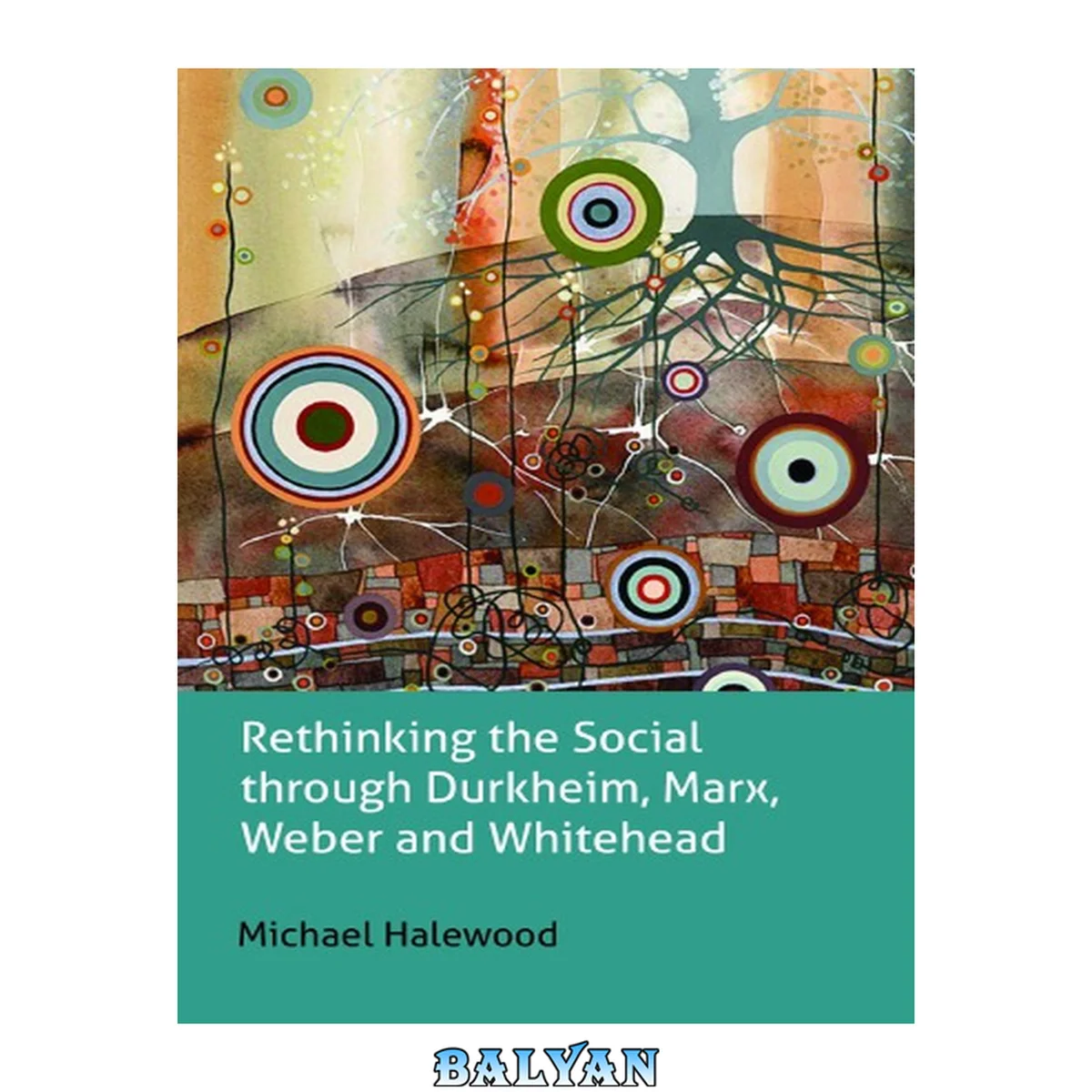
معرفی کتاب «Rethinking the Social through Durkheim, Marx, Weber and Whitehead (Key Issues in Modern Sociology)» نوشتهٔ Michael Halewood، منتشرشده توسط نشر Anthem Press در سال 2014. این کتاب در 8 صفحه، فرمت pdf، زبان انگلیسی ارائه شده است.
According to some social theorists, we are ‘at the end of the social’. This book argues that such pronouncements may be premature, as we need to reengage with what sociologists have previously meant by ‘the social’. ‘Rethinking the Social’ is the first book to systematically analyse the different concepts of the social developed by Durkheim, Marx and Weber. It examines how the concept of the social became unproblematic for twentieth-century writers and suggests that debates surrounding this concept remain very much alive. Building on A. N. Whitehead’s work, Halewood develops a novel ‘philosophy of the social’. Rethinking the Social through Durkheim, Marx, Weber and Whitehead 2 Title 4 Copyright 5 CONTENTS 6 ACKNOWLEDGEMENTS 8 LIST OF ABBREVIATIONS 10 Durkheim 10 Marx 10 Weber 10 Chapter One RETHINKING THE SOCIAL 12 Three Aims 14 A Philosophy of the Social 15 Latour, or not Latour? 20 A Brief Example: Giddens and The Constitution of Society 22 Chapter Two DURKHEIM APPROACHES THE SOCIAL 28 Introduction 28 The Social Is Natural 29 The Social Is Moral 34 One Social Solidarity or Two? 37 Sociality, Morality, Authority and Collectivity 43 The Problem of Society 48 Chapter Three DURKHEIM’S PHILOSOPHY OF THE SOCIAL 54 A Question of Association 54 Durkheim’s “Philosophy of the Social” 56 Science, Things and Force 57 The Categories – Social or Natural? 61 Durkheim’s Philosophy of the Collective 64 Collectivity and Totality 66 Chapter Four MARX ON THE SOCIAL AND THE SOCIETAL 72 Introduction 72 Hegel’s Philosophy of Right (1843) 73 The Holy Family (1844) 83 The German Ideology (1845–46) 84 “Preface” to A Contribution to the Critique of Political Economy (1859) 89 A Contribution to the Critique of Political Economy (1859) 92 Capital (1867) 94 Chapter Five WEBER’S “SOZIAL” ACTION 102 Introduction 102 Weber’s Context: Sociology, the Social and the Science of Society 103 The Meaning of the Social and the Sociality of Meaning 105 A Question of Collectivity? 111 Gemeinschaft, Gesellschaft and the Groupings of Social Action 114 Conclusion – Animal Societies? 119 Chapter Six THE EARLY DEATH OF THE PROBLEM OF THE SOCIAL 122 The Structure of Social Action Volume I: Durkheim 123 The Structure of Social Action Volume II: Weber 127 The Social System 129 Chapter Seven TOWARD A PHILOSOPHY OF THE SOCIAL – PART ONE:DURKHEIM, MARX, WEBER (AND SIMMEL) REVISITED 134 Durkheim 134 Marx 139 Weber 141 Simmel 144 Conclusion 148 Chapter Eight TOWARD A PHILOSOPHY OF THE SOCIAL – PART TWO: WHITEHEAD ON SOCIOLOGY, SOCIETIES AND THE SOCIAL 150 Whitehead’s “Sociology” 151 The Order of Nature and the Creation of Societies 157 Order and Disorder in Nature and Society 161 The Creation of Societies 165 Conclusion 168 NOTES 172 Chapter One: Rethinking the Social 172 Chapter Two: Durkheim Approaches the Social 172 Chapter Three: Durkheim’s Philosophy of the Social 173 Chapter Four: Marx on the Social and the Societal 173 Chapter Five: Weber’s “Sozial” Action 174 Chapter Six: The Early Death of the Problem of the Social 175 Chapter Eight: Toward a Philosophy of the Social – Part Two. Whitehead on Sociology, Societies and the Social 175 REFERENCES 178 INDEX 182 Sociologists and social theorists use the term ‘social'frequently. We talk of social relations, social media, social networks, social factors, and so on, as well as ‘the social'. But do we always know what we mean or what we are invoking when we deploy the term ‘social'? The concept of the ‘social'has often been treated as almost self-explanatory, inherited from the works of the instigators of sociology and social theory who, it is assumed, all meant the same thing by the term. ‘Rethinking the Social'argues that this is not the case, and that there are major differences between their approaches. This the first book to systematically analyse the different concepts of the social developed by Durkheim, Marx and Weber. It examines how the concept of the social became unproblematic for twentieth-century writers and suggests that debates surrounding this concept remain very much alive. Building on A. N. Whitehead's work, Halewood develops a novel ‘philosophy of the social'. According to some social theorists, we are 'at the end of the social'. This book argues that such pronouncements may be premature, as we need to reengage with what sociologists have previously meant by 'the social'. 'Rethinking the Social' is the first book to systematically analyse the different concepts of the social developed by Durkheim, Marx and Weber. It examines how the concept of the social became unproblematic for twentieth-century writers and suggests that debates surrounding this concept remain very much alive. Building on A.N. Whitehead's work, Halewood develops a novel 'philosophy of the social'. --Provided by publisher This is the first book to systematically analyse the different concepts of the social developed by Durkheim, Marx and Weber, suggesting that debates surrounding this concept are still very much alive
دانلود کتاب Rethinking the Social through Durkheim, Marx, Weber and Whitehead (Key Issues in Modern Sociology)