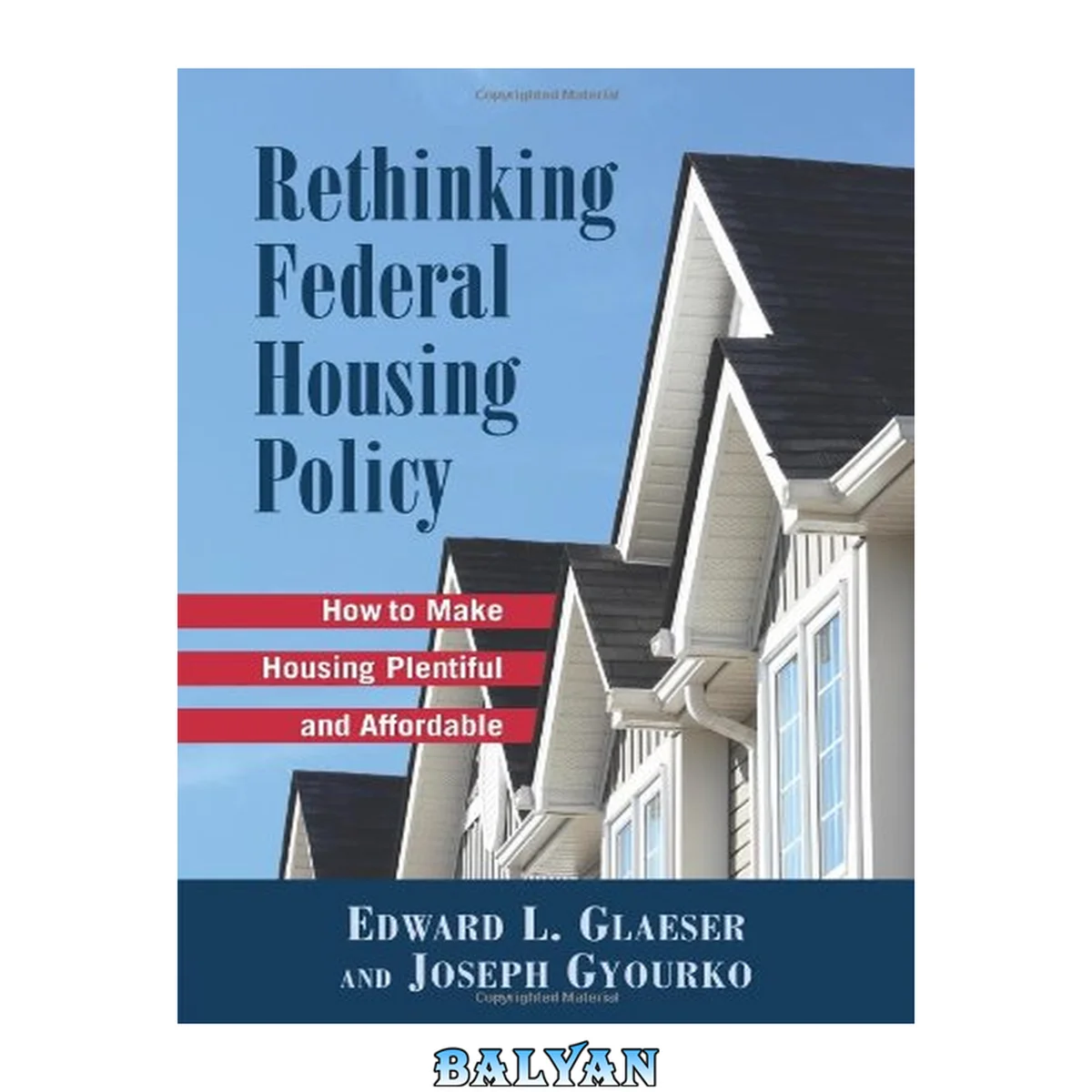
معرفی کتاب «بازنگری در سیاست مسکن فدرال: چگونه مسکن را فراوان و مقرون به صرفه کنیم» (با عنوان لاتین Rethinking federal housing policy : how to make housing plentiful and affordable) نوشتهٔ Edward L. Glaeser and Joseph Gyourko، منتشرشده توسط نشر American Enterprise Institute for Public Policy Research در سال 2008. این کتاب در فرمت pdf، زبان انگلیسی ارائه شده است.
Despite the recent drop in house prices, housing remains unaffordable for many ordinary Americans. Particularly along the coasts, housing remains extremely expensive. In Rethinking Federal Housing Policy: How to Make Housing Plentiful and Affordable, Edward L. Glaeser and Joseph Gyourko explain why housing is so expensive in some areas and outline a plan for making it more affordable. Policymakers must recognize that conditions differ across housing markets, so housing policies need to reflect those differences. The poor and the middle class do not struggle with the same affordability issues, so housing policy needs to address each problem differently. The poor cannot afford housing simply because their incomes are low; the solution to that problem is direct income transfers to the poor, rather than interference with the housing market. In contrast, housing is unaffordable for the middle class because of local zoning restrictions on new home construction that limit the supply of suitable housing. The federal government can sensibly address this issue by providing incentives for local governments in these markets to allow more construction. Ironically, current subsidies for construction of low-income housing only tie impoverished Americans to areas where they have limited job prospects. These supply subsidies also crowd out private-sector construction and benefit politically-connected developers. Mortgage interest deductions, which are intended to make housing more affordable for the middle class, simply allow families who can already afford a house to purchase a bigger one. In restricted, affluent markets, these deductions increase the amount families can pay for a house, driving up prices even higher. Glaeser and Gyourko propose a comprehensive overhaul of federal housing policy that takes into account local regulations and economic conditions. Reform of the home mortgage interest deduction would provide incentives to local governments to allow the market to provide more housing, preventing unnecessary price inflation. Federal subsidies for the production of low-income housing should be eliminated and the funds reallocated to increase the scope of federal housing voucher programs which allow poor households to relocate to areas of greater economic promise. A radical rethinking of policy is needed to allow housing markets to operate freely--and to make housing affordable and plentiful for the middle class and the poor. How do we know when housing is "affordable"? Poverty and housing affordability. Affordability across space. How should housing affordability be measured? The state of American housing. Housing consumption over time. House prices, income, amenities. Housing prices and construction costs Public intervention in U.S. housing markets-a historical perspective. Housing regulation and externalities. Correcting market failures. In-kind redistribution. Conclusion Current policies-price and quantity controls. Price controls. Quantity regulations #1: building codes. Quantity regulations #2: land-use restrictions. Hybrid price and quantity controls: inclusionary zoning. Massachusetts Chapter 40B. The Mount Laurel decision. Conclusion Other interventions in housing markets-taxes and subsidies. The tax code and homeownership. Credit market interventions : the rise of Fannie Mae and Freddie Mac. Project-based subsidy programs for the development of affordable housing : public housing and low income housing tax credit programs. Tenant-based subsidies for the consumption of affordable housing: Section 8 vouchers Conclusion: towards a new national housing policy. The growing affordability problem in markets with high land costs. One size does not fit all. Can the federal government induce localities to permit more construction? Reforming the home mortgage interest deduction. Ensuring the poor can consume some minimum housing quality: vouchers. Summary and conclusion.
Despite the recent drop in house prices, housing remains unaffordable for many ordinary Americans. Particularly along the coasts, housing remains extremely expensive. In Rethinking Federal Housing Policy: How to Make Housing Plentiful and Affordable, Edward L. Glaeser and Joseph Gyourko explain why housing is so expensive in some areas and outline a plan for making it more affordable.